The scorecard
7.5/10 · Great
- Writing25%
- 7.0
- Production25%
- 8.0
- Delivery15%
- 8.0
- Cohesion15%
- 7.5
- Originality10%
- 6.5
- Replay value10%
- 7.5
Romance, regret and self-assurance are handled with an easy touch and a few good turns of phrase, but the lyrics rarely push past pleasant into memorable.
A stripped-back, live-band take on 1970s Philly and Motown soul gives the record real air and space, and the drums and strings are mixed with care.
His voice is looser and warmer than on the Oxnard album, and the singing and the guest vocals from Lalah Hathaway and Brandy are the strongest part of the record.
Eleven tracks and about forty minutes, with nothing overstaying and a steady tone from first song to last.
The retro-soul approach is executed beautifully but follows a well-worn template, and it adds less to his own catalog than the album before it.
Smooth, short and groove-led, it should be easy to return to, though some critics heard a record that is more pleasant than distinctive and that may blur with time.
Anderson .Paak Ventura: Smooth Soul That Trades Edge for Ease
Ventura is the sound of Anderson .Paak exhaling. After an album that pushed hard for impact, he turned toward a looser, more live-sounding record built on strings, bass and a band that sounds like it is playing in the room. The result is a lush and very easy listen that wins you over in the first two songs and mostly keeps you there. It is also a record that rarely surprises, and that tension between comfort and ambition is the real subject of the album.
The thesis is that Ventura is the best-sounding record of his career and not the most daring. It repairs the main flaw of Oxnard, which was an over-polished mix and a scattered sequence, and it does so with confidence. The cost is a certain lack of friction. Almost every song stays in the same smooth, mid-tempo lane, and when the groove is as good as this one, that is easy to forgive, though it limits how far the record can climb.
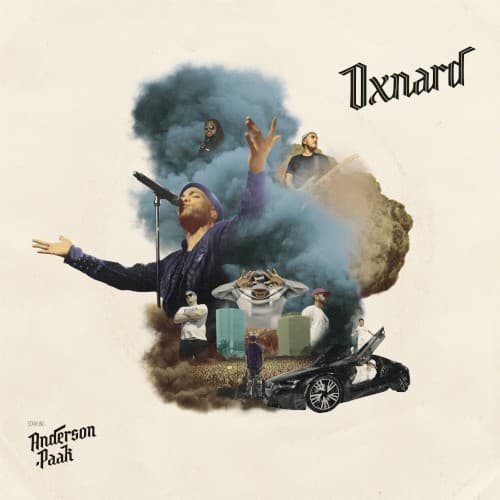
The reception tells the story. Critics were warmer than they were on its predecessor, and the album won Best R&B Album at the 2020 Grammy Awards and gave him his first top-ten album in the United States. Several reviewers heard it as a return to form, while others, including one at Pitchfork, found it pleasant and hollow, a set of nice sounds that never become more than their parts. Both reactions are understandable, and both contain some truth.
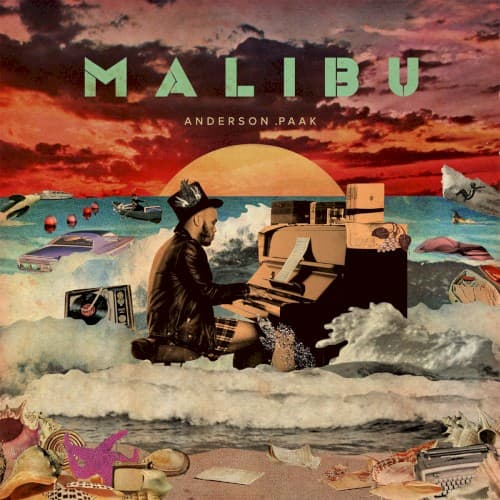
From the standpoint of the West Coast tradition, Ventura sits in the long line of warm, live-instrument soul records that the region has produced, and it leans toward the 1970s more than the G-funk era. It leaves behind the harder rap edge of the last album. It is closer to Malibu in spirit than to Oxnard, though it does not match Malibu's sense of invention. For fans of Anderson .Paak who prefer the singer over the rapper, this is the most satisfying record of his run, and for anyone hoping for a bold new direction, it is a pleasant detour.
Strings, Bass and a Band That Knows Its Cue
The first thing to notice about Ventura is the space. The arrangements are open, the drums are crisp and unhurried, and the strings and horns sit in the mix without crowding the voice. The producer credits are broad, with Anderson .Paak at the center, along with Dem Jointz, Pomo, Fredwreck, The Alchemist, Callum and Kiefer and members of the Free Nationals, but the sound is remarkably consistent. It is a stripped-down version of mid-1970s Philly soul, and the record commits to it more fully than any of his previous albums. Make It Better and Come Home show the approach at its most inviting.
The voice is the second advantage. He sings more than he raps on this record, and the singing is excellent: warm, loose and a little weathered, with a gift for bending a phrase at the end of a bar. The guests are chosen to match the sound. André 3000, Smokey Robinson, Lalah Hathaway, Jazmine Sullivan and Brandy each bring a different kind of authority, and the production gives them room. The record also includes posthumous vocals from Nate Dogg, a touch that fits the West Coast theme without turning into a gimmick.
The weakness is that the writing rarely demands attention. The songs are about love, desire, doubt and pride, and they are well built, but the language tends to stay in familiar territory. There is little of the specific detail that made some of his earlier songs memorable, and few lines that surprise. The album is made of good sentences more than good ideas. That is exactly the criticism one prominent review made: that the record sounds right but never becomes more than the sum of its sounds.
There is also a question of ambition. The record is clearly a deliberate correction of the last one, and its main goal is to restore the feeling of his signature sound. It does that well. But restoration is not the same as invention, and the album does not add much new to what he had already done. The retro-soul approach is beautifully executed, but it is also a style that others have been working in for years, and the record does not give it a distinctive personal twist.
The mix deserves a mention. After the loud, bright polish of the previous album, the sound here is warmer and more natural, with a live-band feel that gives the songs a sense of movement. It is the clearest sign of the creative freedom he has described, and it is the main reason the record feels so much more relaxed than its predecessor.
Forty Minutes That Know When to Stop
The strongest feature of Ventura as a sequence is its restraint. Eleven songs in roughly forty minutes is a refreshing contrast to the long tracklists that dominate streaming-era albums, and the record uses its time well. There is no sense of padding, and the pace feels deliberate. The album opens with a confident, warm invitation, moves through a run of smooth and sensual songs and closes with a short, direct piece that ends on a quiet note.
The flow is smooth. Songs share a tempo and a temperature, but small changes in arrangement and guest voice keep the sequence from feeling static. A short, sharp interlude near the middle acts as a palate cleanser, and a few more energetic tracks lift the energy before the closing stretch. The effect is less like a story and more like a long, well-curated evening, with the mood rising and falling gently.
The weakness is that the album does not have a clear peak. The highlights are scattered, and no single moment stands out as the record's emotional center. The comfort of the groove is also its limit: because nothing is jarring, nothing is thrilling either. The middle stretch, in particular, can blur, as several mid-tempo songs share a similar texture and rhythm. A single, bolder change of pace would have given the sequence more shape.
Still, the length is earned. The record knows what it wants to be and ends before it overstays. Compared with the longer, more uneven tracklists of his earlier albums, this one feels disciplined, and that discipline is a large part of why it works. It is a record built to be played all the way through, even if the destination is more pleasant than surprising.
The Smoothest Record in His Run
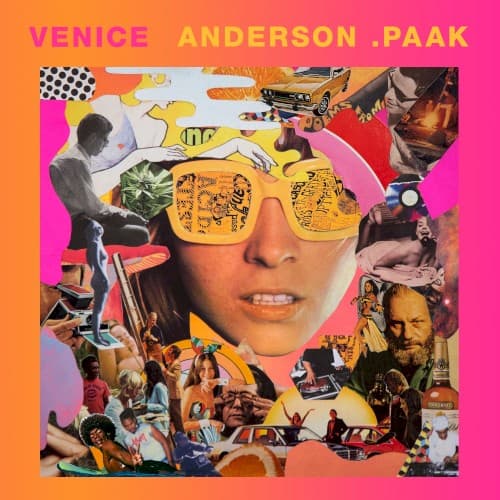
No other albums by .Paak are rated on the site yet, so there is no formal ranking to defend, but the relative order is clear enough. Ventura sits just below Malibu, which has more invention, and above Oxnard and Venice, which are more uneven. It is a very good album, easy to like and easy to finish, held back from greatness by its caution and its lack of a memorable peak.
It is for listeners who like warm, live-sounding soul and R&B with a classic feel, and for anyone who prefers .Paak as a singer more than as a rapper. Fans of Philly soul, Motown and modern retro-soul will find a lot to enjoy. Listeners who want hard-edged rap, bold experiments or sharp lyrical detail might want to look elsewhere, because the album is built on mood and melody and not on argument.
It should age well in the way that comfortable records do. The sound is natural and unforced, and the songs do not depend on a trend. The risk is that its smoothness lets it fade into the background, which is the point several critics made, and that the albums that follow it may make it feel more like a pleasant interlude than a landmark. The Grammy win secured its place in his history.
If you only have time for a few songs, start with Come Home, Make It Better and Reachin' 2 Much. They show the record at its best: a warm, inviting opener with a guest verse from André 3000, a smooth single with Smokey Robinson and a longer, more stretched-out groove with Lalah Hathaway. For what to hear next, go to Malibu for the stronger, more inventive version of the same sound, or to Oxnard to hear the harder-hitting record that this one corrects. Ventura is an album that you will enjoy almost every time you put it on, and it rarely asks for more than that.
Track by track
Track Listing
Come Home
StandoutA warm, inviting opener with a guest verse from André 3000 and a sample from a NxWorries song. The groove is relaxed and the arrangement is open, and it sets the tone for the record quickly. André's appearance adds a quirky, unpredictable voice that gives the track an early sense of occasion. The writing is friendly and direct, and the song makes its case through feel. It is a strong start and one of the clearest statements of the album's approach, though it is more welcoming than ambitious.
Make It Better
StandoutA lush, romantic single with Smokey Robinson, produced by .Paak, Fredwreck and The Alchemist. The strings and the slow, steady groove give the song a classic soul feel, and the two voices blend well, with Robinson's smoothness giving the track a sense of lineage. It is one of the best examples of the album's retro approach working at full strength. The writing is simple but effective, and the hook is among the album's most memorable. It is a clear highlight and a good first listen.
Reachin’ 2 Much
StandoutA long, stretched-out groove with Lalah Hathaway, and the longest song on the record. The vocal blend is excellent and the arrangement has space to breathe, which suits the song's patient mood. It runs close to six minutes and does not fully earn all of them, but the performances are strong enough to carry it. It is one of the album's more sophisticated moments.
Winners Circle
SolidA confident, upbeat track that opens with film dialogue excerpts and moves into a punchy groove. The attitude is playful and the energy lifts the sequence, though the writing leans on familiar swagger.
Good Heels
SolidA very short, smooth interlude with Jazmine Sullivan. It is brief and elegant, and it shows how well the guest voices fit the sound, but it ends before it can leave a mark.
Yada Yada
SolidA bouncy, rhythmic song produced by Callum and Kiefer, with a looser, more playful feel than the tracks around it. It is a welcome change of pace, though the hook is lighter than the album's best.
King James
StandoutThe lead single and the album's most outward-looking song, with a confident groove and a hook that lingers. The production by Callum and Kiefer is bright and crisp, and the track gives the record a burst of energy at the right moment. The writing is more direct and more topical than most of the album, and it adds a welcome sense of purpose. The groove is smooth but has more bite than the softer tracks that surround it, and the hook is simple and effective. It is one of the clearest highlights of the record and a natural first stop.
Chosen One
SolidA sleek, melodic track with Sonyae Elise, built on a sample from a Mac DeMarco song and produced by .Paak. The mood is dreamy and the groove is relaxed, and the vocal blend is smooth. It is pleasant and well made, though it blends into the stretch around it.
Jet Black
StandoutA smooth, romantic duet with Brandy, one of the most polished vocal performances on the record. The arrangement is spacious and the harmonies are lovely, and it is one of the more elegant moments in the middle of the album. It is gentle rather than gripping.
Twilight
SolidA mellow, atmospheric track that slows the sequence and sets up the closer. It is pleasant and well-judged, though it is more mood than song.
What Can We Do?
StandoutA short, direct closer with posthumous vocals from Nate Dogg, produced by Fredwreck. It brings a distinctive West Coast flavor to the end of the record and finishes it on a note of quiet reflection and not a big statement. The effect is subtle and moving, and it suits the record's restraint.