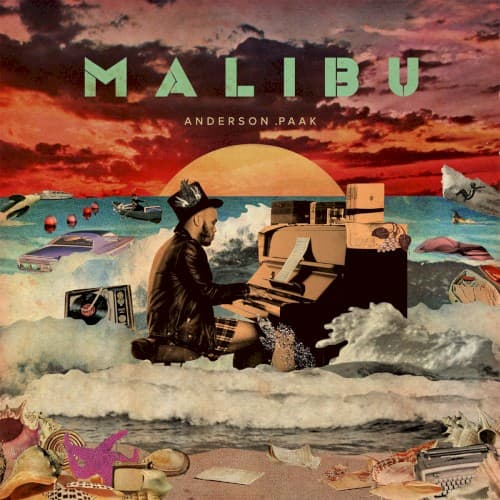
The scorecard
8.3/10 · Great
- Writing25%
- 8.0
- Production25%
- 8.5
- Delivery15%
- 8.5
- Cohesion15%
- 8.0
- Originality10%
- 8.0
- Replay value10%
- 8.5
The writing is at its best when it folds pressure, family, doubt and the odd experience of being almost successful into personal, specific songs, and only a few detours into broader social themes come off as well-meant but flat.
A roster of beatmakers including Madlib, 9th Wonder, Kaytranada and Hi-Tek is bound by live-sounding drums, warm bass and choir so tightly that the record plays like one band in one room, with only a few tracks drifting in the comfortable pocket.
His voice moves between rasp, falsetto and quick rap cadence with total control, and the guest verses from Rapsody and Schoolboy Q lock into the grooves.
The tone holds across sixteen tracks and the first two thirds are close to ideal, though the album runs long and the closing third gives up some of the momentum built earlier.
It joined 1970s soul, 1990s boom bap and trap cadence in a single voice at a moment when few rap records were attempting that range.
Groove-first records tend to last, and the best songs here already sound unhurried and durable years on, though the slack stretches make it a record to dip into more than a record to sit through.
Anderson .Paak Malibu: A Warm Record With Hard Years Underneath
Malibu sounds relaxed in the way only a very well-rehearsed record can. The drums sit loosely behind the beat, the bass walks, a choir drifts in and out, and over all of it Anderson .Paak sounds like a man who spent years working toward a sound and finally found the room where it fit. The easy mood is the hook. The argument underneath it is that the same album can be a party and a reckoning, and that the warmth is more affecting because it is not naive about what came before it.
That is the thesis worth defending: Malibu is the rare rap-adjacent album where the groove is the argument. Its sunny surface is not a mask, it is a response to hardship, and the music keeps both ideas in the same frame. The songs move from gospel-tinted uplift to boom-bap grit to slick modern R&B without ever sounding like a collection of styles. They sound like the same person at different hours of the same long day.
The stakes were high. The album followed a prominent role on Dr. Dre's Compton and arrived as the clearest chance for a breakthrough, which meant it had to prove that the guest-verse star had a full-length statement of his own. It did. Critics responded with near-unanimous praise, and the record earned a Grammy nomination for Best Urban Contemporary Album. The comparisons that circled it, to Stevie Wonder and to Kendrick Lamar, are worth taking seriously, if only because they show how wide the reference points were.
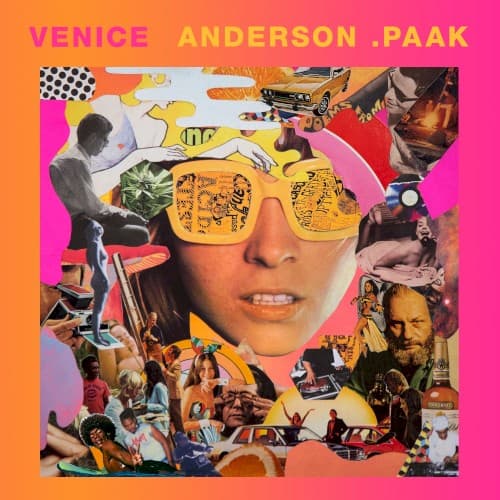
The West Coast has a long tradition of warm, low-slung funk, from the G-funk template to the soul-leaning scenes that followed, and Malibu belongs in that line without copying any single part of it. It borrows the mood and the live-instrument feel but adds a singer's melodic gift and a rapper's rhythmic flexibility. This is the album where Anderson .Paak stopped sounding promising and started sounding finished, and it leaves the debut Venice sounding like a rough draft of the same ideas.
Live Drums, Borrowed Eras and a Voice That Bends
The most striking thing about Malibu is how many hands touch it without disturbing its tone. Madlib, 9th Wonder, Kaytranada, Hi-Tek, DJ Khalil and several others are credited on individual songs, and the record still plays like a single session. The reason is the rhythm section. Live-sounding drums with a loose, human swing, round bass lines and warm keyboards give every producer's contribution the same physical feel, and the result is a mix that is rich without being crowded. Without You and Lite Weight show how far the palette stretches while the pulse stays constant.
The vocal performance is the second pillar. .Paak sings with a rasp that can turn silky in a bar, and he raps with a quick, almost conversational bounce that slides across the beat. The shift between modes is rarely announced. A line starts melodic and ends percussive, and the listener never feels the join. Guests are chosen well and kept in their lanes: Rapsody's verse on Without You has a sharp, assured presence, and Schoolboy Q's turn on Am I Wrong adds grit to a song that could otherwise float away. The choir and the backing voices act almost as a second instrument, giving the choruses a communal lift.
The writing is at its best when it is personal and specific about pressure: money, family, doubt, and the odd experience of being almost successful. It is less sure when it reaches for larger statements. One late song takes aim at a broad social theme and, in the words of at least one critic, comes off as well-meaning but silly, and that is a fair description. The ideas are sincere, but the lines are not sharp enough to carry them. Elsewhere the lyrics lean on a familiar vocabulary of love, loss and luck, and some of the verses give way to pure feel.
There is a smaller issue of mood. The album's loose, mellow temperament is a strength, but it occasionally becomes a limit. A reviewer at one major outlet noted that the music is not always as dynamic as the thoughts behind it, and there are stretches where the pocket is so comfortable that the songs lose tension. The record compensates with details, a change in the drum pattern, a vocal ad-lib, a sudden shift into a sample, but a few tracks still drift.
What it gets right is the integration. A sample of a Hiatus Kaiyote song sits next to boom-bap drums, a reworked national anthem fragment sits inside a taut, energetic beat, and an old-fashioned soul opener leads into a gospel-leaning ballad. None of it feels like a trick. It feels like the music of someone who grew up listening to everything and has a voice strong enough to hold it together.
Sixteen Songs, One Long Golden Hour
Malibu starts strong. The opening song sets a warm, soulful tone, and the second keeps it going with a longer, more patient groove. By the time the record reaches its first big single, the sound has been fully established and the pacing has found a rhythm of its own: a slower song, a bouncier one, a short interlude that resets the ear, then a more upbeat track to push forward. The first half has an excellent sense of flow, and few records manage to feel this comfortable and still keep surprising the listener.
The middle is the peak. A run of songs with guest verses, group vocals and different producers gives the album variety without breaking its mood, and the highlights come one after another. This is the stretch where the record sounds most like a complete world, and it is where the sequencing is most confident. A short interlude near the center works almost like a breath, giving the listener a brief change before the next run.
The back third is where the pace begins to slip. A few songs cover ground that earlier tracks have already covered, and one of them aims for a social message that does not hit. The tempo stays high but the surprises thin out, and the album's length, sixteen tracks and a little over an hour, begins to show. The closer is long and gospel-flavored, and it brings the album to a satisfying emotional place, but the road there has some slack.
Overall, the pacing is a strength with one qualification. The first two thirds are close to ideal, and the final third would benefit from trimming. Sixteen songs is a lot for a record this relaxed, and a tighter version would be an even stronger argument. The length is mostly earned, because the best moments are plentiful, but the sequence does not always know when to stop.
The Sound He Was Always Going to Make
No other albums by .Paak are rated on the site yet, so there is no formal catalog ranking to defend, but the relative order against the debut is easy to state. Malibu is clearly stronger than Venice: the sound is more focused, the production is richer and the writing is more personal. Critics at the time made the same comparison, and the record's reception supported it. Among the rap-adjacent soul records of its period, it sits comfortably in the upper tier.
It is for anyone who likes warm, live-sounding music with a rap pulse, and especially for listeners who enjoy records that blend eras. Fans of Kendrick Lamar's more jazz-and-funk side, of Outkast's melodic tendencies and of modern Los Angeles soul will feel at home. Listeners who want hard-edged lyricism or a tightly plotted concept record might want to skip it, because the album is built on feel and flow more than on narrative.
It has aged very well. The sound was never tied to a trend, and the best songs still feel relaxed and alive. The overlong tracklist is more visible now, but the highlights have stayed strong and the record has become a reference point for the sound it helped popularize.
If you only have time for a few songs, start with Am I Wrong, Come Down and Without You. They cover the range of the record, from bright, bouncing pop-soul to a taut, energetic cut with a clever sample to a boom-bap-flavored duet with Rapsody. For what to hear next, try Venice to hear where the sound began, or Dr. Dre's Compton to hear the project that put .Paak in front of a wider audience. Malibu is the album where a very good voice found a very good room, and its best songs are the ones where you can hear both.
Track by track
Track Listing
The Bird
StandoutA soulful opener with a vintage feel, built from a warm arrangement and a vocal that sounds equal parts confident and wounded. It sets the mood and the theme of the album, hardship and gratitude held together, and it does so in a single compact track. He produced it himself, and the control shows.
Heart Don’t Stand a Chance
StandoutA longer, patient groove that lets the voice stretch and the band settle in. The production is lush and the melody lingers, though the song moves slowly enough that it asks for some patience. It is a good early reminder that this album prefers mood to speed.
The Waters
StandoutA short, warm collaboration with BJ the Chicago Kid, built on a beat from Madlib. The pairing of two soul voices is a pleasure, and the track is one of the album's more compact and engaging early moments.
The Season / Carry Me
StandoutThe album's lead single and one of its most substantial songs. It runs in two parts, moving from a hard-edged, determined first half to a more reflective, uplifting second, and the production from 9th Wonder and Callum Connor gives both sections the same lived-in swing. The writing is at its most personal here, with an honest account of struggle that avoids both self-pity and bragging. The structure is unusual for a single, and that is part of the appeal: it trusts the listener to follow a shift in mood. It is one of the clearest statements of what the album is about.
Put Me Thru
StandoutA brisk, funky track that picks up the energy after a mellow stretch. It is short and tight, and the groove keeps it moving, though the writing is more playful than deep.
Am I Wrong
StandoutThe record's most irresistible song and one of its most successful hybrids. A bright, bouncy beat from Pomo carries a vocal that bounces between sung hook and rapped verse, and Schoolboy Q's guest turn adds grit and contrast. It has the kind of pop sensibility that makes it work outside any one genre, and critics were quick to compare it to the best of Outkast's melodic hits. The hook is huge but the details underneath, the backing voices, the drum fills, the little melodic turns, are what make it rewarding on repeat. It is a key song and a good first listen.
Without You
StandoutA boom-bap-flavored track produced by 9th Wonder, built on a sample of a Hiatus Kaiyote song, with Rapsody delivering a sharp, assured verse. It brings the album closest to classic East Coast rap sensibilities while keeping the Californian warmth. The duet between rapper and singer is a highlight of the record's middle stretch.
Parking Lot
SolidA loose, groove-driven track that leans on a funky rhythm and a relaxed vocal. It is enjoyable but sits comfortably between bigger songs, and it is more mood than statement.
Lite Weight
StandoutA buoyant, dance-friendly song built on a Kaytranada beat and lifted by a choir. It is one of the most joyful moments on the album, and the production gives it a bounce that few other tracks match.
Room in Here
SolidA smooth, slow-rolling cut with The Game and Sonyae Elise as guests. The beat is silky and the verses are polished, but the song is more about atmosphere than invention, and it is a notch below the album's highlights.
Water Fall (Interluuube)
SolidA short, drum-driven interlude that gives the listener a breath. It is brief and atmospheric, and it does what an interlude should do.
Your Prime
StandoutOne of the strongest vocal performances on the record, with a quick flow that was singled out for comparison to Kendrick Lamar's more experimental work. The production by DJ Khalil moves from creamy soul harmonies to trap-flavored cadence in a single track, which shows the album's range in miniature. The writing is sharp and the energy is high, and it is a good example of what makes .Paak distinctive: the ability to move between registers without losing control. It is a clear highlight of the back half.
Come Down
StandoutA compact, energetic song built on a Hi-Tek beat with a bold sample of a national anthem, and one of the album's most distinctive moments. It runs under three minutes and never wastes a second. The groove is tight, the hook is simple, and the arrangement has a drive that most of the album's slower tracks do not. It was the fourth single and earned a place on Pitchfork's list of the year's best songs, and the praise is deserved.
Silicon Valley
WeakA well-meaning song with a broad social theme that does not translate into sharp writing. The intention is clear, but the execution is a little clumsy, and it is the album's weakest moment.
Celebrate
SolidA cheerful, upbeat track that restores the album's positive energy after a weaker stretch. It is pleasant and easy to like, though it is more of a feel-good moment than a standout.
The Dreamer
StandoutA long, gospel-flavored closer with Talib Kweli and a choir, and a satisfying emotional landing for the record. The scale is bigger than most of the songs that come before it, and it gives the album a sense of resolution. It is a bit long, but the warmth and the communal feel earn the space.