The scorecard
8.3/10 · Great
- Writing25%
- 8.5
- Production25%
- 9.0
- Delivery15%
- 8.0
- Cohesion15%
- 7.5
- Originality10%
- 7.5
- Replay value10%
- 8.0
The verses are specific and vivid, moving between swagger and confession, with strong imagery on Massa and Lumberjack and the eight-minute Wilshire letting a whole story breathe without shortcuts.
Samples from Billy Cobham, Gravediggaz and H-Town are chopped and layered with confidence, the mix dense and deliberate, each switch from bossa nova to jazz to stripped-back rap sounding intentional.
Tyler raps harder than on the previous two albums, and the guests—Wayne on Hot Wind Blows, Pharrell on Juggernaut—match the energy, with hooks that mostly land.
The Gangsta Grillz structure keeps the first half moving sharp, though the second half sags with a ten-minute song and interludes before the album can finish.
The mixtape format and DJ Drama tags were not new in 2021, but Tyler had not made a record like this before, and the move away from Igor's synth-pop was a clear-eyed choice that has aged well.
The production still sounds dense and detailed on repeat listens, and the Gangsta Grillz framing has aged well, though the second half tests patience.
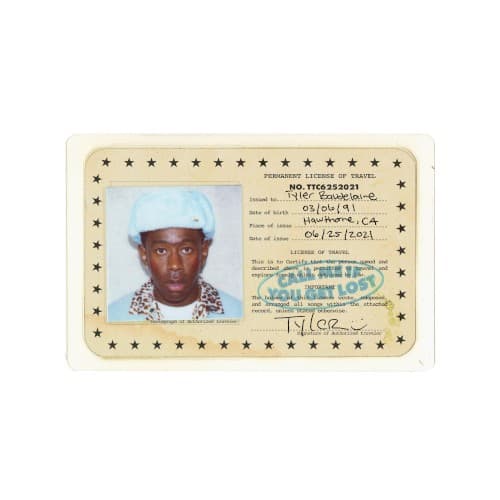
Tyler, The Creator CALL ME IF YOU GET LOST — The Tape That Proved He Could Still Spit
Tyler, The Creator spent 2017 and 2019 proving he could make warm, soulful records that treated rapping as one color among many. CALL ME IF YOU GET LOST is the album where he came back to prove he had not forgotten how to use the mic as the lead instrument.
The decision to frame the whole thing as a DJ Drama Gangsta Grillz tape—complete with air horns, tags and a tracklist that moves like a mid-2000s street release—was a gamble, because by 2021 that format was either nostalgia or cosplay depending on who was using it. Tyler uses it as a way to give himself permission to rap harder and longer than he had in years, and for the first half of the record it works without a hitch.
The thesis is that Tyler can still build a rap album on verses and beats, not just arrangements and vibes. Tracks like LUMBERJACK, CORSO and MANIFESTO make the case clearly. The Gravediggaz flip on LUMBERJACK sounds like early Odd Future, but the rapping is sharper and the mix is deeper, because he has the resources and taste that the Bastard sessions did not.
The problem is the second half, where the album tries to be a Gangsta Grillz tape and a sprawling emotional statement at the same time. SWEET / I THOUGHT YOU WANTED TO DANCE runs nearly ten minutes, WILSHIRE runs eight and a half, and by the time MOMMA TALK and BLESSED arrive as interludes the momentum is gone. What the first half builds, the back end tests.
Samples From Three Decades, Mixed Like One Session
Tyler produced the whole album himself except for two tracks—Jamie xx handled RISE! and Jay Versace co-produced SAFARI—but the sound is built on samples from the seventies through the nineties, chopped and layered in ways that show how much he learned from the boom bap era without trying to recreate it. LUMBERJACK opens with a Larry Willis piano loop and a Gravediggaz sample that Tyler flips into something heavier than the original, the drums hitting harder than anything on Flower Boy. CORSO uses a James Asher percussion break that bounces between channels, and HOT WIND BLOWS lays Lil Wayne over a Penny Goodwin sample that sounds like a lost Mancini score.
The writing is specific where Igor was abstract. On LUMBERJACK Tyler describes a Rolls-Royce with pink rims and floral stitching, on MASSA he talks about wealth in images rather than slogans, and on MANIFESTO he raps over a Barry White flip with Domo Genesis trading verses about success and the people who doubted it.
The guests are chosen for what they do well: Wayne on HOT WIND BLOWS delivers the best verse he had given anyone in years, Pharrell and Lil Uzi Vert on JUGGERNAUT keep the energy high, and YoungBoy Never Broke Again on WUSYANAME fits the H-Town sample like it was written for him.
The weakness is that Tyler does not always know when to end a song. SWEET / I THOUGHT YOU WANTED TO DANCE is three separate ideas stitched together across ten minutes, and while the Brent Faiyaz section and the reggae flip are both strong on their own, the transitions feel like someone skipping between playlists rather than building a suite. WILSHIRE is an eight-minute confession about a relationship that did not happen, and the mumbling, half-finished delivery is intentional—Tyler sounds like someone not ready to say the whole truth out loud—but the length is not earned. The song would work at four minutes; at eight it is an endurance test.
The mix throughout is dense and deliberate, with sounds panning between speakers and samples stacked in ways that reward headphones, but the production does not solve the pacing problem.
Front-Loaded Power, Back-End Sprawl
The first stretch runs twenty-three minutes and barely pauses. The sequencing here is sharp: every track does one thing well and gets out before it can sag.
The second half tries to build an arc and ends up with a structure problem. The middle section is a ten-minute sprawl, followed by two short interludes, and then an eight-minute ballad that stops the album cold. By the time the closing track arrives as a two-minute sprint, the momentum from the first half is gone.
The issue is not that the long songs are weak—one has real writing, and another features one of the album's best stretches—but that Tyler sequenced them like he was making Igor, where the runtime and the emotional weight justified the length, instead of a Gangsta Grillz tape, where every song should feel like it could have been a single. The middle section tries to bridge the gap, but arrives too late to fix the sag.
The Best Rapping Tyler Had Done in Years, Wrapped Around a Pacing Problem
CALL ME IF YOU GET LOST is Tyler's second-best album after Flower Boy, ahead of Igor because the rapping is stronger and the production is just as adventurous, but behind Flower Boy because the sequencing does not hold. The first half is some of the best work he has made: the beats are huge, the verses are specific, and the Gangsta Grillz framing gives the whole thing a swagger that the previous two albums did not attempt.
The second half has two great songs but they are surrounded by interludes and stretched to lengths that the writing does not support. The album won the Grammy for Best Rap Album, and the win was deserved on the strength of the production and the fact that Tyler was willing to make a rap album in a year when most of his peers were chasing pop or staying safe.
It has aged well in the three years since release, because the Gangsta Grillz nostalgia that felt like a risk in 2021 now sounds like a clear-eyed choice, and the production still sounds dense and detailed on repeat listens.
Who it is for: fans of Flower Boy who wanted Tyler to rap more, listeners who remember the original Gangsta Grillz tapes and want to hear what that format sounds like with a bigger budget, and anyone who thinks Igor was too abstract. Who should skip it: people who wanted another Igor, listeners who do not have patience for eight-minute confessionals, and anyone looking for a tight, sequenced album rather than a mixtape with ideas. Start with LUMBERJACK and CORSO to hear the thesis, then decide if you want the whole ride or just the bangers. If you want the next step, go to Flower Boy to hear Tyler at his most cohesive, or Igor to hear him push the pop side further.
Track by track
Track Listing
SIR BAUDELAIRE
SolidDJ Drama introduces the Baudelaire character over a Billy Cobham sample and sets the tone for the Gangsta Grillz format. It works as an intro and nothing more.
CORSO
StandoutThe James Asher percussion break bounces between speakers while Tyler raps about success and the people who doubted it, the verses moving fast enough that the two-minute runtime feels earned. The production is immediate and the hook is minimal, which keeps the focus on the rapping. One of the cleanest examples of what the first half of the album does well.
LEMONHEAD
StandoutThe Gravediggaz flip and the Larry Willis piano loop from Lumberjack carry over into a shorter, harder track with 42 Dugg on the hook. The beat switches into bossa nova halfway through, which is the kind of move that should feel gimmicky but works because the transition is clean and the song is over before the idea wears out.
WUSYANAME
StandoutThe H-Town sample from Back Seat (Wit No Sheets) is flipped into a smooth, nineties-style R&B track with YoungBoy Never Broke Again and Ty Dolla Sign trading verses and hooks. The writing is romantic without being sentimental, and the two-minute length keeps it from overstaying. One of the singles, and it is easy to hear why: the sound is accessible and the guest verses fit the production without distracting from it.
LUMBERJACK
StandoutThe Gravediggaz sample and the Larry Willis loop are chopped into something heavier than the originals, and Tyler raps about wealth and success with images that are specific enough to avoid sounding like a checklist. The pink rims and floral stitching on the Rolls-Royce are the kind of details that make the verse stick. The drums hit harder than anything on Flower Boy, and the hook is simple enough to work on repeat. The lead single, and it makes the thesis clear: this is a rap album, not a pop experiment.
HOT WIND BLOWS
StandoutLil Wayne delivers one of his best guest verses in years over a Penny Goodwin sample that sounds like a lost Henry Mancini score, the kind of lush, mid-tempo beat that Wayne used to own in the mid-2000s. Tyler holds his own, but Wayne is the reason to return to this one. The sequencing choice to put this after Lumberjack keeps the energy high without repeating the same sound.
MASSA
StandoutThe Impressions sample is flipped into a stripped-back beat that lets Tyler rap about wealth and Black success without the triumphalism that usually accompanies those themes. The writing is sharp—he describes the discomfort of being the only Black person in certain rooms, the weight of proving something to people who will never be convinced—and the hook is minimal. The flute-led intro that switches into hard drums is the kind of production flourish that shows Tyler is not just chasing the Gangsta Grillz sound, he is using it as a frame for his own ideas.
RUNITUP
SolidTeezo Touchdown delivers a hook that sounds like it was recorded in a different room, which gives the song a lo-fi texture that contrasts with the polished production on the rest of the album. Tyler raps about success and the people who want a piece of it, and the verses are solid, but the song does not do anything that Massa or Manifesto did not already handle better. Decent, not essential.
MANIFESTO
StandoutDomo Genesis trades verses with Tyler over a Barry White flip, the kind of luxurious, mid-tempo soul sample that dominated the early 2000s. The writing is about success and legacy, and both rappers sound comfortable without coasting. The production is layered enough to reward repeat listens, and the sequencing choice to put this at the end of the first half gives the tape a moment to breathe before the sprawl begins.
SWEET / I THOUGHT YOU WANTED TO DANCE
SolidThree separate songs stitched together across ten minutes: a Brent Faiyaz R&B section, a reggae flip with Fana Hues, and a coda that does not quite resolve either idea. The Faiyaz section is one of the album's best stretches, the kind of smooth, detailed writing and production that shows Tyler can still make soulful music without retreating to the Igor sound. The reggae section is strong on its own, but the transition between the two feels like someone changing playlists mid-song rather than building a suite. The length is not earned, and the sequencing choice to put a ten-minute track in the middle of the album kills the momentum that the first eight tracks built. Strong parts, weak structure.
MOMMA TALK
SolidTyler talks to his mother for a minute. It is the same conversation that played when you called the promotional phone number before the album dropped, and it works as an interlude if you are invested in the Baudelaire character. If not, it is a skit that stops the album.
RISE!
SolidJamie xx co-produced this one, and the sound is brighter and more electronic than the rest of the album, with Daisy World on the hook. The production is clean and the verses are solid, but the song arrives at a point in the tracklist where the album needs momentum, not a shift in tone. Decent as a standalone track, awkward in context.
BLESSED
WeakA one-minute DJ Drama tag. Filler.
JUGGERNAUT
StandoutLil Uzi Vert and Pharrell Williams trade verses over a hard, minimal beat, and the energy is higher than anything in the second half up to this point. Pharrell sounds engaged, Uzi fits the production, and Tyler raps like he remembered this was supposed to be a Gangsta Grillz tape. The sequencing choice to put this after two slow songs and two interludes is baffling, because it is the kind of track that should have been in the first half.
WILSHIRE
SolidAn eight-minute confession about a relationship with someone else's partner, delivered in a mumbling, half-finished style that makes it sound like Tyler is not ready to say the whole truth out loud. The writing is specific and uncomfortable in ways that most rap songs about relationships avoid—he admits to jealousy, dishonesty and the fear of being left—and the production is minimal enough to let the words carry the song. The problem is the length: the story and the emotional arc would work at four minutes, but at eight it feels like Tyler is testing the listener's patience rather than building to a resolution. Strong writing, weak editing.
SAFARI
StandoutA two-minute sprint over an Ebony Expressions sample, with Jay Versace co-producing. The beat is bright and the rapping is confident, and the sequencing choice to end the album with a short, energetic track is the right move after the sprawl of the previous songs. It does not erase the pacing problems, but it leaves the album on a high note.