The scorecard
6.3/10 · Mixed
- Writing25%
- 6.0
- Production25%
- 6.5
- Delivery15%
- 7.5
- Cohesion15%
- 6.0
- Originality10%
- 5.5
- Replay value10%
- 6.0
Songs like "Resurrection (Paper, Paper)" and "Change the World" have clear concepts, but the street-and-survival verses elsewhere lean on familiar images and rarely add detail.
Splitting the beats among Jimmy "JT" Thomas, LT Hutton, Darren Vegas and DJ U-Neek gives "Battlezone" and "Don't Worry" different textures, though the whole set sits in a narrower mood than the group's earlier work.
Bizzy Bone's presence on every track and the group's sung-rapped interplay on "Can't Give It Up" keep the performances sharp even when the material is thin.
At fifteen tracks it is leaner than the previous double album, but the middle stretch around "Servin' Tha Fiends" and "Murder One" runs on a single mood.
The harmonized flow is still unmatched, but the album mostly repeats the group's established approach with slightly darker shading and few new ideas.
A handful of singles hold up well on repeat, while the deeper cuts are pleasant background and rarely demand a second listen.
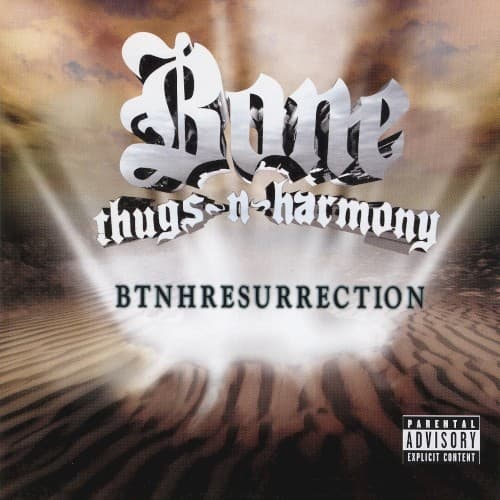
Bone Thugs-n-Harmony BTNHResurrection: A Comeback That Could Not Quite Rebuild the Machine
BTNHResurrection is a solid, well-sung record that proves the group still had its gift, and proves just as clearly that the magic was thinner than it had been. The title promises a rebirth. What the album delivers is a skilled, professional return: the harmonies are intact, the voices are as quick as ever, and the hooks are strong enough to have carried it to platinum. What it lacks is the sense of discovery that made the group's earlier work feel like a new kind of rap.
That is the thesis here, and it is not a harsh one. This is a good album by a great group working below its peak. The distinction matters because the group had set an unusually high standard. Its sound depended on a trick that no one else could pull off, a continuous blend of rapping and singing that moves from verse to hook without a seam, and on this record the trick still works. The difference is that it now works on material that is more cautious. The songs are polished and consistent, and they seldom surprise.
A good part of the story is the lineup. Bizzy Bone appears on every track, which gives the record a restless, unpredictable center, while Flesh-n-Bone shows up on fourteen of the fifteen songs, a presence that earlier albums did not offer. Both choices change the balance of voices, and not always for the better: more of Bizzy's off-kilter delivery adds energy, but it also shifts the weight away from the smoother Krayzie and Layzie leads that anchored the earlier records.
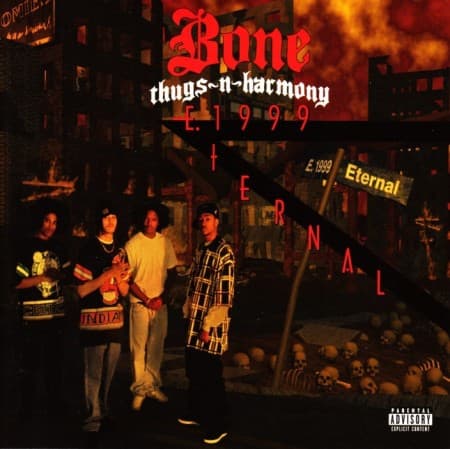
The record opened at number two on the Billboard 200 with 280,500 copies sold, and it hit platinum quickly. Next to the 7.9 for E. 1999 Eternal, though, it plays as a strong follow-up rather than a rival.
Four Producers, One Mood: The Craft Behind a Cautious Comeback
The biggest structural change from the group's earlier records is the beat team. Where the previous albums leaned heavily on a single producer, this one credits Jimmy "JT" Thomas, LT Hutton, Darren Vegas and DJ U-Neek. In theory that should widen the palette. In practice it widens it by a modest amount. The beats are tidy, slow-to-mid-tempo and built to cradle the harmonies, with a darker, harder edge than the group's softest singles, but they share a general temperature. That consistency is a strength when the hooks are good, and a weakness when they are not, because there is rarely a drum pattern or a bass line loud enough to rescue a middling chorus.
The delivery remains the album's strongest asset. These voices overlap and trade lines so smoothly that a four-minute song can feel like a single long phrase. When the group is locked in, the music has a physical quality, a rolling, breathless forward motion that rap rarely achieves. Bizzy Bone's presence throughout adds a jagged counterpoint: his fast, shifting flows keep the more relaxed songs from settling into a rut. Set against the West Coast tradition of laid-back, bass-heavy hooks and sparse rapped verses, this is a different approach, more vocal and more athletic,.
The writing is the weaker half. The themes are the usual ones: street survival, loyalty to the crew, suspicion of outsiders, faith and struggle, and a song about weed. Each is competently handled, but few verses contain a specific image or story that stays with you. A track like "Weed Song" sounds relaxed and good-natured, and also thin on content. The few songs with a stronger concept, such as "Resurrection (Paper, Paper)" and "Change the World," stand out precisely because the others lack one.
The guest list is small, which is a good decision, since the group's own voices are enough variety. David's Daughters appear on one cut, and Big B appears on another. Neither changes the character of the album. The interpolation on "Don't Worry" is a good example of what the beat team does best: it borrows a soft, soulful hook and builds something smooth on top, which suits the group's melodic strengths.
The main flaw is the lack of risk. A group this technically gifted could have used the extra producers to push into stranger territory, a faster pattern here or a more skeletal beat there, and the record would have gained a dimension it currently lacks. Nothing on the record is a mistake, and almost nothing is a gamble either.
Fifteen Songs, Few Risks: How the Record Rises and Settles
BTNHResurrection is the group's tidiest album in terms of length, and that works in its favor. After the sprawl of the previous double album, fifteen tracks feel tight, and the sequencing reflects that. The record opens with its darker, more aggressive songs, building a confrontational mood in the first third, and then relaxes toward a run of singles in the second half, which is a sensible shape for an album that wants both street credibility and radio presence.
The opening stretch is effective. The first few tracks set a hard, slightly menacing tone, and the group sounds focused. The momentum holds for a while, then softens in the middle, where several songs in a similar mid-tempo mode follow one another without much contrast. The sequence needs a change of pace here, a faster track or a more unusual beat, and it does not get one. The effect is not boredom so much as a kind of comfortable plateau, where the songs are individually fine and collectively indistinct.
The back half recovers because the best-known songs are clustered there. A run of the singles gives the album a second peak, with melodic hooks and clearer concepts, and the closing track sends it off without fuss. This is a smart ordering, because it leaves the listener with the group's strongest material fresh in their memory.
The length is earned, more or less. The album is not padded, and it does not outstay its welcome the way the earlier double album did. But it also lacks a true centerpiece, a song that justifies the whole thing on its own. The peaks are pleasant hills, not mountains. A listener who plays it front to back will have a good, consistent hour, and will probably remember the same four or five songs afterward.
A Respectable Fourth Act, Not the Peak: Where It Lands in the Catalog
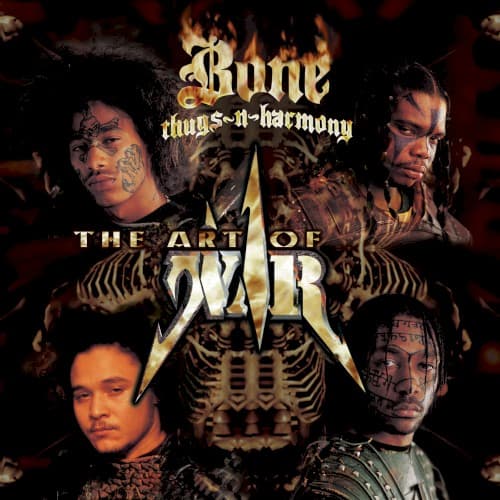
In the group's catalog, BTNHResurrection sits clearly below E. 1999 Eternal and roughly level with The Art of War as a record that is easier to admire than to love. The 7.9 for the earlier record reflects a group at full creative stretch, with a sense of invention that this album does not quite match. This one scores 6.3: a competent, well-performed record with good singles and a narrower range. The relative order is deliberate, and it comes down to ambition. E. 1999 Eternal sounded like a new idea, and this sounds like a skilled reprise of one.
It has aged gracefully in one respect. The vocal blend still sounds unlike anything else, and the best songs have lost none of their appeal. In another respect it has aged less well, because the darker, more cautious production does not stand out in the way the group's earlier, stranger sounds did, and the general feel is of a very good record from a period of transition.
This album is for fans who already love the group and want more of the vocal style, and for listeners who prefer a compact record to a sprawling one. It is not the best starting point for someone new to the group. A new listener will get more from the earlier records, which have the same voices at a more inventive moment.
If you only have time for three songs, start with "Resurrection (Paper, Paper)," "Change the World" and "Can't Give It Up." They represent the concept-driven side, the melodic side and the groove-driven side of the record, and together they make the best case for it. After that, go back to E. 1999 Eternal for the full-strength version of the group's sound, and then to The Art of War for the long, ambitious double album that came between the two. BTNHResurrection works best as a postscript to those: an accomplished reminder that these voices were hard to replace.
Track by track
Track Listing
Show ’em
StandoutA confident opener produced by Jimmy "JT" Thomas, with a hard, steady beat and the group in full harmonized form. It sets the album's darker tone and establishes the lineup, with Bizzy Bone's jagged delivery prominent. A strong start, if not a surprising one. It does the job of an opener without raising the ceiling.
The Righteous Ones
SolidDavid's Daughters join on this Darren Vegas production, which adds a change of texture to the album's harder edges. It is a pleasant change of texture, though the song is more atmosphere than substance.
2 Glocks
SolidA tough, straightforward street track on a Jimmy "JT" Thomas beat. The delivery is crisp and fast, but the subject matter is generic, and the song is more a mood than a statement. The hook has some bite, which keeps it from being a throwaway.
Battlezone
StandoutLT Hutton's production gives this a harder, more urgent feel than its neighbors, and the group answers with tight, driving verses. It is one of the album's more energetic moments and a useful jolt early in the sequence. Its short running time helps, since it never gives the energy time to fade.
Ecstasy
SolidA DJ U-Neek production running nearly six minutes. The vocals are smooth and the vibe is good, but the song stretches a thin idea longer than it needs.
Murder One
SolidA darker DJ U-Neek track that returns to the group's menacing side. The harmonies keep it from becoming a plain threat record, but it sits close in tone to several tracks around it. It is not filler, but it is not a track anyone will name first either.
Souljahs Marching
StandoutThe shortest song on the album, driven by a Jimmy "JT" Thomas beat. It moves quickly and does not overstay, which makes it a welcome change of pace in a plateau of similar tempos.
Servin’ Tha Fiends
SolidA street-themed cut that does exactly what the title says and little more. The flow is solid, but the lyrics follow a familiar script, and the song blends into its surroundings. Competent filler is the fairest label.
Resurrection (Paper, Paper)
StandoutThe title track and one of the album's clearest highlights. The Jimmy "JT" Thomas beat is polished and the hook is built to stick. It has a real concept in the title and the parenthetical hook, and the performances commit to it. It earned a music video, and it is easy to see why: this is the album's idea in its most complete form, with the vocal blend in full control of the song. Compared with the cuts that surround it, this is the one that sounds fully designed rather than simply performed.
Can’t Give It Up
StandoutA smooth, rolling LT Hutton production where the group's trade-offs are at their most fluid. The hook is melodic and memorable, and the verses move with an easy confidence. It is one of the record's best demonstrations of why the vocal style works, and it got a video. The chorus is the kind that settles in after a single listen, and the verses are built to let the hook breathe.
Weed Song
SolidA relaxed DJ U-Neek track, as laid-back as its title suggests. Good-natured and easy to play, though the content is light and the song coasts on mood. Fun in the moment, minor in the catalog.
Change the World
StandoutA hopeful, melodic DJ U-Neek production with Big B on board. This is the group at its most open and sincere, with a warm hook and a message that the verses actually develop. It is the emotional counterweight to the harder songs and the record's clearest nod to the group's gentler singles. The sincerity can feel a little broad, but the singing is strong enough to make it land. Placed after the Weed Song, it also gives the second half a clear change of weather.
Don’t Worry
StandoutBuilt on an interpolation of a soul song, this DJ U-Neek track is smooth and reassuring, with the group's harmonies sitting comfortably on top. A fine mid-album breather, and one of the record's best uses of borrowed melody.
Mind on Your Money
SolidA DJ U-Neek track on the familiar subject of money and hustle. The groove is steady and the hook works, but it is the most conventional song in the back half. Fine on a playlist, forgettable on the album.
No Way Out
StandoutA Jimmy "JT" Thomas closer that settles the album into a steadier, more measured groove. It ends the record without fireworks, which suits the album's cautious character.
Frequently Asked Questions
Is BTNHResurrection a good album?
How well did BTNHResurrection sell?
Who produced BTNHResurrection?
Which BTNHResurrection songs should I hear first?
Genres
Styles