The scorecard
7.6/10 · Great
- Writing25%
- 7.0
- Production25%
- 8.0
- Delivery15%
- 7.0
- Cohesion15%
- 8.0
- Originality10%
- 8.0
- Replay value10%
- 7.5
Houstatlantavegas and The Calm show real specificity and self-scrutiny, but the boasting verses on Ignant Shit and Successful are generic next to the confessional ones.
40 and Boi-1da build sparse, minor-key, keyboard-led beats that leave room for the voice, though the palette rarely changes texture enough to surprise over an hour.
Drake's conversational pocket and easy slide into melody on Best I Ever Had are convincing, though Lil Wayne outrhymes him on his own tape.
The alternation of confession, brag and guest keeps the sequence moving, though the back half and the interludes repeat the same tempo too often.
The blend of R&B confession, indie-pop guests and Southern rap was unusual in 2009 and shaped what followed, though the sound now feels ordinary.
The best songs hold up, but the long, uniform mood means most listeners will return to the singles and a handful of deeper cuts rather than the full tape.
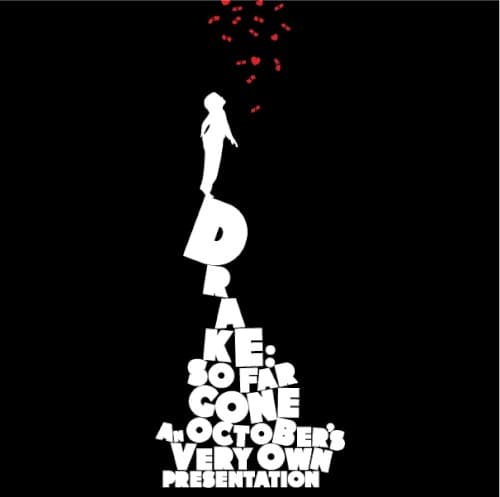
Drake So Far Gone — The Mixtape That Made Hesitation Sound Like a Hit
So Far Gone is a mixtape whose best idea is hesitation. Drake arrives with a hit about being the best a woman ever had, then spends most of the hour wondering whether the life that hit is paying for is worth wanting. The thesis of the tape is that rap's swagger and rap's loneliness can live in one voice without cancelling each other, and that a Toronto rapper who half-sings his hooks was the person to prove it. That is a bigger claim than it sounds, and the record mostly backs it.
It matters because it was made outside the usual capitals. Canada had rappers with local followings and very few with a claim on the American mainstream, and So Far Gone never tries to sound like New York or Atlanta to earn one. Noah "40" Shebib and Boi-1da, the two producers the credits name, build around sparse drums, atmospheric keyboards and minor-key chords, and 40 has said 808s & Heartbreak shaped the tape's mood. The result travels well because it carries no home-city accent that needs translating. A listener in London or Lagos gets the same fog of late-night phone calls that a listener in Toronto does.
The tape is not flawless, and its argument is clearer than its execution. When Drake leaves the confessional lane for standard boasting, the writing thins out, and some of the guest spots do work the host should have done. The sequence also runs longer than its ideas, with a back half that repeats the same mood a few times too often.
Even so, "Best I Ever Had" and "Successful" reached the Billboard Hot 100 top twenty from a self-released tape, which tells you how quickly the sound found an audience. Everything Drake built later, from the melodic hooks to the emotional bookkeeping, is already sketched here. Heard now, it is less a polished album than a blueprint, and the blueprint is better than most finished records from the same year.
Cold Keyboards, Warm Confession, and a Voice That Travels
The writing works best when it is small. Drake's strongest lines are observations about attention: who texted whom, who stayed on the phone, what a night out costs emotionally once the lights are on. That is a different register from the stacked punchlines of his New York contemporaries, and it owes as much to R&B confession as to rap. The fact sheet describes the lyrics as circling relationships, fame and past struggles, and that is accurate, but the specifics are what carry them. A stripper, a city, an ex, a friend who asked whether they were becoming the men their mothers divorced: these give the self-pity a shape, and the best songs treat the narrator as part of the problem.
Delivery is the second asset. Drake raps in a conversational, slightly sleepy pocket and slides into melody without changing gears, which was unusual in 2009 and is now standard. Compare that to the UK rappers of the same moment, who leaned on grime's clipped aggression, or to Southern peers who sold weight and menace. Drake sells vulnerability with a grin, and that mix is portable. It is also why the singing works: he is not a great vocalist, but he sounds believable, and believability is the whole sell.
The production is the real reason the tape coheres. Sparse and minimalist beats leave room for the voice, and the keyboards sit low in the mix like background weather. The sound is cold without being empty. Where the drums are allowed to hit, as on the sunnier singles, the tape brightens; where they drop out, it sinks into something close to ambient pop. This is a producer-led record in the way few rap tapes are, with 40's restraint making the guest features feel like visitors rather than rescues.
The weaknesses are real. Drake's rapping is competent rather than dazzling, and when the beat asks for density he sometimes settles for a boast that any mid-tier rapper could write. The brag verses about money and women are the least distinctive material here, and they make the tape's attempts at self-criticism feel slightly convenient, since the same speaker enjoys the thing he regrets. Some guest verses, notably the Lil Wayne appearances, are sharper than the host in pure rhyme craft, and the album's balance suffers when the headliner is outrapped on his own tape.
There is also a consistency problem inside the mood itself. A hushed, minor-key palette is an asset for the first half hour and a limit after that. The tape rarely changes tempo or texture enough to surprise, so the best songs stand out more by sequencing than by contrast. That limits its ceiling, but it does not undercut its coherence, which is the quality critics singled out in 2009.
A Long Night Out With Better Pacing Than Its Length Deserves
So Far Gone sequences itself like a long night out, and the pacing is the best thing about it. It opens with a slow-burning mood setter and sinks quickly into the heartache of "Houstatlantavegas", so the listener knows within ten minutes that this is not a party record. Then the tape alternates: a confessional, a brag, a guest, a confessional. That rhythm keeps the mood from curdling, and it lets the singles land as relief rather than interruption.
The middle stretch is the peak. Songs with different guests and different moods follow one another without a seam, the drums stay quiet, and the tape feels like a single piece of music with chapters. Here the ear forgives the writing, because the sound is doing the arguing. The singles arrive at the right moments and the album-length sequence feels designed rather than collected, which is what the RapReviews quote about cohesion was pointing at.
The sag comes later. After the high-profile run of guest-heavy songs, the tape loses some of its shape: a handful of tracks cover similar emotional ground at similar tempos, and the interludes and spoken moments add length more than they add meaning. At seventeen tracks and well over an hour, the tape asks for more patience than its ideas repay. Two or three cuts would have made the sequence tighter without removing anything essential, and that is a fair criticism of a tape that otherwise makes sequencing look easy.
The closing stretch rescues part of that loss. A quiet instrumental pause late in the sequence resets the ear, and the last song is a bright, brief coda rather than a victory lap, which fits the thesis: nobody on this record seems to believe the party is the destination. It is a sensible choice, and one that later, longer Drake albums would sometimes forget.
As a sequence, then, the tape is a qualified success. It earns its first hour, spends part of the rest, and still leaves the impression of a record that knew what it wanted to feel like. In a period when mixtapes were mostly stacks of freestyles and street singles, the architecture itself was the surprise.
A Blueprint Better Than Most Finished Records
Ranked against the Drake albums already rated on this site, So Far Gone sits just below Take Care and above Nothing Was the Same. It lacks the larger ambition and deeper writing of Take Care, which refined this exact sound with more control and more range. But it beats the later records in originality and in the clarity of its idea, because it did not have the budget, the expectations or the habits that bloated much of what followed. Thank Me Later, the official debut that came a year later, tried to polish the formula and lost some of the chill in the process.
It is for listeners who want to understand where modern melodic rap came from without wading through a decade of imitators. It is also for anyone who finds Drake's later albums too long and too sure of themselves, since this is a smaller, shakier, more honest version of the persona. Skip it if you need dense lyricism or hard drums; neither is the point. Fans of punchline-heavy East Coast rap may find the mood monotonous, and anyone who wants the polished hooks of the later records will hear a rough draft.
It has aged better than most of the records it inspired. The sound that once felt strange is now ordinary, which makes the tape sound less radical, but its emotional honesty still holds and the best songs have lost none of their pull. Outside North America, the Toronto template has become a global reference point, and So Far Gone is where it starts.
Start with "Best I Ever Had" for the hook that made the tape a hit, "Successful" for the ambition-and-doubt balance, and "Houstatlantavegas" for the song that shows what Drake could do when he wrote about someone else. After that, go to Take Care to hear the sound at full scale. Then try Thank Me Later if you want to hear what a major-label polish did to it.
The tape does not reach the heights of the all-time rap records, but it is one of the few mixtapes that changed what a major-label rap album was allowed to sound like, and it did so with one hit, a few great songs and an hour of fog.
Track by track
Track Listing
Lust for Life
SolidA slow, moody opener that sets the tape's temperature before Drake says much of substance. It is more atmosphere than song, and the point is to establish the cold keyboards and unhurried drums.
Houstatlantavegas
StandoutThe tape's best piece of writing and one of its best beats. Drake narrates from the perspective of a stripper moving through three cities, and the song gets its power from how seldom he judges her. The sparse production lets the character breathe, and the hook sits just on the edge of singing. It is the first proof that Drake could write outside himself, and that the sound had a purpose beyond mood. A sad song that never asks for sympathy and earns it anyway.
Successful
StandoutThe tape's statement of ambition, built on a bouncy beat that contrasts with the doubt underneath. The Trey Songz hook and a Lil Wayne guest verse make it feel like a radio single, which it became, reaching the top twenty on the Hot 100. Drake's verses balance wanting everything with knowing what it costs, though the tone leans more toward the wanting. A strong hit that still sounds like a mixtape cut.
Let’s Call It Off
SolidPeter Bjorn and John add an indie-pop touch to a breakup song, and the cross-border mix shows how open the tape was to non-rap sounds. It is pleasant and light, but the writing is slight and the song does not go far past its premise.
November 18th
StandoutA Houston-focused love letter with a slowed-down, syrupy feel that nods to the city's rap tradition without imitating it. Drake's flow is relaxed, and the song works as a mood piece more than a lyrical showcase. It is one of the places where the tape's debt to Southern rap is audible.
Ignant Shit
WeakA Lil Wayne guest spot over a tougher beat, and the most conventional rap song so far. Wayne's verse is sharper than Drake's, and the song mostly shows how much less distinct Drake is when he plays the standard boaster. Fine as a change of pace, but one of the weaker moments.
A Night Off
SolidLloyd supplies a smooth R&B hook for a slow, romantic track. The writing stays in familiar territory and the guest vocal is more polished than Drake's own, so the song feels like a pleasant stretch of the same night rather than a new idea.
Say What’s Real
StandoutA reflective piece about authenticity and the pressure of being watched, and one of the moments where the confessional style is clearest. The beat is sparse and the delivery is quiet, which suits the theme. It lacks a big hook, but it is the kind of introspective cut that gave the tape its identity.
Little Bit
SolidLykke Li brings a hushed indie-pop tone to a moody duet, and her presence shows how comfortably the tape sat between rap and pop. The song is airy and understated and works as a palate cleanser, although it asks little of Drake as a rapper.
Best I Ever Had
StandoutThe hit, and still the cleanest argument for Drake as a pop-rap writer. It reached number two on the Hot 100 and topped the rap and R&B charts, and the reason is simple: the hook is effortless, the beat is soft and bright, and the verses sound like a man genuinely charmed rather than posturing. It is also the tape's most direct song, with none of the guilt that shadows the rest. The humor and warmth are what make it last. Playful without being silly, and the flow shifts easily between speaking and singing.
Unstoppable
StandoutSantigold and Lil Wayne join a bright, energetic track that breaks up the tape's heavy mood. Santigold's presence adds a touch of left-field cool, and the song shows how wide the guest list reached. A good change of pace, though not one of the tape's most memorable moments.
Uptown
StandoutA long posse cut with Bun B and Lil Wayne that places Drake beside two Southern veterans. The beat is smooth and heavy, and Bun B's verse in particular makes the point that this tape had respect from the South before the pop world noticed. Drake holds his own without leading, and the song shows his early habit of using older rappers as validation.
Sooner Than Later
SolidA quiet, melodic song about a relationship that is running out of time. It plays directly to the tape's strengths, with simple keyboards and a vulnerable delivery, but the writing is repetitive and the idea does not develop much past the first verse. Solid, not special.
Bria’s Interlude
WeakA short Omarion-assisted interlude that works as a bridge between songs. It is smooth and forgettable, and mostly filler.
The Calm
StandoutOne of the most honest pieces on the tape, in which Drake reflects on his position and the people around him. The beat is subdued and the verses are among his most direct, with a moment of reckoning that adds weight to the earlier boasts. It is not a hit, but it gives the sequence its emotional center, and the confessional style is at its most convincing here.
Outro
SolidA short Chilly Gonzales performance that pauses the tape quietly before the last song. It matches the mood, but it is a breather and not a song.
Brand New
SolidA late, upbeat closer that returns to the tape's pop side. It is bright and catchy, but it lands as an afterthought following the more serious material, and the writing does not match the strongest tracks.
Frequently Asked Questions
Is Drake's So Far Gone worth listening to?
Who produced So Far Gone?
What are the biggest songs on So Far Gone?
Where does So Far Gone rank among Drake's albums?
Styles