The scorecard
6.6/10 · Good
- Writing25%
- 6.5
- Production25%
- 7.0
- Delivery15%
- 8.0
- Cohesion15%
- 5.0
- Originality10%
- 6.5
- Replay value10%
- 6.0
The diss material on "Ready 4 War" and "Hatin' Nation" is pointed but repetitive, and the family-and-loyalty songs rarely get past the same few images.
DJ U-Neek's smooth, slow-rolling beats on "Look Into My Eyes" and "If I Could Teach the World" are warm and expensive-sounding, though the template barely changes across two discs.
The sung-rapped interplay of Krayzie, Layzie, Wish and Bizzy on "Handle the Vibe" and "Thug Luv" is still unmatched in rap for speed and melodic control.
Two discs and roughly two hours of the same tempo and the same targets make the middle of World War 1 and most of World War 2 blur together.
The group's vocal style is singular, but the album mostly refines the formula of E. 1999 Eternal rather than extending it, and the beats lean on borrowed R&B.
A strong single-disc playlist hides inside it, but the full double album asks for far more patience than it repays.
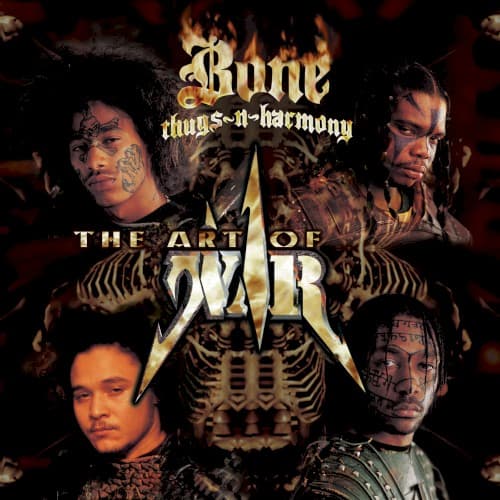
Bone Thugs-n-Harmony The Art of War: A Great Single Disc Buried Under a War It Wouldn't End
The Art of War contains one of the best rap albums of 1997, and it arrives packed inside another one that nobody needed. Strip away the filler and you find a tight, venomous, beautifully sung record built around "Look Into My Eyes," "Handle the Vibe," "Thug Luv" and a handful of others. Left in, the filler turns a triumph of vocal technique into a siege. That is the argument here: the group had never been better as performers, and never worse at deciding when to stop.
The context explains the bloat. Bone Thugs-n-Harmony had spent two years watching other acts borrow their fast, melodic, harmonized delivery, and this record was built as an answer to those "clones." That mission gave the group a target, and a target is a useful engine for a rapper. It sharpens the verses, tightens the cadences and puts an edge into material that could otherwise have drifted into mood music. The problem is that a target is also a rut. The album names its enemies directly, and then keeps naming them, over and over, for two discs.
What saves the record is that the group is operating at a level almost nobody else in rap could reach. Krayzie, Layzie, Wish and Bizzy pass phrases back and forth so fast and so musically that a bar of rapping becomes a hook and a hook becomes a bar of rapping. It sold 394,000 copies in its first week and opened at number one, which tells you how much appetite there was. The appetite was justified. The question is only how much of the meal you should eat.
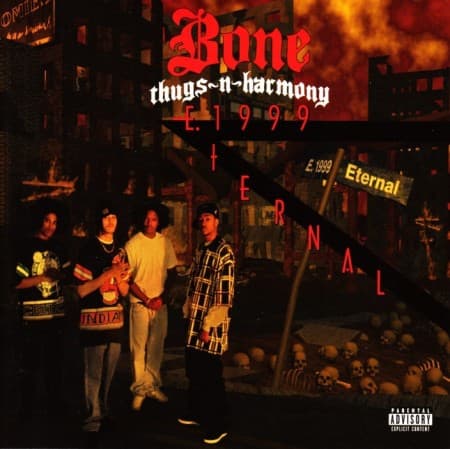
For listeners comparing it with E. 1999 Eternal, the earlier record is the more focused and more affecting work, and this one is the more ambitious and more exhausting. Both are worth knowing, but they are good in different ways, and the difference is mostly about editing.
Smooth Beats, Sharp Tongues, and the Same Gear for Two Hours
The first thing to say about the sound is that it is a single hand. DJ U-Neek produced the entire album, and the benefit of that is a coherent identity: slow, warm, bass-heavy beats with a soft R&B glow, built to leave maximum room for the vocal harmonies. Several of the best cuts lean on interpolations of older soul and R&B, which gives them an easy melodic familiarity. "Look Into My Eyes" and "If I Could Teach the World" are the clearest cases of the template working: patient, lush, slightly mournful, and carried by a hook that the group sings rather than raps. Set against the sparse, hard-edged West Coast records of the period, this is plush, almost sweet music, and the contrast with the threatening lyrics is part of the group's trick.
The delivery is the real draw. These four voices are less like a rap crew and more like an instrument section. Verses overlap, cadences shift mid-line, and a rapped passage will resolve into a sung one without any change in energy. When the group is locked in, as on "Handle the Vibe," the effect is hypnotic, and it is why the record still sounds distinct from anything around it in 1997. Guests are used well when they appear: Maje$ty and 2Pac arrive as contrasts, not crutches, and the 2Pac verse on "Thug Luv" hits harder because everything around it is so smooth.
The weaknesses are structural and lyrical. The beats, for all their polish, hardly change tempo or mood. A listener can go ten tracks without a rhythm that surprises them, and because the vocal approach is equally consistent, the songs begin to share a shape: slow intro, harmonized hook, three or four verses, fade. The writing has the same limit. When the group aims at the clones, the lines are specific enough to sting, but the second and third repetition of the idea adds nothing, and the loyalty-and-struggle songs lean on stock phrases rather than detail. One critic's complaint, that the ideas are repeated again and again by the end of the second disc, is harsh but not wrong.
What the album does not have is much range of subject. There are threats, there are tributes to the crew, there are reflections on a hard life and a few songs about weed and women, and almost all of it is delivered in the same register. That narrowness would be fine at forty minutes. At two hours it is the whole story.
Two Wars, One Tempo: Where the Double Album Peaks and Stalls
As a sequence, the album works for about its first third. The opening run builds well: a short intro, a heavy diss track, then the hit single arriving at the third slot, which is exactly where a hit belongs. The early tracks give the record a clear temperature, confident and slightly sinister, and the pacing between uptempo threats and slow ballads feels deliberate. By the time "Look Into My Eyes" lands, the album has made its case, and the mood is as good as anything the group recorded.
The sag begins in the second half of the first disc. A run of mid-tempo songs with similar hooks and similar subjects arrives with no real shift in energy, and the interlude that breaks them up does not reset the ear. The closing stretch of the first disc recovers some ground, with the sentimental single and a long family roll call finishing the side, but the roll call is a sign of the problem. It is another song about the crew, and by now the crew has been the subject of a great deal of the album already.
The second disc is the harder sell. It opens with real force, because the 2Pac collaboration is the best piece of programming on the record: a hostile, horror-flavored beat that breaks the established smoothness and wakes the listener up. After that, the album slides back into the same gear and mostly stays there. The tracks are not bad, but they are interchangeable, and the second disc has fewer peaks than the first. Several songs end on the same slow fade, and the closing posse cut feels like a victory lap for a fight that ended long ago.
The length is not earned. The group clearly had enough material for two good albums, but the better decision would have been one very good one. A tighter single-disc version would have been a stronger record than E. 1999 Eternal. At this length it is a collection with a great album hidden inside, and that hidden album is something you have to build for yourself with a playlist.
Best Singles, Worst Edit: The Art of War Against E. 1999 Eternal
In the group's catalog, this sits below E. 1999 Eternal, and the gap comes down to discipline. The earlier record is shorter, more varied and more emotionally direct, and it earns its 7.9. This one has better individual vocal performances and a more polished sound, but it fails the test of an album, which is that the whole should be stronger than the sum of the tracks. Here the whole is weaker. A 6.7 reflects that: the best moments rank with the group's finest, and the surrounding hours pull the number down.
That ordering is deliberate. Krayzie Bone has said this is the group's best album, and the fresh in-studio energy he describes is audible, but enthusiasm from inside the group is not the same as a better record.
It has aged unevenly. The singles still sound fantastic, and the vocal blend remains something no one has copied well. The long stretches of diss tracks aimed at rivals most listeners have forgotten have aged worst, since they depend on a feud the listener has to remember. The slow R&B glow, on the other hand, has proven durable and now reads as a genuine style, not a trend.
This is for fans of melodic rap who want to hear the technique at its peak, and for anyone who already loves E. 1999 Eternal and wants more. It is not for listeners who need variety, or who want an album that moves quickly. If you only have an hour, skip the full run and build a playlist.
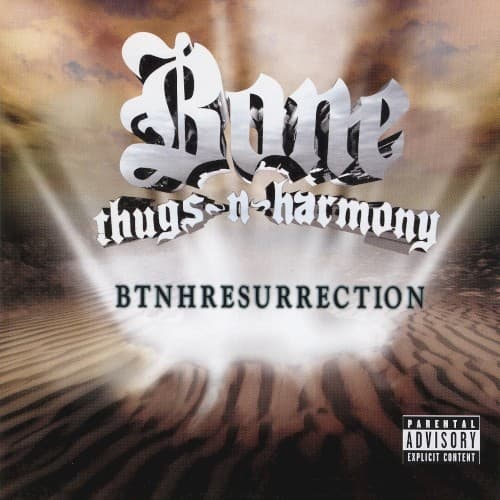
Start with "Look Into My Eyes," "Thug Luv" and "If I Could Teach the World," which cover the three modes the group does best: the smooth lament, the hard collaboration and the hopeful ballad. Then go back to E. 1999 Eternal for the more focused version of the same ideas, and to BTNHResurrection for the group after the peak, when the lineup and the sound had both shifted. The most useful way to treat The Art of War is as a quarry: the stones are excellent, and you pick which ones to carry.
Track by track
Track Listing
Retaliation
SolidA short intro that sets the war theme and the album's tone, but it is only scene-setting and not a song.
Handle the Vibe
StandoutA strong, aggressive opener built on a sampled hook, with Flesh-n-Bone contributing. The harmonized cadences are at their tightest here, and the beat gives the verses space to overlap. It is one of the best examples of the group's trademark mix of menace and melody, and an early sign of how good the record can be.
Look Into My Eyes
StandoutThe album's biggest hit and its best case for itself. The beat is slow and warm, the hook is sung with real melancholy, and the verses sit inside the groove without ever rushing it. The song works because it sounds both threatening and tender at once, and that contradiction is the group's whole appeal. It reached number 4 on the Hot 100 and deserved it.
Body Rott
SolidA dark, menacing track and another of the album's diss records. It has a good groove and an effective hook, though the verses cover ground that the rest of the album covers again.
It’s All Mo’ Thug
SolidA smooth crew anthem built on an interpolation of an Isaac Hayes ballad. The sample gives it a pleasant ease, but the lyrics are a roll call and little else.
Ready 4 War
StandoutA direct call-out of Crucial Conflict, with Maje$ty trading verses. The target is named, the energy is high and the Diana Ross interpolation gives the beat an odd, glossy sheen. It is the album's thesis in one song, and also an example of the feud material that ages least well.
Ain’t Nothin’ Changed (Everyday Thang, Part 2)
SolidA mid-tempo reflection that leans on an R&B interpolation. Pleasant and well sung, but it adds little to the album's emotional range.
Clog Up Yo Mind
SolidA solid track with a lazy groove and fluid vocals, though it sounds close to its neighbors and does not stick in the memory.
It’s All Real
StandoutA solo turn for Krayzie Bone, and a reminder of how fluid and melodic his flow is. His voice carries a song whose subject is familiar, and he makes the familiar sound fresh.
Hardtimes (interlude)
SolidA short breather built around an old soul interpolation. It is pleasant but forgettable, and it does not change the album's pace.
Mind of a Souljah
StandoutLayzie Bone gets a solo turn over a smooth Luther Vandross sample. The writing is conventional, but the delivery is relaxed and confident, and it shows why Layzie is the group's steadiest voice.
If I Could Teach the World
StandoutThe album's hopeful single, and the clearest shift in tone. A wide, gentle beat lets the group sing about a better world, and the harmonies are the most beautiful on the record. It was a gold single and a Hot Rap Songs top three. Its sincerity is a little broad, but the vocal craft makes it work, and it relieves the war theme with something warmer.
Family Tree
SolidA long closing posse song for the first disc that spends nearly six minutes on crew pride. The interpolated hook is catchy, but the song runs past its point, and it is a good example of the album's tendency to repeat itself.
Thug Luv
StandoutThe second disc's centerpiece and the album's best collaboration. 2Pac appears over a horror-movie sample that breaks the record's smooth surface, and the contrast makes the track hit harder than anything else on the album. The group sounds angry here, and the hook has real bite. It charted as a single, and the sound is genuinely different from the rest of the set.
Hatin’ Nation
SolidAnother diss track with a solid hook and the usual quick-fire verses. Competent, but it repeats the album's main target without giving a new angle.
7 Sign
StandoutA Bizzy Bone feature with Maje$ty. Bizzy's rapid, unpredictable delivery is the point, and it provides welcome energy at a point in the sequence where the album needs it.
Wasteland Warriors
SolidA competent, slightly generic war song. The vocal interplay is good, but there is nothing here that the first disc has not already done better.
U Ain’t Bone
SolidAn aggressive diss track with an odd reggae-flavored interpolation. The sample adds some variety, but the lyrical approach is the same as the rest of the second disc.
Get Cha Thug On
SolidA solo track for Wish Bone, with Tre. Wish has a thinner presence on the album as a whole, and this is a decent but unremarkable turn for him.
All Original
SolidA boast about the group's originality that comes down to a familiar claim: no one else sounds like them. The claim is true, and the song proves it more than the words do, but the track is still filler at nearly five minutes.
Blaze It (interlude)
SolidA brief interlude on a smooth old-school sample. Atmosphere, no more.
Let the Law End
StandoutOne of the shorter and tighter songs on the second disc, with a more serious tone about justice and consequences. It is a welcome change of subject and a reminder that the album needed more of them.
How Many of Us Have Them
SolidA reflective track about friends and loyalty, built on an interpolation of an old hip-hop song. It is pleasant, but it covers the same emotional territory as the family songs on the first disc.
Evil Paradise
SolidA moody track built on a recognizable pop interpolation. The atmosphere is interesting and different from the surrounding material, but the verses do not rise to match the beat.
Mo’ Thug Family Tree
WeakA long label-posse closer that feels like a victory lap. Plenty of voices, little urgency, and nothing that justifies five and a half minutes after two hours of music.
Frequently Asked Questions
Is Bone Thugs-n-Harmony's The Art of War a good album?
How did The Art of War do commercially?
Who produced The Art of War?
Is The Art of War better than E. 1999 Eternal?
Styles