Mac Miller Faces — The Mixtape He Made While Falling Apart
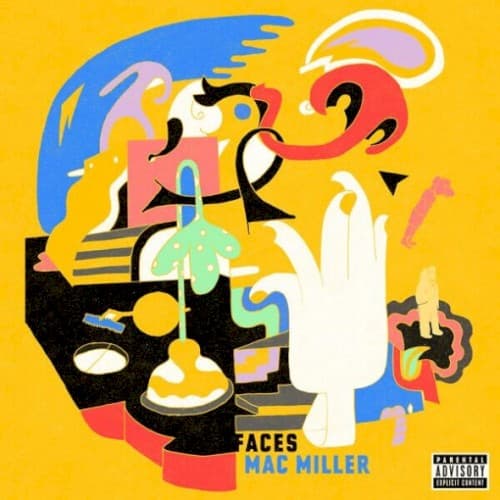
Most artists hide the collapse. Mac Miller recorded it in real time across twenty-four tracks that sound like the inside of someone's head at four in the morning when the drugs stop working. Faces arrived in May 2014 as a free download, eighty-seven minutes of unfiltered depression, drug paranoia, and production so warped it felt like listening through a fish tank.
No label oversight. No radio consideration. Just a kid from Pittsburgh documenting his own mental deterioration with the kind of honesty that makes you uncomfortable.
The mixtape landed between his poppier studio albums, a jagged detour that confused casual fans and cemented his legend among heads who understood what he was really doing. This was not experimentation for experimentation's sake. This was someone using music as a confession booth, a therapy session, a suicide note he kept revising. The production palette pulled from psychedelic soul, jazz fusion, lo-fi beats, and sample flips so abstract they sounded like fever dreams.
Every song felt like it was recorded in a different room of the same haunted house.
Why does an eighty-seven-minute mixtape about drug addiction and existential dread remain so listenable? Because Miller refused to wallow. He cracked jokes in the middle of breakdowns. He rapped circles around the darkness instead of surrendering to it.
The writing was too sharp, the production too inventive, the sequencing too deliberate for this to feel like a diary dump. It felt like an artist working at the absolute peak of his technical ability while standing at the edge of a cliff. Faces exists in that rare space where commercial accessibility and raw honesty collide without compromise. It is the sound of someone who mastered the pop-rap formula and chose to burn it down.
The Sound of Someone Drowning in Slow Motion
The production across Faces feels like flipping through radio stations in a dream. ID Labs handled much of the engineering, but Miller himself produced several tracks, pulling samples from cult soul records, obscure jazz cuts, and film dialogue that added layers of unease. The beats do not knock. They sway, wobble, and occasionally collapse mid-song.
Drums hit soft, basslines drift in and out of focus, and melodies sound like they were recorded underwater. It is the opposite of clean studio rap.
Miller's vocal delivery matched the disorientation. His flow shifted between sing-song melodies, double-time bursts, and spoken-word confessions. He sounded exhausted on some tracks, manic on others, sometimes both within the same verse. The writing balanced self-deprecating humor with suicidal ideation, often in the same bar.
He name-dropped Xanax, cocaine, lean, and existential philosophy with equal weight. It was funny until it was not, and then it was funny again because the alternative was too heavy.
Lyrically, Faces explored addiction as both escape and trap. Miller did not romanticize the lifestyle. He described the paranoia, the isolation, the way drugs stop working but you keep taking them anyway. He also did not preach recovery.
He just reported from the trenches with the clarity of someone who knew exactly what he was doing to himself and could not stop. That honesty made the project feel dangerous, the kind of raw confessional approach that Isaiah Rashad would later explore on his own terms.
The biggest flaw is the runtime. Eighty-seven minutes is too long for any project, even one this strong. Several interludes could have been cut without losing the narrative thread. Some of the mid-section tracks blur together in a haze of similar tempos and tones.
Trimming ten minutes would have sharpened the impact. But the bloat also adds to the suffocating atmosphere, the sense that you are trapped inside someone else's spiral with no clear exit. Does the excessive length hurt the project or is it essential to feeling trapped in Miller's headspace?
The guest features served the vision. Earl Sweatshirt appeared, sounding as depressed as Miller. Vince Staples showed up to remind everyone he could outrap most people while barely trying. Da$h, Mike Jones, and Rick Ross each contributed verses that fit the paranoid energy without overshadowing the host.
No one sounded like they were chasing a single. Everyone sounded like they understood the assignment.
Faces also functions as a producer's reveal. The sample choices alone tell a story: soul breaks chopped into unrecognizable textures, jazz chords that never resolve, vocal loops that sound like ghosts. The mixing is deliberately rough, with vocals sitting just slightly off-center in the mix, creating a persistent sense of unease. It is not lo-fi for aesthetic reasons.
A Descent With No Intermission
The sequencing of Faces reads like a twenty-four-chapter novel about a bad month. The opening stretch establishes the tone immediately, plunging the listener into Miller's headspace with no soft intro. The production is paranoid, the writing is bleak, and the pacing dares you to keep listening. It is not background music.
The middle section bogs down slightly under its own weight. Several consecutive tracks hover around the same tempo and emotional register, creating a stretch where the project feels more like a diary than an album. This is both a strength and a weakness. The monotony mirrors the experience of depression, where every day feels identical and time loses meaning.
But it also tests the listener's patience. A tighter edit would have helped.
The back half regains momentum by leaning harder into the experimental production and bringing in stronger guest verses. The energy shifts from introspective to confrontational, with Miller sounding more agitated and less resigned. The sequencing choice to place darker, slower material earlier and more aggressive tracks later creates an inverted emotional arc. Most albums build toward catharsis.
What makes the album work as a complete listening experience is the way Miller uses interludes and shorter tracks as breathing room between the longer, denser pieces. The pacing is methodical. You feel the weight of the runtime, but it never feels accidental. Every transition serves the larger narrative of a mind unraveling in slow motion.
The closing stretch offers no resolution, no redemption arc, no promise of recovery. It just ends, mid-thought, as if Miller ran out of things to say or energy to say them. That refusal to provide closure is the most honest choice on the entire project.
The Mixtape That Became an Elegy
Faces is the second-best project in Mac Miller's catalog, right behind Swimming and miles ahead of his major-label work. It is the moment he stopped trying to please anyone and started making the music only he could make. Every album he released afterward carried traces of this mixtape's influence, but none matched its raw honesty or willingness to sit in discomfort without flinching.
This is essential listening for anyone who cares about hip-hop as more than entertainment. It is not easy. It is not fun. But it is real in a way most rap albums are not, and that realness is what separates good artists from great ones.
Fans of Earl Sweatshirt's I Don't Like Shit I Don't Go Outside, Vince Staples' Summertime '06, or anything produced by Madlib will recognize the aesthetic. It sits in the same lineage of hip-hop that values atmosphere and emotional weight over commercial appeal, a vulnerable introspective lane that artists like Tyler, The Creator would later expand into mainstream territory.
New listeners should start with Swimming or The Divine Feminine before diving into Faces. This is not an entry point. It is the deep end, and it assumes you already understand what Miller was capable of. Casual fans of Blue Slide Park or Best Day Ever will find almost nothing familiar here.
That is the point. Faces is the sound of an artist outgrowing his audience and daring them to follow.
The mixtape's unofficial release in 2014 meant it never got proper chart placement or mainstream recognition, but its cult status grew every year. The official release in 2021, three years after Miller's death, recontextualized the entire project. What sounded like artistic exploration in 2014 sounds like a warning in hindsight. The addiction, the depression, the casual references to dying young all became impossible to hear the same way.
Faces influenced a generation of bedroom producers and emo-rap artists who tried to replicate its vulnerability and experimental production. Most failed. You cannot fake the kind of pain that powers this mixtape, and most artists do not have the technical skill to turn personal collapse into compelling art. Miller did both.
Essential tracks: New Faces v2, Diablo, Polo Jeans, San Francisco, Rain. Similar albums: Earl Sweatshirt - I Don't Like Shit I Don't Go Outside, Vince Staples - Summertime '06, Danny Brown - Atrocity Exhibition. Long-term influence: helped establish emo-rap and lo-fi hip-hop as viable subgenres, showed a generation of rappers that vulnerability could coexist with technical skill.
This is what happens when an artist stops performing and starts confessing. Faces is eighty-seven minutes of someone telling the truth when everyone around him wished he would lie.
Track Listing
Inside Outside
●The opening track sets the tone with disorienting production and Miller's voice buried just slightly too deep in the mix. The beat sounds like it is playing through a broken speaker, all muffled bass and warped melodies. He raps about feeling trapped inside his own head while the world moves on outside, establishing the central theme of mental isolation that runs through the entire project. The hook is more spoken than sung, delivered with the flat affect of someone recounting a bad dream. It is an uncomfortable introduction that makes clear this will not be an easy listen.
Here We Go
●A deceptively upbeat instrumental backs one of Miller's darkest lyrical performances. He sounds manic, rattling off bars about drug use and self-destruction with the energy of someone who has not slept in three days. The production features a chopped soul sample that almost sounds cheerful, creating a jarring contrast with lyrics about dying young and wasting potential. The song functions as a mission statement: Miller knows he is falling apart and plans to document every moment. Short, punchy, and relentless.
Friends
▼The Rex Arrow Orange sample flips into a hazy, nostalgic backdrop for Miller reflecting on relationships that drugs have destroyed. His flow is conversational, almost like he is talking to himself rather than performing for an audience. The second verse digs into the loneliness that comes with addiction, the way it isolates you from everyone who used to care. The production stays minimal, just drums, bass, and that melancholy sample loop. No big moments, no hooks that grab you. Just a depressed guy talking over a sad beat.
Angel Dust
▲One of the project's most immediately engaging tracks, built around a groovy bassline and one of Miller's most technically impressive flows. He rides the pocket with the confidence of someone who knows exactly what he is doing behind the boards. The lyrics pivot between flexing and self-loathing, sometimes within the same bar. The hook is minimal but effective, just Miller repeating the title over a vocal loop. The beat never gets stale despite its repetitive structure, a testament to the subtle layering in the production. This is one of the few moments on Faces where Miller sounds like he is enjoying himself.
Malibu
●A woozy, sun-dazed track that sounds like the morning after a three-day bender. The production features live instrumentation, with lazy guitar strums and brushed drums creating a beachside atmosphere that clashes with Miller's burnt-out vocal delivery. He sounds exhausted, dragging his words like each syllable requires effort. The writing is less focused here, more of a vibe than a statement. It works as a mood piece but lacks the lyrical punch of the stronger tracks. The bridge offers a brief moment of melodic beauty before the song fades into static.
What Do You Do
▲Miller produced this one himself, and you can hear his Dilla influence all over the drums. The beat knocks harder than most of Faces, with punchy snares and a bassline that actually moves. His flow is relaxed, almost lazy, but the writing is sharp. He questions the point of success when it does not fix the internal problems. Sir Michael Rocks shows up for a solid guest verse that matches the laid-back energy without trying to steal the spotlight. The song ends abruptly, cutting off mid-thought like Miller lost interest.
It Just Doesn't Matter
●An interlude built around a Bill Murray sample from Meatballs, where Murray delivers a speech about how nothing matters. Miller lets the sample ride with minimal musical backing, just some ambient noise and light percussion. It functions as a palate cleanser and thematic anchor. The nihilism is not edgy or performative. It just hangs in the air like smoke. Thirty seconds that encapsulate the project's worldview more effectively than some full songs.
Therapy
▲Miller gets confessional over a gorgeous sample flip that sounds like it came from a forgotten Motown B-side. The drums stay light, giving space for the melody to breathe and for Miller's voice to sit front and center. He talks about needing help but not wanting it, about recognizing the problem but being too tired to fix it. The hook is the most melodic moment on the project so far, with Miller stretching his limited singing voice to its limit. The production is immaculate, every element placed perfectly in the mix. One of the best-executed tracks on Faces.
Polo Jeans
▲Earl Sweatshirt shows up sounding more depressed than Miller, which is saying something. The beat is grimy and claustrophobic, with distorted bass that rattles your chest and drums that feel off-kilter. Miller's verse is solid but Earl steals the track, delivering one of his best guest appearances with his signature monotone flow. The hook is minimal, just the title repeated over a vocal loop. The song feels like two friends commiserating over a shared misery. The chemistry is palpable. Dark, heavy, and one of the project's standout moments.
Happy Birthday
▼Despite the title, this is one of the bleakest songs on Faces. Miller reflects on getting older while feeling like he is regressing, about partying to avoid thinking. The production is sparse, just a murky bassline and some distant synths. His delivery is flat, almost robotic, as if he is too numb to inject emotion into the performance. The second verse gets darker, touching on suicidal ideation without melodrama. No catharsis, no resolution. Just the sound of someone aging poorly in real time.
Wedding
●A short interlude centered on marriage as a metaphor for commitment to self-destruction. The production is skeletal, mostly just atmospheric noise and a distant piano loop. Miller's vocals are half-spoken, half-sung, delivered with the energy of someone reading a grocery list. It is too brief to make a strong impression but serves its purpose as a transitional moment. The writing is decent but the execution feels rushed.
Funeral
●Miller flips the wedding metaphor into a funeral, because of course he does. The production is eerie, with dissonant chords and a drumless first half that creates maximum unease. He raps about death with the casual familiarity of someone who thinks about it daily. The second half introduces a beat that sounds like it is limping, dragging its way to the finish line. The writing is strong but the song overstays its welcome by about thirty seconds. Still, the thematic connection to the previous track makes the pairing effective.
Diablo
▲One of the hardest beats on Faces, with trunk-rattling bass and menacing piano stabs. Miller sounds more aggressive here, his flow tighter and more focused than on much of the project. He is flexing, talking shit, reminding you he can rap when he wants to. The hook is simple but effective, built around a vocal loop that gets stuck in your head. The energy never dips. This is the sound of Miller shaking off the lethargy and remembering he is actually good at this. A much-needed jolt of adrenaline in the middle of a very heavy project.
Ave Maria
▲A brief, beautiful interlude built around the classical piece. No rapping, just the sample with some light atmospheric production underneath. It functions as a moment of grace in the midst of chaos, a palate cleanser before the project dives back into darkness. Thirty seconds of something approaching peace. The placement is smart, giving the listener a chance to breathe before the next stretch of dense material.
55
▲Miller produced this one and it shows. The sample chop is Dilla-esque, with the loop slightly off-time in a way that creates tension. He flows in the pocket with ease, his writing focused on the passage of time and the fear of dying young. The hook is minimal but haunting, just Miller repeating numbers over the beat. The production stays sparse, never cluttering the mix with unnecessary elements. It is one of the more understated tracks on Faces but also one of the most technically impressive. The restraint is the point.
San Francisco
▲One of the most fully realized songs on the project, with lush production that sounds like a lost Tribe Called Quest cut. Miller's flow is nimble, weaving through the beat with the confidence of someone operating at the peak of his abilities. The writing balances introspection with wordplay, giving the track more replay value than some of the heavier material. The hook is catchy without feeling like a concession to commercial sensibilities. This is the rare Faces track that could have worked on a studio album without feeling out of place.
Colors and Shapes
●A psychedelic trip disguised as a rap song. The production is swirling and disorienting, with synths that bubble and pop like a lava lamp. Miller's flow is loose, almost improvisational, as he describes a drug-induced haze in real time. The song has no traditional structure, no clear verse-chorus distinction. It just drifts for four minutes like smoke. It is more interesting as a mood piece than as a song you would return to regularly. The experimentation is admirable but the execution is uneven.
Insomniak
●Rick Ross shows up to deliver the most ridiculous verse on the entire project, rapping about drug dealing over a beat that sounds like it belongs on a different mixtape entirely. The tonal whiplash is jarring. Miller's verses are solid but the guest appearance feels like a favor more than a creative choice. The production is too polished for Faces, too clean and radio-ready. It is not a bad song but it sticks out like a sore thumb in the context of the project's overall aesthetic. Skip candidate.
Uber
●Mike Jones makes a surprise appearance, delivering a verse that sounds exactly like you would expect a 2014 Mike Jones verse to sound. The beat is bouncy and playful, a stark contrast to the darkness surrounding it. Miller sounds like he is having fun, which is rare on Faces. The song works as a brief moment of levity but it also breaks the project's momentum. The writing is lighter, the stakes lower. It is a decent track in isolation but feels slightly out of place in the larger narrative.
Rain
▲Back to the darkness. The production is gorgeous, with a melancholy piano loop and live drums that give the track an organic feel. Vince Staples delivers a characteristically sharp verse, cutting through the haze with his precise flow and dark humor. Miller holds his own, matching Vince's intensity with one of his strongest performances on the project. The hook is simple but effective, building on the rain metaphor without overexplaining it. This is Faces at its best: collaborative, focused, and unafraid to sit in discomfort.
Apparition
●A short, skeletal track with minimal production and a hushed vocal delivery. Miller sounds like he is whispering secrets, confessing things he would not say out loud in daylight. The beat is barely there, just some ambient noise and a distant kick drum. The writing is impressionistic, more concerned with mood than narrative. It works as an interlude but lacks the substance to function as a standalone song. The brevity is its strength.
Thumbalina
●An oddball inclusion with a quirky sample and Miller adopting a playful, almost cartoonish flow. The writing is surreal, veering into absurdist territory. It is one of the few moments on Faces where Miller sounds like he is fucking around, experimenting for the sake of experimentation. The track is too weird to work as a serious entry but too entertaining to skip. The placement this late in the project is strange, undercutting some of the emotional weight that has been building. Interesting but inessential.
New Faces v2
▲The crown jewel of Faces. Earl Sweatshirt and Da$h join Miller for what might be the best posse cut of the 2010s. The beat is slow, menacing, and impossibly heavy, with a bassline that sounds like it is dragging itself through mud. All three rappers are at the top of their game, delivering verses that balance technical skill with raw emotion. Earl's contribution is particularly devastating, sounding as hopeless as anything in his catalog. Miller closes the song with his best verse on the entire project, tying together the themes of addiction, depression, and self-awareness that define Faces. The song is over seven minutes long and does not waste a second.
Grand Finale
▼The closing track offers no resolution, no redemption, no hope. Miller sounds exhausted, barely making it through his verses. The production is hazy and distant, like a memory of a song rather than the song itself. He reflects on mortality, on wasted potential, on the likelihood that none of this matters. The final lines are chilling in hindsight, given what happened four years later. The song fades out mid-thought, leaving the listener suspended in the same unresolved state Miller inhabits. It is the only way Faces could have ended. Anything resembling closure would have felt like a lie.