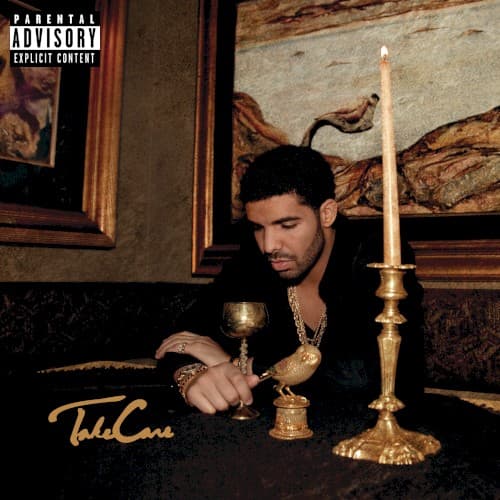
Drake Take Care — The Night He Stopped Apologizing for Feeling Everything
No other sophomore album has weaponized vulnerability this effectively. Drake turned depression into a competitive advantage, transformed midnight texts into chart domination, and proved that rappers could colonize R&B territory without surrendering their credibility. The audacity was not in the sadness itself but in the refusal to frame it as weakness. Every bar about failed relationships and Toronto loneliness arrived with the same confidence other rappers reserved for drug tales and street wars.
This album landed when hip-hop still expected its stars to maintain emotional distance. Watch the Throne had dropped two months earlier, all imperial grandeur and victory laps. Take Care responded by sitting in a dark room and refusing to turn the lights on.
The commercial gamble was obvious: build an entire album around the emotional space most rappers spent maybe one song exploring. The label had every reason to worry.
What separated this from standard heartbreak music was the production architecture. Noah "40" Shebib constructed soundscapes that felt like 4 AM drives through empty cities, where every synth pad carried weight and every snare hit arrived drenched in reverb. The sonic palette rejected the maximalist trends dominating radio. Instead of competing with the loudness, Drake and 40 built a world where silence held as much power as sound.
The Weeknd was still an anonymous blog presence when this dropped. Frank Ocean had released nostalgia, ULTRA but had not yet become a cultural force. Drake was colonizing territory that barely existed yet.
Did the album need twenty tracks to make its point? Probably not. But the excess was part of the statement, the creative equivalent of scrolling through old messages at three in the morning, unable to stop even when you know you should.
When Reverb Became a Weapon
The production on Take Care sounds like expensive sadness. Every element arrives processed through layers of atmosphere, where drums hit like they are playing in the next room and vocals swim in reverb that suggests physical distance even when Drake is confessing directly into the microphone. 40 was the album's secret weapon, a producer who understood that space between sounds could communicate as much as the sounds themselves. His approach rejected the sample-heavy aesthetics still dominating hip-hop production, instead building tracks from synth pads, muted drums, and minimal melodic elements that left room for Drake's voice to occupy the emotional center.
The Weeknd's fingerprints appear across multiple tracks, his influence pushing Drake deeper into the nocturnal R&B territory that would define the album's identity. Boi-1da and T-Minus contributed harder-hitting production that provided necessary contrast, preventing the album from drowning entirely in melancholy. Just Blaze showed up for one track and delivered exactly the soul-sampling grandeur his reputation promised, echoing The Blueprint's soul-sampling influence that shaped early 2000s hip-hop. The production diversity should have created whiplash but instead established a tonal range that justified the extended runtime.
Lyrically Drake committed fully to the oversharing that would become his signature and his burden. The album documented failed relationships, family tension, sudden fame's isolating effects, and the specific loneliness of achieving everything you wanted while losing everyone you started with. The confessional approach invited both devotion and mockery.
For every listener who heard their own 3 AM thoughts reflected back, another rolled their eyes at the self-pity. Drake understood the risk and doubled down anyway, turning criticism into content and controversy into album sales.
The singing became impossible to ignore.
Drake devoted entire songs to melody, his voice occupying the space between rapper and R&B vocalist without fully committing to either identity. The vocal approach frustrated purists who wanted clear genre boundaries. But the ambiguity was strategic, allowing Drake to move between modes within single tracks.
He rapped when he needed to assert dominance and sang when vulnerability served the narrative better. The delivery influenced a generation of artists who realized they could access both toolboxes.
Did the album need every one of its twenty tracks? The main weakness was its inability to edit itself. Several tracks in the back half felt like bonus cuts that should have remained bonus cuts, extending the listening experience past the point where the emotional impact peaked. The pacing suffered when Drake circled back to themes he had already explored more effectively earlier in the tracklist.
The Architecture of a Long Night
The album opens by establishing its sonic world immediately, refusing to ease listeners in with radio-friendly material. The first stretch builds the emotional foundation, moving from orchestral vulnerability to isolated confessions to the one moment of pure commercial ambition that reminded listeners Drake could still make hits when he wanted to. The sequencing in those opening tracks established the emotional vocabulary the rest of the album would speak.
The middle section contains the album's most devastating stretch, where the production becomes more minimal and the subject matter more raw. This is where the album stops performing sadness and starts inhabiting it. The pacing slows deliberately, tracks bleeding into each other through interludes and tonal consistency. The momentum dips but the emotional intensity increases, the listening experience becoming more uncomfortable and more effective simultaneously.
The back half struggles with tonal inconsistency, introducing party tracks that feel obligatory rather than organic. The album tries to accommodate radio expectations and maintain its melancholic core, resulting in jarring transitions that break the immersion the earlier material worked to create. The sequencing decisions suggest label pressure or artistic indecision, moments where Drake's vision blurred. Yet even the weaker material contains production choices and vocal moments that reward patient listening, the album never fully abandoning its sonic identity even when the emotional focus shifts.
The Blueprint Everyone Copied Then Resented Him For
Take Care ranks second in Drake's discography, sitting just below Nothing Was the Same but miles ahead of the bloated playlist-era projects that would follow. The album captured Drake at his most focused, before the success became so overwhelming that the music started serving the brand rather than the art. This is the last time Drake sounded hungry, the last project where the emotional exposure felt necessary rather than performative.
The album is essential listening for anyone interested in how hip-hop absorbed R&B aesthetics in the 2010s, how streaming-era track counts began inflating before streaming even dominated, how a Toronto kid redrew the genre map by refusing to choose between rapping and singing. New listeners should approach this as a complete experience rather than a collection of singles, understanding that the album's power comes from sustained immersion rather than individual moments. The pacing demands patience, but the emotional payoff justifies the investment.
It aged better than it had any right to. The production still sounds current, 40's approach to space and atmosphere proving more durable than the maximalist trends that dominated radio in 2011. The vulnerability that invited mockery became the standard, Drake's confessional approach normalizing emotional exposure to the point where every male rapper now has at least one heartbreak song in their catalog. The influence extended beyond hip-hop into pop and R&B, the album's sonic fingerprints appearing across genres for the next decade.
Essential tracks include Marvins Room for the definitive drunk-texting anthem, Headlines for proof Drake could still rap when needed, and Take Care for the Rihanna duet that became the album's emotional centerpiece. Listeners who connect with this should explore The Weeknd's House of Balloons trilogy, PARTYNEXTDOOR's debut, and Kanye West's 808s and Heartbreak for the album that made Take Care possible. The long-term influence cannot be overstated: Drake turned introspection into a commercial formula, proved that sad boys could dominate charts, and established OVO Sound as an aesthetic rather than just a label.
He never made another album this patient, this willing to sit in discomfort without rushing toward resolution. Everything that followed either chased commercial peaks or drowned in self-parody. Take Care remains the exception, the moment where ambition and execution aligned perfectly, where the sad boy persona felt earned rather than calculated. The night Drake stopped apologizing for feeling everything, he made the album that gave an entire generation permission to do the same.
Track Listing
Over My Dead Body
▲The album announces itself through Chantal Kreviazuk's haunting vocal sample, building an orchestral foundation before Drake enters with the kind of reflective bars that set the emotional temperature for everything that follows. The production feels expansive and claustrophobic simultaneously, strings swelling while Drake's voice remains close and intimate. He addresses the pressures of sudden fame, complicated family dynamics, and the isolation that success brings, establishing the confessional tone that will define the album. The track functions as thesis statement and warning label, informing listeners that the next hour will prioritize emotional honesty over traditional rap bravado. I remember hearing this opening and recognizing immediately that Drake had graduated from the young kid making songs about high school crushes to someone processing adult disillusionment in real time. The orchestration gives the confessions weight, transforming what could have been journal entries into cinematic statements. The absence of a traditional hook keeps the focus on the narrative, Drake speaking directly without the safety net of melody or repetition.
Shot for Me
▲Pure 40 production, all negative space and muted drums, the instrumental feeling like an empty apartment after someone moved out. Drake sings almost entirely, his voice treated with reverb that creates physical distance even as the lyrics demand intimacy. The track addresses an ex who has moved on, the perspective shifting between acceptance and resentment, Drake unable to maintain the maturity he wants to project. The melody is deceptively simple, the hook repeating with minor variations that suggest obsessive thinking rather than compositional laziness. This is where the album commits fully to blurred genre lines, Drake operating as R&B vocalist without apology or irony. The minimal production allows every vocal inflection to register, every slight change in delivery communicating emotional shifts the lyrics only hint at.
Headlines
▲The only moment on the album where Drake remembers he can rap with technical precision and competitive edge, the production hitting harder than anything else in the first half. The drums actually knock, the bass actually moves, the energy level rising to meet traditional hip-hop expectations. Drake uses the track to address critics, defend his emotional approach, and remind listeners that vulnerability does not equal weakness. The hook became inescapable, the kind of simple repetition that lodges in memory and refuses to leave. The track feels slightly out of place tonally, a commercial concession that breaks the album's nocturnal atmosphere. But the sequencing is strategic, providing necessary contrast before the album descends deeper into melancholy. The bars about his mother and his place in hip-hop history reveal the ambition underneath the sadness, Drake making clear that the introspection is a choice rather than a limitation.
Crew Love
▲The Weeknd's presence transforms the track into something darker and more druggy than anything else on the album, his voice carrying the hook while Drake raps verses that sound like they are being performed through a fog. The production is spare and hypnotic, a simple synth pattern and kick drum creating space for both artists to operate in their respective modes. Drake's verses feel almost secondary to The Weeknd's hook, the collaboration highlighting how much Drake was borrowing from the Toronto R&B sound The Weeknd was pioneering anonymously on blogs. The track documents strip club culture without celebration or judgment, both artists sounding more numb than excited about the lifestyle they are describing. This was the moment that introduced many listeners to The Weeknd's voice before most people knew his name, the collaboration functioning as cosign and preview.
Take Care
▲Rihanna's presence elevates the title track into the album's emotional centerpiece, her voice providing the reassurance Drake's character desperately needs even as the lyrics suggest both parties are too damaged to actually save each other. Jamie xx's production sample creates a bed of melancholic beauty, the instrumental feeling like sunrise after a long night, hope and exhaustion existing simultaneously. Drake's verses are among his most vulnerable on the album, admitting dependency and weakness without the defensive posturing that appears elsewhere. The collaboration feels inevitable in retrospect, both artists operating at the intersection of pop accessibility and genuine emotion, neither afraid to let the sadness show. The hook became an anthem for everyone who has ever tried to fix someone while falling apart themselves, the melody simple enough to remember and complex enough to reward repeated listening. I played this song on loop for weeks after a relationship ended in 2012, the specific kind of comfort that comes from hearing someone else articulate what you cannot. The extended outro with Rihanna's vocal runs feels excessive on paper but works emotionally, the track refusing to resolve cleanly because the feelings it documents never resolve cleanly either.
Marvins Room
▲The drunk-texting anthem that became Drake's most memed and most beloved confessional, the production consisting of little more than sparse keys and Drake's voice swimming in reverb. The genius was in the specificity, Drake documenting the exact emotional state of calling an ex from a club bathroom while inebriated and lonely, the kind of universally relatable poor decision that everyone has made but few have documented with this level of detail. The track has no real structure, Drake rambling and repeating himself the way actual drunk people do, the artistic choice making the vulnerability feel authentic rather than performed. The lyrics became cultural shorthand, phrases entering the lexicon and inspiring countless parody versions and think pieces about masculinity and emotional expression in hip-hop. Jill Scott's voice appears near the end, her ad-libs adding maternal warmth to Drake's spiral. This is peak Drake, the moment where the oversharing and the melody and the production and the cultural timing aligned perfectly, creating something that transcended the album and became a moment. Every rapper who has made a sad drunk song since owes royalties to this track.
Buried Alive Interlude
▲Kendrick Lamar appears as guest, his verse serving as album interlude and mission statement for his own artistic vision. The production is minimal, just bass and drums, giving Kendrick space to operate at full technical capacity. His bars feel like an invasion, the West Coast perspective and the lyrical density contrasting sharply with Drake's melodic introspection. The interlude functions as reminder that hip-hop contains multitudes, that Drake's emotional approach and Kendrick's technical prowess can coexist on the same album. Kendrick was still building toward the mainstream breakthrough that would arrive with good kid, m.A.A.d city the following year, but the confidence in this verse announced that the breakthrough was inevitable. Drake giving him this platform was strategic, aligning himself with the artist who represented hip-hop credibility even as Drake himself faced constant questions about his authenticity. The interlude feels longer than it is, Kendrick packing so much wordplay and internal rhyme into each bar that the verse demands multiple listens to catch everything.
Under Ground Kings
●The title references Houston legend Bun B's label but the track sounds nothing like Texas rap, instead continuing the album's atmospheric template. Drake uses the track to address his come-up, defending his path and asserting his place in hip-hop hierarchy. The production is murky and claustrophobic, the mix sitting in a strange sonic space that feels intentionally uncomfortable. The track never quite coheres, the hook underdeveloped and the verses meandering through topics without clear focus. This is where the album's length starts becoming a liability, the track feeling like a decent deep cut stretched into prominence through sequencing rather than quality.
We'll Be Fine
●Birdman appears on the hook, his presence feeling like label obligation rather than artistic choice. The track addresses loyalty and brotherhood, Drake making promises about staying connected even as success changes everything. The production is pretty but unremarkable, the melody pleasant without being memorable. The track functions as palate cleanser rather than statement, occupying space in the tracklist without advancing the album's emotional or sonic narrative. Birdman's contribution is minimal, his voice treated as texture rather than focal point.
Make Me Proud
▲Nicki Minaj delivers the album's strongest guest verse, her bars about female ambition and success providing necessary counterweight to Drake's endless relationship documentation. The production by T-Minus and Noah "40" Shebib hits harder than most of the album's second half, the drums actually punching through the reverb. Drake's verses are encouraging rather than confessional, the track feeling like an attempt to make an uplifting anthem that radio could embrace. Nicki sounds more invested than Drake, her voice carrying genuine emotion while Drake coasts on melody. The track succeeds on her presence alone, the collaboration highlighting how much stronger Drake's albums become when women are given space to respond to rather than just appear in his narratives.
Lord Knows
▲Rick Ross shows up for one of the album's harder-edged tracks, his verse providing the kind of luxury rap that feels almost alien against Take Care's introspective majority. Just Blaze's production is the album's sole example of classic soul-sampling hip-hop, the instrumental sounding like it could have appeared on a 2003 Roc-A-Fella release. Drake raps with more aggression here than almost anywhere else on the album, the beat demanding a different energy level. Ross sounds comfortable, his presence never feeling forced despite the tonal shift. The track represents the album's most obvious concession to traditional hip-hop expectations, Drake proving he can still operate in that mode even if he chooses not to most of the time. The beat switch near the end feels unnecessary, the track already making its point before adding additional sections.
Cameras / Good Ones Go Interlude
●Two short pieces stitched together, neither substantial enough to stand alone. The first section addresses fame and surveillance, Drake reflecting on constant scrutiny. The production is skeletal, just enough instrumentation to support the vocal. The interlude section features spoken word from Drake's friend, the voice lamenting relationship difficulties while Drake provides musical backdrop. The combined piece barely crosses three minutes, functioning as breathing room in the album's middle stretch.
Doing It Wrong
▲Stevie Wonder's harmonica grounds the track in classic soul tradition while the lyrics document relationship failure with the kind of granular detail that defined the album's strongest moments. Drake sings almost entirely, his voice carrying genuine pain as he catalogs the mistakes that ended something that mattered. The production by 40 is gorgeous, strings and keys creating a bed of melancholy beauty that matches the emotional weight. The hook is simple and devastating, Drake repeating the title phrase until it becomes mantra. Stevie Wonder's instrumental contribution provides the track with gravitas, his harmonica playing connecting Drake's modern heartbreak to decades of soul music processing the same themes. This is the kind of track that rewards headphone listening, every production detail calibrated to support the emotional narrative.
The Real Her
▲Lil Wayne and André 3000 both appear, their verses providing the album with its highest concentration of pure rapping skill. The production by 40 is built around a flipped soul sample, the instrumental feeling warmer than most of the album's second half. Drake's hook is melodic and sticky, the kind of simple repetition that works through familiarity rather than complexity. Wayne sounds engaged, his verse packed with wordplay and delivered with the kind of ease that reminded listeners why he dominated the late 2000s. André's appearance is brief but potent, his bars dense with meaning and delivered in his distinctive voice. The track feels like Drake surrounding himself with legends, the collaboration serving as credibility boost even as the album's commercial success made such validation unnecessary. The presence of two of hip-hop's most respected artists on a single track should have elevated this into classic territory, but the song never quite coheres, each element strong in isolation but never gelling into something greater than the parts.
Look What You've Done
▲Drake addresses his mother and grandmother directly, the track functioning as letter and apology for the distance success has created. The production is built around a sample of his grandmother's voice, the personal touch making the confessional feel even more intimate. Drake gets specific about family dynamics, the kind of detail that risks alienating listeners who cannot relate but ultimately makes the emotion feel earned. The track has no hook, Drake simply speaking and occasionally singing over the instrumental, the structure following emotional logic rather than commercial formula. This kind of raw family documentation rarely appears in hip-hop, most artists preferring to keep maternal relationships sacred and private. Drake's willingness to expose family dysfunction and his own shortcomings gives the track power, the vulnerability feeling genuine rather than performed for effect. The track works best for listeners who have experienced similar complicated relationships with parents or grandparents, that specific guilt that comes from achieving success while watching the people who raised you age and struggle.
HYFR (Hell Ya Fucking Right)
●Lil Wayne returns for a celebratory track that feels tonally misplaced this deep in the album, the energy level and subject matter jarring after the family confessional that precedes it. The production bounces, the beat built for clubs and parties rather than introspection. Drake and Wayne trade bars about success and excess, the verses competent but unremarkable. The hook is juvenile but effective, the kind of simple phrase that works in live settings even if it adds nothing to the album's emotional narrative. The track succeeds as single and fails as album cut, the sequencing decision revealing either poor judgment or label pressure to include more uptempo material. Wayne sounds better here than on his first appearance, his chemistry with Drake more natural when both are in celebratory mode rather than reflective. The music video became more memorable than the song itself, Drake's bar mitzvah-themed visual providing cultural conversation that the track alone could not generate.
Practice
●The album returns to melancholic introspection after the HYFR detour, the production spare and haunting. Drake sings about relationship struggles with the kind of circular repetition that suggests obsessive thinking, the same themes and phrases appearing multiple times as if he cannot move past them. The track feels like late-album filler, the ideas explored more effectively elsewhere. The production is pretty but unremarkable, 40 on autopilot rather than pushing boundaries.
The Ride
▲The Weeknd returns, his voice appearing on the hook while Drake handles verses that reflect on success and isolation. The production is hypnotic and druggy, the instrumental feeling like the soundtrack to driving through empty streets at 4 AM. Drake's verses are strong, the bars about fame's cost and fake friends ringing true even as the themes retread ground covered earlier in the album. The Weeknd's hook is ethereal and haunting, his voice treated with enough effects to sound otherworldly. The collaboration works better here than on Crew Love, both artists occupying the same emotional space rather than existing in parallel. The track benefits from placement late in the album when listeners are fully immersed in the nocturnal atmosphere, the vibe more important than the specific lyrical content.
The Motto
▲The track that birthed YOLO, the phrase becoming cultural phenomenon and punchline simultaneously. Lil Wayne appears again, his presence on four tracks suggesting close creative partnership or label synergy depending on your perspective. The production by T-Minus hits hard, the 808s actually knocking rather than sitting in the mix politely. Drake and Wayne trade bars about excess and living without concern for consequences, the verses celebrating the lifestyle most of the album spent documenting the cost of. The hook became inescapable, the acronym entering mainstream vocabulary within weeks of release. The track works as single and party anthem but damages the album's cohesion, the tonal shift feeling jarring this late in the sequence. Musically the track is simple but effective, the beat carrying enough energy to overcome the repetitive lyrics. This was the song that dominated clubs and radio while the rest of the album processed heartbreak in private, the commercial success proving Drake could still make hits even when most of his creative energy was devoted to introspection.
Hate Sleeping Alone
●The album closes with extended reflection, the track stretching past five minutes as Drake processes everything the album documented. The production is atmospheric and sleepy, the instrumental matching the title's suggestion of late-night insomnia. Drake sings more than raps, his voice carrying exhaustion as he circles back to themes of loneliness and isolation despite success. The track lacks the punch of a proper closer, the energy dissipating rather than building to cathartic release or definitive statement. The final moments include a spoken-word section where Drake addresses someone directly, the intimacy feeling appropriate for an album built on confessional vulnerability. The track functions less as conclusion and more as trailing off, the album ending because it reached its natural length rather than because the emotional journey reached resolution. Which might be the point: some nights you don't find answers, you just eventually fall asleep.