The scorecard
3.9/10 · Poor
- Writing25%
- 5.0
- Production25%
- 3.5
- Delivery15%
- 6.0
- Cohesion15%
- 2.5
- Originality10%
- 2.0
- Replay value10%
- 3.0
Technically proficient rapid-fire verses on tracks like "Offended" cannot overcome outdated shock humor and clumsy political commentary that mistakes sincerity for depth
Heavy-handed rock samples on "Remind Me" and "In Your Head" clash with Eminem's delivery while mechanical pop production from Alex da Kid flattens the album's emotional moments
Flow remains technically impressive with complex rhyme schemes and breath control, but the performances sound strained and self-conscious rather than urgent
Nineteen tracks with no clear sequence or purpose, lurching from Trump disses to sex jokes to sincere confessions with Ed Sheeran ballads wedged between horror pastiches
Chases pop-rap trends already stale by 2017 while recycling Slim Shady horror concepts from two decades prior, offering nothing new to the artist's catalog or the genre
"Castle" and "Arose" reward careful listening but the bloated runtime and dated production choices make full playthroughs a chore rather than a choice
Eminem Revival — The Album That Proved Technique Isn't Enough
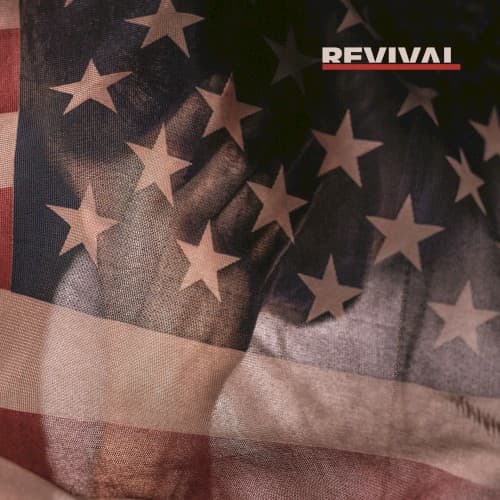
Revival is the sound of an artist who spent two decades bending rap to his will discovering that rap no longer bends. Released in December 2017 after months of speculation and a fake pharmaceutical marketing campaign, the album arrives with a thesis Eminem states plainly in interviews: a revival for himself and for America. What it delivers instead is nineteen tracks of pop-rap calculus, where every technical flex is undercut by a production choice or guest vocal that sounds focus-grouped rather than felt. The ambition is clear in the structure, with Trump critiques bookending sex-joke tracks bookending sincere addiction confessions, but the execution collapses under its own contradictions. This is not an album that fails for lack of effort or skill; it fails because the effort is visible in every overwritten bar and the skill is applied to songs that sound designed to chase streams rather than make a case.
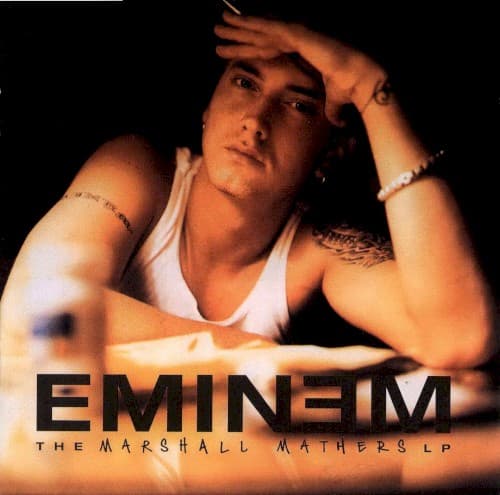
The stakes should be obvious: Eminem in 2017 was eight albums deep, with a catalog that includes The Marshall Mathers LP, two of the genre's most important records, and a commercial peak that made him the biggest rapper alive. Revival was positioned as a return to relevance after the uneven Recovery and the disappointing Marshall Mathers LP 2, a chance to reclaim the spotlight with Dr. Dre and Rick Rubin listed as executive producers. Instead it became the album that forced Eminem to respond with Kamikaze a year later, a project built entirely around defending Revival from the criticism it earned. The question is not whether Revival is Eminez's worst album; most listeners and critics have settled that. The question is how an artist this technically gifted made a record this miscalculated, and what it reveals about the gap between rapping well and making a good rap album.
When the Production Fights the Rapping
The production on Revival is where the album's problems begin and where they never resolve. Rick Rubin's rock-sample approach, which worked in small doses on earlier records, dominates the tracklist:
Nineteen Tracks With No Map
Revival is seventy-seven minutes long and it feels even longer because the sequencing has no logic. The album opens with a slow confessional that sets a reflective tone, then immediately pivots to an adrenaline-rush track about overcoming doubt, then pivots again to a battle-rap throwback. The Trump disses are separated by ten tracks, so the political thread never coheres. The sex jokes interrupt the emotional arc that the relationship apologies are trying to build.
The sequencing suggests that every track was conceived in isolation and then piled onto the tracklist without regard for how they fit together. The album sags badly in the middle, with a stretch of four tracks that has no momentum and no reason to exist as a bloc. The half-minute interludes do nothing to create flow; they are just filler. By the time the album reaches the closing trio, the listener has already endured an hour of starts and stops, and the emotional weight those tracks carry cannot overcome the fatigue of getting there.
The pacing is brutal not because the album is long but because it is long without purpose. Seventeen of the nineteen tracks could be cut or rearranged with no loss to the album's supposed themes, and the two that could not are the only ones that feel essential. The rest of Revival plays like a playlist designed to cover every possible angle, every possible audience, with no consideration for whether those angles support each other. An album this bloated needs either a ruthless editor or a stronger concept to justify the length. Revival has neither.
Where It Sits and Who It's For
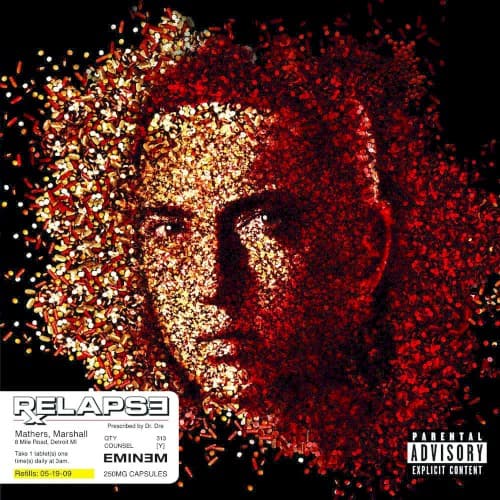
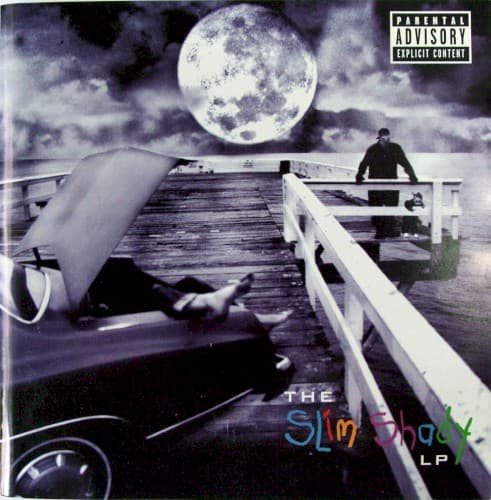
Revival is Eminem's worst album, which is not a controversial claim but a widely held consensus supported by the record itself. It ranks below Relapse, which at least committed to a sound even when the accents and subject matter misfired, and it ranks miles below The Slim Shady LP and The Marshall Mathers LP, albums that matched technical skill with cultural urgency and a clear artistic vision. Revival has the skill but none of the vision. It chases pop trends that were already stale in 2017, recycles shock-rap bits from 1999, and attempts political commentary that mistakes volume for insight. The result is an album that satisfies no one: too pop for the hardcore fans, too technically dense and self-referential for the casual listeners those pop features were meant to attract, too long and unfocused for anyone looking for a cohesive artistic statement.
The audience for Revival is narrow. Eminem completists will find moments worth studying, particularly the technical wizardry on "Offended" and the emotional specificity of "Castle" and "Arose." Fans of pop-rap crossovers might appreciate "River," which at least executes its formula competently. Everyone else should start with those three tracks and skip the rest. If you are coming to Eminem for the first time, start with The Marshall Mathers LP or The Slim Shady LP to hear what he is capable of when the production and writing and sequencing all serve the same vision. If you are a fan wondering where it went wrong, Revival is the clearest case study in what happens when an artist mistakes technical ability for artistic direction.
Revival has not aged well in the six years since its release, and it will not age better. The rock samples sound more dated with each passing year, the Trump disses are tied to a specific moment that has already passed, and the pop production choices mark the album as a relic of the late-2010s streaming era, when bloated tracklists and crossover features were seen as the path to chart dominance. Eminem himself has acknowledged the album's failures, calling Kamikaze a direct response to Revival's reception and admitting in interviews that he questioned the number of tracks and features. That self-awareness does not redeem the album, but it does clarify what Revival represents in his catalog: a miscalculation, a failure of judgment, and a reminder that even the most technically skilled rappers need a reason to make an album beyond proving they still can.
Track by track
Track Listing
Walk on Water
SolidThe album opens with Eminem admitting doubt about his legacy, a vulnerable starting point undermined by overwritten verses that circle the same insecurity for five minutes. Beyoncé's hook does the emotional work while Eminem's bars feel more like a thinkpiece about writer's block than a song experiencing it. Rick Rubin and Skylar Grey's production is spare and reverent, which only highlights how little the verses have to say beyond "I'm not sure I'm still great." It is a confessional that talks about confession rather than confessing, and it sets the tone for an album that will spend seventy-seven minutes proving it has nothing left to prove.
Believe
SolidA technical showcase over minimal Mr. Porter production, with Eminem stacking syllables and internal rhymes at a pace that proves his flow is still sharp. The problem is that the subject, overcoming doubt through sheer determination, is generic motivational-poster material dressed up in complex wordplay. The verses are impressive as an exercise but empty as a statement.
Chloraseptic
SolidThe EPMD sample gives this track a boom-bap foundation that sounds closer to Eminem's roots, but the writing devolves into self-conscious bars about how good his bars are. Phresher's hook adds nothing. This is competent battle-rap with no real target and no stakes.
Untouchable
WeakA six-minute attempt at addressing racism and police brutality that fails on almost every level. The two-part structure, with a sung hook in the first half and Eminem rapping from a Black perspective in the second, feels clumsy and didactic. The Cheech & Chong sample is an odd choice for a song about systemic oppression, and the lyrics, while well-intentioned, lecture rather than illuminate. Lines about Republicans and bootstrap philosophy hit their targets but with no subtlety and no insight beyond what you would find in a think piece. The production from Eminem, Mark Batson, Emile Haynie and Mr. Porter is noisy and overstuffed, matching the overwritten verses.
River
StandoutThe most successful pop crossover on the album, pairing Ed Sheeran's melancholy hook with a narrative about an affair and an abortion that has real emotional specificity. Emile Haynie's production is restrained and the writing is focused, with Eminem sketching a story rather than circling his own technical prowess. It is still a formula track designed for radio, but at least the formula is executed well enough to justify its existence.
Remind Me (intro)
SolidA twenty-six-second snippet that serves no purpose.
Remind Me
WeakRick Rubin lifts Joan Jett's "I Love Rock 'n' Roll" and Eminem responds with a sex-joke track that sounds like a parody of his own worst instincts. The wordplay is technically proficient but the humor is dated and graceless, recycling shock-rap bits from 1999 that were not funny then and are even less funny now. The rock sample overwhelms Eminem's flow rather than supporting it, and the result is a track that fails both as a showcase for rapping and as a song you would ever choose to hear again.
Revival (interlude)
SolidA fifty-one-second sample of Regina Spektor with no clear purpose.
Like Home
SolidA flag-waving anthem with Alicia Keys that calls for a "brand new America" without Trump in lines that sound written for a campaign ad. Just Blaze's production is competent but the writing is vague and sentimental, with none of the specificity or bite needed to make political rap land. This is well-intentioned and toothless.
Bad Husband
SolidAn apology to his ex-wife over sentimental Alex da Kid production that flattens every verse into a feel-good pop moment. The writing has real specificity about guilt and co-parenting, but the production telegraphs redemption so heavily that the apology feels performed rather than lived. X Ambassadors deliver a competent hook that could fit on any pop record from 2015, which is exactly the problem.
Tragic Endings
WeakAnother Alex da Kid ballad with Skylar Grey, this time about a toxic relationship. The production is sentimental piano-and-strings and the writing is overwrought, with Eminem circling the same points about dysfunction without adding insight or narrative. This is filler.
Framed
StandoutThe best pure rap track on the album, with Fredwreck delivering horror-movie production that matches Eminem's Slim Shady persona at its most unhinged. The verses are vivid and technically sharp, stacking gruesome imagery with the same precision that made "97 Bonnie & Clyde" and "Kim" so unsettling. The problem is that "Framed" arrives after thirteen tracks of tonal whiplash and sounds like it belongs on Relapse, not here. It is a strong track orphaned by the sequencing, proof that Eminem can still execute this mode but no justification for why he is executing it in 2017.
Nowhere Fast
WeakA gun-violence track with Kehlani that names the National Rifle Association but offers no insight beyond "violence is bad." Rock Mafia and Hit-Boy's production is mechanical and Kehlani's hook is serviceable but anonymous. This is another well-intentioned track that says nothing.
Heat
WeakA sex-joke track over Boogie Nights samples and Run-DMC/Beastie Boys loops that fails as both humor and as rap. The production is cluttered, the punchlines are graceless, and the decision to joke about grabbing women "by the pussy" in 2017 is tone-deaf. Rick Rubin's approach here is heavy-handed and the writing is embarrassing.
Offended
SolidA bravura display of technical skill, with Eminem cramming polysyllabic runs into pockets most rappers would not attempt. The breath control and rhythmic precision are undeniable, but the subject is Eminem explaining why his wordplay makes him great, which is not a subject that needs five minutes. This is impressive as an exercise and empty as a song.
Need Me
WeakA pop ballad with Pink over more Alex da Kid production that sounds designed for adult contemporary radio. The writing is generic and the production is sentimental, with no edge or specificity to justify its existence. This is filler aimed at a demographic that was never going to care about Revival.
In Your Head
WeakThe Cranberries' "Zombie" sample is obvious and heavy-handed, and Eminem's verses about regretting past Slim Shady lyrics feel more like damage control than genuine introspection. Scram Jones's production does nothing with the sample beyond looping it, and the result is a track that announces its seriousness without earning it. This is clumsy and overwrought.
Castle
StandoutA series of letters to Hailie structured around key moments in Eminem's life, climaxing in the 2007 overdose. DJ Khalil's production is moody and restrained, with darkened guitars and minimal drums that give the verses space to breathe. The writing is specific and focused, tracing Eminem's struggle with fame and addiction without overexplaining or sentimentalizing. This is one of the two tracks on Revival that justifies its existence, a reminder that Eminem can still write with clarity and emotional weight when the production and sequencing support it rather than fight it.
Arose
StandoutA continuation of "Castle" that rewinds the overdose and imagines a different outcome, with Eminem rapping from his deathbed perspective before pulling back and committing to sobriety. Rick Rubin's production samples Barry White and Bette Midler, which should be cloying but somehow works because the writing is specific and earned. This is the album's other essential track, a conceptual gambit that pays off because the verses do the work rather than relying on the concept to carry them. The problem is that "Arose" arrives after seventy-three minutes of bloat, and by the time it gets here the listener is too exhausted to fully appreciate what it accomplishes.