The scorecard
6.3/10 · Mixed
- Writing25%
- 5.5
- Production25%
- 7.5
- Delivery15%
- 6.5
- Cohesion15%
- 6.0
- Originality10%
- 5.5
- Replay value10%
- 6.5
Gunna's subject is wealth as texture, and a verse on Met Gala leans on one repeated rhyme sound, so the cadence carries more than the ideas.
Wheezy and Turbo build clean, spacious, expensive-sounding beats on Skybox and Wunna that fit Gunna's voice almost perfectly.
His clipped, melodic purr sits in the pocket with real ease on Skybox, though the tone barely changes across eighteen tracks.
The mood never breaks and the opening run is tight, but the back half drifts into padding and eighteen songs outstay the material.
It refines the Atlanta melodic trap template rather than extending it, and Dollaz on My Head works because Young Thug supplies the unpredictability.
As a streaming-era projection, the singles and the first half should keep returning to playlists, while the closing stretch is unlikely to.
Gunna Wunna: Luxury Mood Music Built for the Stream
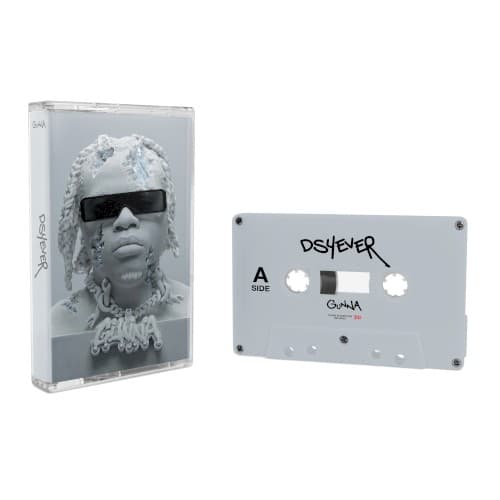
Wunna is the sound of a streaming-era rapper discovering that a mood can be a style. Gunna does not hit hard, does not tell stories and rarely changes his voice, yet the album debuted at number one on the Billboard 200 with 111,000 units, only 4,000 of them pure sales, and racked up 143.6 million on-demand streams in a single week. Those numbers describe a record built to be left on, and the interesting question is not whether it is deep but whether it is any good as ambient luxury. The answer is yes, up to a point, and the point is roughly the halfway mark.
The case for Wunna is that its best songs are more disciplined than the genre usually allows. Most tracks run under three minutes. The beats, mostly from Wheezy and Turbo, are glossy without being cluttered, and Gunna floats across them in a clipped, melodic purr that sounds like he is reading a receipt aloud and enjoying it. When the match between voice and instrumental clicks, as on the singles, the effect is hypnotic in a way that has nothing to do with lyrical content.
The case against it is just as clear. Gunna's writing is thin, his voice is a single setting, and eighteen songs of the same temperature leave the listener wondering which track just ended. Critics split along exactly this line: Pitchfork praised his engagement and the sheen of the production, while others called the record monotonous or pick-and-mix padding. Both camps are correct, which is why the album is hard to rate.
This review argues that Wunna is a smoother, more confident step up from Drip or Drown 2, with the best production of Gunna's run so far, but that it makes its case in the first ten songs and then repeats it. It is a record to sample, not to finish, and its commercial success says more about how people consume rap now than about what the music achieves.
Wheezy's Penthouse Beats, a Voice With One Setting
The production is the real author of this album. Wheezy has a hand in most of the tracklist and sets the template: soft, spacious melodies, clean low end, drums that tick rather than thump. Turbo, Taurus and Mike Will Made It each supply a variation, and Tay Keith appears with a slightly harder sound on one track. The result is a consistent palette that feels expensive without being showy. It is the same idea Pitchfork described when it compared the beats to a penthouse elevator ride, and it fits Gunna's voice precisely, since neither pushes against the other.
That fit is both the strength and the ceiling. Gunna's delivery is a soft, rushed melody that sits inside the beat rather than on top of it. He has good instincts for pocket and for stretching a syllable to land a hook, and when he has a catchy phrase to repeat he is hard to beat. But his tone barely moves, and the Beats Per Minute critic's complaint that his hushed monotone is hard to distinguish from other voices is not a fantasy. Over eighteen tracks, the performances run together, and the guest verses become the only real dynamic.
The writing is the weakest dimension. Gunna's subject is wealth, and his language for it is mostly a list of brands, jewelry and price tags. There is craft in the cadence, but the ideas rarely extend beyond the surface. Rolling Stone noted a verse that rhymes the same sound for a long run, which is more a gimmick than a technique, and some lines are not carefully thought through. The album sets up an astrology-themed alter ego and a title that expands into an acronym, but little of that concept surfaces in the actual songs. It is a record about a feeling rather than a story, and the feeling is repeated at nearly the same volume throughout.
The guest list is used sensibly. Young Thug supplies the most obvious contrast, adding strange, bendy inflections that make Gunna sound steadier. Lil Baby, Roddy Ricch and Travis Scott each bring a different energy to the middle of the record and help break up the sameness, though only one or two of them leave a real mark. Nechie's contribution is minor.
The clearest flaw is the back half, where the beats lose their distinct hooks and the songs depend on atmosphere. A tight twelve-track version of this album would be a better one. As it stands, the record has several excellent singles surrounded by competent filler, and the filler is so smooth that it is difficult to say exactly where it begins.
Eighteen Tracks, Ten Good Ideas
Wunna is front-loaded, and the front load is impressive. The opening run gets to the point quickly: short songs, confident hooks and a steady build of mood. Two of the three singles arrive in the first third, and the sequence feels like a well-curated playlist rather than an album arc. The pacing early on is smart because it uses brevity to hide repetition. A song that ends before it has worn out its idea is almost always better than one that overstays.
The sag begins around the middle, where the record settles into mid-tempo songs with similar melodies and similar flexes. Nothing is bad in isolation. The problem is that nothing is different either, and the energy flattens. A few guest features arrive at the right moment to restore some contrast, and a late run of tracks tries to add emotional variety, but the shift is more of tone than of substance. By the final stretch, the album is mostly coasting.
This is the structure of a streaming-era project: the first songs are optimized for attention, the middle for background listening and the end for completists. It works in that environment, and it is clearly how many people used the album. But as a front-to-back experience, eighteen tracks at roughly three minutes each is about four songs too long. The AllMusic criticism that the closing stretch reads as padding is fair.
What saves the sequencing from being a failure is consistency. The record never breaks its own mood, never makes an obviously bad stylistic choice and never feels like an artist reaching beyond his means. That is not a high bar, but it is a real one, and it is why even the weaker songs are easy to sit through. The album is smooth rather than good at every moment, and smoothness has its own appeal.
The deluxe edition added eight more tracks, which would only lengthen the problem. The standard edition is the version to play, and the first ten songs are the album that should have been released.
A Polished Step Up That Gets Off at the Wrong Floor
On Rap Album Reviews, Drip or Drown 2 rates 6.8. Wunna lands just above it, at roughly 6.9, and the reason is production. Gunna's voice and writing are in essentially the same place, but the beats are richer, the singles are stronger and the album has a clearer sense of itself than the earlier project. It is a better-made record that suffers from the same lack of range, and the ranking reflects that the polish is real while the growth is modest.
This is for listeners who treat rap as atmosphere: people who want something to play while working, driving or hosting, and who respond to a pleasant melodic flow more than to verses. It is also a good example for anyone studying how Atlanta trap sounded in 2020, when melody and mood had largely overtaken punchlines. It is not for fans who need strong writing, narrative, or a vocal performance with texture. If you are looking for lyrical detail, you will find the surface of everything and the depth of nothing.
Start with Skybox, which captures the entire appeal in under three minutes, then Dollaz on My Head for the best collaboration and the most radio-ready hook. Add Wunna, the title track, for the clearest case of voice and beat locking together. After those three, the album gives diminishing returns, though the Travis Scott collaboration is worth hearing as a change of texture.
For what to hear next, go to Young Thug if you want to hear the stranger, more daring version of this melodic Atlanta style, and to Lil Baby for a harder, more grounded delivery that shows what Gunna's pocket sounds like with more weight behind it. Both make the limits of Wunna clearer, and both are more rewarding when you want something other than comfort.
Wunna will age as a snapshot of 2020 trap-as-lifestyle, and its singles will probably outlive the album. The best thing about it is the elevator-ride feeling of the first half, and the best advice is to get off before the last floor.
Track by track
Track Listing
ARGENTINA
StandoutA brisk opener that sets the template: a clean Wheezy loop, a tidy hook and Gunna floating over it with no strain. It is short and confident, and it establishes the mood so efficiently that it almost makes the rest of the album feel redundant. The writing is just brand names and swagger, but the cadence makes it work. A good first impression and a representative sample of the record's strengths.
GIMMICK
SolidA solid mid-tempo track with a catchy hook and a smooth bounce. Gunna sounds relaxed and in the pocket. It is easy to enjoy and easy to forget.
MOTW
SolidA short, glossy cut that continues the opening run without adding much. The beat is pleasant, the hook is quick, and the track disappears almost as soon as it ends. Competent but interchangeable.
FEIGNING
StandoutTay Keith's production brings a slightly harder, bouncier edge than the Wheezy tracks around it, and the change is welcome. Gunna adapts well, tightening his flow without raising his voice. A small change of pace that helps the early sequence.
DOLLAZ ON MY HEAD
StandoutA key single and the best collaboration on the album. Mike Will Made It builds a sparse, icy beat that leaves space for both rappers, and Young Thug arrives with the elastic, unpredictable delivery that Gunna lacks. The hook is simple enough to stick after one listen, and the chemistry between the two is the most vivid on the record. Gunna sounds sharper than usual here because he has something to push against. It peaked well on the Hot 100 and deserves to; it is the track that shows what the album could be with more contrast. Everything else in the style sounds like a rehearsal for this.
ADDYS
SolidNechie's feature adds some variety, but the song itself is a modest, mood-driven cut. The beat is pleasant and the vocal interplay is fine, though neither is memorable. Solid filler with a decent hook.
SKYBOX
StandoutThe lead single and the clearest case for the album. Taurus's beat is simple and hypnotic, Gunna's melody slides over it without effort, and the hook is built from a few repeated notes that become addictive. The writing is mostly about luxury as a feeling, and here it works because the music matches. It is under three minutes, which is exactly the right length, and it makes the case for the whole record in one place. If you hear only one song, hear this one, and notice how little it does while sounding so complete.
WUNNA
StandoutThe title track and second single is the best fit between voice and production. Turbo's beat has a bright, buoyant melody, and Gunna's flow is quick and playful, with a hook that doubles as a brand statement. It is the album's most direct piece of self-mythology, and while the content is thin, the sound is persuasive. A strong centerpiece, and a good moment to consider just how well this approach can work when the tempo and tone line up.
BLINDFOLD
StandoutLil Baby arrives with a firmer, more grounded delivery that gives the track a bit of weight. The Wheezy beat is clean and the chorus is good. It is not a standout, but the guest's contrast helps.
ROCKSTAR BIKERS & CHAINS
SolidA shorter Wheezy cut with a catchy, bouncy feel. Gunna's flow is smooth and the hook is sing-song. It is enjoyable but anonymous.
MET GALA
SolidNotable mostly for its writing flaws: Rolling Stone pointed to a verse built on one repeated rhyme sound, which shows how thin the lyrics can get. The beat is glossy and the hook is bright, so the song works as pure texture. A good example of why the album sounds better than it reads.
NASTY GIRL / ON CAMERA
SolidThe longest track and a two-part song that tries to add variety. The first half is a standard mood piece, and the second shifts to a slightly different groove. The change is welcome, but the idea does not develop far, and the length gives the middle of the record a bit more drag than it needs.
COOLER THAN A BITCH
StandoutRoddy Ricch adds a melodic, sing-rap contrast that livens up the late-middle section, and the beat is brighter than its neighbors. It is a decent change of texture, though the song is more pleasant than memorable.
I’M ON SOME
WeakA routine mid-album track. The beat is smooth, the hook is serviceable and the verses repeat familiar flexes. Filler, though pleasant filler.
TOP FLOOR
StandoutTravis Scott brings a different atmosphere, with a warped, spacey presence that contrasts with Gunna's cleaner style, and the mix gives the track a bigger sound. It is a useful change of pace and one of the more interesting late tracks, even if it feels like a guest showcase.
DON’T PLAY AROUND
WeakThe record's momentum fades here. The beat is competent and Gunna's flow is fine, but there is no distinctive hook or idea to hold on to. Filler.
DO BETTER
SolidA more reflective tone appears, and the track hints at emotional variety. Gunna sounds a little more vulnerable, which is a welcome change, though the writing still stays shallow. Better than the songs around it, but not enough to transform them.
FAR
StandoutYoung Thug returns to close the album, and his presence gives the ending a lift that the surrounding material lacks. Turbo's beat is airy and the hook is memorable enough to leave a decent final impression. A strong closer that echoes the best parts of the opening.
Frequently Asked Questions
Is Gunna Wunna a good album?
What does Wunna mean?
What are the best songs on Gunna Wunna?
How did Wunna do on the charts?
Styles