The scorecard
7.3/10 · Good
- Writing25%
- 7.0
- Production25%
- 8.5
- Delivery15%
- 7.5
- Cohesion15%
- 6.5
- Originality10%
- 6.0
- Replay value10%
- 7.5
Epps keeps the hustler talk specific and lived-in across most tracks, though the formula wears thin on the back half where verses blur into interchangeable flex.
Mike Dean, Mike Will Made It and the rest build trap that knocks without sounding recycled, from the syrupy 'Good Drank' to the trunk-rattling 'Sleep When U Die' to the string-laced closer.
The croak and the punchline timing still land after five years of heavy rotation, and the guest roster mostly earns its keep, though Swae Lee and the R&B choir on 'It's a Vibe' do more work than the host.
Sixteen tracks is at least three too many: 'Bailan' feels like it wandered in from a yacht playlist, and the middle third sags under redundant thumpers that say the same thing twice.
This is trap polish applied to the Atlanta sound 2 Chainz helped define a decade earlier, not a reinvention; the maturation he promised in interviews shows up as Mike Dean strings and R&B hooks, not new ideas.
The singles and a handful of album cuts have held up for seven years, but the filler tracks announce themselves faster on each return.
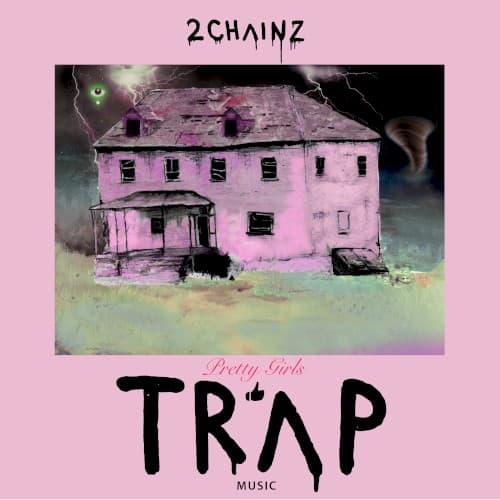
2 Chainz Pretty Girls Like Trap Music — The Year Atlanta Trap Got a Manicure
The album opens with Mike Will Made It synths that could fuel a strip club or a stadium, and by the third track 2 Chainz has Gucci Mane and Quavo in the same booth toasting over Mike Dean strings. That sequencing choice tells you what Pretty Girls Like Trap Music is after: the sound that took over Atlanta basements in the 2000s, now polished enough for a national tour and a pop-up salon in Manhattan. Tauheed Epps was forty when he released this, the same age Jay-Z was when he started chasing Coldplay features, and the thesis here is that trap can mature without losing the trunk rattle. The result is his most consistent solo album, a sixteen-track run that proves the formula still works when the production budget goes up and the guest list gets deeper. It also proves that maturation in this context means better sound engineering and more R&B singers, not necessarily better sequencing or new things to say.
What matters is whether the music justifies the expanded runtime and the pivot toward crossover palatability. On the first ten tracks it mostly does: Mike Dean and Mike Will Made It build beats that knock without sounding like 2013 leftovers, and Epps deploys the croak and the punchline timing that made him a fixture on everyone else's songs for half a decade. The back third sags under filler and a Pharrell duet that belongs on a different album entirely, but the peak moments here are the best work Epps has put his name on since he dropped the Tity Boi moniker. The question is whether the album needed to be this long to make that point, or whether the same case could have been argued in twelve tracks instead of sixteen.
Big Rooms Need Big Drums
The production on Pretty Girls Like Trap Music is the album's strongest selling point and the reason it holds up better than most 2017 trap releases. Mike Dean shows up on five tracks and brings the string sections and synth swells that make Atlanta trap feel expensive without sanding off the low end. The best example is the lead single: Dean turns a simple toast into something that sounds like it cost money to record, with a bassline that sits in your chest and enough space in the mix for Quavo and Gucci to trade bars without stepping on each other. Mike Will Made It handles the openers and delivers the arena-ready thump the album needs to establish momentum, while Murda Beatz and Buddah Bless supply the trunk-rattlers that keep the middle from floating away. The production crew understands that trap in 2017 had to compete with pop radio, so they built beats that work in cars and on festival stages without losing the pocket that made the sound regional in the first place.
Epps still writes like a hustler who got out and can afford to joke about it now, which means most of these verses are about money, women and cars, delivered with the timing that made him a go-to guest feature for half a decade. The croak is deployed sparingly enough that it still lands as emphasis rather than shtick, and the punchlines mostly avoid the groan-worthy setups that cluttered his earlier solo work. What he does not do is expand the subject matter or dig into the trap background the album title promises to elevate: the writing here is proficient hustler talk, vivid in spots and redundant in others, but it does not attempt the storytelling or the thematic coherence that would justify calling this a mature statement. The guest verses mostly hold their own, with Nicki Minaj and Travis Scott contributing performances that match the energy of their hosts, though the R&B choir on the second single does more heavy lifting than Epps himself.
The album's most obvious weakness is its unwillingness to edit. Sixteen tracks is at least three too many, and by the time you reach the back third the verses start to blur into interchangeable boasts about the same cars and the same jewelry. Mike Dean's strings can only carry so much weight before the formula becomes apparent, and tracks like the Pharrell duet feel like they were included because a big name showed up in the studio, not because the album needed them. The sequencing is competent but not deliberate: the album peaks early, sags in the middle, and closes with a gospel-tinged moment that works as a finale but arrives after you have already heard the same flex four times. A tighter tracklist would have made the case for maturation more convincingly than the expanded runtime does.
The Problem Is Knowing When to Stop
The album's pacing is front-loaded by design: the first five tracks establish the sound and the thesis, with the three singles arriving by track nine to ensure that casual listeners get the hits before the filler kicks in. That structure works for streaming playlists but not for album listening, because the back half never recovers the momentum the front half builds. The peak arrives around the fourth track, where Murda Beatz and Cubeatz build a Travis Scott demonstrate that feels like the album's centerpiece, and then the energy plateaus for the next five songs. By the time you reach the Migos posse cut in the thirteenth slot, the formula has been stretched thin enough that even a beat switch and three extra voices cannot revive it.
The sequencing makes two smart choices and one puzzling one. The smart choices: opening with a Mike Will banger that announces the production upgrade, and closing with the Monica duet that lets Mike Dean build a proper finale. The puzzling choice: placing the Pharrell track second-to-last, where it disrupts the flow and sounds like it was parachuted in from a different album entirely. The result is a listening experience that rewards front-to-back play for about forty minutes, then tests your patience for the final twenty. The length is not earned, and the album would have been stronger as a twelve-track statement with the filler and the yacht music left on the cutting room floor.
Where It Lands and Who It Is For
Pretty Girls Like Trap Music is the best solo album Tauheed Epps has released under the 2 Chainz name, which is not a high bar to clear but still matters. It is the first time he has paired the punchline delivery and the ear for hooks with production that sounds like it belongs on a major-label flagship release rather than a mixtape stretched into an album. The Mike Dean collaborations are the reason this album aged better than most 2017 trap releases, and the guest roster is deep enough that even the weaker tracks have a moment or a verse worth returning to. Where it falls short is in the editing and the sequencing: the back third is bloated with filler, and the runtime overstays the thesis by at least fifteen minutes. This is an album that proves trap can get a bigger budget and a wider audience without losing the low end, but it does not prove that trap benefits from sixteen-track runtimes or Pharrell duets that sound like hold music.
This is for fans of Atlanta trap who want to hear the sound polished to a festival sheen without losing the trunk rattle, and for anyone who wrote off 2 Chainz as a punchline rapper and wants to hear what he sounds like when the production keeps up with the hooks. Skip it if you prefer your trap leaner and meaner, or if you have no patience for albums that could have been EPs. Start with the three singles to get the album's best sequencing decisions in miniature, then decide whether the deep cuts justify the expanded runtime. If you want more of this sound, go back to Mike Dean's work on Rodeo or forward to his work on Astroworld; if you want 2 Chainz with less polish, the Daniel Son mixtape from the year before this shows what he sounds like without the major-label gloss. Pretty Girls Like Trap Music lands as a strong statement from a forty-year-old rapper who finally got the production budget his hooks deserved, but it also lands as proof that more songs do not always mean a better album.
Track by track
Track Listing
Saturday Night
StandoutMike Will Made It opens the album with synths that sound like money, a trunk-rattling bassline and a hook that establishes the thesis in ten seconds: this is trap music that can fill a stadium without losing the low end. Epps deploys the croak sparingly and keeps the verses focused on the flex, but the beat does most of the work here. The sequencing choice is smart: put your biggest sound first and let it set the tone for everything that follows.
Riverdale Rd
StandoutMano and Mike Dean build a slower, moodier track that nods to Epps' College Park roots without turning into a nostalgia exercise. The writing here is more specific than most of the album, with verses that name streets and corners instead of just cars and jewelry. The beat leaves space for the details, and the result is one of the few tracks where the maturation the album promises actually shows up in the lyrics. This is the sound of someone who got out but still remembers the route.
Good Drank
StandoutMike Dean builds the album's best beat, a syrupy, string-laced thump that lets Gucci Mane and Quavo trade verses without crowding each other. The hook is a singalong that earned its radio play, and the three rappers sound like they are enjoying themselves rather than fulfilling a contract. Dean's production elevates a simple toast into something that feels like an event, and the sequencing here is perfect: place your lead single third, after you have established momentum, and let it carry the album into the next stretch. This is the track that justifies the album's crossover ambitions.
4 AM
StandoutMurda Beatz and Cubeatz build the darkest, hardest-hitting beat on the album, and Travis Scott matches the energy with a verse that feels like it was recorded in one take at four in the morning. Epps holds his own but this is Scott's track, with a hook that sounds like it could have appeared on Rodeo. The beat switches twice, which keeps the energy from plateauing, and the result is the album's centerpiece: the moment where the trap gets meaner and the guests earn their features. This is the sound the album should have chased more often.
Door Swangin
SolidBuddah Bless builds a straightforward trunk-ratter with a bounce that nods to Houston without copying it outright. The verses are proficient hustler talk with no surprises, and the track works as a reset after the Travis Scott showcase, but it does not add anything new to the album's argument. Competent filler that does its job and gets out of the way.
Realize
StandoutFKi 1st builds a lighter, more melodic beat that gives Nicki Minaj room to run, and she delivers one of the album's best guest verses, with a flow that weaves around the hook instead of stepping on it. Epps matches her energy and the two sound like they are competing rather than coasting. The beat is too polite for its own good, but the performances elevate it into something worth returning to. This is the album's best showcase for how well Epps works with guests who bring their own ideas to the booth.
Poor Fool
SolidMike Will Made It and Mike Dean team up for a string-heavy track that sounds expensive, and Swae Lee handles the hook with the kind of melodic ease that made him a go-to feature in 2017. The writing here is thin: more boasts about money and women, delivered with the same cadence as the last three tracks. The production carries the song, but by this point in the album the formula is starting to show its seams. Solid but not essential.
Big Amount
SolidBuddah Bless builds a minimalist beat that sounds like it cost nothing to make and everything to clear, and Drake shows up for a verse that is more conversational than competitive. The hook is catchy enough that the song charted as a loosie before the album dropped, and the two rappers trade bars without much friction. The track works as a streaming play but not as an album moment: it feels like it was tacked on because Drake showed up, not because the tracklist needed it here. Enjoyable but inessential, and the bonus-track designation on some versions of the album is the right call.
It’s a Vibe
SolidMurda Beatz and G Koop build a smooth, mid-tempo track that sounds like it was designed for summer playlists, and the three R&B singers on the hook do more work than Epps himself. The verses are fine but forgettable, and the song coasts on the production and the guest vocals rather than on anything the host brings to the booth. This is the album's most obvious crossover bid, and it works as a single but not as a statement. The track aged well because the hook is strong enough to survive repeated listens, but it also highlights the album's weaknesses: when Epps steps back and lets the guests handle the melody, the songs work better than when he tries to carry them himself.
Rolls Royce Bitch
StandoutHonorable C.N.O.T.E. builds a trunk-ratter with a bounce that nods to Atlanta's bass music roots, and Epps delivers some of the album's most quotable lines over a beat that never stops knocking. The hook is simple and effective, and the track works as a palate cleanser after the R&B smoothness of the previous song. This is the kind of no-frills trap that made Epps a fixture on other people's albums, and it is a reminder that he does not need strings or guest singers to hold attention. One of the album's most replayable deep cuts.
Sleep When U Die
StandoutBuddah Bless builds another trunk-ratter with a hypnotic loop and a bassline that sits in your chest, and Epps delivers verses that are more focused than most of the album's back half. The writing is still hustler talk, but the specificity is higher and the punchlines land harder. The track works as proof that the album did not need R&B hooks or big-name features to justify its existence: just a good beat and a rapper who knows how to ride it. This is the last great moment before the album sags under its own length.
Trap Check
SolidBuddah Bless samples Jeezy and T.I., which is a smart way to nod to the Atlanta trap lineage the album claims to elevate, and Epps delivers verses that explicitly position himself as the next generation of the sound. The beat knocks and the writing is on-theme, but the track feels like it is trying too hard to make a point the album has already made five times. Solid but redundant.
Blue Cheese
SolidK Swisha builds a Migos-ready beat with a bounce that gives all four rappers room to trade bars, and the posse-cut energy keeps the track from dragging despite its five-minute runtime. The verses blur together into interchangeable flex, and by this point in the album the formula has been stretched so thin that even a beat switch and three extra voices cannot revive it. The track works as a playlist add but not as an album moment, and the sequencing choice to place it thirteenth means it arrives after you have already heard the same ideas executed better earlier in the runtime. Enjoyable in the moment, forgettable after.
OG Kush Diet
WeakFKi and iLL Wayno build a woozy, psychedelic beat that sounds like it was mixed underwater, and Epps delivers verses about weed and women with the same cadence he has used for the last hour. The track is fine as background music but it does not justify its place this late in the album. Filler.
Bailan
WeakPharrell builds a breezy, yacht-ready track that sounds like it wandered in from a completely different album, and Epps delivers his least convincing performance of the runtime. The writing is thin, the beat is too polite, and the sequencing choice to place this second-to-last disrupts the flow the album has been building toward a proper closer. This is the album's most obvious misstep: a collaboration that exists because a big name showed up in the studio, not because the album needed it. Skip it.
Burglar Bars
StandoutM16 and Mike Dean close the album with a string-laced gospel moment, and Monica delivers a hook that gives the track the weight of a proper finale. Epps uses the space to reflect on where he came from and where he is now, and the writing is more introspective than anything else on the album. The beat builds slowly and the song earns its five-minute runtime, and the result is the kind of closer that makes you forget the filler that preceded it. This is the sound of someone who got out and can afford to look back without bitterness, and it is the best argument the album makes for the maturation Epps promised in interviews. End here and the album feels like a statement; suffer through the Pharrell track first and it feels like a missed opportunity.