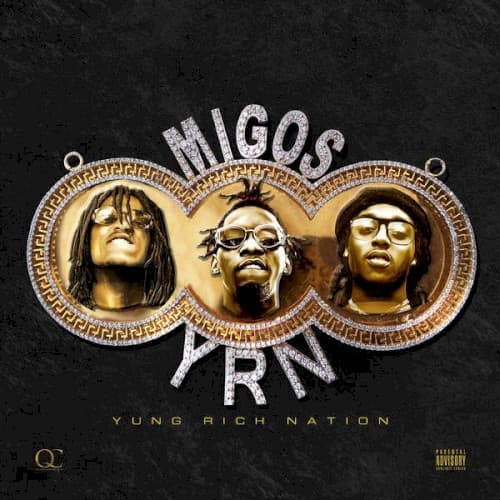
The scorecard
5.9/10 · Mixed
- Writing25%
- 5.5
- Production25%
- 6.5
- Delivery15%
- 6.5
- Cohesion15%
- 5.5
- Originality10%
- 5.5
- Replay value10%
- 5.5
The grim origin-story cuts at the top show sharper detail than the mixtapes, but the flex-heavy majority of the album says little, so the strengths and the interchangeable luxury talk roughly cancel out.
Honorable C.N.O.T.E., Zaytoven and Murda Beatz keep the minimalist trap bounce intact and give "One Time" and "Gangsta Rap" real snap, but several beats are forgettable next to the free-release catalog.
The tumbling triplets, punchy ad-libs and three-way trade-offs on "Pipe It Up" give the record real identity and chemistry, though the sameness of tempo and hooks across fifteen tracks keeps it from being more than solid.
The middle finds its footing and the closing songs answer the opening, but two heavy autobiographical tracks up front, a long stretch of similar mid-tempo trap and a length that is not earned leave the sequencing a wash.
The group's cleaner packaging of the triplet signature is polished, but it refines a trademark already perfected on mixtapes rather than adding anything new, so the strengths and limits roughly cancel out.
The singles and the best songs still sound good and the rhythm remains contagious, but the production feels less distinctive now and the album was overtaken fast by the group's later work, so the pull to return is uneven.
Migos Yung Rich Nation: A Major-Label Debut That Plays It Safe
Yung Rich Nation is the record where Migos proved they could behave like a major-label act, and the cost was most of the surprise. The argument of this review is that the debut is a competent, confident, frequently fun consolidation of a style the group had already perfected on mixtapes, and that its limits come from caution rather than weakness. It is a victory lap that arrived before the victory.
The context matters because the record was made under strain. The group, Quavo, Offset and Takeoff, had built a following through a long run of free releases, including the earlier Y.R.N. mixtape that gave this album its name. A debut album was supposed to arrive in June 2015, with a different title. After the three members were arrested during a show in April, the schedule slipped to July 31, the promotional tour was canceled and the album was renamed and re-covered. A record meant to announce arrival was instead assembled around an interruption, and the front half of the tracklist shows it.
That is why the opening is unusually heavy for a group known for club records. Early songs lean on their backstory, the Atlanta street and the family and the struggle, and while the writing is more disciplined than on the mixtapes, the sequencing asks the listener to sit through it before the party starts. Critics noticed. One reviewer called those opening autobiographical cuts solid but uninviting laid out in a row.
Where does the record sit in hip-hop history? It belongs to a lineage of Southern groups who used rhythm as the main event, from the call-and-response of Memphis crews to the sung-spoken pivots of Atlanta's later wave. Migos took the triplet, a cadence that had been a regional specialty for years, and made it a group signature, repeating it so confidently that it became the default way to rap on a trap beat. Yung Rich Nation does not invent that. It packages it, and the packaging is cleaner than anything they had done before.
The result is an album that works as a bridge: less thrilling than the best mixtapes, less ambitious than what followed, and worth hearing for the singles and a few strong album cuts.
Triplets, Ad-Libs and Trap Beats Built for Crowded Clubs
The strongest asset on Yung Rich Nation is the rapping as rhythm. Quavo, Offset and Takeoff deliver in tumbling triplets, with ad-libs that land like punctuation, and the interplay between the three of them is what gives the record its identity. One critic described the ad-libs as punctuating like paintballs, and the image is accurate: short, bright, and designed to leave a mark. When the three voices pass lines back and forth, the effect is closer to a dance routine than a set of separate verses, and the best songs here are built around that choreography.
The production is an Atlanta homecoming. Honorable C.N.O.T.E. is the main architect, with Zaytoven and Murda Beatz filling out the rest. The approach is minimalist, leaving room for the voices, and that suits the group: sparse drums, dying-battery synths and simple melodic hooks that stay out of the way of the flow.
At its best, as on "One Time," the beat is a smooth melody with enough bounce to make the club crowd shout along. At its worst, it is functional, competent and forgettable. One reviewer called some of these instrumentals among the least memorable the group had used, and while that is harsh, it is not baseless. The mixtape-era beats had more personality.
The writing splits into two modes. The first is the autobiographical register of the opening songs, which tell the group's origin in grim, specific terms and show sharper detail than the earlier tapes. The second is the flex: luxury, drugs, women, the standard vocabulary of the form. The second mode takes up more of the album and says less. Songs like "Dab Daddy" and "Playa Playa" feel built on mood and rhythm, with little to separate them from the group's free releases or from the trap records being made around them at the time. There is energy but not much argument.
That is the real weakness: not a lack of skill but a lack of variety. Across fifteen tracks, the tempo rarely shifts, the subject matter rarely develops and the hooks rarely stand out from their neighbors. The record feels like the same excellent trick performed many times. The guests help only a little. Chris Brown adds a glossy hook on "Just for Tonight" and Young Thug brings his warped melodic style to "Cocaina," and both are welcome changes of texture, yet neither pushes the album into new territory.
What the album does well, it does consistently. It is easy to listen to, and the group's chemistry carries it. It just rarely surprises, and surprise was the thing the mixtapes did best.
Heavy Start, Long Middle, Late Recovery
The sequencing of Yung Rich Nation works against it. The album begins with a short opener and then moves straight into two of its heaviest autobiographical songs, a decision that sets a serious tone before the record has built any goodwill. For a group whose reputation rested on hooks and energy, it is a strange way to start, and it creates a gap between what the title promises and what the first ten minutes deliver.
The middle of the record is where it finds its footing. The singles land here, the tempo picks up and the group's chemistry takes over, and for a stretch the album plays like what fans of the mixtapes wanted. It also settles into a comfortable pattern, with mid-tempo trap, similar hooks and a steady stream of luxury talk, that makes it hard to tell where one song ends and the next begins. The run is pleasant but not cumulative; the fifth song of the stretch has no more impact than the second.
The late album recovers some ground. A longer guest-featuring cut gives the record a change of mood, and the closing songs return to a more personal register that answers the opening. The final track gives the album a sense of resolution the middle never builds, which is a point in its favor.
Fifteen tracks and roughly an hour is too long for this material. The group's style is built on compression, short bursts of rhythm and hook, and it works best in smaller doses. A twelve-song version with the opening restructured and a few middle tracks cut would be a stronger album. As it stands, the length is not earned.
A Bridge Between Mixtape Heroes and Chart Stars
Yung Rich Nation is a good but unessential debut, and on this site it stands alone in the Migos catalog for now. Its place is as a transition: the moment the group moved from free releases to a major-label album, polishing their sound without changing it. Critics at the time called it a turning point for the trio, and the label support is audible, but the album plays more like a victory lap than a step forward. It is worth hearing, and it is not the best place to start.
It is for listeners who want to trace how the Migos sound was packaged for a wider audience, for fans of Atlanta trap who like their rap minimalist and rhythm-driven, and for anyone interested in how the triplet became the dominant cadence of the next several years. People who want the group at their most inventive should go back to the mixtapes, and listeners who need emotional range or variety should skip it. There is a lot of the same energy here, and not much contrast.
The album has aged unevenly. The singles still sound good, and the rhythm of the best songs is still contagious. But the production feels less distinctive now than it did, and the record was overtaken fast by the group's own later work, which had bigger hooks and a sharper sense of what to do with them. Seen from the present, it is a necessary step rather than an arrival.
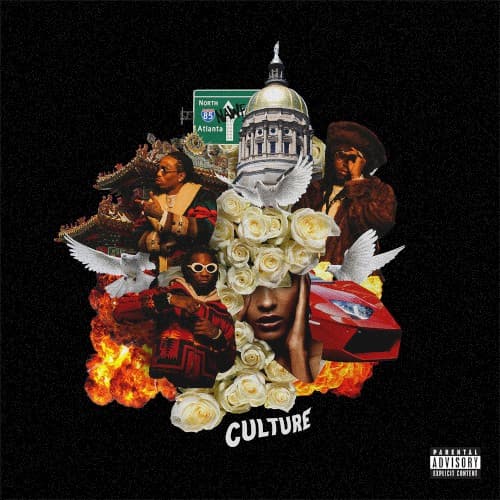
For a first listen, start with "One Time" for the smooth, club-ready melody, "Gangsta Rap" for the short, menacing throwback slink, and "Pipe It Up" for the clearest example of the group's three-way chemistry. Then move on to Culture, the follow-up that took this formula and turned it into a chart-topping album with hooks to match. The distance between the two records is the clearest measure of what the debut was missing, and what it was building toward.
Track by track
Track Listing
Memoirs
SolidA short, Honorable C.N.O.T.E.-produced opener that sets a reflective tone. It does the job of an introduction but does not do much beyond that.
Dab Daddy
SolidA bouncier, more playful cut produced by Honorable C.N.O.T.E. that is built around mood and rhythm more than ideas. The hook is sticky enough, but the song is closer to a mixtape track than an album statement.
Migos Origin
SolidProduced by Zaytoven, this is one of the grim, autobiographical songs at the top of the record. The writing is more specific than on most of the group's earlier work, and it is a serious attempt to tell their story. Placed this early, it is also a heavy ask for a casual listener, and one critic singled it out as an uninviting start. It is solid, but it lacks the hook that would make it a draw.
Spray the Champagne
StandoutA short, bright celebration produced by Honorable C.N.O.T.E. and Murda Beatz. At under three minutes it keeps the energy up and gives the trio room to trade lines. A good change of mood after the opening songs.
Street Nigga Sacrifice
SolidThe second of the heavy, autobiographical openers, produced by Honorable C.N.O.T.E. It has real intent and some sharp writing, but it arrives directly after another serious track and makes the front of the album feel uninviting. A solid song in the wrong place.
Highway 85
SolidA longer Honorable C.N.O.T.E. production with a steady, travel-minded groove. It gives the album a moment to settle and offers a relaxed, rolling feel, though it does not stand out from the mid-tempo songs around it.
One Time
StandoutProduced by Deko and the album's first single, this is the clearest case for the group's appeal. The beat is built from dying-battery synths over a smooth melody, and the trio's triplet flow glides across it with ease. The hook is simple and sticky, and the song works in a club or a car with equal force. It is the track that best balances the group's rhythmic instincts with a pop-ready shape, and the one that most deserves its place as a lead single. A critic called it a smash, and the record does not argue otherwise.
Just for Tonight
SolidChris Brown adds a glossy hook to a Murda Beatz production, giving the album its most pop-leaning moment. It is smooth and well made, but the shift in tone feels designed for radio more than for the record.
Pipe It Up
StandoutThe album's second single, produced by Murda Beatz, and a strong showcase for the group's three-way chemistry. The lines pass between the members with precision, the ad-libs punch in on cue, and the beat stays out of the way. It is a good example of the style at its tightest and one of the best songs for a first-time listener.
Gangsta Rap
StandoutAt just over two minutes, this OG Parker, Deko and DJ Durel production is the album's sharpest and most menacing cut. The slow, throwback slink of the beat gives the group a darker palette, and the brevity keeps it from wearing out. A critic noted that it still sounded fresh, and that holds up. It is the album's best deep cut and a reminder of how much the group can do with a short song.
Playa Playa
SolidA long Murda Beatz production that coasts on mood and repetition. The flow is smooth and the hook is serviceable, but at over four minutes the idea wears thin.
Cocaina
StandoutYoung Thug joins the trio on a Murda Beatz production that is the album's longest track. His warped, melodic style gives the song a different texture from the rest of the record, and the guest spot adds welcome variety. The song is atmospheric and a little hazy, and it is among the better changes of pace on the album.
Trap Funk
SolidAn Honorable C.N.O.T.E. production built around a bouncy groove that fits its title. It is energetic and functional, but it sounds like many of the songs around it.
What a Feeling
SolidA Zaytoven production with a lighter, more celebratory tone. It is pleasant and well made, but it does not leave much of an impression.
Recognition
SolidThe closer, produced by Deko, gives the album a more personal, reflective ending that answers the heavy opening. It is a satisfying bookend, though it does not match the energy of the best songs in the middle.
Frequently Asked Questions
Is Migos' Yung Rich Nation a good album?
When was Yung Rich Nation released?
What are the best songs on Yung Rich Nation?
How did Yung Rich Nation perform on the charts?
Genres
Styles