Gucci Mane: The East Atlanta Rapper Who Made Trap a Release Schedule
Gucci Mane is the Atlanta rapper who turned an entire city's drug-corner vocabulary into a release schedule. Born Radric Davis in Bessemer, Alabama, in 1980 and raised mostly in East Atlanta, he took his stage name from a nickname his father carried, and he has spent more than two decades as the genre's most prolific and least predictable figure. If you want a Gucci Mane artist profile in one sentence: he is the bridge between the Southern street rap of the early 2000s and the trap sound that took over the charts a decade later.
The pitch is simple, even if the catalog is not. A thick, lazy drawl, a talent for the quotable aside, and a seemingly endless supply of beats from Zaytoven, Drumma Boy, Mike Will Made It, Metro Boomin and Southside. He released a staggering number of mixtapes, EPs and albums, often in bursts of several a month, and he treated the format as a conveyor belt rather than a series of event albums.
That output is the point. Gucci Mane did not just rap about the trap; he ran a one-man content factory that taught younger artists what consistency could look like. Listening to him for the first time is a little like walking into a conversation already in progress. Pick any year from 2009 on and there is a project waiting, and the best entry points sit closer together than the sheer volume suggests.
For listeners new to Southern hip-hop, the Gucci Mane experience has a distinct texture: a bit of menace, a lot of humor, and a persistent sense that anything might drop next week. His live and public presence has mirrored that unpredictability, and part of the appeal is simply never knowing which Gucci Mane will show up.
A Slurred Drawl, Zaytoven Keys and the Gucci Mane Trap Sound
The voice comes first. Gucci Mane raps in a slurred, unhurried baritone that sounds half-asleep until a punchline lands and you realize the timing was deliberate. He is a rhythmic rapper more than a lyrical one: ad-libs, repeated hooks and a talent for turning a throwaway line into the thing you quote for a week. The bounce of the delivery matters more than the density of the writing.
The beats are the other half of the identity. Early on, Zaytoven's keyboard-driven productions supplied the eerie, minor-key melodies that became a trap signature, while Drumma Boy and later Mike Will Made It brought more low-end weight. In the 2010s Metro Boomin and Southside pushed the sound toward the colder, sparse style that dominated streaming, and Gucci adapted without losing the lazy cadence that made him distinct.
He is also an unusually flexible guest. He can sound menacing on a crunk-adjacent club record, then glide onto a pop-leaning hook, as he did on Rae Sremmurd's "Black Beatles," and still sound like himself. The limitation is the flip side of the strength: with so much material, filler is unavoidable, and his weaker projects can feel like inventory instead of statements.
It helps to hear the progression in order. The early Trap House records feel like regional street rap, built around local slang and a hometown audience. By the time of Mr. Davis and the Southside-produced El Gato: The Human Glacier in 2017, the same voice sits inside crisper, more expensive-sounding arrangements, and the result feels like a veteran adjusting the lighting rather than changing the room.
From Trap House to Ice Daddy: Gucci Mane's Mixtape-Fueled Career Arc
Gucci Mane's first real traction came in the mid-2000s with the independent album Trap House, which featured the single "Icy" with Young Jeezy; a dispute over the rights to that single soured the relationship between the two for years. Hard to Kill followed in 2006 with "Freaky Gurl," and the Chicken Talk mixtape from the same year has since been recognized by outlets like Pitchfork and Rolling Stone Australia as one of hip-hop's strongest. By 2007 he had a commercial debut in Back to the Trap House, whose "Freaky Gurl" remix added Ludacris and Lil' Kim.
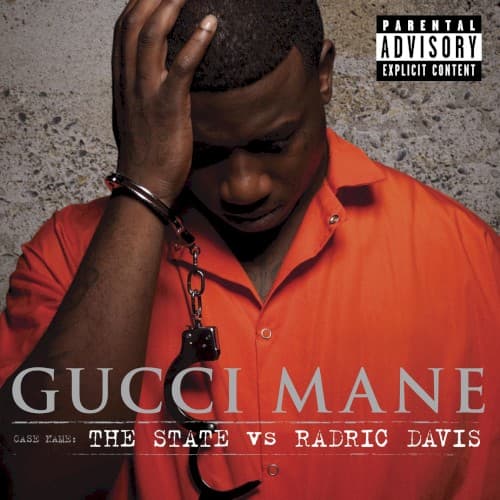
The turning point toward the mainstream arrived with Warner Bros. in 2009. After the mixtapes Bird Money and Writing on the Wall, he signed with the label in May of that year and posted a flood of guest verses, including appearances on remixes for The Black Eyed Peas and Mariah Carey. His first Warner album, The State vs. Radric Davis, came out in December 2009, built around the Plies-assisted "Wasted," which peaked at number 36 on the Hot 100, then his biggest hit. It is a decent, uneven major-label debut: the singles and the Usher collaboration "Spotlight" polish his sound, but the album sands off some of the strangeness that made the mixtapes compelling, as our review of The State vs. Radric Davis argues.
The early 2010s were defined by a growing label operation. He renamed his label 1017 Brick Squad Records, released The Appeal: Georgia's Most Wanted in 2010, and followed with Ferrari Boyz, a collaboration with Waka Flocka Flame, and The Return of Mr. Zone 6, his highest-charting EP, along with a steady run of Trap God and Trap Back mixtapes. The period also brought turbulence, including a public falling-out with associates in 2013 and several legal troubles that kept interrupting momentum.
What happened next might be the strangest chapter in modern rap. During his incarceration from 2014 to 2016, Gucci kept releasing music at a rapid pace, including collaborations with Young Thug, Migos, Chief Keef and Peewee Longway, and he put out well over a dozen projects in 2014 alone. By 2015 he was dropping the Breakfast, Lunch and Dinner triple release and King Gucci, which featured production from Metro Boomin, TM88 and Zaytoven. Few artists have stayed this visible under those circumstances.
After his release in May 2016, the narrative changed again. He signed with Atlantic, released "First Day Out tha Feds," then the album Everybody Looking, and soon had a number one single as a featured artist on "Black Beatles." Droptopwop with Metro Boomin and Mr. Davis, whose "I Get the Bag" with Migos reached number 11 on the Hot 100, showed a more polished, healthier Gucci Mane. His autobiography, published in 2017, became a New York Times bestseller, and he continued with Ice Daddy in 2021 and Breath of Fresh Air in 2023.
Why Gucci Mane's Output Reshaped Southern Rap and Trap Music
Gucci Mane's influence runs through his roster as much as his own records. Young Thug, Future, Migos, Chief Keef and Lil Uzi Vert all passed through his orbit, whether as collaborators on joint tapes or as artists he helped put in front of a larger audience. Young Thug's song "Guwop," from his Jeffery mixtape, is named after him. Producers such as Metro Boomin, Zaytoven and Southside kept returning to him as a creative partner.
His bigger contribution is to the business of being an artist. Years before streaming rewarded constant output, Gucci Mane treated the mixtape as a legitimate and profitable release format, building a brand around quantity, loyalty and a recognizable voice instead of one-off events. He also showed how thoroughly an image can be rebuilt: the sober, married, Gucci-campaign-fronting version of him in the late 2010s was a surprising reinvention, and he joked about the internet theories it sparked.
The honest caveat is that his catalog is better sampled than swallowed. No single album captures him, and the best way in is a handful of key tapes and singles. But that is also part of his legacy. In the lineage of Southern rap that runs from the crunk era through Young Jeezy and Future to the current generation, Gucci Mane is the figure who made volume itself an art form.
Follow the thread to the artists he sits beside in the genre's story. Rick Ross and Young Jeezy built Southern street rap into mainstream star power in the same era, while 2 Chainz and Future carried the idea into the next one. Gucci Mane is the connective tissue: a regional figure who kept showing up on the records that defined each stage.