The scorecard
6.4/10 · Mixed
- Writing25%
- 6.0
- Production25%
- 7.5
- Delivery15%
- 6.5
- Cohesion15%
- 5.5
- Originality10%
- 6.0
- Replay value10%
- 6.5
The brags and the lemonade-and-diamonds imagery are goofy and quotable, and the reflective cut about his past shows real self-awareness, but most verses repeat one idea in slightly different words.
Drumma Boy, Zaytoven, Bangladesh, Fatboi and Mannie Fresh give the record a wide, bouncy Southern palette, from synth-heavy trap thump to warm New Orleans swing.
Guests like Lil Wayne and Rick Ross out-rap him on the darker songs, though the low, lazy drawl and sing-song repetition are instantly recognizable and bend easily around a hook.
Three skit-length interludes, a remix tacked on the end and a run of radio-minded duets in the middle make a twenty-track sprawl with several tracks that could vanish.
The album mostly polishes ideas he had already refined on mixtapes, though his voice and vocabulary are distinct and the trap-meets-pop positioning is a real move.
The singles and the closing confession hold up well, while the interludes and the duplicated remix make front-to-back replays a chore.
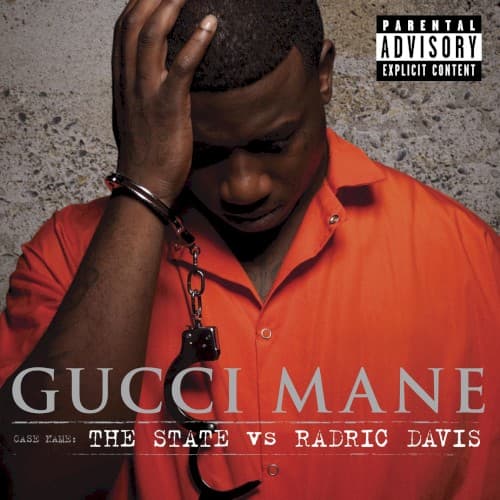
Gucci Mane The State vs. Radric Davis: Trap's Loudest Voice Takes a Major-Label Stand
The State vs. Radric Davis is the album where Atlanta's most repetitive rapper tried to prove that repetition is a style. The thesis, argued across twenty tracks of bass, is that Gucci Mane's slow, sing-song drawl and his goofy, color-coded boasts are not a limitation but a signature, and that the right Southern producers can turn them into hits. The case is strong on the singles and shakier on everything between them.
The stakes were real. This was his sixth studio album, and it arrived after a long run of independent releases, mixtapes and features that had made him a name in the South without making him a mainstream star. The major-label version had to translate a mixtape voice into a radio product, which explains the guest list: Usher, Lil Wayne, Nicki Minaj, Rick Ross, Bun B, Plies and more. It also explains the producers, a Southern dream team that moves through Atlanta trap, Memphis menace and New Orleans bounce in the space of a few songs.
What matters is how it sounds, and the sound is the best thing about it. The beats are thick and wide, the hooks are chantable and the leading voice is so unmistakable that almost any track could be played in a stadium or a parking lot. Critics split sharply on the result, which fits the music: some heard a culmination of the Dirty South, others heard a rapper who mumbles through the same joke for an hour. Both are right. The album is better than its worst reviews and not as good as its best, and its strongest argument is how easily the hits roll out of the speakers.
Zaytoven Keys, Drumma Boy Thump, and a Drawl That Refuses to Hurry
The production is a map of the South, and that is its biggest strength. Drumma Boy's Memphis-bred thump anchors the opener, the money anthem with Rick Ross and the Southern confessional near the end. Zaytoven brings the bright Atlanta keys on a love song and on the deluxe extras, Bangladesh supplies the hard, knocking drums on the Lil Wayne and Cam'ron cut, and Mannie Fresh drops in a New Orleans bounce for a duet with OJ da Juiceman. A producer like Polow da Don gives the Usher single the glossy R&B sheen it needs. The sound is consistent in weight even when it changes in region, and that is a real accomplishment on a twenty-track album.
Gucci's voice is the glue. He sits behind the beat, stretches vowels and repeats the same phrase until it becomes a chant, which is exactly the kind of cadence that Southern clubs reward. The delivery is the reason a song like the lemonade single works: the topic is silly, the hook is simple, and the groove is so locked that the silliness becomes the point. Spin heard a relentless, brilliantly goofy way with vocabulary, and that description is the fairest summary of the writing at its best.
The weakness is that the same tools are used on almost every song. His brags rely on a small set of images, such as colors, jewelry, drugs and cars, and when the beat does not carry them, the verses feel thin. RapReviews made this point about the guests: on the darker Drumma Boy tracks, the visiting rappers ride the serious tone better than the headliner does. Wayne, Ross and Cam'ron all arrive with sharper lines, and the contrast is not flattering.
There is also a split personality. The record oscillates between the playful, light-hearted Gucci and a more reflective one, and the shift is not always smooth. The second personality is the more interesting, but the album gives it less space than the first. The result is a collection of strong moods without a strong argument: a Southern rap record with a great sound, a distinctive voice and not quite enough to say. That is not a fatal flaw in a genre built on atmosphere, and the best songs here understand it: they treat the beat as the argument and the voice as the hook, and they stop before the idea runs dry. The songs that ignore that lesson are the ones that stretch past four minutes with nothing new to add, which is where the album's twenty-track length starts to cost it.
Twenty Tracks, Three Interludes, and One Remix Too Many
As a sequence, the album runs hot and cold. The first stretch is the best: an intro that sets a menacing tone, a quick joke, and then a string of Southern bangers that move from dark synths to bright keys without losing momentum. The guest-heavy section that follows is the most commercial, and it is where the radio ambitions of the album are clearest. Each song has a famous visitor, a hook designed for a playlist and a polished finish.
The pacing breaks down in the middle. Three interludes with the same comedy bit, repeated at intervals, interrupt the music, and they do more to slow the album than to establish a personality. After the second one the sequence turns toward sex-and-party songs that feel like they were assembled from the same parts, and the energy drops. The record is not long by modern standards, but twenty tracks of this kind of material is too many, and the filler is easy to hear.
The closing stretch restores some dignity. Near the end the album finally gives its reflective side room, with a confessional song that revisits his past and the chip it left on his shoulder, followed by a final remix that stretches the album past the point of usefulness. Putting a remix of the lead single at the very end is a commercial gesture rather than an artistic one, and it undercuts the sense of resolution the confessional song earned.
The length is not earned. A thirteen- or fourteen-track version, with the interludes cut, would have kept the best of the Southern production and the best of the confessions without the dead air. Instead, the sequence rewards listeners who skip, which is the wrong lesson for an album that wanted to prove Gucci Mane could carry one.
A Fun Southern Rap Record That Mostly Proves Its Case
On this site it is the first Gucci Mane album to be rated, so its place in the catalog comes from critics rather than a ranking. The fact sheet shows a polarized reception, with a Metacritic average of 66 from 11 reviews, and that is about right: the album is good rather than great, with a clear sound and a real voice but too many soft spots. It debuted at number 10 on the Billboard 200 with 90,000 copies in its first week and later went gold, which suggests that the public heard more in it than the harshest critics did.
It is for listeners who love Southern production, who enjoy a rapper with a strong personality, and who want a snapshot of Atlanta trap at the moment it was becoming a national sound. It is a good fit for anyone curious about how Gucci Mane's mixtape voice translated to a major label. Skip it if you want dense lyricism, a tight album arc or a record you can play start to finish without reaching for the skip button. The three tracks to start with are Wasted, Lemonade and Worst Enemy, because together they cover the radio hit, the signature oddball single and the personal side.
It has aged better than some of its Southern peers from 2009. The sound of the singles, with their synth-heavy bounce and chantable hooks, has been echoed across trap for years, and the album works as a document of how that style crossed over. The interludes and the extended tracklist have aged worse, and nothing about them suggests the album needed twenty tracks.
For the next step, listen to the free mixtapes that critics at the time recommended over the album, since they show the same voice with less polish, and then to a more focused Southern record that treats the drawl as a weapon. The State vs. Radric Davis is the version of Gucci Mane that learned to sound big, and for the three or four songs where that works completely, it is enough.
Track by track
Track Listing
Classical (intro)
StandoutDrumma Boy opens with a menacing, orchestral-leaning beat that sets the tone for a darker album than the title suggests. It is a mood piece rather than a song, but it does its job.
Interlude #1: Toilet Bowl Shawty
WeakA comedy skit with Mike Epps. It is filler, and it is the first of three that interrupt the music.
Heavy
StandoutShawty Redd supplies a thick, bass-leaning beat for one of the promotional singles, and Gucci leans into a slower, heavier version of his drawl. Spin singled it out as an example of how subversive he can be, and the track proves that his voice works best when the production gives it weight. It lacks a big hook, but the groove carries it.
Stupid Wild
SolidLil Wayne and Cam'ron join Gucci over a hard Bangladesh beat. Both guests come with sharper lines, and the contrast makes Gucci sound like the least ambitious voice on his own song. The beat is excellent and the energy is high, but the track belongs to its visitors.
All About the Money
StandoutRick Ross brings his heavyweight voice to a Drumma Boy beat, and a music video was filmed for it. The theme is simple and the hook is blunt, which suits the song. Ross sounds more commanding than Gucci, but the pairing works as a straightforward money anthem.
Lemonade
StandoutThe third single and the album's most distinctive song. Bangladesh builds a bouncy, sample-driven beat from a Flo and Eddie record, and Gucci turns the subject, the profits of selling codeine-laced lemonade, into a comic chant where everything is the color of a lemon. It reached number 53 on the Hot 100 and number 8 on the rap chart. The writing is repetitive by design, and that is why it works: the groove is hypnotic, the joke is committed to, and the hook sticks. It is the clearest example of how Gucci's silliness becomes a strength.
Bingo
SolidScott Storch produces a bright, synth-led beat for Soulja Boy and Waka Flocka Flame. It was the fourth single and peaked at number 75 on the R&B chart. It is catchy and disposable, a club track that earns its place in the sequence but not much more.
Spotlight
SolidPolow da Don gives Usher a glossy R&B bed for the second single, which reached number 42 on the Hot 100 and number 15 on the R&B chart. Usher's hook carries the song, and Gucci sounds comfortable but secondary. It is a smooth, effective crossover move that shows the label's priorities more than the artist's.
I Think I'm in Love
StandoutZaytoven's bright, bouncy keys frame a gentle love song with Jason Caesar. The mood is warm and the production is the best part. The writing is thin, but the Atlanta keys give it a charm.
Bad Bad Bad
SolidKeyshia Cole sings the hook over a Fatboi beat. It is a decent R&B-leaning song that leaves little impression, and Gucci's verses blur into the background.
Interlude #2: Toilet Bowl Shawty
WeakThe same comedy bit as before. Filler that interrupts a sequence that was already running out of energy.
Sex in Crazy Places
WeakFatboi produces a slick party track with Bobby V, Nicki Minaj and Trina. It charted on the Bubbling Under list on digital sales, and the cast is more interesting than the song. Minaj and Trina bring more personality than the host, but the track is mostly the sort of filler that makes the middle of the album drag.
The Movie
SolidJazze Pha and Detroit supply a polished beat for a narrative-leaning track. It is competent and forgettable, with no sign of why it should be here.
Volume
SolidJ.U.S.T.I.C.E. League and Wooh da Kid join Gucci for a gritty, club-aimed track. The beat is hard and the energy is high, but it is another track that blends into the surrounding ones.
Gingerbread Man
StandoutMannie Fresh brings New Orleans bounce, and OJ da Juiceman adds his ad-lib-heavy voice. It is a playful change of regional flavor and one of the most fun cuts on the record, even if the lyrics are lightweight.
Wasted
StandoutThe lead single, with Plies and production by Fatboi, and his first top five on the R&B chart. It reached number 36 on the Hot 100. The beat is simple and the hook is smooth, and Plies's pained, melodic voice is a perfect foil for Gucci's lazy drawl. It is the best example of how the pop-leaning approach could work: catchy, relaxed and unforced. The theme, getting high and ignoring consequences, is routine, but the execution is flawless.
Kush Is My Cologne
StandoutDrumma Boy produces a lengthy track with Bun B, Devin The Dude and E-40, with an Amy Winehouse interpolation in the mix. It is the most Southern and West Coast cross-section on the album, and the verses from the guests are more interesting than the host's. A fun, loose posse cut.
Worst Enemy
StandoutDrumma Boy gives Gucci his best material on the album: a dark, reflective beat over which he revisits his past and how it fed his fame, referencing Young Jeezy and T.I. as he moves on. It was a promotional single and Spin cited it as an example of his subversive side. RapReviews also noted that it is the one song where Gucci rides a serious tone as well as his guests. The writing is plainer and more direct than the rest of the album, and the confessional register suits his flat voice. It is the track that most deserves to be heard by listeners who think they already know him.
Interlude #3: Toilet Bowl Shawty
WeakThe third and final repeat of the same skit. By now it is simply dead air.
Wasted (remix)
SolidFatboi's beat returns with Lil Wayne, Jadakiss and Birdman added. The extra verses are competent and Jadakiss is the sharpest, but placing a remix of the lead single at the end of the album is a commercial move that weakens the closing.
Frequently Asked Questions
Is The State vs. Radric Davis Gucci Mane's best album?
What are the best songs on The State vs. Radric Davis?
How did The State vs. Radric Davis perform commercially?
Genres