Scorecard: 7.7/10 · Great
How we score- Writing(25%)
- 8.5
Nas unpacks divorce and middle age with the specificity and internal rhymes that defined him, from the Saudi oil bars on "No Introduction" to the unsuitable-men irony on "Daughters."
- Production(25%)
- 8.0
No I.D. and Salaam Remi balance boom bap classicism with orchestral weight on "A Queens Story" and "Accident Murderers," though "Summer on Smash" chases radio appeal the album does not need.
- Delivery(15%)
- 7.5
The plainspoken, conversational flow suits the grown-man themes, but the relaxed cadence occasionally slips into autopilot on lesser tracks like "Roses."
- Cohesion(15%)
- 6.5
The 14-track standard edition flows well from introspection to nostalgia; the deluxe bloats to 19 tracks with material that disrupts the arc and dilutes the thesis.
- Originality(10%)
- 7.0
The divorce-album framework and the willingness to admit vulnerability set it apart from Nas' own comeback records, though the boom bap foundation and MC Shan samples court nostalgia more than invention.
- Replay value(10%)
- 7.5
The thesis tracks and the Amy Winehouse collaboration hold up; the album-closing deluxe filler and the Swizz Beatz pop attempt do not.
Nas Life Is Good — The Wedding Dress He Kept When She Left Everything Else
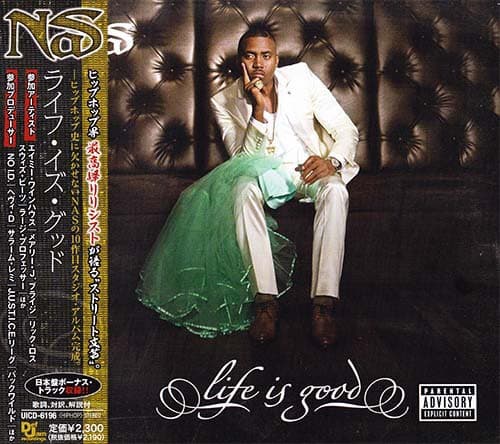
Nas released Life Is Good holding Kelis' green wedding dress on the cover, the only item she left behind after their divorce, and the image is not a stunt. The album that follows is his most vulnerable work since he had nothing to prove, a 38-year-old rapper using the same internal rhymes and Queensbridge references that made Illmatic to admit that fame did not spare him child support hearings or the lawyers splitting assets. The thesis arrives early: life is good, he repeats across 14 tracks, but the more he says it the more it sounds like a mantra he is testing against the evidence. This is Nas' Here, My Dear, the Marvin Gaye comparison he made himself, and it earns the reference by refusing to sand down the bitterness or pretend the nostalgia he traffics in solved anything.
The stakes are whether Nas, two decades past his debut and halfway through a catalog that veers from essential to forgettable, can write with the clarity he had at 20 about problems he did not have then. Life Is Good answers that question on "Daughters," where he realizes his teenage daughter is dating the kind of man he was in the Queensbridge projects, and on "Bye Baby," where he recounts the wedding, the counseling, the legal proceedings, and the moment he knew it was over. The album works because Nas applies the same narrative eye he once turned on corner deals to the fact that marriage is expensive and maturity does not arrive on schedule. No I.D. and Salaam Remi build him a foundation of boom bap drums, orchestral strings, and MC Shan samples that let him sound like 1994 while writing about 2012, and the tension between the golden age sonics and the grown-man subject matter is the point.
The Boards That Let Him Sound His Age Without Sounding Old
No I.D. and Salaam Remi split production and pull Nas in opposite directions that somehow meet in the middle. No I.D. handles the introspective material with the warm crackle of throwback beats: "Loco-Motive" channels the underwater keyboard menace of "N.Y. State of Mind," "Daughters" layers a dusty soul chop that gives the vulnerability room to breathe, and "Back When" flickers with drums that recall A Tribe Called Quest at their loosest. Remi works the orchestral side, stacking classical piano and strings on "A Queens Story" until the boom bap foundation feels like it is holding up a symphony, and letting pipe organ rumble under "Accident Murderers" while Rick Ross delivers a rags-to-riches verse that plays like a warped mirror of Nas' own narrative. The two producers never quite merge styles, but the album benefits from the split: Remi gives Nas the grandiose sound his legacy chasing demands, No I.D. keeps it grounded in the breaks and samples that built him.
The writing is where Nas makes the case. He still loves internal rhymes and dense imagery, but the subjects are no longer hustlers on the corner. "No Introduction" opens with boats and revolutionary posturing before pivoting to the real thesis: organizing to take over Goldman Sachs and teaching the world facts. The bravado is there, but it sits next to admissions that he feels too rich for the hood and too hood for Hollywood on "Reach Out," a song built around an Isaac Hayes piano loop and a Mary J. Blige hook that might be too smooth for its own good. "Daughters" is the album's clearest success, Nas bewildered at his daughter's social media presence and his past undermining the authority he is trying to claim, the irony so obvious he does not oversell it. "Bye Baby" is the other end of that narrative, recounting the marriage from the wedding to the court proceedings without flinching, and the Aaron Hall sample from "Goodbye Love" underlines the point.
The weaknesses are visible and Nas does not hide them. "Summer on Smash" is a Swizz Beatz radio grab with Miguel on the hook, and it has nothing to do with the reflective tone the album earns everywhere else. The deluxe edition stretches the tracklist to 19 songs, diluting the arc with material that feels like vault clearance rather than considered sequencing. "Roses" is a Dan Wilson co-write that gestures at pop accessibility without committing, and "The Black Bond" is an instrumental interlude that stops the momentum for no reason. Even on the standard edition, "World's an Addiction" meanders for five minutes without a strong enough hook to justify the length, and Anthony Hamilton's feature does not add enough to compensate.
A Front-Loaded Arc That Peaks Early and Coasts to the End
The album front-loads its strongest material and never recovers the momentum. The first stretch builds the thesis without a misstep, establishing the grown-man perspective and nostalgic boom bap sound before delivering the album's two best verses. By the time the up-tempo victory lap arrives, sampling Super Cat and pushing the New York pride that Nas has never abandoned, the album has already made its argument. What follows is a slow descent into filler and half-finished ideas, the sequencing unable to sustain the weight of the themes or the 14-track length.
The Amy Winehouse collaboration is the exception, an ill-fated duet that feels like the ladies track Nas never quite nailed before, and the narrative between doomed lovers plays like a distillation of the divorce themes without naming them directly. The song was titled after Winehouse's guitar, and Salaam Remi's production treats her vocal like an instrument, letting it haunt the track without overwhelming Nas' verses. It is the album's most fully realized moment after the father-daughter confession, and it arrives too late to redirect the back half. The closing run mixes soul and jazz in ways that recall Low End Theory, but the ideas do not develop past the loops, and the deluxe edition tacks on five more songs that kill the ending and replace it with nothing.
The Best Nas Album After the Comeback, Before He Learned to Edit
Life Is Good is Nas' third-best album, behind only Illmatic and Stillmatic, and it is the one that proves he could write about new subjects without losing the technique. The divorce framework gives him a thesis that sustains 14 tracks, and No I.D. and Salaam Remi give him production that sounds like 1994 without pretending it is. The weaknesses are the same ones that have followed Nas since It Was Written: he does not know when to stop, he chases radio singles that do not fit, and he trusts his own judgment on sequencing more than he should. The deluxe edition is a test case for every bad instinct, bloating a focused album into a slog and replacing a strong ending with five songs that say less. Strip it back to the standard 14 and you have the best Nas album of the 2010s, the one that updates the Queensbridge narratives for middle age without turning them into nostalgia porn.
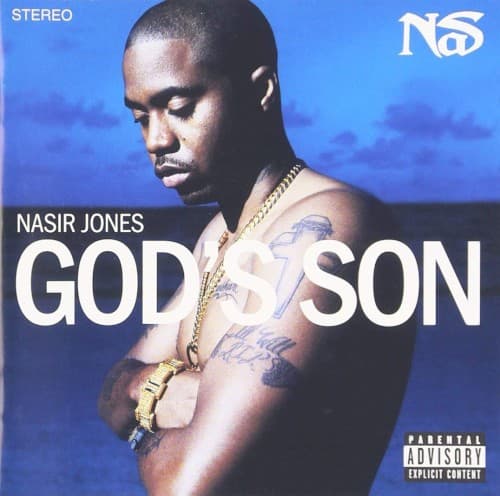
This is the album for anyone who wondered if Nas could still write at the level of his first two classics, and the answer is yes on six or seven tracks and no on the rest. Start with "Daughters," "Accident Murderers," and "Cherry Wine" to hear what the album does that nothing else in his catalog does. Skip "Summer on Smash" and anything past track 14 unless you need to hear every Salaam Remi loop he recorded that year. The best comparison point is God's Son, another post-divorce Nas album that mixes vulnerability with bravado, but Life Is Good is sharper and more willing to let the bitterness show. If you only know Illmatic and Stillmatic, this is the place to hear what Nas sounds like when he stops trying to reclaim 1994 and starts writing about what came after.
Track Listing
No Introduction
▲Nas opens with a thesis statement that moves from poverty to revolution in four minutes, citing his role as a "graphic, classic song composer" and pivoting from lifestyle boats to organizing a billion Black people to take over Goldman Sachs. The J.U.S.T.I.C.E. League production is sturdy but unremarkable, a mid-tempo beat that lets Nas set the tone without overwhelming the message. The Saudi oil line and the civilized-versus-revolutionary tension frame the grown-man perspective the album will spend 13 more tracks unpacking.
Loco‐Motive
▲No I.D. channels the underwater keyboard dread of "N.Y. State of Mind," and Nas responds with the kind of dense internal rhymes that made him. Large Professor's feature is a homecoming, the two Queensbridge natives trading verses over a beat that sounds like 1994 without copying it. The underground vibe and the refusal to chase hooks make this the album's clearest boom bap statement, proof that Nas can still write in the mode that built him without retreating into nostalgia.
A Queens Story
▲Salaam Remi stacks classical piano and orchestral strings over boom bap drums, building a production that pays homage to Queensbridge and Nas' creative influences without naming them. The Run-DMC and MC Shan samples anchor the song in golden age hip-hop, and Nas writes a love letter to his borough that avoids the clichés by focusing on the specifics of his own upbringing. The weight of the production matches the mytholigizing tone, and the balance holds.
Accident Murderers
▲No I.D. layers pipe organ under a beat that sounds like a funeral march, and Nas addresses senseless violence with the narrative clarity that defined Illmatic. Rick Ross delivers a rags-to-riches verse that plays like a warped reflection of Nas' own story, the two perspectives on street life sitting side by side without reconciling. The MC Shan sample ties the song to the boom bap foundation, and the storytelling is specific enough to earn the four-and-a-half-minute runtime. This is the album's best pure rap track.
Daughters
▲Nas admits that fatherhood bewilders him, his teenage daughter dating unsuitable men while he realizes he was that man two decades ago in Queensbridge. The irony is so clear he does not oversell it, and the vulnerability cuts deeper than any of the divorce material because it concedes that his past undermines the authority he is trying to claim. No I.D.'s dusty soul production gives the confession room to land, and the three-minute runtime is the album's tightest. This is the song that justifies the Here, My Dear comparison, Nas using his daughter's perspective to admit what he cannot say directly.
Reach Out
●Mary J. Blige anchors a song about displacement, Nas caught between the hood that birthed him and the Hollywood circles that will not fully accept him. The Isaac Hayes piano loop is lush enough to carry the theme, but the production by Salaam Remi, Darkchild, and DJ Hot Day feels over-smoothed, the edges sanded down in a way that undercuts the tension Nas is describing. The New Edition interpolation adds nothing. Solid idea, safe execution.
World's an Addiction
▼Anthony Hamilton's feature does not add enough to justify the five-minute runtime, and Salaam Remi's production meanders without a strong hook to anchor it. Nas writes about life struggles in broad strokes, the specificity that powers the album's best tracks replaced by thematic gestures. This is filler, the kind of track that makes the case for a 10-song album instead of 14.
Summer on Smash
▼Swizz Beatz builds a radio single that has nothing to do with the reflective tone the album earns everywhere else, and Miguel's hook chases pop appeal without committing. Nas sounds disengaged, the verses coasting on autopilot while the production pushes for summer anthem status. This is the album's worst sequencing decision, a track that disrupts the thesis to chase a chart position it will not reach.
You Wouldn't Understand
●Buckwild's mellow production samples Miles Jaye and Eric B. & Rakim, building a neo soul foundation that suits the life-struggles theme. Victoria Monét's feature is understated, and Nas writes with the plainspoken flow that defines the album's conversational mode. The track works without reaching for anything more than a solid album cut, the kind of mid-tier material that a tighter album would leave off.
Back When
▲No I.D. flickers the drums and Nas mytholigizes Queensbridge again, citing the "oracle bred by city housing" and revisiting the MC Shan samples that anchor the album in golden age sonics. The production recalls A Tribe Called Quest at their loosest, and the three-minute runtime keeps the nostalgia from overstaying. This is the album's most successful backward-looking track, Nas writing about the past without pretending it solved the present.
The Don
▲Heavy D, Salaam Remi, and Da Internz sample Super Cat's "Dance inna New York" and build an up-tempo victory lap that extols Nas' rapping prowess and New York pride. The 1990s hip-hop sound is the most explicitly retro production on the album, and Nas responds with the kind of bravado that feels earned after six tracks of introspection. The three-minute runtime is tight, the hook is strong, and the sequencing gives the album a needed energy boost before the back half sags.
Stay
●No I.D. mixes soul and jazz elements in a way that recalls Low End Theory and Me Against the World, and Nas writes about the line between love and hate without developing the idea past the loop. The production is atmospheric enough to carry the track, but the lack of a strong hook or a narrative arc leaves it feeling like a sketch. Solid, not essential.
Cherry Wine
▲Amy Winehouse's vocal haunts the track, Salaam Remi treating it like an instrument rather than a feature, and Nas writes a narrative between ill-fated lovers that distills the divorce themes without naming them. The song was titled after Winehouse's guitar, and the specificity of that detail matches the care in the production. This is the best ladies track Nas has ever delivered, infinitely classier than the label suggests, and the six-minute runtime is the only moment on the album where the length feels earned. The dedication to Winehouse in the video underlines the loss.
Bye Baby
▲Salaam Remi and 40 sample Guy's "Goodbye Love," and Nas recounts the marriage from the wedding to the divorce proceedings without flinching. The narrative follows the counseling sessions and the lawyers splitting assets, and the bitterness is specific enough to avoid self-pity. This is the album's clearest divorce statement, the track that earns the Here, My Dear comparison by refusing to sand down the anger or pretend the nostalgia solved anything. The four-minute runtime closes the standard edition on the album's strongest thematic note.
Nasty
●Salaam Remi builds a grimy Queensbridge beat and Nas delivers a back-to-basics banger that has nothing to do with the divorce themes or the grown-man perspective. The track works as a single, the kind of material that proves Nas can still write a street anthem, but it disrupts the album arc when tacked onto the deluxe edition. This should have stayed a standalone release.
The Black Bond
▼A Salaam Remi instrumental interlude that stops the album momentum for no reason. Filler.
Roses
▼Dan Wilson co-writes a pop-accessibility track that gestures at radio play without committing, and Nas sounds uncertain about the mode. The Al Shux production is polished but generic, and the three-and-a-half minutes add nothing to the album that the standard edition did not already say better. Skip it.
Where's the Love
▼No I.D. samples 3rd Bass and Cocaine 80s provide the feature, but the four-and-a-half-minute runtime drags without a strong enough hook to justify the length. The deluxe edition exposes the limits of Nas' judgment on sequencing, and this track is evidence that the vault material should have stayed there.
The Don (Don Dada remix)
●Salaam Remi and Heavy D remix "The Don" for the Japan bonus track, and the four-minute version adds nothing to the album version. This is bonus-track filler for completists only.