Rod Wave: The St. Petersburg Voice Who Made Heartbreak a Chart Strategy
Most rappers announce themselves with swagger. Rod Wave announced himself with a crack in his voice. Born Rodarius Marcell Green on August 27, 1998, in St. Petersburg, Florida, he has spent the better part of a decade turning pain, regret and tenderness into some of the most reliable commercial hip-hop of the streaming era. If you want a single Rod Wave artist profile in one sentence: he is the singer-rapper most often credited as a pioneer of trap-soul.
His rise did not come from a radio push or a viral dance. "Heart on Ice," from the 2019 mixtape PTSD, caught fire on YouTube and TikTok and climbed to number 25 on the Billboard Hot 100. That song set the template: a melody that hurts, a delivery that sounds half sung, half confessed, and a hook people repeat to themselves when they are not okay.
The backstory matters because he never hides it. Green grew up in a house shaped by his father's incarceration, drifted into trouble as a kid, and was steered toward music by his father, who bought him a microphone, while another relative bought him a computer to record on. His father and a close family friend later started Hit House Entertainment to back him before he signed with Alamo Records, where he remains.
What makes the story unusual is the consistency. Since 2019 he has put a top-ten album on the Billboard 200 every single year, and four of them have reached number one.
Trap-Soul, Gospel Cries and the Sound of Open Wounds
Rod Wave sings the way other rappers rap. The cadence is rhythmic enough to sit on a trap beat, but the phrasing leans on long, bending notes and a rasp that cracks right where the emotion peaks. Critics have used words like candid and heart-tugging for the result, and the praise tends to circle the same point: the songs feel like entries from a diary, not constructed singles.
The subject matter is narrow on purpose. Heartbreak, loyalty, family, fear of failure, the weight of getting out. He has described the music as therapy, and that explains why records sound more like confession than performance. When a track does turn braggadocious, it usually comes wrapped in a sad piano line.
Sonically he moves between trap drums, hip-hop soul and R&B, with a recurring church-organ and gospel undercurrent on songs like "Long Journey" and "Chip on My Shoulder." He is also fond of unexpected samples. "Already Won" borrows from New Edition's "Can You Stand the Rain," "Cold December" leans on Hank Williams Jr., and "Crazy" reworks Paramore's "Ain't It Fun." Those picks point to a listener who grew up on E-40 and Boosie Badazz but also admires Adele, Ed Sheeran and Tupac Shakur.
The risk is sameness. Spend an hour with a full album and the moods can blur together, which is the most common complaint about his catalog. Fans would answer that the sameness is the point: nobody else is making mid-tempo, tear-streaked street music at this scale.
From Hunger Games Mixtapes to Four Number-One Albums
The groundwork came early. His 2015 release Rookie of the Year and the Hunger Games mixtape trilogy got things started, and the last two Hunger Games tapes arrived after he signed with Alamo Records in 2018. Then PTSD and "Heart on Ice" landed in June 2019, and he spent July through October opening for Kevin Gates on the I'm Him Tour. Green later said that run made the world feel bigger and made him humbler.
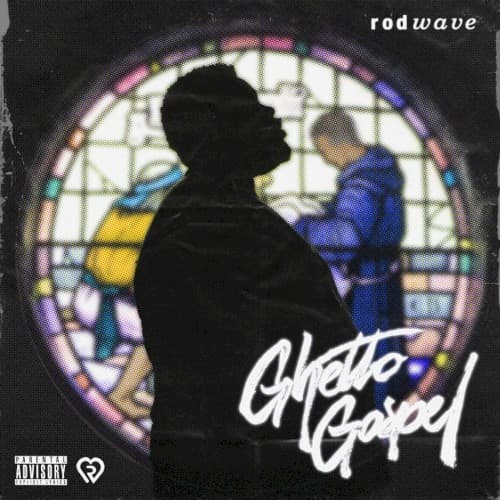
Gates executive produced his debut album, Ghetto Gospel, released November 1, 2019, which peaked at number ten on the Billboard 200. Our review rated it 6/10: the voice and the feeling are unmistakable, but the project is more a promising draft of the Rod Wave formula than the finished product. You can read the full breakdown in our review of Ghetto Gospel.
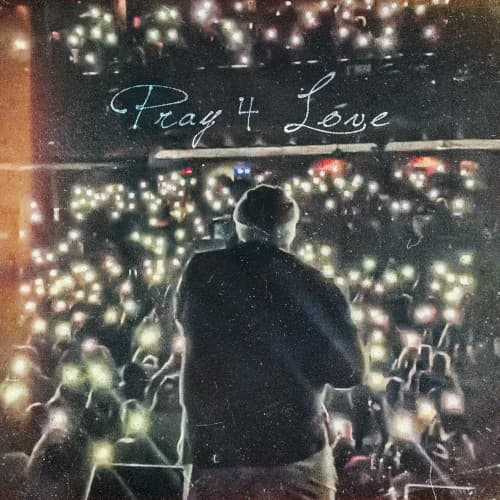
The jump came fast. Pray 4 Love arrived April 3, 2020, debuting at number two, and its song "Rags2Riches" (with a remix featuring Lil Baby) reached number 12 on the Hot 100, then his highest-charting song. XXL put him in its 2020 Freshman Class that August. By then he had also signed a global co-publishing deal with Sony Music Publishing.
SoulFly (March 2021) was the commercial breakthrough: it debuted at number one on the Billboard 200 with 130,000 units, and "Street Runner" and "Tombstone" became his highest-charting singles, both inside the top 20. It came after a public spat in which he accused Alamo of not paying him and said the album would not come out until he was. Beautiful Mind followed in August 2022 and also opened at number one after a missed release date frustrated fans, and the EP Jupiter's Diary: 7 Day Theory landed that November.
Nostalgia in September 2023 is the peak so far. It debuted at number one with 137,000 units, held the top spot for a second week, and produced a run of Hot 100 entries including "Fight the Feeling," "Call Your Friends," "Come See Me" and "Boyz Don't Cry," with guests including 21 Savage. Last Lap (October 2024) debuted at number two, extending a streak that Billboard framed as matched only by Taylor Swift for top-ten albums every year from 2019 to 2024. Don't Look Down followed in 2026 and went to number one.
Not every year was smooth. A dispute with Boosie Badazz over lyrics and samples surfaced in late 2023, and he has faced legal trouble over the years, including a 2024 weapons arrest in Florida. The music mostly stays out of the way of that noise.
Why Rod Wave's Melodic Pain Reshaped Modern Street Rap
Rod Wave's real contribution is permission. He made it commercially normal for a street rapper to sing about heartbreak without a trace of irony, and to build entire tours and arena runs around that vulnerability. In the lineage of artists who bridged street music and raw emotion, from 2Pac to Juice WRLD, he sits closer to the sung end of the spectrum than almost anyone with his sales.
The numbers back that up. He has sold more than 100 million digital copies in the United States, and he was named among the highest certified artists in the country. His collaborations with Kevin Gates, Lil Baby, Lil Durk, Polo G, NBA YoungBoy and Future's "Wait for U," which he remixed as "Sorry 4 The Wait," show how easily he slots into the melodic wing of the genre.
If you came up on lyrical hip-hop, he may not fit your idea of rap at all, and his weaker records can feel samey. But for the audience that finds him, nothing else sounds quite like it, and the sales show how many people that is.
Start with "Heart on Ice," move to SoulFly for the biggest swing, then Nostalgia for the most polished version. If you want context for where it began, the Ghetto Gospel review is the place to start.