The scorecard
5.7/10 · Mixed
- Writing25%
- 5.5
- Production25%
- 6.5
- Delivery15%
- 5.5
- Cohesion15%
- 5.0
- Originality10%
- 5.5
- Replay value10%
- 5.5
Verses circle the same appetites for drugs, money and women with little new imagery, and the Bobby persona is a thin frame for most of the rhymes.
The record's best beats come from outside producers such as Megahertz on We Pop and True Master on Fast Cars, while RZA's own tracks are sparser and less detailed than his Wu-Tang work.
RZA's flat, gruff voice is recognizable but rarely changes pace, and the guests, especially Ghostface Killah and Masta Killa, often sound more engaged than the host.
Six different producers and a spread of Wu affiliates give the sixteen tracks no single sound, though the run time stays reasonable.
It continues the Bobby Digital style rather than extending it, and the attempts at new textures, such as the live band on See the Joy, come only at the end.
A handful of cuts are worth returning to, but the middle of the tracklist offers little that holds attention a second time.
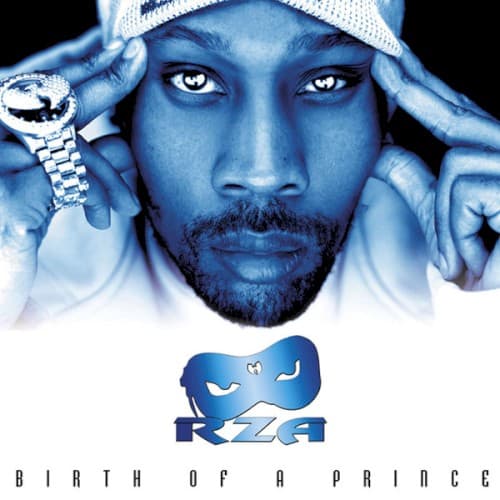
RZA Birth of a Prince: The Producer Who Gave His Best Beats Away
The best beats on Birth of a Prince are not the RZA's. That is the awkward fact at the center of an album by one of hip-hop's most influential producers: when Megahertz builds the lead single and True Master builds the Ghostface Killah feature, the record sounds sure of itself, and when RZA builds the track himself, it sounds like a sketch. A producer's album that hands its sharpest tools to other people is a strange object, and it never quite explains itself.
That is the thesis. Birth of a Prince is not a failure of ideas so much as a failure of focus. It is RZA's third solo studio album, and it comes without the Bobby Digital alias even though he calls himself Bobby throughout and writes in the same style. The sessions ran from June to September 2003 at his own 36 Chambers Studio, which is a short window for a record meant to reset his solo career, and the haste shows in the sequencing and in the uneven mixing between producers.
Listened to as a built object, the album is a collection of parts. The drum programming changes from track to track, the arrangements range from stripped-down to clumsy, and the vocal sits at different distances from the beat depending on whose mix you are hearing. That does not make it a bad record, since there are several tracks that stand alone, but it does make it a hard one to love as a whole. The reception reflected that: critics split between those who found it a respectable addition to his catalog and those who called it a career low, with an average score of 62 from eleven reviews.
The stakes are the question of what RZA is without the Wu-Tang Clan's collective ear. On this record the answer is: a smart man with a lot of good ideas that never receive the same level of finishing.
Six Producers, One Host and a Sound That Never Settles
The writing is the clearest weak point. RZA's verses circle drugs, women, money and a few grudges, and the repetition of those themes dulls the impact of what might otherwise be a solid rhyme pattern. The Bobby Digital character, the hedonistic alter ego he used on earlier records, supplies a frame but not a story, and several lines feel like they exist only to fill the space in front of the hook. One reviewer in the reception summed it up as self-obsessed and repetitive, and the complaint is hard to dispute.
Delivery follows the same pattern. RZA's voice is a gruff, even, slightly sleepy monotone, and he rarely changes pace or pitch. The guests do the work of adding variety. Ghostface Killah's rapid, vivid delivery, Masta Killa's calm precision and Ol' Dirty Bastard's chaotic presence all bring more life to their tracks than the host brings to his own. That is a feature of the Wu-Tang model, where the strength was always the ensemble, but on a solo album it leaves the lead voice sounding like a guest on his own record.
Production is where the record should shine and where it divides. RZA produced the majority of the tracks, including the quieter, sparser pieces such as Grits and Koto Chotan, but his own beats here lack the dense, dirty detail of his earlier Wu-Tang work: the drums are cleaner, the loops are simpler and the low end is lighter. Megahertz on We Pop, True Master on Fast Cars and Bronze Nazareth on two of the later tracks all deliver more developed arrangements, with clearer drum programming and more distinct textures. The mix also varies, because the producers' contributions sit at different levels of polish and the album never evens them out.
The concrete weakness is the uneven quality of the beat-making. The strongest tracks have a clear idea of how the drums, the melody and the vocal should fit together, and the weaker ones feel unfinished: a loop, a drum pattern, a vocal and nothing in the arrangement to develop. For an artist whose reputation rests on arrangement, that is a notable gap. The result is a record that is often pleasant to listen to and rarely interesting to study, which is a disappointing outcome for a producer-first listener. Even the better tracks carry small flaws in the mix, such as vocals that sit too far forward or low-end that vanishes on smaller speakers, and those flaws matter more on a record sold on the strength of its maker's ear.
Sixteen Tracks, Few Transitions and a Late Change of Texture
As a sequence, the album begins with energy and loses its direction as it goes. The opening run sets a reasonable tone, with a brief opener and a heavier second track, and the lead single arrives early enough to give the record momentum. The first third has the strongest mix of producers and guests, and it is where the album feels most like a collective project with a host.
The middle stretch is the problem. A series of tracks with similar tempos, similar vocal levels and similar themes follow each other without any transition, and the quality of the production drops at the same time. Because the credits shift between producers, the sound changes from song to song without a clear logic, so the album sounds neither unified nor deliberately varied. There are no skits, no spoken passages and no structural devices to break the sequence into movements, and the record relies on the guests to provide variety, which they do only intermittently.
The ending is better than the middle. The final tracks include a longer, more atmospheric track from Bronze Nazareth and a closer that uses a live band, with keyboards, bass, drums, flute and trumpet credited, and the added texture is a relief after a long run of programmed beats. That change shows what the album might have been with more of that ambition. The sixteen-track length is not earned, but the closing section offers a hint of purpose, and the final song is the one point where the record sounds like a statement rather than a collection. A sequence that moved the live-band ideas earlier would have given the whole project a clearer shape.
A Hit-and-Miss Third Album That Hints at Better Records
No other RZA albums are rated on the site yet, so the ranking cannot be set here, but the context is clear. Birth of a Prince reached number 49 on the Billboard 200 and received mixed reviews, ranging from praise for its Wu-Tang spirit to a description of it as a career low. It sits in the middle of the scale because its best tracks are good enough to recommend and its worst are filler.
The album is for listeners who already follow the Wu-Tang universe and want to hear how RZA sounds in a more hedonistic, less mystical mode, and for anyone interested in the producer-as-artist question. It is also worth hearing for the guest appearances, since Ghostface Killah, Masta Killa and Ol' Dirty Bastard all deliver their parts with more energy than the host does. It is not for listeners who want the dense, textured production of his earlier work, or for those who want a tight, focused album. It is not a good starting point for anyone new to RZA.
The record has aged as a curiosity, and its position in the catalog is clearer now: a stepping stone between the more distinctive records on either side of it, which is how one reviewer described it at the time. The best tracks still sound good, and the live-band closer reads as a hint of a direction that was only partly followed.
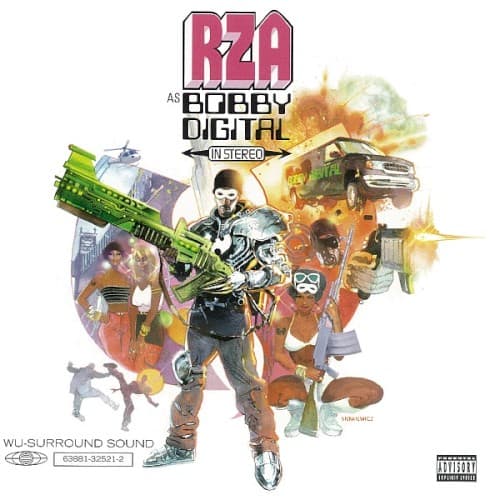
Start with We Pop, the lead single with Ol' Dirty Bastard, then Fast Cars for the Ghostface Killah feature and See the Joy for the live-band closer. If you want the stronger RZA record, go next to Bobby Digital in Stereo, the earlier album built around the same character.
The record's most accurate description is that it is a very good compilation of an uneven album, and the three songs listed above are the ones worth keeping.
Track by track
Track Listing
Bob n' I
SolidJose 'Choco' Reynoso produced the opener, a short 2:52 introduction that sets the Bobby persona in place. It is competent and functional, with a vocal that sits comfortably but a beat that lacks the weight of a proper opening statement.
The Grunge
WeakRZA produced this 1:56 cut himself, and it is a sparse, brief sketch with a flat vocal and little arrangement. It is a good example of how his own beats on the record often stop before they are finished.
We Pop
StandoutThe lead single, produced by Megahertz and featuring Ol' Dirty Bastard and CCF Division. At 4:53 it is the longest song on the record, and the extra space is used well: the drums are clearer and heavier than on the RZA-produced tracks, the arrangement has a recognizable hook, and Ol' Dirty Bastard's presence gives the song a chaotic energy that the host cannot supply. It found mild success in the UK, and it is the album's best argument that the formula can work. The contrast between this beat and the sketches that surround it is the whole story of the record.
Grits
StandoutRZA produced this with Masta Killa and Allah Real on the credits. The beat is steady and spare, Masta Killa's calm delivery offers a welcome change of voice, and at 4:17 the track has enough room to build a mood. A solid mid-album cut.
Fast Cars
StandoutTrue Master produced this track with Ghostface Killah and Erica Bryant. It is the clearest example of an outside producer giving the record a fuller sound: the drums have punch, the arrangement leaves room for the guest and Ghostface's quick, vivid delivery lifts the whole song. At 3:59 it is tight and confident, and it makes the argument for what the record could have been with a more consistent producer lineup.
Chi Kung
SolidBarracuda produced this track with Beretta 9 and Cilvaringz. It is a sparse, brooding piece at 4:20, with a mood that suits the title, though the beat does little to develop and the verses are uneven.
You'll Never Know
SolidRZA is the producer and Cilvaringz the guest. At 3:23 it is an ordinary mid-tape track, with a steady beat and a vocal that fades into the background.
Drink, Smoke + Fuck
WeakA 3:23 track whose title announces the album's most repetitive theme. RZA produced it, and the beat is straightforward and the writing is a list of appetites without any new angle. This is the kind of track the harshest reviews pointed to.
The Whistle
SolidRZA produced this with Masta Killa and Prodigal Sunn. The beat has a simple, repeating hook and the guests bring a bit of variety, but at 3:02 it feels like a minor entry.
The Drop Off
SolidDaddy-O and Division appear on this 3:27 track. RZA's beat is steady, but the song blends into the ones around it and leaves no strong impression.
Wherever I Go
WeakAt 4:49 this is one of the longest tracks, with Allah Real and CCF Division joining. RZA produced it, and the extra length is not justified by the arrangement, which repeats rather than develops. It drags in the middle of the tape, where the album can least afford it.
Koto Chotan
StandoutA shorter track at 2:50 with Masta Killa and Tash Mahogany. The title suggests a more exotic palette, and the track is among the more atmospheric on the record, with a vocal presence from Tash Mahogany that adds a different color. A modest highlight.
A Day to God Is 1,000 Years
StandoutBronze Nazareth produced this 3:57 track, and it is one of the more thoughtful arrangements on the record. The tone is reflective, the beat is more developed than on RZA's own tracks, and the song gives the late stretch a change of mood.
Cherry Range
StandoutRZA produced this with Xavier Naidoo, a German singer, on the hook. The soulful vocal adds a texture the album rarely offers, and at 3:25 it is a pleasant change of tone, though the beat itself stays modest.
The Birth
StandoutBronze Nazareth produced this 4:38 track, which carries the album's title idea and is one of its more ambitious arrangements. The longer, more atmospheric structure gives the vocal room to stretch, and the production is clearer than much of the record. One of the better tracks in the closing run.
See the Joy
StandoutThe closer, produced by RZA and the only track to credit a live band: keyboards, bass, drums, flute and trumpet. At 3:10 it sounds warmer and more open than any other track on the album, and the live instruments add a texture the programmed beats cannot. It is the clearest hint of what the record could have been with more of that ambition, and an unexpectedly graceful way to finish.
Frequently Asked Questions
Is RZA's Birth of a Prince a good album?
Who produced Birth of a Prince?
Who is featured on Birth of a Prince?
How did Birth of a Prince do on the charts?
Styles