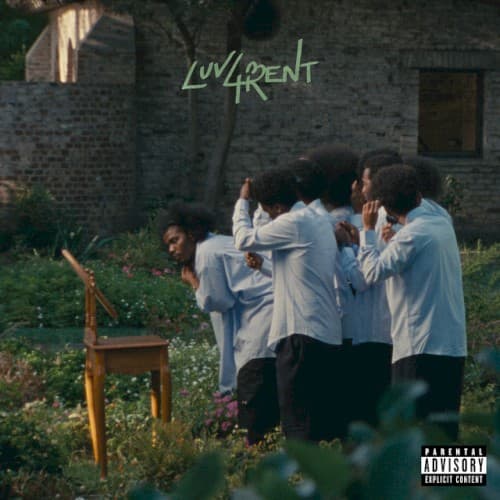
Smino Luv 4 Rent — The Breakup Album That Refused to Sound Broken
This is the album where Smino stopped trying to prove anything. No more winking at the underground. No more coded nods to his Zero Fatigue crew or elaborate wordplay meant for heads who parse lyrics like theologians. Luv 4 Rent sounds like a man who got dumped, processed it with his therapist, and decided to make the funkiest, most sensual heartbreak record the 2020s had seen yet.
The album arrived at the tail end of 2022, a year when most rappers were either chasing TikTok virality or drowning in melancholy. Smino did neither. He built a soundscape so lush and detailed it felt like walking through a greenhouse at midnight, every leaf humming with texture. The breakup is real here — you can hear it in the exhaustion on certain tracks, the distance in his voice when he sings about loss — but he never wallows.
Instead, he floats above the wreckage, turning pain into motion. Monte Booker and Groove anchor the production, but this time the palette expands beyond their signature haze. There are live drums, basslines that snap instead of drift, horns that feel like they were recorded in one take at 3 a.m. The album breathes.
It does not suffocate you with its sadness. It invites you to dance through it. Which raises the question: can a breakup album this smooth still hurt?
Smino proves it can. The trick is in the details — the ad-libs that crack mid-phrase, the moments where his voice dips into something raw before floating back into falsetto. He never lets you forget he is processing something real. But he also never lets the record collapse under its own weight.
That balance is what makes Luv 4 Rent his most complete project yet.
The Studio as a Healing Space
Luv 4 Rent sounds expensive. Not in the way major-label rap albums sound expensive — no orchestras, no grandiose string arrangements, no guest verses stacked like insurance policies. Expensive in the sense that every element feels intentional, curated, placed with surgical precision. Monte Booker and Groove handle the lion's share of production, and they build a world that sits somewhere between early Soulquarian funk and the kind of textured, bass-heavy experimentation that defined late-2010s internet R&B.
The drums knock harder than anything on blkswn or NOIR, but they never overpower Smino's voice. The basslines walk instead of rumble. The synths shimmer without ever tipping into ambient wallpaper. This is music designed for headphones and late-night drives, but it works just as well at volume in open spaces.
Smino's vocal delivery remains his greatest weapon. He slides between rap and sung melodies so seamlessly that categorizing him as a rapper feels reductive. His voice is an instrument here — breathy one moment, percussive the next, stretching syllables until they lose meaning and become pure texture. Lyrically, the album circles themes of loss, lust, and self-preservation.
He talks about relationships the way someone talks after months of therapy: aware of his own patterns, skeptical of easy answers, unwilling to play the victim.
The album's biggest flaw is its runtime. Fifteen tracks is not bloated by modern standards, but three or four songs could have been cut without losing the narrative thread. The pacing sags in the back half, where introspective moments start to blur together. A tighter tracklist would have sharpened the impact.
But even the weaker moments here are never outright bad — just less essential than the peaks.
The production philosophy throughout is maximalist in detail but minimalist in execution. Layers stack without crowding. Space exists between elements. You can hear every instrument clearly, which is rare in an era where mixing often flattens everything into a wall of sound.
The album invites repeated listens not because it is complex, but because it reveals new textures every time you press play. Does a breakup record need to be this polished to hit hard?
The Journey from Denial to Acceptance
The album opens with its thesis statement and never looks back. The first stretch — from the opener through the fourth track — establishes the mood without wasting time on exposition. Smino sounds loose, confident, unbothered by the heartbreak he is about to unpack. The sequencing here is deceptive: he lures you in with grooves before pulling the rug out emotionally.
The middle section is where the album earns its depth. Tracks five through nine contain some of the most introspective writing Smino has ever committed to record, but he never lets the tempo drag. Even when he is reflecting on loss, the production keeps you moving. This is the stretch where the album could have collapsed into navel-gazing, but the hooks are too strong, the melodies too infectious.
The back half shifts into resolution mode. The energy never spikes back to the opening run, which is intentional — this is the part of the album where Smino stops running from the pain and starts sitting with it. The sequencing mirrors the emotional arc: denial, anger, bargaining, acceptance. By the time the final stretch arrives, the album feels less like a breakup record and more like a document of someone who survived one and came out sharper.
The pacing stumbles slightly in this closing run, where a few tracks feel like they are saying the same thing in different keys. But the album never loses its sense of purpose. Even the slower moments serve the larger narrative. The arc is complete.
Where Smino Ranks Among the New Wave's Finest
Luv 4 Rent is Smino's best album. It is more focused than blkswn, more emotionally direct than NOIR, and more confident in its own identity than anything he has released before. This is the album where he stopped chasing underground credibility and started making music for anyone willing to meet him halfway. The production is immaculate, the writing is sharp, and the vocal performance is the best of his career.
In his discography, this sits at the top. The album is not perfect — the runtime could be tighter, and a few tracks in the second half blur together — but the highs are high enough to justify the occasional dip.
Who should listen to this? Fans of Monte Booker's production, anyone who grew up on early Soulquarian records, listeners who want their breakup albums to sound like healing instead of wallowing. Who might not enjoy it?
Traditionalists who need their rap albums to sound like rap albums, anyone allergic to sung melodies, listeners who prefer their heartbreak raw and unprocessed.
Discovery check: start with the first four tracks to understand the palette, then jump to the middle section for the emotional core. If you love this, try Saba's Care for Me for another introspective Midwest classic, or Mick Jenkins' The Water[s] for a darker, more cerebral take on the same sound. Similar artists to explore: Monte Booker's solo work, Phoelix, Noname, and JID for lyrical dexterity over experimental production.
Long-term influence: this album will age beautifully. The production is timeless enough to avoid sounding dated, and the themes are universal enough to resonate a decade from now. In five years, this will be the album new Smino fans discover and wonder why no one told them sooner. Press play and let it run front to back.
Track Listing
4rm Da Source
▲Monte Booker opens the album with a beat that sounds like it was assembled from studio scraps and then polished until it glowed. The drums snap, the bass wobbles just enough to feel loose without losing pocket, and Smino floats over it like he has been doing this for thirty years. His delivery here is effortless — syllables stretched and bent, ad-libs layered so thick they become part of the melody. The hook is hypnotic without being obvious, and the outro features a vocal run that feels like a thesis statement for the entire album. This is Smino at his most confident, establishing tone and intention in under three minutes. The production never overcomplicates itself, which is the smartest choice anyone involved could have made. You press play and immediately understand what kind of album you are about to hear.
No L's
▲The second track doubles down on the groove established by the opener but adds a sharper edge. The bassline here is filthy — rubbery, insistent, the kind of thing that makes you rewind just to confirm it hit that hard. Smino's flow is more percussive here, trading melodic runs for tightly packed bars that land on the offbeat. Lyrically, he is flexing without being obnoxious about it, cataloging wins without losing sight of the bigger picture. The hook is deceptively simple, built around a single phrase that gets stuck in your head for days. Groove's production shines here, especially in the bridge where the beat strips down to just bass and hi-hats before everything crashes back in. The track feels like a victory lap, but one where Smino refuses to slow down and wave at the crowd.
90 Proof
▲This is where the album shifts gears emotionally. The production gets hazier, the tempo slows just enough to let Smino's vocals breathe, and the lyrics start unpacking the heartbreak that the first two tracks only hinted at. His voice cracks in places, not from poor technique but from something closer to exhaustion. The hook is vulnerable in a way that feels earned — no performative sadness, just a man admitting he is not okay. Monte Booker laces the beat with subtle jazz flourishes, chords that shimmer in the background without demanding attention. The second verse contains some of the album's most direct writing, where Smino stops hiding behind wordplay and just says what he means. By the time the outro fades, you realize this is the moment where the album stops being fun and starts being honest.
Pro Freak
▲Smino pivots hard into sensuality here, and the result is one of the album's most infectious moments. Doechii's verse is a revelation — sharp, witty, perfectly matched to Smino's energy without trying to outshine him. The beat is sparse, built around a bassline that sounds like it belongs on a late-night R&B slow jam from 1997. Smino's delivery is playful, his voice dipping into falsetto on the hook before snapping back into rhythm on the verses. The chemistry between him and Doechii is undeniable, each one pushing the other to get weirder, more inventive, more willing to take risks. The production never overcomplicates itself, trusting the vocals to carry the track. This is the kind of song that works at a party but also works alone in your headphones at 2 a.m.
Ole Ass Kendrick
●The title is a misdirect — this is not a diss track or a response to anyone. Instead, Smino uses the hook to flip a phrase into something completely different, a meditation on aging, legacy, and the pressure to stay relevant. The production is minimal here, just drums and a looped vocal sample that sounds like it was pulled from a dusty gospel record. Smino's flow is conversational, almost stream-of-consciousness, as he works through thoughts about where he fits in the current landscape. The track feels like an interlude stretched into a full song, which is not a criticism — the runtime is justified by the writing. By the end, you are not sure if he is talking to himself, the industry, or someone specific, and that ambiguity is the point. This is Smino working through doubt in real time, refusing to tie everything up with a neat conclusion.
Louphoria
▲I heard this track at a listening party in Chicago the week before the album dropped, and the entire room went quiet by the second verse. The production is lush without being overwhelming — strings that sound live, not sampled, and a drum pattern that feels like it was programmed by someone who grew up playing in church. Smino's vocal performance here is the best on the album, full stop. He transitions between rapping and singing so fluidly that you stop noticing the shifts and just ride the wave. Lyrically, he is reflecting on euphoria as a fleeting state, something you chase but can never hold. The bridge features a vocal run that sounds impossible, his voice cracking in places that somehow make the melody stronger. This is the emotional centerpiece of the album, the moment where everything clicks into place.
Blu Billy
▲This track feels like an outlier in the best way possible. The production is heavier than anything else on the album, with a bassline that rattles car speakers and drums that hit like they are trying to wake you up. Smino's flow is aggressive here, spitting bars with a precision that reminds you he can rap-rap when he wants to. The hook is minimal, just a repeated phrase over a stripped-down beat, but it works because of how hard the verses go. Lyrically, he is reflecting on loyalty, trust, and the people who stuck around when things got difficult. The track never overstays its welcome, clocking in under three minutes and ending exactly when it should. This is Smino reminding everyone that he is more versatile than the smoothed-out production might suggest.
Matinee
▲Lucky Daye shows up here and the track immediately shifts into a different register. The production is airy, built around a guitar loop that sounds like it was recorded in one take on someone's porch. Smino and Daye trade verses and harmonies, each one complementing the other without stepping on toes. The vibe is relaxed, almost lazy in the best way, like two friends recording a song just because they felt like it. Lyrically, the track is about escape — leaving the city, finding peace, choosing yourself over the chaos. The hook is simple but effective, and the outro features a guitar solo that feels completely out of place in a modern rap album, which is exactly why it works. This is the kind of track that makes you want to roll the windows down and drive somewhere new.
Modennaminute
●Smino gets introspective again, and the production mirrors the mood. The beat is skeletal — just a kick, a snare, and a looped vocal sample that sounds like it is being played through a broken speaker. His delivery is slower here, more deliberate, each word given space to land before the next one arrives. Lyrically, he is wrestling with the tension between staying present and constantly looking ahead, the pressure to capitalize on every moment before it disappears. The hook is haunting, his voice layered over itself until it sounds like a choir. This is not a track that demands immediate replay, but it is one that grows on you with each listen. The production choices are bold — most rappers would have added more elements to fill the space, but Smino trusts the silence.
Defibrillator
▲J. Cole's verse here is fine — competent, well-constructed, exactly what you would expect from him at this stage of his career. But the track belongs to Smino. The production is kinetic, drums that stutter and start, a bassline that refuses to stay in one place. Smino's flow is elastic, bending around the beat in ways that should not work but somehow do. Lyrically, the track is about revival — bringing something back to life, refusing to let it die, fighting through exhaustion. The hook is built around a single phrase repeated until it becomes a mantra. Cole's verse fits the theme but does not elevate the track beyond what Smino already established. The outro is the best part, where the beat breaks down completely and Smino's voice is left hanging in space.
Garden Lady
▲This is the quietest moment on the album, and it feels like a necessary exhale. The production is minimal — just a piano loop and some ambient noise in the background. Smino's voice is front and center, no vocal effects, no layering, just him singing about someone who helped him heal. The writing is direct, almost painfully so, as he catalogs small moments of care and gratitude. The hook is simple but effective, and the bridge features a key change that catches you off guard. This is not a flashy track, and it will not be the one people share on social media, but it is essential to the album's emotional arc. Without it, the record would feel incomplete.
Settle Down
▲Smino shifts back into groove mode, and the production is some of the best on the album. The bassline here is ridiculous — sliding, funky, the kind of thing that makes you rewind just to confirm it was real. His delivery is loose, almost improvisational, as he raps about the tension between wanting stability and craving freedom. The hook is infectious, built around a melody that sounds like it was borrowed from a 70s soul record. Lyrically, he is honest about his contradictions, admitting he does not have all the answers but is trying to figure it out. The track feels like a conversation with himself, and the production gives him space to work through it in real time.
Pudgy
●Cruza and Kal Banx show up, and the track leans harder into rap than most of the album. The production is sharp, drums that punch through the mix, a bassline that stays in the pocket without trying to do too much. Smino's verse is solid but not spectacular, which is fine because the track is clearly designed to be a vibe more than a statement. The hook is catchy enough to justify the runtime, and the energy never dips. This is a good album track, the kind of thing that works in sequence but probably would not survive as a single. The outro drags slightly, stretching the track past the four-minute mark when it could have ended thirty seconds earlier.
Curtains
●Another interlude disguised as a full song. The production is ambient, built around a looped vocal sample and some distant strings. Smino's voice is buried in the mix, more texture than focal point, as he sings about closure and letting go. The track feels like a transition, a bridge between the album's emotional climax and its resolution. Lyrically, it is sparse, just a few repeated phrases that hammer home the theme without overexplaining. This is the kind of track that only makes sense in context — pull it out of the album and it falls apart, but in sequence it serves its purpose. The runtime is short, which is a mercy.
Lee & Lovie
▲The album closes with a tribute to Smino's grandparents, and it is the most emotionally raw moment on the entire record. The production is simple — just a guitar, some light percussion, and Smino's voice. He sings about love that lasts, the kind that survives decades and does not need grand gestures to prove itself. The writing is personal without being sentimental, grounded in specific memories that feel lived-in rather than constructed for effect. The hook is devastating in its simplicity, just a repeated phrase that gains weight with each repetition. By the time the outro fades, you realize this is what the entire album was building toward — not a resolution of the breakup, but an understanding of what real love looks like. This is Smino at his most vulnerable, and it is a perfect ending.