The scorecard
5.4/10 · Weak
- Writing25%
- 4.5
- Production25%
- 6.5
- Delivery15%
- 5.5
- Cohesion15%
- 5.5
- Originality10%
- 4.5
- Replay value10%
- 5.5
Lyrics recorded without writing them down come out as short, repetitive phrases about money and women strung together by rhythm.
Mustard and Official, Dupri and D.A. Doman keep a bright, bass-forward Los Angeles bounce consistent, though it echoes earlier work.
Tyga's dry, half-sung cadence suits the hooks, but Offset, Gunna and Blueface bring more personality on their own tracks.
The album is efficient at fourteen short songs and works as a playlist, but the middle blurs into one mood and it falls short as a sequenced statement.
The sound is a polished echo of earlier Los Angeles club rap and the radio-rap guest-list template of its moment.
Taste, Haute and Stash will survive as playlist items, but the album as a whole offers little to hold onto, which is a projection for such a recent release.
Tyga Legendary: A Short, Clean Playlist With a Title It Cannot Support
Legendary is an album that admits what it is in the first few minutes. The opening track runs under two and a half minutes, the next two are barely longer, and by the time the first guest verse arrives the record has already made its case: this is a collection of singles with a shared sound, assembled by a rapper who says he never planned to make an album at all. Tyga has explained that he was releasing party records one at a time, recording as he went without writing lyrics down, until fans kept asking for a full project and he gave in. That origin story is also the best description of the music. My argument is that Legendary is a competent, consistent, deliberately lightweight playlist, and that its modesty is both its main virtue and its ceiling.
The virtue is real. Compared with the long, over-stuffed albums that defined much of the previous decade, Legendary respects the listener's time. Fourteen songs, most of them under three minutes, move briskly through a set of club-ready beats from Mustard, Jermaine Dupri, D.A. Doman and others, and the guest list is a roll call of the current radio: Offset, Chris Brown, J Balvin, Gunna, Blueface, Swae Lee and Lil Wayne among them. One reviewer called it a smarter, more carefully built version of a DJ Khaled record that shapes its guests into one person's coherent vision, and the praise is fair as far as it goes.
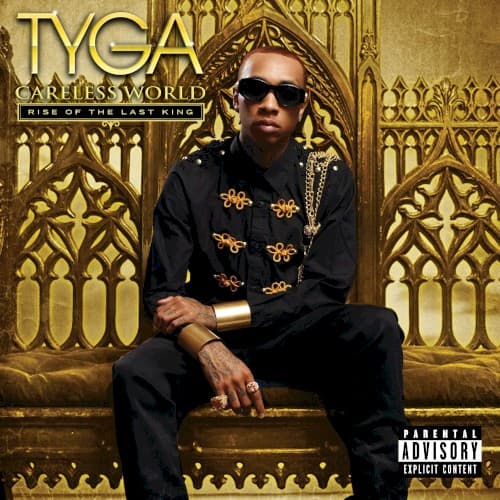
The ceiling is just as visible. Against the tradition of West Coast hip-hop, from the G-funk era to the modern club sound, this record offers a tight Los Angeles bounce and not much else. The rapping rarely asks for attention, and the writing rarely earns it. Compared with the larger, more ambitious Careless World: Rise of the Last King, it is a more disciplined listen and a less interesting one.
Legendary earns a mixed rating, with a good playlist inside it and a title that promises more than the record delivers.
Mustard Bounce, Guest Verses, and Lyrics Written by Rhythm
The production is the album's best asset, and it is consistent in a way that most single-producer records are not. Mustard and his collaborator Official handle several of the strongest beats, built on the sparse, bass-forward, hand-clap bounce that defined Los Angeles club rap in the 2010s. Jermaine Dupri brings a smoother, more melodic touch to a group of songs, D.A. Doman supplies a run of glossy, radio-ready tracks, and Boi-1da, Murda Beatz and Dr. Luke each add a single contribution. The result is a record with a coherent sound despite the many hands: bright, clean, and built to sit comfortably in a playlist. The weakness is that the sound is more borrowed than earned. Mustard's work here is a polished echo of what he did for the region years earlier, and the Atlanta-leaning tracks owe more to their producer's history than to anything Tyga contributes.
The writing is where the record is thinnest. Tyga said he recorded most of it without writing anything down, and the result sounds like it. The lyrics are made of short, repetitive phrases about money, women and style, strung together by rhythm rather than by idea. That works on a club track, where the hook does the heavy lifting, but over fourteen songs it runs out of variation. A review in HipHopDX said that if Tyga wanted to be as legendary as the title suggests, he needed to do better, and the criticism is accurate: the title is a joke the writing cannot support.
Delivery is competent and a little flat. Tyga has a dry, half-sung cadence that sits easily on a beat, and he makes no effort to compete with his guests. That restraint is sensible on the hit singles, where the hook is the star, but it leaves the album without a strong personality. When Offset, Gunna, Blueface or Lil Wayne appear, their verses bring more character than the host's, and the record often sounds like a vehicle for them.
The concrete weakness is the sameness. Many of the songs share a tempo, a mood and a lyrical register, and the middle of the record, in particular, drifts from one clean, forgettable beat to the next. The short running times help, but they also mean that no song has room to develop an idea. The record is built to be consumed in pieces, not listened to in order.
Even so, the consistency is a form of craft. The mix is clean, the hooks are tidy, and the album never embarrasses itself. What it lacks is a reason to come back.
Fourteen Short Songs and the Economy of a Summer Playlist
As a sequence, Legendary is efficient and low-stakes. It opens with a fast, short run of party songs that establish the sound and the tempo, and the first third is the most energetic part of the record. The pacing is tight, with little time between songs, and the guests arrive early enough to keep the energy up. In that opening stretch the album does what it set out to do: it sounds like a summer playlist, and it does not ask for more attention than that.
The middle is where the record loses some shape. A group of songs built on similar beats, similar moods and similar subject matter run together, and the effect is of a long scroll more than a sequence. The guest features are well chosen but start to feel interchangeable, and the album settles into a groove that is pleasant without being memorable. The short running time helps; even the weakest songs are over quickly, so the sag never becomes a drag.
The late stretch recovers some ground. The biggest single is placed near the end, which is a smart sequencing choice, and the closer brings a more melodic, slower tone that gives the record a gentle landing. The ordering is not dramatic, but it is sensible, and it respects the listener by saving the most recognizable material for when attention begins to fade.
At fourteen tracks and roughly forty-two minutes, the length is earned. Nothing here feels padded, and the economy is the album's clearest strength, especially next to the bloated collaboration records of the previous few years. A tighter edit would remove two or three songs from the middle, but the shape is fundamentally sound. The sequence works as a playlist and falls short as a statement, and that is exactly what the album's origin story suggested it would be.
A Good Playlist That Should Have Been Named Something Smaller
In Tyga's catalog, Legendary is a deliberate step back from ambition. It ranks below Careless World: Rise of the Last King on range and weight, because that record at least reaches for something bigger and contains his most important single. It ranks above it on discipline: it is shorter, more consistent and less self-serious. Our rating is mixed, with strengths in sound and economy and weaknesses in writing and personality. The album also marked his highest chart position in years, which suggests it found the audience it was built for.
The album is for listeners who want a clean, fast, club-ready playlist, who follow the radio-rap circle of the late 2010s, or who like Mustard-style Los Angeles bounce with a pop sheen. It is also useful for anyone curious about how a streaming-era album gets assembled out of singles and guests. It is not for those who want lyrical depth, a distinctive voice, or an album that rewards close listening.
As for age, the record is built to be a snapshot, and it will probably date quickly. The guest list pins it to a particular moment, and the writing offers little to hold on to once the hooks stop feeling fresh. The best singles will survive as playlist items, and the album as a whole will not.
Start with "Taste", the hit that launched the whole project, then try "Haute" for its pop crossover appeal and "Stash" for the Los Angeles guest spot that gives the record a regional anchor. Those three show the album at its most appealing.
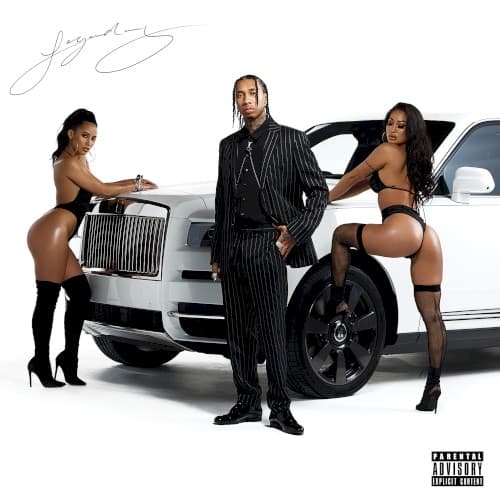
For what to hear next, go to Careless World: Rise of the Last King for the larger-scale version of the same artist, or to Ice-T for the older record whose cover art Tyga says inspired this one, and which makes a very different case for what a Los Angeles rapper can do with the form. Legendary is a good playlist that should have been named something more modest.
Track by track
Track Listing
Too Many
StandoutA short opener produced by Mustard and Official, and a clean statement of intent. The beat is spare and bouncy, the tempo is quick, and Tyga's delivery is dry and confident. At under two and a half minutes it is more of a calling card than a song, but it sets the record's tone well and sounds unmistakably like Los Angeles. A solid opener that does exactly what it needs to.
Lightskin Lil Wayne
SolidA Boi-1da production with a title that announces its borrowed influence. The beat has a bright, bouncy quality, and Tyga's delivery leans into a loose, playful cadence. It is a short, amusing track that does not take itself seriously, though the writing is thin.
On Me
SolidA collaboration with Lil Wayne, produced by Jermaine Dupri and K.E. on the Track. The beat is smooth and a little glossy, and Wayne's guest verse adds personality that the host verse lacks. A pleasant, unspectacular track that sounds good and fades quickly.
Stash
StandoutA song with Blueface over a Mustard and Official beat, and one of the album's most distinctly Los Angeles moments. Blueface's off-beat, slurred flow contrasts with Tyga's steadier delivery, and the interplay gives the track more personality than most of its neighbors. The production is stripped and punchy, and the hook is simple enough to stick. It is the clearest example of the record's regional identity and one of its best songs.
Haute
StandoutA single with J Balvin and Chris Brown, produced by Dr. Luke and B HAM, that aims squarely at the pop charts. The Latin-flavored rhythm and the glossy hook make it the most radio-friendly track on the record, and the three voices blend easily. It is slick and effective, with little depth, and a good example of how the album uses guests to widen its appeal. A strong single.
Werkkkk
SolidA third Mustard and Official production, and a straightforward party track. The beat is tight and the tempo is quick, but the writing is a collection of catchphrases and the song does not develop beyond its hook. Fun and forgettable.
Maykherkhum
WeakA Dupri-produced cut that sits in the middle of the record and does little to distinguish itself. The beat is smooth and the delivery is relaxed, but the song offers nothing the previous few tracks have not already done. Filler.
Vibrate
SolidA collaboration with Swae Lee, produced by Dupri and Extendo Beatz. The hook is melodic and easy, and Swae Lee's voice gives the track a softer, more sung quality. It is one of the better mid-album songs, if only because it breaks the pattern of the surrounding tracks.
Shit I Like
WeakAnother Dupri and Extendo Beatz production, with a title that describes the lyrical content. The beat is clean and the mood is relaxed, but the writing is a list of preferences and the song has little to say. Filler.
Legendary
SolidThe title track, featuring Gunna and produced by Murda Beatz and Sool Got Hits. The beat is moody and melodic, and Gunna's guest verse brings the most personality on the song. The title promises a grand statement, and the track delivers a modest, pleasant cut instead. At two and a half minutes it is over quickly, which is probably for the best, but it is a letdown as a centerpiece.
February Love
SolidA slow, romantic cut with Chris Brown, produced by D.A. Doman. The hook is smooth and the mood is warm, but the song is one of several similar slow jams and does not stand out. Pleasant, but you have heard it before.
Goddamn
StandoutA single with A Boogie wit da Hoodie, produced by D.A. Doman. The melodic hook is the draw, and A Boogie's voice gives the track a sung, emotional quality. The beat is polished and the song is built for repeat listening. It is one of the record's most replayable cuts, though the writing is slight.
Taste
StandoutThe album's best-known single, featuring Offset and produced by D.A. Doman. The beat is lean and dancehall-tinged, the hook is catchy, and Offset's verse brings energy that lifts the track. It is the song that sparked the whole project and gave the album its gold certification on release day, and it earns the attention. A tightly built, simple hit and the best song on the record.
Made Me
SolidA closer with Bazzi, produced by D.A. Doman. The mood is softer and more melodic, and Bazzi's hook gives the album a gentle landing. It is a pleasant, low-key way to end, though the song is slight and does not add much.