Tyga's Career in Full: From Compton to Young Money and Back Again
Few rappers have been counted out as often as Tyga, and few have returned as many times. Born Micheal Ray Stevenson in Compton, California, in 1989 and raised partly in nearby Gardena, he spent the first half of the 2010s as one of the most visible faces of the Young Money family, then spent the middle of the decade fighting his own label, then landed one of the biggest songs of 2018.
That whole arc is the real story of any Tyga career profile. His name is a backronym, Thank You God Always, and his catalog follows a pattern: club-ready singles that travel far, surrounded by albums that critics found thin. He grew up listening to Fabolous, Lil Wayne, Cam'ron and Eminem, and the Lil Wayne influence became a literal relationship when he signed to Young Money in 2008.
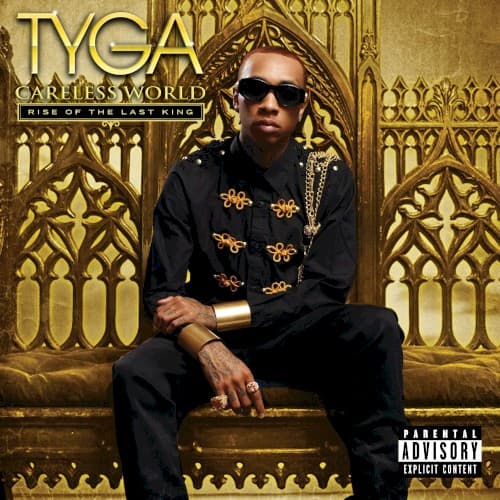
The numbers show why he matters. "Rack City" reached number eight on the Hot 100 in 2012, and "Taste" with Offset hit the same position six years later and went Diamond. Careless World: Rise of the Last King, his major-label debut, peaked at number four on the Billboard 200 and went platinum.
What the numbers do not show is how much of Tyga's reputation depends on timing. He caught the moment when producer DJ Mustard's stripped-down West Coast club sound took over radio, and he knows how to ride a beat without overcomplicating it. Our reviews of his three albums that we cover sit between 5.1 and 5.4 out of 10, a score that fits the pattern: a few undeniable songs, a lot of filler.
West Coast Club Rap, Pop Hooks and a Laid-Back Flow
Tyga's music is rooted in West Coast hip-hop, but it has never stayed in one place. Pop rap, trap and R&B all leak in, and the themes rarely stray from money, sex, nightlife and luxury. It is a glossy, unserious style, and his best records understand that and lean into it instead of pretending to be something deeper. He has named Lil Wayne, Eminem, Tupac Shakur, Snoop Dogg, Dr. Dre and even Prince among his influences, an eclectic list that explains the genre-hopping better than any tag does.
His flow is the key. Critics have described it as laid-back, and that is accurate: he rarely pushes for dense rhyme schemes, preferring a clipped cadence that sits right on top of a bass-heavy beat. On a song like "Rack City" it works because the repetition is the point. He also moves comfortably between rapping and a melodic sing-rap, which is a skill that XXL singled out when it reviewed Hotel California.
His sound has moved through distinct phases. The debut No Introduction (2008) was polished pop-rap, shaped by Travie McCoy and Pete Wentz's Decaydence Records. With Careless World he shifted toward a harder, gangster-rap-influenced palette, and then toward the stripped-down, club-oriented sound that DJ Mustard produced, the hyphy-adjacent "ratchet" style that defined his early-2010s breakthrough. Hotel California widened the production net further with Cool & Dre, Mustard, The Olympicks and others.
The downside is that the range sometimes reads as chasing the market. When a hit works, as with "Taste" and its Offset hook, the cadence and the beat line up perfectly. When it does not, the lyrics feel interchangeable and the mood stays the same from track to track.
Careless World to Legendary: Tyga's Hits, Fights and Comebacks
Tyga started with mixtapes. His 2007 tape Young on Probation caught the attention of Gym Class Heroes' Travie McCoy, who connected him with Pete Wentz's Decaydence Records. His debut album No Introduction followed in June 2008, with "Coconut Juice" giving him his first Hot 100 entry. Around the same time he founded G.E.D. Inc., an imprint that helped launch the early career of Schoolboy Q.
The Young Money deal in 2008 changed everything. Careless World: Rise of the Last King arrived in February 2012, preceded by "Far Away" and "Still Got It" with Drake, then lifted by "Rack City" and "Faded" with Lil Wayne. It peaked at number four and went platinum. We rated it 5.4/10: a successful record, but one stretched across too many moods.
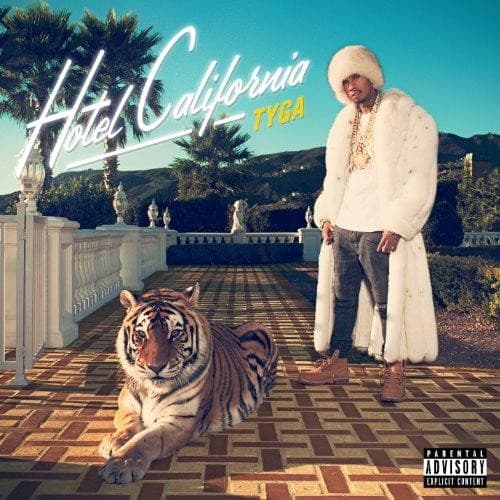
Hotel California followed in April 2013. The lead single "Dope" featured Rick Ross, "For the Road" brought in Chris Brown and "Show You" brought in Future, and the album's other guests included Lil Wayne, 2 Chainz, The Game, Wiz Khalifa and Jadakiss. It debuted at number seven with 54,000 first-week copies, below its predecessor, and reviews were mixed. Our score is 5.1/10, the lowest of the three. By then Tyga was also collaborating heavily with Chris Brown, and their joint album Fan of a Fan reached number seven in 2015.
Then came the fight with his label. In late 2014 Tyga said Young Money was holding his album hostage, and he ended up self-releasing The Gold Album: 18th Dynasty in 2015. It sold roughly 2,000 copies in its first week. He signed to Kanye West's GOOD Music in 2016, but BitchImTheShit2 (2017) and Kyoto (2018) did little to repair his standing, and Kyoto became his first album to miss the chart entirely.
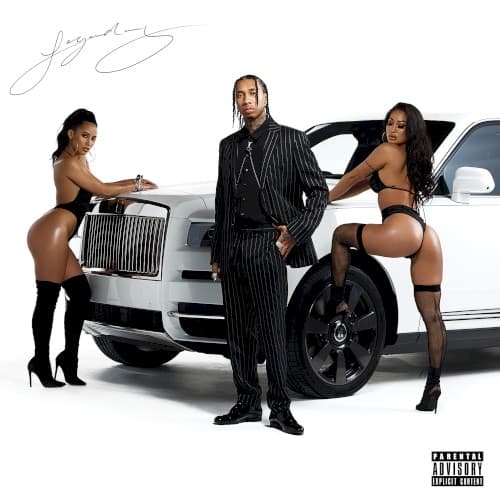
"Taste," released in May 2018 with Offset, flipped that story. It peaked at number eight, went Diamond, and gave him a new life. "Swish" and "Dip" with Nicki Minaj followed, and Legendary arrived in June 2019. Our review gives it 5.4/10. He kept stacking features, and he added global crossover ones such as "Loco Contigo" with DJ Snake and J Balvin and "Go Loko" with YG. Away from the studio, he starred in the reality show Kingin' with Tyga on MTV2 in 2015, joined the third season of the VH1 series Scream, launched the delivery-only food brand Tyga Bites in 2020 and competed on The Masked Singer in 2021. His most recent albums, NSFW in 2025 and Starface in 2026, did not chart and were poorly received, with Starface drawing heavy criticism for its use of artificial intelligence.
Tyga's Legacy: Hit-Maker, Survivor, Cautionary Tale
Tyga's legacy sits in an awkward but real spot. He will not be remembered for classic albums, and a skeptical listener will find little in the full-length catalog to change that view. What he will be remembered for is a run of songs that dominated clubs and radio at precisely the right time, and a rare ability to return after the industry had moved on.
His place in the West Coast timeline is the clearest contribution. "Rack City" and the DJ Mustard sound that surrounded it helped put West Coast club rap in the national spotlight, and Tyga was one of its most visible faces, sharing records with YG along the way. Lil Wayne was a lifelong influence on his approach, and his repeated pairings with Chris Brown, including Fan of a Fan, kept him in the pop-leaning R&B-rap lane.
Industry-wise, the Young Money dispute is a cautionary tale about artists stuck in the machinery of a major label. He walked away, self-released an album and paid for it commercially, but he also showed that a single hit can reset a career, as "Taste" did.
For newer listeners, the entry point is simple: start with "Rack City" and "Faded" from Careless World, then jump to "Taste" and the Legendary period. For fans of YG, Chris Brown or the early Young Money roster, Tyga fits into a recognizable lineage: not a lyricist's rapper, but a craftsman of the catchy single.