The scorecard
6.4/10 · Mixed
- Writing25%
- 5.5
- Production25%
- 7.5
- Delivery15%
- 6.5
- Cohesion15%
- 5.5
- Originality10%
- 6.5
- Replay value10%
- 6.5
The subjects stay on sex, status and the club, and songs like Fresh Pair of Panties On and Can U Control Yo Hoe rely on one-note jokes instead of detail, with repetition and stock phrasing outweighing wit.
The Neptunes' sparse clicks and keys on Drop It Like It's Hot, Let's Get Blown and Signs give the record a unified, distinctive sound that few rap albums of the period matched.
Snoop glides behind the beat with total ease and handles hooks and duets with Pharrell, Timberlake and Charlie Wilson comfortably, though the weaker guest verses bring little energy.
Twenty tracks and over an hour, with a long middle of club filler and a weak duet with 50 Cent that stalls the momentum.
The Star Trak sound turned a West Coast veteran into a minimalist pop-rap stylist, a shift his catalog had not made before, though the reliance on interpolation limits how fresh it feels.
The singles are durable, but the second half rewards a playlist more than a front-to-back listen.
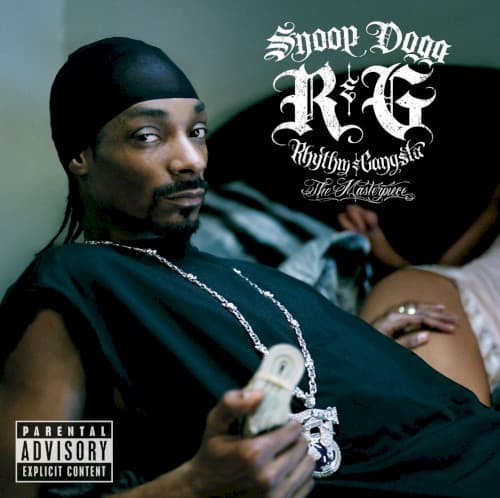
Snoop Dogg R&G (Rhythm & Gangsta): All Rhythm, Not Much Gangsta
The best idea on R&G (Rhythm & Gangsta) is the quietest one. Drop It Like It's Hot is built from little more than tongue clicks, a thin keyboard line and a drum machine, and it gives Snoop Dogg the most room he has ever had to be Snoop Dogg. That song became his first number one on the Billboard Hot 100, and it frames the whole record: when producers strip the track down and let his voice do the work, the album is among the most distinctive pop-rap of its moment. When they stack guests, falsetto hooks and generic club filler around him, it turns into an expensive, overlong playlist.
That is the argument this review will defend. R&G is a stylish and often irresistible singles record with a real sonic identity, courtesy of Star Trak and the Neptunes, but it is padded with weaker material and a title that promises a union of rhythm and gangsta that it does not fully deliver. The rhythm is plentiful. The gangsta is mostly a costume.
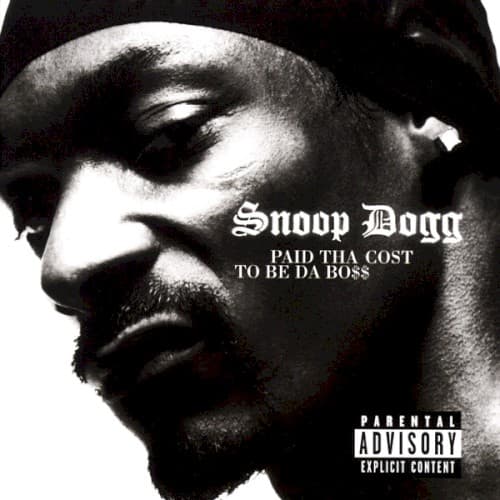
The album arrived at a strategic moment. It followed Paid tha Cost to Be da Boss and moved Snoop onto Pharrell and Chad Hugo's label, with the Neptunes handling five songs and a long list of other producers filling in the rest. It debuted at number six on the Billboard 200 with 225,000 copies in its first week, and its singles reached the top of charts around the world. Against the West Coast tradition it is an odd record: not G-funk, not gangsta rap in any classic sense, but a slick Los Angeles-meets-Virginia hybrid that treats Snoop as a stylist rather than a street narrator. Whether that counts as an evolution or a dilution depends on how much you value the older sound, and the honest answer is that it is both.
Neptunes Minimalism Meets a Voice That Needs Room
The production is the album's reason to exist, and it has a clear center of gravity. The Neptunes supply the singles and the template: dry, bouncing drums, sparse keyboards, chimes and falsetto-heavy vocal hooks, a sound that gives Snoop an unusually clean frame. The effect is cool and slightly eerie rather than warm, and it suits the gentle menace of his voice. The other producers largely follow suit, which is why the record sounds unified even with so many names in the credits. That unity is real, and it distinguishes the album from many guest-heavy records of its era, though it also means the sound is narrow. Soft pianos, guitar flickers and a persistent R&B shimmer dominate, and the harder-edged moments are few.
Snoop's delivery is excellent for the format. He glides over these beats with a lazy, behind-the-beat cadence that sounds effortless, and he is comfortable sliding into melody, playing the lover or the pimp or the party host as the song demands. The Justin Timberlake and Charlie Wilson hooks, the Bee Gees interpolation and the Pharrell appearances all play to his strength as a collaborator who lets other voices shape the room. He rarely sounds strained, and when he is paired with a producer who understands his pace, the performances are among the best of his career.
The writing is where the record is weakest. The subjects are sex, status, the club and the pleasures of being Snoop, and the approach is more flirtatious than inventive. A handful of songs have wit and rhythm, but many rely on repetition and stock phrasing, and the album's two or three most explicit-minded songs substitute shock for craft. The cheap seduction material wears thin over twenty tracks, and the sheer number of songs about the same few subjects makes the writing feel like an afterthought to the production. There is also very little of the narrative detail that gave his early work its bite.
The guest list is a mixed blessing. Some features, such as Bootsy Collins, add real funk, and the pop-star cameos are well chosen for the singles. Others, including the rap duets, feel like marketing decisions and bring little energy. The album also leans on interpolation: the Bee Gees, Slave, the Gap Band and Curtis Mayfield are all invoked. These choices make the record sound lush and give it a retro warmth, but they also show a reliance on borrowed hooks that limits its originality.
A Hot Start, a Dead Middle and a Smooth Landing
R&G runs twenty tracks and well over an hour, and the length is not earned. The front half is the album at its best: a short, soulful intro sets a classy tone, a rap track hands the baton to the first single, and the sequence moves through a run of polished, hook-driven songs with real momentum. The first third feels like a well-curated greatest-hits program, with each song offering a different mood but a consistent sound.
The middle is where the pacing collapses. A run of club-oriented cuts with similar tempos and similar shock-value lyrics breaks the flow, and the short interlude does little to reset it. There is no escalation in this stretch, no change of tempo and no sense that the album is building toward anything. It sounds like a series of independent songs placed in order by availability rather than design. This is also where the weakest guest verses land, and the album's energy bleeds out.
The late section recovers sharply. The sequencing of the final run is the best of the album: a pair of Neptunes songs return the record to its strongest sound, a smooth duet and a sultry closer give the record its romantic finish, and the last ten minutes feel much more purposeful than the middle. The recovery is real, but it comes after a long stretch of inattention, and a listener who has quit by track eleven will miss what the album does best.
The cleanest way to use R&G is as a curated playlist. A trimmed sixteen-song version, with the club filler removed and the Neptunes singles preserved, would be a stronger album and a more flattering representation of the sound. As released, it is a record with excellent peaks and a long, forgiving middle, and the sequence asks more patience than most of the songs deserve.
A Singles Record With a Real Sound, Not the Statement Its Title Claims
R&G (Rhythm & Gangsta) belongs in the upper middle of Snoop Dogg's catalog: far below Doggystyle, which has the writing, menace and cohesion this record lacks, and comfortably above BODR, which has no comparable sense of identity. It lands slightly behind Paid tha Cost to Be da Boss in the scoring, because that record had a wider range of producers and a more competitive guest list, while this one is more uniform and loses focus over its length. What R&G has that its predecessor does not is a handful of songs that became part of the culture, and that counts for something in a ranking.
The album is for anyone who likes the Neptunes sound at its peak, who enjoys Snoop in his smoothest, most flirtatious mode, or who wants to understand why he became a crossover star in the mid-2000s. It is also a good record for casual listeners, since the singles are strong enough that a handful of songs will cover most of the pleasure. Listeners who want hard-edged West Coast gangsta rap, serious lyrical content or a tight album should skip it and go to the earlier work.
It has aged unevenly. The Neptunes singles still sound fresh, partly because their minimalism did not tie them to a specific production fashion, while the club filler and some of the guest features sound dated. The title promised a definitive statement, and the record is not that, but it is a snapshot of a particular moment in pop rap, and a vivid one.
Start with Drop It Like It's Hot for the sparse, minimal best-case, Signs for the pop-star crossover, and Let's Get Blown for the funkiest of the Neptunes tracks. For next listening, go to Doggystyle for the original West Coast version of Snoop's charm, or Paid tha Cost to Be da Boss for the first stage of the Neptunes partnership. The record's lasting value is that it shows how much space a great voice needs, and how little a great producer has to put in it.
Track by track
Track Listing
(Intro) I Love to Give You Light
SolidThe Alchemist produces this short opening, which uses a gospel-flavored sample from the Andraé Crouch Singers alongside a line from an Eddie Murphy recording. It sets a warm, soulful tone and shows ambition, but it is an intro and nothing more.
Bang Out
SolidJ.R. Rotem's production is bright and punchy, and the track moves briskly at three minutes. It is a standard hype record that does its job as a bridge to the first single without leaving a memory of its own.
Drop It Like It’s Hot
StandoutThe lead single, produced by The Neptunes with Pharrell, and the album's defining moment. The beat is almost aggressively sparse: tongue clicks, a keyboard line and a drum machine, with nothing else to hide behind. Snoop responds with one of his most relaxed and precise performances, letting each line land on the click. Pharrell's contributions are minimal and well judged, adding texture rather than competing for space. It was nominated for two Grammy awards and gave Snoop his first number one on the Hot 100, and it still sounds unlike almost anything else on the radio at the time. The ultimate test of a minimalist record is whether it feels inevitable, and this one does.
Can I Get a Flicc Witchu
StandoutJosef Leimberg produces this one, with Bootsy Collins and a sample from Davy DMX. At over five minutes it is a long, funky groove with a real P-Funk lineage, and Bootsy's presence gives it authenticity. A highlight of the album's funk side, even if it stretches slightly beyond its idea.
Ups & Downs
StandoutFeatures the Bee Gees and interpolates their 1979 hit Love You Inside Out. The disco-funk bounce is irresistible, and Snoop's smooth, conversational verses fit the groove. It was the fourth single and did not match the earlier ones, but as a pop-rap collaboration it is smart and sunny, and a better song than its chart performance suggests. The interpolation is handled with affection rather than novelty.
The Bidness
StandoutSoopafly's production samples Lyn Collins, Edwin Starr, Richard Pryor and Dana Dane. The collage of old-school references gives it personality, and the beat is the most West Coast-sounding on the record. Brief, loose and fun, though the lyrics are lightweight.
Snoop D.O. Double G
SolidA self-titled name-check with no guest and no producer credit in the listing. It is a standard self-celebration that adds little beyond the brand.
Let’s Get Blown
StandoutThe second single, produced by The Neptunes with Pharrell, built on a Slave sample that also underpins an earlier Snoop classic. It is the album's funkiest groove, with a bass line that does the persuading, and Snoop's loose delivery rides it comfortably. It did not match the success of the first single, but it is a stronger song in many ways, and it points to what the record could have been had it stayed this tight. Solid and fun.
Step Yo Game Up
WeakLil Jon produces, with Lil Jon and Trina as guests. The beat is loud and crunk-flavored, a poor fit for Snoop's relaxed style, and the lyrics lean on cheap shock. One of the clearest examples of the album's club filler.
Perfect
SolidThe Neptunes produce, with Charlie Wilson, at nearly six minutes. It is a slow, sensual R&B song that suits the record's romantic side, and Wilson's voice gives it warmth. Pleasant and well made, but long and light on rapping.
WBALLZ (interlude)
SolidA twenty-one-second interlude. Skit, and nothing to remember.
Fresh Pair of Panties On
SolidOle Folks produces this short, playful cut at just over two minutes. It is fast and fun, but the subject matter is a one-note joke that wears thin quickly.
Promise I
SolidMr. Porter produces. A smooth, mid-tempo song that fits the romantic thread of the album but does not stand out. Competent filler.
Oh No
WeakFeatures 50 Cent. A duet between two major names should be an event, but the song is uninspired, and neither rapper sounds particularly engaged. A missed opportunity.
Can U Control Yo Hoe
SolidL.T. Hutton produces, with Soopafly. A throwaway comic song with a bouncy beat and a lazy hook. Not offensive, but not strong either.
Signs
StandoutThe third single, produced by The Neptunes, featuring Justin Timberlake and Charlie Wilson, built on a Gap Band sample. It is a breezy, melodic pop-funk song that plays to everyone's strengths: Timberlake provides the hook, Wilson adds soul, and Snoop's verses are charming and loose. It peaked at number two in the United Kingdom and number one in Australia, and its success is easy to understand. The arrangement is warm and uncluttered, and the song feels like a summer afternoon. One of the record's real highlights and a strong example of Snoop as a collaborator.
I’m Threw Witchu
SolidBaby Dubb produces, with Soopafly. A smooth, soulful track that continues the romantic theme. Pleasant, a little generic.
Pass It Pass It
StandoutAnother Neptunes production, with uncredited vocals from Keyshia Cole. The sound is lush and slightly woozy, and Cole's voice adds a human touch. A quiet highlight and a good example of the Neptunes sound at its most relaxed.
Girl Like U
SolidL.T. Hutton produces, with Nelly. A smooth duet with a polished hook. It sounds designed for radio and works on those terms, but it does not add much.
No Thang on Me
StandoutHi-Tek produces, with Bootsy Collins, over a sample of Curtis Mayfield. Warm, funky and loose, it is a strong closer that returns to the album's soul roots and leaves a pleasant final impression. Not a standout, but a fitting end.
Frequently Asked Questions
Is Snoop Dogg's R&G (Rhythm & Gangsta) a good album?
What was the biggest hit from R&G (Rhythm & Gangsta)?
How did R&G perform on the charts?
Who produced R&G (Rhythm & Gangsta)?
Styles