The scorecard
5.4/10 · Weak
- Writing25%
- 5.0
- Production25%
- 6.5
- Delivery15%
- 5.5
- Cohesion15%
- 4.5
- Originality10%
- 5.0
- Replay value10%
- 5.5
Hook-first lines work on the club cuts, but the confessional songs repeat ideas about fame and money without developing them.
A roster that includes Pharrell, Boi-1da, 40 and Mustard keeps the mix clean and spacious, though several beats are anonymous.
Tyga's lazy, clipped cadence suits Rack City, but his tone barely changes across the record and guests like Nas often outshine him.
Singles are scattered among slow jams and interludes, and the main edition runs well past what its material supports.
Rack City helped define a stripped Los Angeles club sound, while the rest borrows from Young Money and Drake templates.
The best singles still earn replays and went on to platinum, while the long middle stretch rarely gets a second listen.
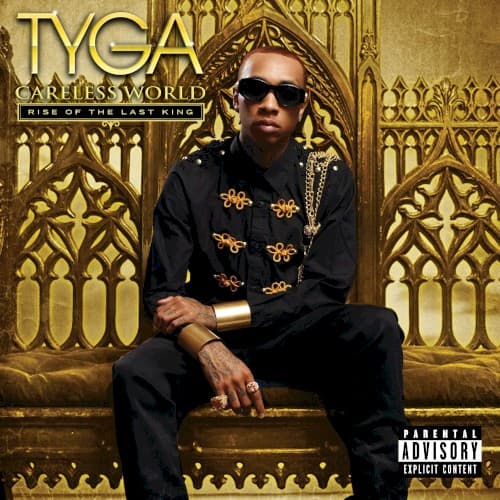
Tyga Careless World: Rise of the Last King: A Pop-Rap Playlist in a Prestige Album's Clothes
The most revealing thing about Careless World: Rise of the Last King is where its best song sits in the running order. "Rack City" arrives eleventh, buried among a pile of heavy-looking collaborations and moody confessionals, and it is the one track that sounds like it belongs to a specific time and place. It is a stripped, bass-heavy Los Angeles club record built on almost nothing, and it went to number seven on the Hot 100. Around it, Tyga builds a record that wants to be taken as a major-label statement, with a king's title, a speech sample at the front and a procession of famous guests. My argument is that the album is a good pop-rap playlist trapped inside a mediocre prestige album, and that the gap between the two is the whole story.
The ambition is not hard to see. This was Tyga's first album on a major, after an independent debut, and it was made over a long stretch, from 2009 to 2011, with a long list of producers brought in to give it polish. The release was delayed by sample clearances and then partly recalled because of an uncleared Martin Luther King Jr. speech on the opening track, which is not a good look for a record trying to sound serious. Despite the limited release it debuted at number four, and it eventually reached platinum.
What the album does not have is a point of view strong enough to organize all that material. The tradition it sits in, the West Coast hip-hop line from G-funk to the modern club sound, rewards economy and a clear sense of place, and Careless World mostly trades both for scale. The slick pop singles borrow from the Young Money school, the confessional tracks borrow from Drake, and the strongest moment belongs to a young Los Angeles sound that the album never fully commits to.
It is a record with real highlights and a rating to match: mixed, with an obvious path to a much better album at half the length.
Great Beats, Borrowed Gravity, and Nine Songs Too Many
The album's production is its strongest asset, and it is also the clearest sign of the record's divided mind. The credits read like a summit: Pharrell Williams, Boi-1da, Noah "40" Shebib, Cool & Dre and a cluster of in-house names, with Jess Jackson handling the largest share. The result is a polished record that moves comfortably between club bounce, glossy R&B-leaning hooks and slow, atmospheric beats. At its best, the sound is spacious and cleanly mixed, with synthesizer lines that leave room for the voice. At its weakest it is competent and anonymous, a set of beats that would suit almost any rapper on the label.
The writing is where the record is most exposed. Tyga is a hook-first rapper whose strength is catchy, punchy repetition, and the album works when it plays to that: short, clipped lines, simple rhymes and a sing-song cadence that sticks. When he attempts something more reflective, the results are thin. A critic at Spin called the seriousness joyless and affected, and the criticism lands in the places where the album reaches for pathos with little to say, repeating a handful of ideas about fame, money, doubt and loyalty without developing them. One review noted that his real strength is curation more than introspection, and that is a fair description of what the record does best.
Delivery is solid but narrow. Tyga's voice has a lazy, slightly nasal edge that suits a club single, and he rides a beat with confidence. But there is not much variation in his tone from track to track, and the guests, a long list that includes Pharrell, Nicki Minaj, Big Sean, Busta Rhymes, Lil Wayne, Wale, Nas and J. Cole, often outshine him. Some of those guest slots feel like marketing choices instead of artistic ones, and the collaborations with established names give the record a borrowed authority.
The concrete weakness is the length. At twenty-one tracks on the main edition, and with bonus material beyond that, the album is far too long for the amount of material it has. One reviewer said it was about nine songs too long, and another thought the length was insane for a record with this kind of pop instinct, and both are right. The long stretch in the middle is the clearest example, where a run of interchangeable ballads and mid-tempo songs buries the better material.
Even so, there is craft here. The hooks are well made, the mixing is clean, and the best singles are tightly constructed. What is missing is selection.
A Strong Start, a Sagging Middle, and an Album That Never Stops
As a sequence, Careless World starts with confidence and loses it. The opening run is the best part of the record: a serious title song, a pair of guest-led tracks and a Boi-1da production give the album momentum and a sense of purpose, and the first third has a sound that is varied but coherent. The decision to put a recognizable speech at the end of the opener was a poor one for reasons well known by now, but as an attempt to frame the record as something larger, the intention is clear.
The sag begins in the middle. Interludes, a long run of R&B-flavored guest features and a series of mid-tempo songs arrive in quick succession, and the record loses its shape. The club singles that give the album its commercial identity are scattered among them, not grouped, so the sequence swings from party to confession to romance without any logic beyond tracklist symmetry. The hit that matters most, and the one that makes the case for the LA club sound, is almost lost in the shuffle.
The late stretch is the least successful. A very long ballad, a collaboration with a soul singer and a run of songs that all work the same emotional register make the album feel longer than it is, and the hidden and bonus tracks at the end are best seen as extras rather than part of the arc. A few of the late songs, particularly the ones with the most prominent guests, are strong, but they are surrounded by material that does not earn the space.
At twenty-one tracks and nearly ninety minutes, the length is not earned. A cut to fourteen or fifteen songs, keeping the singles, the strongest guest features and the best producer collaborations, would have been a leaner, more convincing album. As it stands, the record rewards a playlist more than a straight listen, and the sequence is the clearest evidence that selection was the missing skill.
The Playlist Inside the Album Is the Better Record
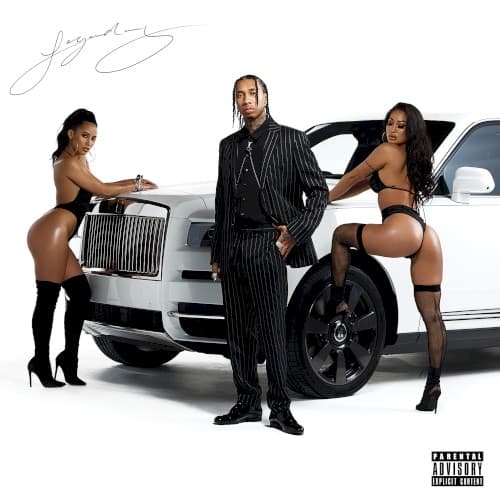
In Tyga's catalog, Careless World is the high-water mark for ambition and one of the stronger entries for commercial reach, but it ranks below the focused, hook-driven records of his later career on coherence. Compared with Legendary, the 2019 record that stays short, stays in one lane and leans on a few strong hooks, Careless World has more range and more weight but is a much less disciplined listen. Our rating is mixed: strengths and weaknesses roughly cancel out, and the strengths are mostly in a handful of singles.
The album is for listeners who want to hear the early-2010s pop-rap sound at its most polished, who follow the Young Money circle, or who want to understand how a Los Angeles club single became a national hit. It is also useful for anyone interested in the odd history of the record's release, with its delays and its recalled speech sample. It is not for those who want a tight, consistent album, who are tired of confessional rap about fame, or who dislike long, glossy collaboration-heavy records.
As for age, the album has settled into two parts. The club singles, especially the one built around bass and handclaps, have kept their appeal. The serious material has dated, and the spoken-word framing sounds even less convincing now that the context is known. The platinum certification arrived years after the release, which suggests that the best songs have found a long audience while the album as an object has not.
Start with "Rack City", "Faded" and "Far Away", the three singles that make the best case for the record's commercial instincts. Then try "King & Queens" for the most serious guest verse of the set.
For what to hear next, go to Legendary for the same artist with a shorter running time and fewer ambitions, or to Tyga in his mixtape mode for the looser, more direct side of his rapping. The best version of this album is the playlist you make from it.
Track by track
Track Listing
Careless World
SolidThe title track and the album's framing device. It samples a modern choral piece and a dance track, and it opens the record with a solemn, almost grand tone. The recalled Martin Luther King Jr. speech was placed at the end of this track, and the controversy tends to overshadow the music. Tyga's delivery is steady and serious, but the writing is thinner than the sound suggests, and the song makes a bigger gesture than it earns. Ambitious and well produced, but top-heavy.
Lil Homie
StandoutA guest spot with Pharrell Williams, who also produced it. The beat is bouncy and polished, and the track has a lighter touch than the opener. Tyga sounds relaxed, and the song is one of the more enjoyable early moments, though it does not stay with you.
Muthafucka Up
SolidA collaboration with Nicki Minaj, produced by Jess Jackson. It is a loud, brash cut that aims for energy and mostly gets it. The guest verse adds some spark, but the writing is generic and the song is gone from memory quickly.
Echoes (interlude)
SolidA short interlude that sets a moody tone. Atmospheric and forgettable.
Do It All
SolidA song that, according to critics, borrows heavily from a Kanye West record. The beat is dark and grand, built on elements from funk and a world-music track, and Tyga plays at ambition with a weighty, confident delivery. The structure is clear but the writing is repetitive, and the borrowed feel keeps it from being fully convincing. A decent attempt at scale.
I’m Gone
StandoutA guest verse from Big Sean over a Boi-1da beat. The production is tight and menacing, and the track has more bite than much of the surrounding material. Tyga sounds sharper here, and the feature is well placed, making it one of the stronger mid-album songs.
For the Fame
SolidA pop-leaning cut with Chris Brown and Wynter Gordon. The hook is smooth and the production is clean, but the song is built for radio and little else. It fits the record's commercial side without adding much character.
Birdman (interlude)
SolidA short interlude with a label-head tie-in. Filler.
Potty Mouth
SolidA collaboration with Busta Rhymes, produced by Key Wane. Busta brings a burst of energy that Tyga's own verses lack, and the track is one of the more rhythmic on the album. It is fun but slight.
Faded
StandoutA single with Lil Wayne that went to number thirty-three on the Hot 100. The beat is lean and spacious, the hook is easy, and Wayne's guest verse gives the track a loose, playful feel. It is one of the record's most focused and replayable songs, and a good example of what the album could have been with a tighter filter. A solid, confident single.
Rack City
StandoutThe record's biggest hit and its most important track. Produced by Mustard and Mike Free, it is built on a stark, bass-heavy beat with a minimal arrangement and a hook that repeats until it sticks. It reached number seven on the Hot 100 and went platinum, and it helped establish the Los Angeles club sound that would shape the next several years of West Coast radio. Tyga's delivery is deadpan and rhythmic, a perfect match for the beat. The writing is thin, but that is part of the design. A key track and the best song here by a wide margin.
Black Crowns
SolidA confessional track that ends with a voicemail from Tyga's mother, a moment a Rolling Stone critic compared unfavorably to Drake's style. The production is moody and the intent is sincere, but the writing is generic and the track runs long. A decent attempt at depth that does not quite arrive.
Celebration
SolidA bright song with T-Pain that works as a party cut. The production is clean, and T-Pain's hook gives it a pop sheen. Enjoyable and disposable.
Far Away
StandoutThe album's lead single, featuring Chris Richardson, which reached number eighty-six on the Hot 100. It is a smooth, melodic song built around a sung hook, with Tyga's rapping serving mostly as a bridge. It shows the album's pop ambitions and is well made, though it is a less distinctive single than the later ones. A solid, radio-friendly entry.
Mystic a.k.a. Mado Kara Mieru (interlude)
SolidA very short interlude, under half a minute, built on a sample from a modern choral piece. A brief breath between songs.
This Is Like
WeakA romantic cut with Robin Thicke, produced by D.A. Doman. The mood is smooth and the hook is polished, but the song is one of several interchangeable slow jams in the record's middle stretch. Forgettable.
King & Queens
StandoutA collaboration with Wale and Nas that is the closest the album comes to a traditional rap set piece. The beat is restrained and the guests give the track weight, and Nas in particular lifts the song above its surroundings. Tyga holds his own, though the verse is more competent than memorable. A good change of tone and a strong late addition.
Let It Show
SolidA track with J. Cole, produced by Cool & Dre, with excerpts from a classic soul record. The sample gives it warmth, and Cole's verse adds a thoughtful note. Tyga's part is workmanlike, but the overall effect is pleasant and polished. A solid, mid-weight cut.
Love Game
WeakAt more than seven minutes, the longest track on the record, and a sign of its excess. The beat is slow and the mood is intimate, but the song stretches a thin idea across a long running time and loses momentum. Filler.
Lay You Down
SolidA romantic track with Lil Wayne. The guest verse is amusing and the beat is smooth, but the song sounds like another entry in the record's long run of slow jams. Fine but unnecessary.
Light Dreams
SolidA song with Marsha Ambrosius that closes the standard album on a soulful note. Her voice gives it a depth that Tyga's verses do not, and the production is lush. A pleasant, atmospheric closer, though the writing is slight.