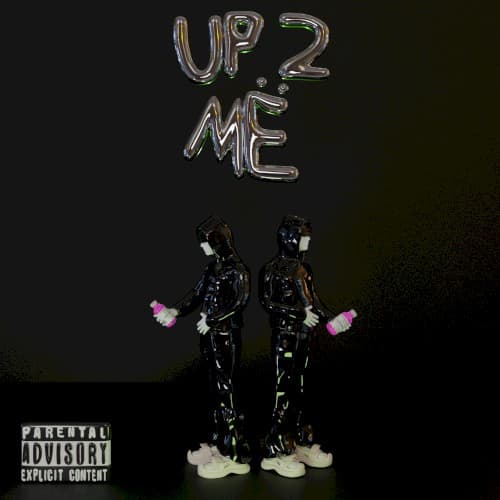
The scorecard
6.0/10 · Mixed
- Writing25%
- 4.5
- Production25%
- 7.0
- Delivery15%
- 7.0
- Cohesion15%
- 5.0
- Originality10%
- 7.0
- Replay value10%
- 6.5
The lyrics lean on drug talk, jokes and fragments, and even the addiction songs "Lët ya know" and "Bak on ëm" stay at the level of a passing remark.
Droning synthesizers, nervous hi-hats and chiming bells give "Gët Busy" a signature sound, though the many beats are similar in tempo and length and blur together in the middle.
Yeat bends his voice into birdsong, glitches and yelps on "Turban" without it feeling like a gimmick, and the vocal personality is the best thing on the record.
Twenty-two songs and almost fifty-six minutes pile up near-identical tracks with no interludes, and only the five-minute closer "Lying 4 fun" changes the pace.
The voice sounds unlike its peers and the humor sets it apart from the more serious rage albums of 2021, even if the format was already taking shape.
Its best songs have lived beyond the album through viral clips and placements, but the thin writing and sameness make a front-to-back replay less rewarding than a playlist of highlights.
Yeat Up 2 Më: A Voice Built for the Clip, Not the Record
Up 2 Më is the sound of a voice being treated as the whole product. Yeat's debut album rests on a simple, risky wager: that a rapper who can sound like a malfunctioning toy, a songbird and a sports announcer within the same minute can carry twenty-two songs without a verse worth quoting. The wager mostly pays off in the moment and mostly fails in the aggregate, and that tension is the thesis of this review. The album is a laboratory for vocal ideas, brilliant at the level of the clip and uneven at the level of the record.
The evidence for the moment is strong. Pitchfork's Alphonse Pierre set it against the rage albums that Ken Carson and Trippie Redd released the same year and found theirs hollow by comparison, crediting Yeat with bending his voice without making it feel like a gimmick. The Washington Post and AllMusic were similarly warm. They are right about the voice, which sits somewhere between melody, noise and mischief, and which rarely repeats a trick from one song to the next.
The evidence against is the sequence. Twenty-two tracks and nearly an hour of beats built from bells, chimes and nervous hi-hats put a ceiling on how much any one sitting can absorb, and the writing rarely gives the ear something to hold when the vocal gymnastics pause. A streaming-era listener who skips freely will assemble a very good dozen-song set from it. A listener who plays it start to finish will wonder when the ideas run out.
Its afterlife shows the streaming-era mechanism at work. The album arrived in September 2021, entered the Billboard 200 in January 2022 at number 183, and climbed to number 58 the following month as viral clips, a television placement, a pole-vault world record and a sneaker commercial pulled new ears toward it. That is a record that spread in fragments, and the fragments are where it is strongest.
Bells, Yelps and Thin Writing: Where the Fun Comes From
The first thing to hear is how much of the album's identity lives in the vocal chain. Yeat's delivery moves between numb, drowsy mumbling and sudden, high-pitched yelps, with a melodic sense that critics compared to Future, Travis Scott, Chief Keef, T-Pain, Young Thug and Playboi Carti. The comparison list is long because the voice is genuinely hard to pin down, and the best moments use it as an instrument rather than a carrier for words. A writer for the Washington Post heard him visiting nearly every corner of the lungs, throat and sinuses on one track, and the description is fair: the album is at its best when the sounds he makes matter more than the sentences.
The production supports this approach by staying out of the way and then occasionally jumping in. Many different hands worked on the record, and Yeat himself is credited as a producer on a good share of the tracks, which helps explain the consistent mood: droning synthesizers, nervous hi-hats, chiming bells and low, rubbery bass. The sound is spare compared with the thicker, more compressed rage records that followed, and the space gives the vocal room to wander. The bells deserve a mention as a signature. They are a simple idea, and they turn up often enough to become a brand without wearing out.
Against its peers the album comes across as the more interesting of the early rage releases, and the reason is humor. Yeat is willing to be silly, to break the fourth wall and to make a joke of his own drug use, and the tone keeps the record from sinking into the grim sameness that hollowed out some of its competition. That lightness is also a defense mechanism: it papers over how thin the writing is, because a joke does not have to be about anything.
The concrete weakness is the lack of substance once the novelty fades. Songs that confront a dependence on prescription opioids stay at the level of a passing remark, with a few lines of reckless talk and a brief flash of doubt, and the album never turns those moments into a theme. The same weakness shows in the beats: at roughly two and a half minutes each, the instrumentals blur into one another, and several tracks have no melody or hook beyond the voice. Without the vocal tricks, many of the songs would not survive.
What the record gets right, and what most of its imitators miss, is that it knows its limits. It does not pretend to be a concept album or a statement. It is a collection of short, strange, catchy sketches by a rapper who has figured out his best instrument, and it is honest about that. The result is more fun than most debuts in the genre, even if it is not more substantial.
Twenty-Two Songs on a Conveyor Belt
As a sequence, Up 2 Më is a long run of similar songs, held together by tone more than by structure. It opens with a quick, short track that sets the voice and the sound immediately, and the first third of the record moves fast, with strong ideas arriving every few minutes. The lead single sits early in the order, which was the right call: the bell gag lands, the hook sticks, and the record has established its personality before anyone has a chance to drift.
The middle is where the sequence sags. A long run of songs of nearly identical length, tempo and structure creates a feeling of being on a conveyor belt, and the changes of pace are small enough to be missed. There is no skit, no interlude and no deliberate shift of register, so the pacing depends entirely on how much the listener enjoys the voice. If you do, the stretch is a pleasure. If you do not, it is a test of patience.
The album recovers in the last third with a few of its more memorable ideas, and it ends in an odd and bold way. The closer, "Lying 4 Fun", runs more than five minutes, easily the longest song on the record and twice the length of most of the others. It is an unusual choice for a record built on short bursts, and it works as a loose, atmospheric comedown, though it also spends its time on an idea that could have been shorter.
The length is not earned. Twenty-two songs and almost fifty-six minutes is a streaming-era number, designed to accumulate plays and give the algorithm more to work with, and the album would have been stronger at fourteen or fifteen songs. The best material would have survived a cut, and the middle would have stopped pulling the energy down. As it stands, the record is better in pieces than as a whole, which is also exactly how most listeners have found it.
The Debut That Made a Bell Into a Style
Up 2 Më is a good debut with a clear ceiling. No other Yeat album is rated on this site yet, so its place in the catalog is provisional, but the record's strengths are easy to describe: a vocal approach that sounds like no one else, a sense of humor that sets it apart from the more serious rage albums of its year, and a handful of songs that have lived far beyond the album. Its weaknesses are just as clear: thin writing, a sameness of beat and a running time that outstays its ideas. Pitchfork's 6.7 out of 10 is about right, and it reads as a generous mixed-to-good rather than a rave.
It is for listeners who enjoy voice as an instrument and who are happy to take a record in pieces. It is also a useful starting point for understanding how rage rap grew from internet-native weirdness, and for anyone curious why a debut album could chart in 2022 after being released in 2021. Skip it if you value lyrical detail, if you need a coherent arc, or if a nasal, mumbled, bell-laden style is not for you.
The record has aged well in the way that matters most for this scene: its strangest ideas are now familiar, and they still sound like Yeat's. The 2022 placements in a prestige television series, a world-record pole vault and a sneaker commercial suggest how portable the sound is, and a vinyl and CD reissue for the fifth anniversary in 2026 suggests the audience has not left. What it has not done is deepen. It is a good time capsule and a good starter, not an album that rewards close reading.
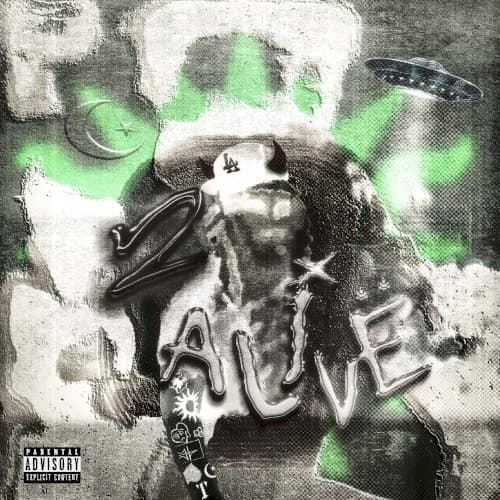
Start with "Gët Busy", which is the single and the best introduction to the bell-and-bark approach, then "Turban" for the most extreme vocal experiment, and "Lët ya know" for the album's moment of doubt. For what to hear next, go to 2 Alive, the follow-up that tightens the formula, or to Playboi Carti's Whole Lotta Red if you want the record this one is often measured against. Up 2 Më is best remembered as the album that made a bell and a squeal into a style, and its strongest evidence is that you can recognize both within three seconds.
Track by track
Track Listing
Cmon
StandoutThe shortest track on the album, a quick opener that introduces the voice and the sound in under two minutes. It was written with its producers, and it has enough bounce to work as a statement of purpose. A brisk start rather than a highlight.
Morning mudd
SolidProduced by Bugz Ronin, who also shares a writing credit, this is a mid-length, mellow cut that eases the album into its groove. The vocal is slow and drowsy, and the beat is spare. Pleasant but not distinctive.
Got rich
SolidProduced by Yeat with F1lthy, Lucian and Lukrative, and one of the shorter tracks at about two minutes. It is built for speed and attitude, with a hook that sticks without much development. Solid, and gone before it wears out.
Lët ya know
StandoutA key song for the album's darker side. Yeat confronts his dependence on prescription opioids, suggesting at one point that this could be his last song, and it gives the record a rare flash of introspection. The beat is spare and moody, and the delivery is flat and tired in a way that suits the subject. It is not a deep examination, and the writing stays brief, but the contrast with the playful tone elsewhere gives it weight. One of the few places where the album sounds like it is about something, and the better for it.
Stayëd tha same
SolidAnother short, steady entry, produced by Bnyx and Snapz, where the vocal rides a repeating beat. Competent and easy to listen to, but it does not stand out from the tracks around it.
Gët Busy
StandoutThe lead single and the album's defining moment. Yeat breaks the fourth wall to announce a bell, then church bells wash over the beat, which is built from droning synthesizers and nervous hi-hats. The gag went viral and was quoted by Lil Yachty, Drake and the comedian Druski. It is silly, memorable and economical, and the bell gives the song a signature that nobody else had. The track earns its fame because the joke is delivered with total commitment, and because the hook underneath is strong enough to survive repeated plays. It is the best introduction to what the record does well, and a clear example of how a single moment can carry a song. The only complaint is that nothing else matches its focus.
Rokstar
SolidA brief entry credited to three producers, built on a bouncy beat and a confident, low-key vocal. It is solid, if easily forgotten in the middle of the record.
Trëndy way
StandoutThe only guest feature, with SeptembersRich, who also shares a writing credit, and at over three minutes one of the longer tracks. Yeat makes light of his drug use here, with a playful tone that undercuts the darker songs around it. The guest adds a second voice and a change of texture, which the album sorely needs by this point, and the beat is bright and bouncy. It is not among the sharpest writing on the record, but the shift in dynamic makes it one of the more enjoyable tracks in the middle stretch. A welcome change of pace, and a good example of the humor that sets the album apart.
Swërved It
SolidA quick, energetic track produced by Outlit, running just over two minutes. The vocal is sped up and a little frantic, and the beat is lean. Fun but interchangeable.
Ya Ya
SolidA short track with a chanted hook and a repeating beat. It does its job and moves on.
U could tëll
StandoutProduced by Yeat and Subzeroswiz, and featured in an episode of Euphoria in 2022. The placement is a good indication of its mood, which is sleek, nocturnal and easy to drop into a scene. A strong, moody track that works well outside the album too.
Factz
SolidProduced by Yeat and Synthetic, a mid-length track with a steady, hypnotic rhythm and a confident, drawling vocal. It is solid, but it does not add much to the album's vocabulary.
Bak on ëm
StandoutAnother view of Yeat's struggle with addiction, this time bouncing between reckless drug talk and a little introspection. The vocal sounds numb and emotionless, and the beat is so muffled that a chiming bell is the only sound that stands out. At two minutes it is brief, and it works as a mood piece rather than a song.
Hëy
SolidA mid-length track produced by Yeat with Bnyx and Nuu. The vocal moves between a mumble and a higher register, and the beat is similar in tone to its neighbors. Solid filler in a long middle stretch.
Turban
StandoutThe album's most extreme vocal experiment, and a standout. Yeat uses his voice as an instrument, imitating birdsong, the glitch of a bad phone connection and the groan of a straw through a plastic lid, culminating in a cry that sounds like an exorcism. The Washington Post singled it out for how many parts of the voice it uses. The instrumental was later used in a Nike and Dick's Sporting Goods commercial, which shows how adaptable the beat is. It is silly and a little unsettling, and it is the clearest case for Yeat as a vocal performer rather than a lyricist. The cost is that it works best as a stunt, and it asks little from the listener beyond amazement. Still, it is unforgettable.
Twizzy Rich
SolidNamed for the label and produced by Yeat and Synthetic, this is a confident, self-branding track at over two and a half minutes. The tone is relaxed and slightly boastful, and the beat is steady. Solid, though it adds little beyond its attitude.
Told ya
SolidAt over three minutes, one of the longer songs, with a slower pace and a more melodic approach. The extra time gives the vocal room to stretch, though the idea is not strong enough to fill it.
Monëy so big
StandoutA confident, bouncy track that was played as Armand Duplantis broke the pole vault world record. The placement fits: the beat has lift, and the vocal has a feel of ascent. A fun, light track and one of the more memorable late entries.
Dëserve it
SolidThe second-shortest track, produced by Yeat with several collaborators, running under two minutes. It is a quick burst of melody and mumbled confidence, over before it can wear out its welcome.
Kant changë
SolidA brief, steady track with a repeating beat and a flat, confident vocal. Competent, and entirely typical of the late album stretch.
Callin më
SolidA short, mid-tempo track with a melodic hook, and a gentle change of tone before the closer. Pleasant but slight.
Lying 4 fun
SolidThe closer and by far the longest track, at just over five minutes. It is a loose, atmospheric comedown that gives the vocal space to drift, and it is a bold choice on a record of short bursts. The length is more than the idea can comfortably carry, though the change of pace is welcome after so many tracks of similar size. It ends the album on a hazy, unresolved note rather than a statement, and that fits. Ambitious, a little long, and a fitting end to a record that is more about mood than meaning.
Frequently Asked Questions
Is Yeat's Up 2 Më a good album?
What are the best songs on Up 2 Më?
How did Up 2 Më perform on the charts?
Who is featured on Up 2 Më?
Styles