The scorecard
6.0/10 · Mixed
- Writing25%
- 4.5
- Production25%
- 7.0
- Delivery15%
- 7.0
- Cohesion15%
- 5.5
- Originality10%
- 6.0
- Replay value10%
- 6.5
The lyrics are made of money talk, drug references and nonsense syllables that rarely rise above texture, leaving little to hold on to once the voice stops being surprising.
A wide pool of beatmakers delivers one consistent room of chiming synthesizers and soft, heavy bass, though the shared tempo, palette and structure make the beats blur over the hour.
Yeat's elastic, slightly numb voice is more controlled than on the debut and sits inside the beats without the guests taking over, but the vocal tricks are used up before the halfway point.
Seamless transitions and a clean closing landing make the album work as one stream, but twenty tracks and over an hour of similar tempo and texture leave a long, flat middle.
Critics agreed it tightens the debut's sound rather than expanding it, so the deliberate album-as-stream format is the only real step forward.
It works well as background listening and for long sessions, but the lack of distinct songs makes it easier to enjoy than to remember.
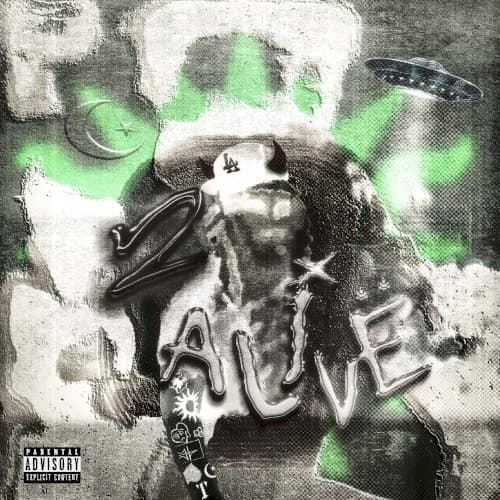
Yeat 2 Alivë: A Safe Bet on a Strange Voice
2 Alivë is built to be heard as one long stream rather than twenty songs, and that is both the best defense of it and the clearest charge against it. Yeat's second album takes the formula of his debut, a nasal, elastic voice over spare, chiming rage beats, and lets it run for about an hour without pausing to make a case for any single track. The thesis is that this is a good album precisely because it understands what its audience wants, and a limited one because it never asks that audience for more.
The critics split along those lines. HipHopDX called it a lesson in precision and in knowing what listeners crave, arguing that zooming in can be as impressive as expanding. Pitchfork's Alphonse Pierre was more measured, noting that Yeat was doing little that was new but praising an album-focused approach best taken as one noisy, continuous stream. AllMusic's David Crone called the twenty-track list bloated and padded with one-dimensional material. All three are right, and none of them cancels the others out.
The numbers say the formula worked. The album debuted at number six on the Billboard 200 with 35,000 album-equivalent units, Yeat's first top-ten record, after a release that slipped from January so that an additional guest could be secured. That detail is revealing. The guest list was treated as an asset, with Young Thug, Gunna and Ken Carson among the names, and a record of this kind lives on the strength of its voice and its cameos as much as on its songs.
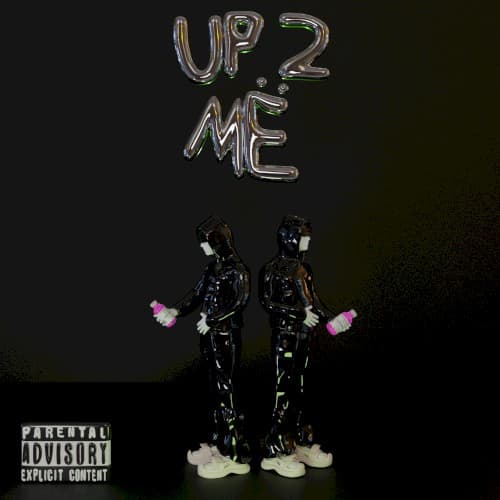
What follows argues that the record's focus is real, its bloat is real, and its ceiling is set by the writing, which stays shallow even at its most ambitious. If Up 2 Më was a laboratory of vocal tricks, this is the same laboratory with the lights dimmed and the volume raised, and in the dark the experiments begin to blur.
One Room, Many Beatmakers, A Voice Under Control
The core of the album is a vocal performance that has become more controlled. Yeat still stretches syllables, drops into a mumble and jumps to a higher register, but the effect is steadier than on the debut, and he sits inside the beats instead of interrupting them. The sound is the same elastic, slightly numb voice that critics had compared to a long list of Atlanta and rage predecessors, now used with more discipline. That discipline is what HipHopDX meant by precision: the record knows what it wants to do and does it repeatedly, with little waste in the sound itself even when there is waste in the tracklist.
The production comes from a wide pool of beatmakers, with Synthetic, Rision, Trgc and BenjiCold each appearing on more than one song, yet the album sounds like a single room. Bright, chiming synthesizers, soft but heavy bass and fast hi-hats dominate, and the mix is consistent from track to track, with recording and mixing credited to a single person. The consistency is the strength. It means the album works as a continuous stream, as Pierre suggested, and it lets a listener drift through the hour without noticing the seams between songs.
The guests are handled with a light touch. Young Thug, Gunna, Yung Kayo, Ken Carson and SeptembersRich appear across the record, and while they add commercial polish and a change of voice, none of them changes the album's center of gravity. That is a deliberate choice rather than an accident, and it supports the idea that the voice is the product. It also means the features rarely become events in their own right. The album would not be very different if they were removed, and a record that does not need its biggest names is making a statement about how it is built.
The concrete weakness is the one AllMusic named: the record is long, and much of what fills the length is repetitive. Twenty tracks at an average of just over three minutes is a heavy load for beats that share a tempo, a palette and a structure, and the vocal tricks that kept the debut fresh are used up before the halfway point. The writing does not rescue the middle. The lyrics are made of money talk, drug references and nonsense syllables, and they rarely rise above texture. When the voice stops being surprising, there is not much left to hold on to.
The comparison to the debut is the useful one. HipHopDX noted that the sound had not expanded, and Pierre said Yeat was not doing anything new, and both are fair. What changed is the format: this is a record designed to be streamed in one go, with less fuss about individual songs. That is a legitimate choice for a streaming-era artist, and it makes the album a better fit for background listening than for close attention. It also means the album is easier to enjoy than to remember, which is exactly the trade-off at the center of this kind of rage.
An Hour-Long Stream and Its Sagging Middle
As a sequence, 2 Alivë is a deliberately seamless hour. The tracks flow into one another without skits, intros or obvious breaks, and the tempo changes only slightly from one song to the next. That is the design: the album is meant to be played as a stream and to wash over the listener, and on those terms the sequencing works. The opening stretch sets the tone quickly and establishes the voice, and the first guest arrives early with the longest song in the front half, "Outsidë", which gives the record a larger scale than its opening tracks promised.
The weaknesses of that approach show up in the middle. Over a long run of songs of about the same length and shape, the lack of contrast becomes tiring, and without clear markers it is hard to tell where one idea ends and another begins. The album has peaks, but they are low and widely spaced, and the sag comes from sameness rather than from bad songs. A listener who treats the album as a playlist will notice the problem less than one who plays it in order, which is a point in favor of the streaming-era approach and against the album as a form.
The ending is the best sequencing decision. The album closes on "Still countin", the single that was released a week before the record, and it lets the hour end on a song that was already familiar to the audience. It is a reward for listeners who stayed through the whole stream, and it gives the record a clean landing after so many tracks that fade into each other. Placing the single last, instead of first, is a confident choice and a sensible one.
Length is the unresolved problem. At just over an hour and twenty tracks, the album asks for more attention than its ideas can repay, and the deluxe edition's additional songs only extend the run. A tighter version, closer to fourteen or sixteen tracks, would have kept every peak and removed most of the sag. The album's insistence on being one continuous stream is admirable, but a stream, unlike an album, has no obligation to end when the ideas do.
The Breakthrough That Never Asked for More
2 Alivë is a good album and a better product than it is a record. No other Yeat album is rated on this site yet, so its position in the catalog is provisional, but the context from the critics is consistent: it takes the sound of the debut and tightens it, and it is the commercial breakthrough, with a top-ten debut that the first album did not reach. The scores reflect that: strong marks for delivery and production, a middling one for writing, and a modest one for originality, since the album did not add much to the earlier sound.
It is for listeners who want rage in one continuous stream, who treat albums as environments and who enjoy a voice more than a verse. It is a good gym record, a good driving record and a clear example of how the genre works for its audience. Skip it if you want variety, lyrical substance or a record that rewards close reading. Anyone who found the debut thin will find this thinner, and anyone who found it funny may find this a little too serious about its sameness.
How it will age is a question about the whole style rather than this one record. The album's strengths, consistency and a voice that cannot be mistaken for anyone else's, are the same qualities that have kept the sound relevant, and its weaknesses, bloat and shallow writing, are the same ones critics have pointed to throughout the genre. It is likely to age as a document of the moment when rage became a full-length format, and less as a collection of songs people return to individually.
Start with "Outsidë" for the Young Thug feature and the most expansive track, "Still countin" for the single and the cleanest hook, and "Gëek high" for the Ken Carson collaboration, which shows how the voice sounds next to a close peer. For what to hear next, go back to Up 2 Më for the looser, stranger and funnier version of the same voice, or to Playboi Carti's Whole Lotta Red to hear where the whole style comes from. 2 Alivë is best summed up as a record that proves a strange voice can be a safe bet, and its best song is the one that ends it.
Track by track
Track Listing
Poppin
StandoutThe opener, produced by BenjiCold, and a quick, bright introduction to the album's sound. The voice is pushed forward, and the beat sets the tempo that most of the record will follow. A solid and functional start rather than a statement.
Outsidë
StandoutThe first guest feature, with Young Thug, and the longest track in the album's front half at nearly four minutes. The extra length gives the record a larger scale early on, and the second voice offers a contrast to Yeat's own flat, elastic delivery. It is built on a bright, chiming beat by Supah Mario and Bass Charity, and it benefits from the space. The song is not a dramatic departure, and the writing is as slight as elsewhere, but the sense of event is welcome. It is among the best tracks for a first-time listener, and it sets a standard that few of the later songs reach. The main complaint is that it arrives so early that the album has nowhere higher to go.
Rëal six
SolidOver three and a half minutes, with a long, steady beat by Dulio, Rision and Ace. The pace is relaxed and the vocal drifts, and it is a good example of the album's stream-like quality. It is solid, though it is longer than the idea requires.
Nvr again
StandoutA shorter, tighter track at under three minutes, produced by Trgc and Bart How. The hook is punchy and the vocal stays on top of the beat, which gives it more drive than its neighbors. A good, quick moment in the first third.
Luh gëek
SolidProduced by GeoGotBands, this is a mid-length track with a steady rhythm and a confident, drawling vocal. It is typical of the record's middle register: smooth, consistent and not especially distinct.
Rackz got më
StandoutThe second major guest feature, with Gunna, and a smooth, melodic change of pace that makes the most of his lighter touch. The beat, produced by Trgc and Takado, is polished, and the two voices complement each other without competing. It adds a more commercial sheen to the middle of the album, and the hook is among the more memorable. The track is more conventional than much of the record, which can be read either as accessibility or as a loss of edge. It works well as a break from the noise, and it shows how Yeat's voice can sit next to a more traditional melodic rapper without disappearing. A pleasant, polished highlight with a light weight.
Doublë
SolidA track produced by Synthetic, running just under three minutes, with a quick, repeating hook. It does its job and moves on, and it is easily absorbed into the stream.
On tha linë
SolidOne of the shorter songs, with a compact beat by Hue and Dream Awake. It is quick and punchy, and the brevity is a point in its favor, but it does not leave a strong impression.
Jus bëtter
SolidA mid-length track by Dream Awake and Flexer with a steady, hypnotic rhythm. Solid filler that benefits from the album's smooth transitions, and not much more.
Jump
StandoutThree producers share the credit, and the beat has more bounce than most of the middle stretch. The vocal is energetic, and the track has a clear hook. One of the more lively songs in the second third.
Dnt lië
SolidAt about three and a half minutes, a longer track co-produced by Earl on the Beat, with a smoother, more melodic feel than much of the record. The length gives it room to build a mood, though the ideas thin out by the end. Decent, and a bit long.
Rollin
SolidProduced by Dulio and Rision, and at over three and a half minutes one of the longer tracks. The tempo is relaxed, and the vocal drifts along the beat. It is smooth but unremarkable, a good example of the album's tendency to blur.
Taliban
SolidA track produced by BenjiCold, with a title that is meant to provoke and a beat that does not match the shock. The song is mid-length and steady, and the vocal is typical. The title draws more attention than the music, which is the main thing to say about it.
Narcoticz
StandoutThe third guest feature, with Yung Kayo, at nearly four minutes and tied with the longest tracks on the record. The beat, by Synthetic and Kele, is darker and heavier than most, and the guest gives it a change of voice that helps the late stretch. The track leans on the album's drug-focused themes, which are as thin as elsewhere, but the sound is more atmospheric and more distinct. It works as a late change of texture and one of the better uses of a feature. The length is a little excessive, but the mood justifies most of it. A strong, moody entry in the second half.
Call më
SolidJust over three and a half minutes, produced by Rision and Malikai. The vocal is melodic and the beat is gentle, giving the track a softer feel than its neighbors. A pleasant but slight change of tone.
Kant dië
SolidA shorter track by Trgc and Frankie Bash, under three minutes, with a quick, punchy delivery. It is serviceable and brisk, and it helps keep the late stretch from dragging.
Gëek high
StandoutThe Ken Carson feature, and the shortest track on the album at about two and a half minutes. Produced by Flansie and Skimayne, it is fast and compact, and the pairing of two voices from the same scene gives it a distinct, almost friendly energy. The brevity is a strength: it makes its point and leaves. It is one of the sharper songs in the late stretch, and a good snapshot of the genre's two leading voices side by side. The writing is slight, and the song depends entirely on the sound of the two rappers together, but that is enough. A fun, efficient highlight.
Luh m
SolidA guest spot for SeptembersRich, produced by Darkboy and Synthetic, running about three and a half minutes. It is a smooth, steady track that brings a familiar second voice to the late album. Solid, though it adds little new.
Smooktobër
SolidA short track produced by F1lthy and AM, running under three minutes. The beat has a lighter, bouncier feel than most of the late album, and it works as a brief change of mood. Fine, and quick.
Still countin
StandoutThe single and the closer, released a week before the album, and a clean landing for the hour. Four producers share the credit, and the beat is bright and confident, with a hook that is clearer than most of the record's. It is the song that best captures what the album does well: a nasal, elastic voice over a spare, chiming beat, tidy and memorable. At under three minutes it is short, and the brevity gives it more impact than many longer tracks. The writing is as thin as ever, but the hook carries it. It is the most effective ending the album could have had, and the best case for the record's approach.
Frequently Asked Questions
Is Yeat's 2 Alivë a good album?
Who features on 2 Alivë?
How did 2 Alivë perform on the charts?
What are the best songs on 2 Alivë?
Styles