
From Professional Kitchens to Hip-Hop's Culinary Renaissance
Action Bronson arrived in hip-hop through an unconventional door. Born Ariyan Arslani in Flushing, Queens, he spent his twenties working as a professional chef in New York City restaurants before a broken leg in 2008 forced a career pivot that would reshape his life. What began as rehabilitation-period freestyling evolved into one of rap's most distinctive personas — a bearded, barrel-chested storyteller who rhymes about obscure cannabis strains, rare fish preparations, and luxury car interiors with equal fervor. His voice, delivery, and lyrical preoccupations created immediate comparisons to Ghostface Killah, a resemblance Bronson acknowledged while building an identity that transcended the parallel.
Unlike traditional hip-hop narratives centered on struggle and ascent, Bronson constructed his mythology around hedonism, craftsmanship, and appetite. His Queens upbringing provided street credibility, but his culinary background offered something rarer: a vocabulary steeped in sensory detail and material obsession that felt both grounded and fantastical. Food metaphors saturate hip-hop, but Bronson wielded them with professional precision, turning verses into tasting menus where Albanian heritage, wrestling references, and designer fashion coexisted naturally.
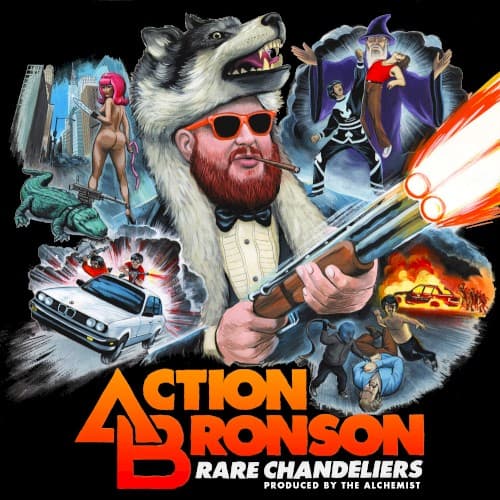
By the early 2010s, Bronson had established himself as a cult favorite whose popularity extended beyond traditional rap audiences. His collaborations with producers like Party Supplies and The Alchemist yielded critically praised mixtapes that showcased his ability to navigate boom-bap traditionalism and psychedelic experimentation with equal comfort. He represented a strain of New York rap that refused nostalgia while honoring lineage — rooted in the borough's gritty texture but willing to chase strange tangents and absurdist humor.
Maximalist Lyricism Over Sample-Heavy Soundscapes
Bronson's sonic identity sits at the intersection of classic New York production aesthetics and stoner-friendly eclecticism. He gravitates toward sample-heavy beats rich in texture — dusty soul loops, obscure jazz breaks, psychedelic rock interpolations — that provide sonic luxury to match his lyrical indulgence. Producers like Party Supplies, The Alchemist, and Harry Fraud became regular collaborators precisely because they understood this balance: beats opulent enough to support Bronson's maximalist approach but loose enough to let his personality dominate.
His delivery style borrows Ghostface's gruff urgency and melodic inflection while adding a laid-back, almost conversational quality. Bronson rarely shouts. Instead, he leans into his natural speaking register, letting punchlines land through confidence rather than emphasis. This creates an intimacy that makes even his most outlandish boasts feel like anecdotes shared over expensive wine. His flow adapts to production rather than imposing a rigid cadence, which allows him to sound equally comfortable over stripped-down loops and dense, layered instrumentals.
Lyrically, Bronson operates as a detail-obsessed materialist who treats luxury goods, obscure foods, and physical experiences as both subject matter and structural device. He name-drops obscure fish species alongside designer furniture, Albanian slang alongside wrestling holds, creating verses that function as sensory collages. This approach risks alienating listeners unfamiliar with his reference points, but Bronson's enthusiasm sells the specificity. You don't need to know what ortolan is to understand he's describing something rare and forbidden. The precision itself becomes the point — proof of expertise, evidence of a life lived through taste and texture. This culinary specificity extended his appeal beyond hip-hop purists, attracting food enthusiasts and lifestyle audiences who recognized his chef's eye for composition and detail.
Building an Empire Beyond Rap Through Authenticity and Appetite
Action Bronson's recorded career began in earnest around 2011 with the release of his debut album Dr. Lecter, followed quickly by Well-Done, a collaboration with Statik Selektah that demonstrated his ability to hold attention across full-length projects. But it was the Blue Chips series with Party Supplies that truly defined his early aesthetic. These mixtapes — loose, energetic, and unapologetically weird — captured Bronson at his most playful, rapping over eclectic samples that ranged from classic soul to prog rock. Blue Chips felt like party music for people who read Bourdain and collected vintage bongs, a vibe that carved out dedicated audiences in unexpected corners.
The 2013 mixtape Saaab Stories, executive produced by Harry Fraud, showed Bronson refining his formula. The production became more cinematic, the sequencing more deliberate, but the personality remained front and center. Tracks like "Strictly 4 My Jeeps" became underground anthems, demonstrating Bronson's knack for creating quotable moments wrapped in hypnotic beats. By this point, his resemblance to Ghostface had become a talking point he addressed directly in interviews and occasionally in lyrics, acknowledging the influence while asserting his own culinary-focused lane.
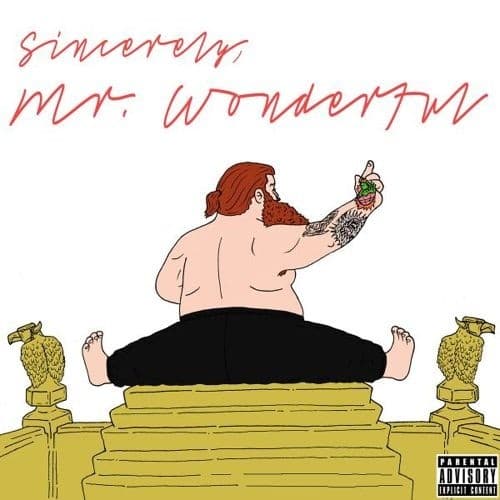
Mr. Wonderful arrived in 2015 as Bronson's major-label debut via Vice Records and Atlantic. The album attempted to balance his underground sensibility with broader commercial ambitions, resulting in a project that felt more polished and contained than his earlier work. Tracks like "Actin Crazy" and "Baby Blue" featuring Chance the Rapper showed Bronson could craft radio-friendly singles without abandoning his core identity, though some longtime fans felt the album sacrificed spontaneity for structure. Reviews were mixed but generally positive, with critics praising his charisma while questioning whether his shtick could sustain album-length focus outside the mixtape format.
Bronson's subsequent releases reflected a willingness to experiment beyond hip-hop convention. Blue Chips 7000 (2017) returned to the Party Supplies partnership with a more refined but still irreverent approach. White Bronco (2018) leaned into shorter runtimes and tighter song structures, an acknowledgment that his style thrived in concentrated doses. Lamb Over Rice (2019), named after the halal cart staple, continued this trajectory with guest appearances from Meyhem Lauren and other figures from his extended crew, emphasizing the communal aspect of his creative process.
But Bronson's cultural impact extends well beyond albums and mixtapes. He launched Fuck, That's Delicious, a Vice video series that followed him eating his way through global cities, blending food journalism with stoner comedy and hip-hop travelogue. The show became wildly popular, cementing Bronson as a media personality whose appeal transcended music. He published cookbooks, hosted other food-focused programs, and cultivated a brand built on authenticity and appetite. This multimedia approach allowed him to maintain relevance even during periods between album releases, proving that his core appeal was personality-driven rather than dependent on chart performance. In 2020, Bronson documented a dramatic weight loss journey, shedding over 125 pounds through lifestyle changes he shared openly with fans, adding another dimension to his public narrative — the hedonist learning discipline without losing joy.
Redefining What a Rapper Can Be in the Digital Age
Action Bronson's significance lies not in revolutionary musical innovation but in demonstrating how authenticity and niche expertise can build sustainable careers outside traditional hip-hop pathways. He proved that a rapper could maintain credibility while hosting cooking shows, appearing on late-night television, and cultivating audiences who might never buy a traditional rap album. This cross-platform presence predated the current era where artists routinely diversify income streams, making Bronson an early model for how personality-driven content creation could complement rather than undermine musical legitimacy.
His influence appears less in direct stylistic imitators and more in the permission structure he created. Younger artists now feel freer to embrace hyper-specific interests — whether sneakers, anime, or regional cuisine — as central to their artistic identity rather than distractions from it. Bronson showed that depth of knowledge and genuine enthusiasm could be as compelling as traditional rap subject matter, expanding what listeners would accept as valid content. His culinary expertise wasn't gimmick or metaphor; it was credential, proof that his lavish descriptions came from lived experience rather than aspirational fantasy.
Within New York hip-hop, Bronson represents a lineage that values personality and craft over commercial dominance. He connects to the city's tradition of larger-than-life characters while existing outside the mainstream industry machinery that typically defines success. His collaborations with underground producers and guest appearances alongside artists like Meyhem Lauren, Roc Marciano, and other independent figures cement his place in a scene that values artistic control and niche audience cultivation over radio play. That he achieved this while maintaining respect from old-school hip-hop heads speaks to the authenticity of his approach — the chef credentials, the Queens upbringing, the genuine love for the music all combined to create something that felt real even when it was ridiculous. Action Bronson may never be mentioned alongside the genre's all-time greats, but he redefined what a great career could look like.