Scorecard: 7.8/10 · Great
How we score- Writing(25%)
- 7.5
Bronson's imagery is absurdly specific and lived-in, from rotisserie chicken grease to leather interiors, with enough craft to keep the food raps from becoming a gimmick
- Production(25%)
- 9.0
Alchemist delivers thirteen loops that sound expensive and dusty at once, each sample chopped to leave room for the rapping without ever feeling empty
- Delivery(15%)
- 7.0
Bronson's gruff Queens bark carries the punchlines but the flow rarely shifts gears, and guest verses from Roc Marciano and Styles P outpace him technically
- Cohesion(15%)
- 8.0
Thirty-nine minutes with no filler, sequenced so the guest posse cuts land right when the solo material needs a break, then closes with Bronson alone
- Originality(10%)
- 6.5
The Alchemist-Bronson pairing was fresh in 2012 and the food-kingpin persona hadn't been done to death yet, but the mixtape follows a template Alchemist perfected with other rappers a decade earlier
- Replay value(10%)
- 8.0
The beats reward repeat listens more than the raps do, but the runtime is short enough that weaknesses never outstay their welcome
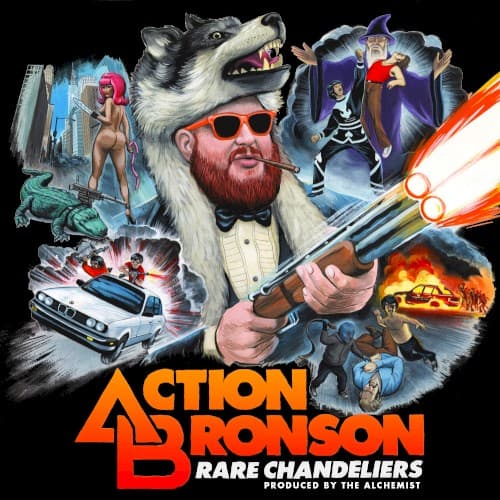
Action Bronson Rare Chandeliers — When the Chef Met the Cook
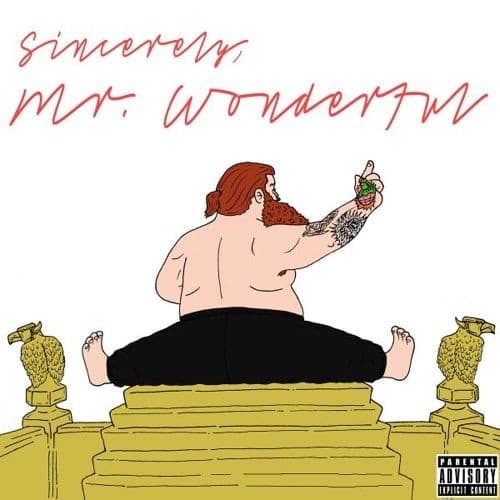
Rare Chandeliers is the sound of Action Bronson before the budget arrived and the edges got sanded down. Thirty-nine minutes, thirteen Alchemist loops, no hooks to speak of, guest spots from the Alchemist Rolodex rather than from the label wishlist. The thesis is simple: pair a Queens rapper whose punchlines about rotisserie chicken and Acura leather were still novel in 2012 with a producer who had been making expensive-sounding boom-bap out of dollar-bin soul samples since the nineties, then get out of the way. The result is Bronson's best album, better than the polished major-label effort Mr Wonderful that followed three years later, because the constraints forced focus and the running time never let the shtick sag.
What makes it work is that Alchemist treats Bronson like he treated Prodigy on Return of the Mac: he builds beats that sound like money but leave space for a voice that does not. The loops are plush and the drums crack, but nothing is overstuffed. Bronson at this point was still Ghostface's echo more than his own thing, and the writing had not yet deepened past the punchline-and-non-sequitur mode that defines most of the tape. But when the best rapper-producer fit is this tight and the runtime is this disciplined, weaknesses become mannerisms instead of problems. The food raps and luxury brags that would wear thin across a bloated tracklist here come and go before the joke gets old.
Loops That Sound Like Velvet Over Concrete
The production carries the tape. Alchemist works from a narrow palette: soul loops pitched and chopped to sound simultaneously expensive and worn, drums that knock without overwhelming the sample, no excess. The Symbol drapes a string section over a drum pattern that feels like it is always about to trip but never does. Randy the Musical flips what sounds like a Brazilian funk sample into something hypnotic enough to carry more than four minutes without a traditional structure. Demolition Man gives ScHoolboy Q a skeletal two-chord loop and a bassline that does all the work the hook should have done. Every beat sounds like it could have appeared on an Evidence album or a Gangrene tape, which means every beat sounds like Alchemist in 2012: refined, minimal, expensive.
Bronson's writing leans on food imagery and tough-guy brags, and the ratio is about right. When he describes a specific dish or a specific car, the detail sells it: rotisserie chicken, hand-stitched leather, Gore-Tex in the rain. When he reaches for punchlines the craft is inconsistent. Some land because the image is absurd enough to work on rhythm alone; others fall into the Ghostface comparison trap, where you notice the influence more than the line. His best moments come when he combines the food raps with threat, turning a verse about cooking into a verse about dominance without stating the metaphor outright. His weakest moments come when he coasts on tone and lets the punchline do nothing.
The guest verses expose Bronson's limitations. Roc Marciano on Modern Day Revelations moves through the beat with a conversational ease that makes Bronson sound stiff by comparison. Styles P on Gateway to Wizardry raps circles around the host with a flow that bends time signatures Bronson does not attempt. Evidence and ScHoolboy Q hold their own without showing him up, but the gap between Bronson and the best technical rappers on the tape is audible. His strength is presence and punchlines, not pocket or complexity, and on a tape where Alchemist invited some of his most skilled collaborators that gap becomes a liability. When Bronson closes the tape solo on Mike Vick, the absence of competition helps more than it should.
Thirty-Nine Minutes With No Sag
The sequencing is deliberate: Bronson alone for the first stretch to establish the voice, then a run of posse cuts in the middle to break up the monotony, then back to Bronson for the closing run to remind you whose tape this is. The structure works because Alchemist knows when the solo material needs help and when it can stand. The best pure Bronson performances run long enough to let him build momentum but not so long that the writing runs out of ideas. The posse cuts are scaffolded so the guest always elevates rather than derails.
The only dead weight is the intro, which exists because mixtapes in 2012 needed intros. Body Bes yells over a loop for ninety seconds and adds nothing. The remastered extended version added three more tracks that also add nothing; the original thirteen-track sequence is the correct length.
By the time the tape closes Bronson has been rapping for thirty-seven minutes and Alchemist has not repeated himself once. That is the win. The tape never overstays and never undersells. It does one thing and stops.
The High-Water Mark Before the Retreat
Rare Chandeliers is the best Action Bronson album because it is the only one that plays to every strength and hides every weakness. The Alchemist production is as good as anything he released in the early 2010s, and the thirty-nine-minute runtime means Bronson never has to stretch past the punchline-and-persona mode that defines his best work. Mr Wonderful, the major-label follow-up, had better guest features and a bigger budget, but the extra polish exposed how limited Bronson's writing becomes across a full hour. Rare Chandeliers stays in the zone where his absurd imagery and gruff delivery are enough.
This is for fans of Alchemist's run with Prodigy, Evidence and Gangrene in the late 2000s and early 2010s: understated loops, grown-man raps, no crossover ambitions. If you need complexity or progression in your rapper, Bronson will frustrate you. If you can live with a one-trick pony who executes the trick well for thirty-nine minutes, this is the tape. Start with The Symbol or Randy the Musical to hear Bronson when he is locked in, then move to the posse cuts to hear him next to better technicians. Skip the extended version unless you need every Alchemist loop ever recorded.
The aging has been kind. Bronson's food raps became a cliché by 2015, but in 2012 they still sounded fresh enough to carry a tape. The production has not dated at all; Alchemist loops will sound good in twenty years. Rare Chandeliers remains the blueprint for what Bronson does well: specific imagery, expensive beats, no filler, and out before the joke gets old. Every album he has made since has been a step away from this formula, and none of them have been better.
Track Listing
Big Body Bes (intro)
●Ninety seconds of Big Body Bes yelling affirmations over an Alchemist loop. Standard mixtape throat-clearing that adds nothing and could be skipped without losing a thing.
Rare Chandeliers
▲The title track sets the template: a soul loop chopped to leave space, drums that crack without overwhelming the sample, Bronson rattling off punchlines about luxury and violence in equal measure. The writing is all surface but the surface is detailed enough to work. He moves from hand-stitched leather to threats without transition, and the lack of a hook keeps the momentum from sagging. Alchemist lets the loop ride for two and a half minutes and trusts Bronson to fill it, which he does.
The Symbol
▲The best pure Bronson performance on the tape. The string-section loop sounds like it cost more than it did, and Bronson locks into a flow that bends around the drums without fighting them. The imagery is absurd and specific: rotisserie chicken, Gore-Tex, gestures at food preparation that double as threats without stating the metaphor. The verse builds momentum across three minutes and stops exactly when it should. When Bronson is this locked in the Ghostface comparisons become irrelevant because the presence is enough.
Sylvester Lundgren
●Meyhem Lauren and AG Da Coroner join Bronson for a posse cut that plays like a victory lap with no victory to celebrate. The beat is minimal, almost skeletal, and the guest verses are solid without adding much. Bronson holds his own but the track feels like an interlude that ran long.
Randy the Musical
▲Four minutes of Bronson over a hypnotic Brazilian-funk flip, and the length is earned. The loop is repetitive in a way that works because Alchemist chopped it to leave room for the rapping, and Bronson fills that room with some of his most technically solid writing on the tape. The punchlines are still absurd but the craft is tighter: internal rhymes that land without calling attention to themselves, transitions between images that feel deliberate rather than random. The track never builds to a climax and does not need to; the loop and the flow are enough to carry the runtime.
Demolition Man
▲ScHoolboy Q shows up and nearly steals the track. Alchemist gives them a two-chord loop and a bassline that does the work a hook should have done, and Q rides it with a ease that makes Bronson sound stiff. Bronson's verse is solid but workmanlike; Q's verse moves. The beat is strong enough to carry both, but the gap in technical skill is audible.
Eggs on the Third Floor
●Bronson solo again, and the writing sags without a guest to break up the rhythm. The beat is plush, all strings and soft drums, but Bronson does not match the mood. The punchlines are scattershot and the flow stays in one gear. By four minutes the track feels long, which is a problem Rare Chandeliers mostly avoids. Not bad, but filler by this tape's standards.
Modern Day Revelations
▲Roc Marciano shows up and makes it look easy. The beat is minimal, just a loop and a drum pattern, and Marciano moves through it like he is having a conversation rather than writing bars. Bronson holds his own but the contrast is unflattering: Marciano bends time signatures and lets lines breathe, Bronson punches through in a straight line. Still a highlight because the beat is immaculate and Marciano is in top form.
Dennis Haskins
▲Two minutes of Bronson over a murky soul loop. No guests, no hooks, just bars. The track works because it is short and the beat knocks. Bronson is in punchline mode and the lines land more often than they miss.
Bitch I Deserve You
▲Evidence joins Bronson for a midtempo posse cut that feels like a Dilated Peoples B-side in the best way. The beat is dusty and expensive, and both rappers sound comfortable without trying to outdo each other. Evidence's verse is technically sharper but Bronson matches him in presence. A solid entry that does not reach for more than it can deliver.
Gateway to Wizardry
●Styles P raps circles around Bronson and makes it look effortless. The beat is one of Alchemist's best on the tape, a string loop that sounds like it is falling apart and pulling itself together at the same time, and Styles rides it with a flow that bends bar lines Bronson does not attempt. Bronson's verse is fine but forgettable next to Styles, who turns in one of the tape's best technical performances. The track is worth hearing for the guest spot and the production; Bronson is just along for the ride.
Blood of the Goat
▲Big Twin and Sean Price join Bronson for the deepest posse cut on the tape. The beat is grimy and minimal, just a loop and drums, and all three rappers sound at home. Sean Price in particular turns in a verse that is technically sharper and funnier than anything Bronson does on the tape. Bronson holds his own without embarrassing himself, but this is another track where the guests elevate more than the host. Still a highlight because the chemistry is real and the beat knocks.
Mike Vick
▲Bronson closes the tape solo, and the absence of competition helps. The beat is skeletal, just a loop and a drum pattern, and Bronson fills it with punchlines that land because he is not next to Roc Marciano or Styles P anymore. The writing is not deeper or more complex than earlier in the tape, but the sequencing is smart: after a run of posse cuts, a solo Bronson track feels like a return to form rather than a retreat. The tape ends exactly when it should, before the shtick wears thin.