The Architect of Minimalist Hip-Hop: Roc Marciano's Blueprint
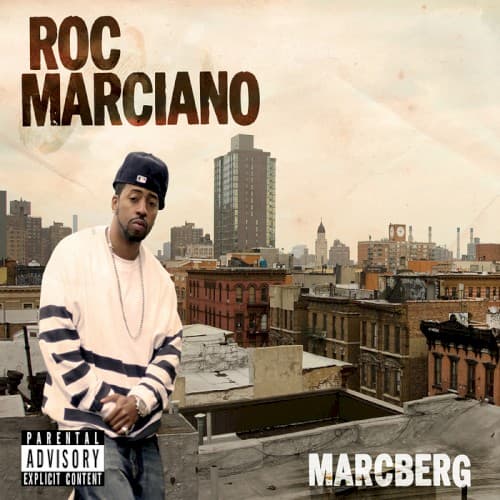
Roc Marciano didn't wait for permission to reshape underground hip-hop. When his 2010 debut Marcberg arrived with virtually no guest features, no promotional budget, and production stripped down to skeletal loops and unadorned drums, it read like a deliberate rejection of everything contemporary rap valued. No bombast, no AutoTune, no radio-friendly hooks — just dusty samples, carefully placed drums, and Marciano's conversational flow weaving crime narratives over beats that felt excavated from 1973. The Long Island native had spent years in the industry wilderness, briefly affiliated with Busta Rhymes' Flipmode Squad and the UN crew, before deciding that if the industry wouldn't accommodate his vision, he'd build his own lane entirely.
What seemed like stubborn anachronism in 2010 became the template for underground rap's next decade. Marciano's approach — self-produced albums crafted with methodical precision, luxury-brand name-checking merged with street corner pragmatism, and beats that relied on atmospheric suggestion rather than conventional structure — influenced everyone from Mach-Hommy to Westside Gunn. He proved that a rapper could control every aspect of their sound, distribute independently, and cultivate a devoted audience without compromising aesthetic purity. Where mainstream rap chased maximalism, Marciano offered negative space. His influence isn't measured in chart positions but in the number of producers who started removing elements from their beats rather than adding them.
Cinematic Loops and Conversational Violence: Roc Marciano's Production Philosophy
Marciano's sonic signature is immediately recognizable: sample loops that feel cinematically expansive despite minimal arrangement, drums that arrive sporadically rather than relentlessly, and basslines that suggest menace through absence as much as presence. He constructs beats the way jewelers set stones — each element given space to breathe, nothing crowded, every flourish deliberate. A piano loop might run for thirty seconds before drums enter. A horn section hovers in the mix just loud enough to create atmosphere. The approach owes debt to RZA's early Wu-Tang production but strips away even more, favoring implication over declaration. These aren't beats designed for clubs or car stereos; they're meant for headphone immersion, revealing new textures on repeated listens.
Vocally, Marciano operates in the conversational register perfected by Raekwon and Ghostface Killah but refined into something even more understated. No raised voice, no aggressive delivery — just calm recitation of luxury goods and criminal enterprise rendered in precise detail. His flow rarely adheres to conventional rhythmic pockets, instead draping itself across the beat with syncopated phrasing that feels both casual and carefully constructed. The effect is hypnotic rather than energetic, pulling listeners into street narratives told with the detachment of someone recounting yesterday's errands. This restraint became his trademark: violence described with businessman cool, opulence catalogued without celebration, the entire performance suggesting someone too seasoned to get excited about anything.
From Flipmode Exile to Independent Kingpin: Roc Marciano's Unconventional Ascent
Marciano's early career followed hip-hop's traditional pathways before he abandoned them entirely. His tenure with the UN — a crew featuring Cam'ron, before Cam achieved solo stardom — positioned him adjacent to late-90s New York's commercial aspirations without ever breaking through himself. A brief Flipmode Squad affiliation yielded little traction. By the mid-2000s, he'd become industry flotsam: talented but misaligned with prevailing trends, too idiosyncratic for major label machinery, seemingly destined for the
The Godfather of Modern Underground: Roc Marciano's Enduring Influence
Marciano's impact crystallized slowly, then suddenly became undeniable. By 2015, a generation of underground rappers openly cited him as primary influence. Westside Gunn built Griselda Records on aesthetic principles Marciano pioneered — self-produced albums, luxury-meets-gutter imagery, deliberate rejection of mainstream accessibility. Ka's increasingly sparse productions and Mach-Hommy's cryptic brand-building both trace lineage directly to Marcberg's blueprint. Even artists operating in different sonic territories acknowledged his example: he proved independent distribution could sustain a career, that relentless touring and vinyl sales could replace label infrastructure, that artistic control mattered more than radio play.
Beyond specific sonic imitators, Marciano shifted underground rap's entire value system. Pre-Marcberg, independent hip-hop often compensated for commercial exclusion through technical virtuosity or conscious messaging — proving legitimacy through different metrics. Marciano offered a third path: unapologetic artistic vision executed with absolute confidence, requiring no justification or alternative validation. His albums function as complete aesthetic statements, hermetically sealed against outside influence. This self-sufficiency — musical, financial, ideological — became aspirational for rappers unwilling to compromise. He demonstrated that minimalism could be luxurious, that restraint conveyed power, and that the most influential music often arrives without fanfare, building audience through patient word-of-mouth rather than algorithmic manipulation or media saturation.