The Producer Who Redefined Genre Boundaries in Modern Music
Brian Burton operates under a name borrowed from cartoon espionage, but there's nothing animated about his impact on 21st-century music production. As Danger Mouse, he's navigated between hip-hop's sample-based tradition and rock's instrumental sensibility with a fluidity that few producers achieve. His 2004 bootleg mashup The Grey Album—fusing Jay-Z's The Black Album with The Beatles' White Album—didn't just go viral before viral was a business model. It announced a producer willing to treat the entire history of recorded music as raw material.
Burton emerged from the Atlanta underground in the early 2000s, but his sound never locked into regional expectations. Where Southern production was gravitating toward crunk's minimalism and trap's skeletal hi-hats, Danger Mouse pursued orchestral density and melodic complexity. His work spans Gnarls Barkley's psychedelic soul, collaborations with MF DOOM as Danger Doom, production for The Black Keys and U2, and extensive work shaping albums for artists from Run the Jewels to Adele. That range isn't dilettantism—it's a consistent aesthetic applied across formats.
What makes Burton significant isn't versatility for its own sake. It's his role in collapsing the barriers between hip-hop production and broader pop sophistication during a period when those worlds were actively converging. He represents the producer as auteur, where the sonic signature matters as much as the artist's voice.
Cinematic Sample Architecture and Melodic Layering Techniques
Danger Mouse builds tracks like film scores—sweeping, atmospheric, concerned with mood and narrative arc. His production doesn't chase immediacy. Strings appear without irony, live instrumentation blends with samples so seamlessly the seams vanish, and negative space functions as compositional element rather than dead air. There's a European art-film sensibility to his arrangements, a patience that contrasts with hip-hop's usual urgency.
His sample selection gravitates toward soul, psych-rock, and obscure library music—sources with inherent cinematic quality. But he processes them through heavy manipulation: pitch-shifting, time-stretching, layering fragments until the original context dissolves. The result feels both vintage and futuristic, anchored in analog warmth but structured with digital precision. His drums hit hard when they need to, but they're rarely the focal point. Melody drives the composition.
Vocalists working with Burton operate inside richly textured sonic environments that reward repeated listening. His mixes create depth through layering rather than volume, building three-dimensional sound spaces where elements occupy distinct positions. The approach lends itself equally to rap vocals and sung hooks, which explains his cross-genre success. He doesn't force hip-hop artists into rock structures or vice versa—he finds the intersection where both traditions share DNA. That synthesis, more than any single technique, defines the Danger Mouse sound.
From Underground Mashups to Mainstream Production Dominance
Burton's career before The Grey Album involved obscure releases and Atlanta underground connections, but that 2004 project changed the trajectory entirely. The mashup's illegal status—EMI sent cease-and-desist letters—only amplified its cultural resonance. Suddenly Burton was the producer who challenged copyright law and won in the court of public opinion. The album never received official release, yet it established his reputation for conceptual ambition and technical skill.
That momentum led directly to Gnarls Barkley, the collaboration with CeeLo Green that produced "Crazy" in 2006—a global hit that sounded like nothing else on pop radio. The song's success was significant not just commercially but aesthetically: it proved mainstream audiences would embrace production that prioritized atmosphere and strangeness over conventional song structure. St. Elsewhere, the full album, showcased Burton's range across soul, psychedelia, and electronic textures, all filtered through hip-hop's sample-based methodology.
His work with DOOM as Danger Doom on The Mouse and the Mask (2005) demonstrated he could operate credibly within hip-hop's underground while maintaining commercial appeal. The album used Adult Swim cartoon samples as conceptual framework, pairing DOOM's abstract lyricism with Burton's playful yet sophisticated production. It remains a cult favorite that bridged alternative hip-hop and broader indie audiences.
Burton's production for The Black Keys on Attack & Release (2008) and Brothers (2010) helped revive rock's commercial viability in a hip-hop-dominated market. His approach—applying sample-based production thinking to live rock instrumentation—resulted in albums that sounded both classic and contemporary. Brothers won three Grammys, cementing Burton's status beyond hip-hop circles. Broken Bells, his ongoing collaboration with The Shins' James Mercer, further explored indie-pop territory with Burton's signature cinematic approach.
His work with Run the Jewels represents his most sustained hip-hop partnership. Producing all four RTJ albums alongside Killer Mike and El-P, Burton contributed sonic polish and melodic depth to the duo's aggressive political rap. His involvement added mainstream credibility and Grammy nominations without diluting RTJ's confrontational edge. The collaboration demonstrated his ability to support artist vision rather than impose his signature at every turn.
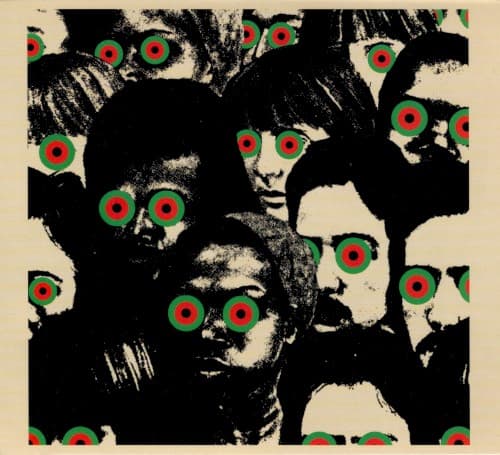
Cheat Codes (2022), his collaborative album with Black Thought, arrived after years of high-profile production work. The project—featuring appearances from MF DOOM (posthumously), Raekwon, Joey Bada$$, and A$AP Rocky—showcased Burton's curatorial instincts and his ongoing connection to hip-hop's lyrical tradition. Our review noted the album's occasional drift toward tasteful convention, rating it 6.5/10, but acknowledged the strong performances and Burton's sophisticated sonic framing. It reinforced his position as a connector between underground credibility and polished execution.
Producer as Architect: Reshaping Hip-Hop's Relationship with Pop Ambition
Danger Mouse's influence operates across multiple dimensions. He legitimized the producer-as-artist model in an era when beatmakers were transitioning from background figures to cultural brands. His career demonstrated that a producer could maintain artistic identity while working across genres, that hip-hop production techniques could enhance rock records, and that sample-based composition could coexist with live instrumentation without compromise.
His impact on hip-hop production aesthetics is harder to quantify than Metro Boomin's trap templates or DJ Mustard's ratchet sound, because Burton never established a easily replicable formula. Instead, he modeled an approach: treat production as composition, prioritize melody and atmosphere, trust audiences to engage with complexity. That philosophy influenced a generation of producers who reject genre boundaries—Flying Lotus, Kaytranada, Sounwave among them—even if their sounds differ dramatically from his.
The Grey Album's cultural legacy extends beyond its music. It became a case study in remix culture, fair use debates, and the tension between artistic expression and intellectual property. Burton didn't invent mashup culture, but his execution elevated it to artistic statement rather than novelty. The project's underground distribution through file-sharing networks presaged how artists would later use the internet to bypass traditional gatekeepers.
Burton's cross-genre success—Grammy wins for his work with Adele, critical acclaim for albums with Portugal. The Man and Parquet Courts, continued relevance in hip-hop via Run the Jewels—proves the viability of refusing specialization. In an industry increasingly driven by algorithmic categorization and playlist placement, his career argues for artistic restlessness. He remains one of the few producers whose involvement signals ambition regardless of genre, a reputation built not on signature sounds but on consistent elevation of collaborators' visions.