The Quiet Revolution: Ka's Dual Life as Firefighter and Hip-Hop Philosopher
Kaseem Ryan — known simply as Ka — operated at hip-hop's most uncompromising margins for over two decades before his passing in October 2024. A captain with the New York City Fire Department for twenty years, he approached rap with the same deliberate precision he brought to emergency response: every word measured, every silence intentional, every decision potentially life-or-death. Where contemporary hip-hop chased bombast and maximalism, Ka stripped the form down to its skeletal essence — sparse, often drumless production that forced listeners into the lyrical foreground. His voice rarely rose above a near-whisper, yet carried weight that louder rappers struggled to match.
Emerging from Brownsville, Brooklyn — the same projects that shaped Mike Tyson — Ka's early career included a stint with the group Natural Elements in the mid-90s before disappearing from music entirely. His 2008 solo debut 'Iron Works' arrived with zero fanfare, self-released and self-produced under the alias Brownsville Ka. What followed was a body of work that redefined underground hip-hop's possibilities: concept albums built around noir imagery, medieval warfare, organized crime hierarchies, and biblical allegory. Each release — 'The Night's Gambit', 'Days With Dr. Yen Lo', 'Honor Killed the Samurai', 'Descendants of Cain' — arrived as fully realized artistic statements, meticulously crafted during off-hours from his day job saving lives. His refusal to tour, promote, or compromise made him both critically revered and commercially invisible, exactly as he intended.
The Architecture of Absence: Ka's Drumless Sonic Signature
Ka's production philosophy rejected hip-hop's foundational element: the drum break. His beats — all self-produced under the alias Preservation for much of his discography — constructed atmosphere from negative space. Muted piano loops, distant horn samples, vinyl crackle, and melodic fragments hung suspended in silence, creating what felt less like instrumentals and more like sonic crime scenes. The absence of percussion wasn't minimalism for its own sake; it was architectural. Without rhythmic scaffolding to carry momentum, every syllable had to earn its placement. The production forced active listening in an era designed for passive consumption.
His delivery matched this austere aesthetic. Ka's vocal approach — barely above conversational volume, metronomically precise in its cadence — resembled film noir narration more than traditional rapping. He rarely raised his voice, never shouted, and deployed internal rhyme schemes so dense they required multiple listens to fully appreciate. Where peers emphasized performance and personality, Ka emphasized text and subtext. His flow moved in strict lockstep with the music's sparse pulse, each bar ending exactly where the loop cycled back. This created hypnotic repetition, mantras disguised as street poetry. The effect was cinematic: imagine walking through empty Brooklyn streets at 3 AM while someone recounts their life in unflinching detail just behind you.
From Natural Elements to Self-Reliance: Ka's Underground Trajectory
Ka's first chapter began in hip-hop's golden age. As part of Natural Elements alongside Mr. Voodoo and Anthony Cruz, he appeared on sought-after underground 12-inches in the mid-90s — '2 Tons of Fun' and 'Indeed' became collector items among purists. But the group never secured a proper album deal, and by the late 90s, Ka had stepped away from music entirely to focus on his firefighting career. For nearly a decade, he disappeared from rap completely, working shifts in some of New York's most dangerous neighborhoods while the industry moved on without him.
His 2008 return with 'Iron Works' announced a fully formed aesthetic that would remain remarkably consistent. Entirely self-produced and self-released, the album introduced his signature drumless approach and dense, literary lyricism. Follow-up 'Grief Pedigree' (2012) refined the formula, but it was 2013's 'The Night's Gambit' that established Ka as underground royalty. Built around chess metaphors and Brooklyn noir, the album showcased his ability to sustain conceptual frameworks across entire projects without sacrificing immediacy. A collaboration with Preservation (his own production alias) and Dr. Yen Lo yielded 'Days With Dr. Yen Lo' (2015), an homage to organized crime cinema that featured guest appearances from Roc Marciano, further cementing his place within New York's new underground movement.
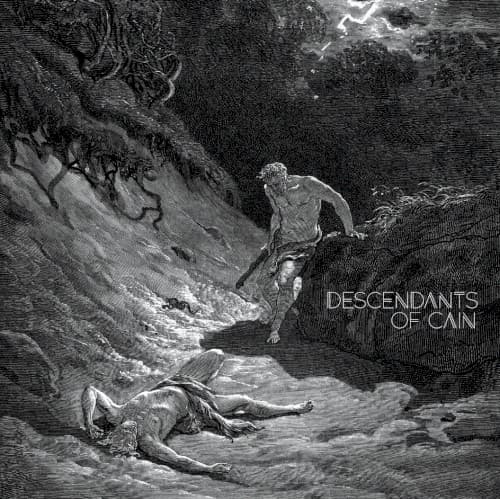
'Honor Killed the Samurai' (2016) represented a creative peak — a meditation on loyalty, survival, and the warrior codes that govern street life and emergency response alike. The album's cover featured Ka in his firefighter dress uniform, explicitly linking his two identities. He followed with 'Orpheus vs. the Sirens' (2018), a conceptual piece framed around Greek mythology, before delivering 'Descendants of Cain' in 2020. That album — his most acclaimed and our highest-rated at 8.9 — used biblical lineage to explore violence, inheritance, and moral complexity in Black communities. Each verse functioned as parable, each song as chapter in an extended theological inquiry.
His final works, 'A Martyr's Reward' (2021) and 'Languish Arts' (2022), continued his thematic explorations while maintaining his uncompromising approach. Ka never played traditional venues, rarely gave interviews, refused streaming service playlists, and sold physical copies primarily through his own website. This total independence meant complete creative control but limited commercial reach. He collaborated selectively — projects with Preservation, Roc Marciano, and the Hermit and the Recluse album with Animoss — choosing partners who shared his aesthetic rigor. Until his sudden passing in October 2024, he remained active as both firefighter and rapper, two demanding vocations pursued with identical dedication.
The Firefighter Philosopher: Ka's Enduring Influence on Underground Hip-Hop
Ka's death at 52 revealed the quiet impact he'd accumulated. Tributes poured in from across hip-hop's spectrum — not just underground peers but mainstream figures who'd studied his work in private. His legacy rests on proof of concept: that hip-hop could strip away commercial considerations entirely and still produce vital, career-defining work. He demonstrated that an artist could maintain a full-time career outside music, release albums on personal timelines, avoid all traditional promotion, and still command critical respect and cult devotion. For a generation of independent rappers, Ka provided the blueprint for sustainable artistic practice without industry gatekeepers.
His influence appears most clearly in the post-2010s underground renaissance — the Griselda movement, the Armory collective, the drumless production trend that swept through Brooklyn and beyond. Artists like Mach-Hommy, Roc Marciano, and MIKE absorbed Ka's lessons about space, patience, and the power of withholding. His production approach — melodic loops, minimal percussion, maximum atmosphere — became a legitimate subgenre unto itself. More broadly, he proved that hip-hop could function as literature, that albums could be experienced like novels rather than singles collections, and that an artist's mystique grew stronger in the absence of social media oversaturation.
What separates Ka from influences and imitators alike is the integrity of his dual existence. He never quit his day job for rap fame because the day job mattered as much as the art. Firefighting wasn't a backup plan or interesting biography detail — it was his primary identity, the source of his perspective on mortality, sacrifice, and service. His music emerged from that reality rather than in spite of it. In a culture obsessed with celebrity and visibility, Ka chose obscurity and meaning. His albums will outlast his commercial footprint precisely because they were never designed for commercial consumption. They were built to endure, like the buildings he helped save and the lives he helped protect.