Scorecard: 8.7/10 · Essential
How we score- Writing(25%)
- 9.5
Biblical imagery and New York street life merge without seams; every line carries multiple meanings and the verse construction is dense with internal rhyme and layered metaphor that rewards close listening.
- Production(25%)
- 8.0
Ka, DJ Preservation, Animoss and Roc Marciano build skeletal beats with space for every syllable to land, though the locked-in aesthetic means no dynamic shift marks progress across eleven tracks.
- Delivery(15%)
- 8.5
Whisper-rap cadence stays locked to the pocket with no wasted breath; the monotone delivery magnifies rather than masks the writing's complexity and emotional weight.
- Cohesion(15%)
- 9.0
Thirty-three minutes with no filler, sequenced as a sermon from guilt through reckoning to love; the Biblical frame holds every track in place and the album ends exactly when it should.
- Originality(10%)
- 8.5
The whisper-minimalist approach is Ka's signature by now, but the Biblical concept executed this consistently across an entire album pushes the lane further than peers have taken it.
- Replay value(10%)
- 8.0
The density demands repeat listens to catch the wordplay and four years later the writing still reveals new connections, though the unvarying aesthetic can slide past on casual spins.
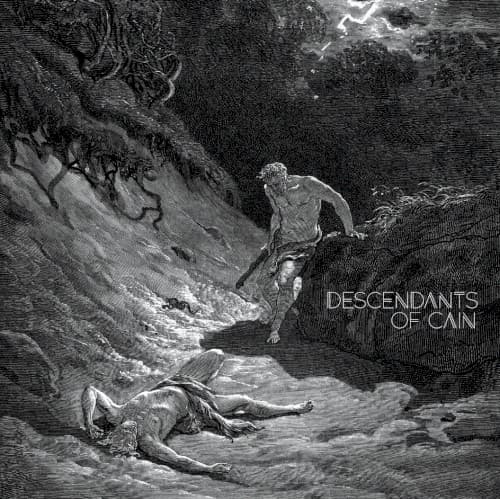
Ka Descendants of Cain — The Weight That Never Lifts
Descendants of Cain argues that guilt is structural, that the street and the Scripture name the same trap, and that recognizing the inheritance is the only honest starting point. Ka delivers the argument in thirty-three minutes of whisper-rap over skeletal beats, every line a knot of internal rhyme and double meaning, every track another verse in a sermon about cycles that do not break. The thesis is in the title: Cain's children carry the mark forward, and Ka counts himself among them, a firefighter and ex-dealer parsing the violence he participated in and the grace he does not quite believe he has earned. The album works because it refuses to resolve the contradiction. It does not offer redemption as a conclusion, only love as a partial answer, and it ends on a dedication rather than a declaration.
The stakes are whether the concept can hold across eleven tracks without collapsing into allegory, and whether the minimalist production leaves room for the writing to move. The answer on both counts is yes. The Biblical frame is not decoration; it structures the sequencing and gives Ka a language for guilt that does not require explanation or self-pity. The beats, handled mostly by Ka himself with assists from DJ Preservation, Animoss and Roc Marciano, strip away everything that would compete with the voice. What remains is the most focused and uncompromising album in a catalog already known for austerity, a record that asks the listener to sit still and pay attention or leave.
Bare Drums and Old Testament Clarity
Ka produces seven of the eleven tracks and the aesthetic is locked in from the first bar: drum hits with space between them, faint loops barely rising above the vocal, bass that suggests rather than insists. Every Now and Then opens with a two-note loop and a snare that lands like a door closing; the emptiness around the words makes the delivery feel like a confession overheard rather than performed. DJ Preservation's work on Unto the Dust and the closing dedication I Love stays in the same lane, low strings and minor chords, nothing to distract from the syllables. Animoss handles My Brother's Keeper with slightly thicker texture but still keeps the drums spare and the melody muted. Roc Marciano's beat on Sins of the Father, the only guest appearance, brings a slightly warmer soul sample but the tempo and the space stay consistent. The production across the album sounds like one voice, and that voice is saying: listen to the words.
Ka's writing here is as dense as anything he has done. He builds verses out of internal rhyme schemes that lock every line to the next, then layers in Biblical references that comment on the street content without stopping the narrative. On Patron Saints he moves from housing project survival to scripture and back in a single breath, the metaphors doing two kinds of work at once. The Eye of a Needle threads the rich man parable through block economics without announcing the connection; you hear it in the structure, not in a thesis statement. P.R.A.Y. rides a jagged, off-kilter loop and the verses match the unease, cataloging debts that cannot be paid and violence that replicates itself across generations. The writing is specific about geography—Brooklyn corners and stairwells—and about the mechanics of the life, and it never softens the consequences or shifts blame away from the people, including Ka, who chose it.
The whisper-rap delivery is not new for Ka but here it serves a clear purpose. The monotone cadence keeps the focus on the construction of the lines rather than on performed emotion, and the low volume forces the listener in. On Land of Nod the flow barely rises above the drums and the effect is hypnotic, the repetition of internal rhymes creating a rhythm inside the rhythm.
The lack of dynamic range in the voice makes the moments when Ka does lift a syllable or pause for emphasis land harder. Roc Marciano's verse on Sins of the Father matches the energy but brings a slightly more conversational tone, a useful contrast that makes Ka's restraint more audible. There are no hooks, no sung choruses, no concessions to traditional song structure. Every track is two or three verses and then it ends.
The weakness is that the aesthetic does not bend. The album sounds like one long track broken into movements, which is the point, but it also means there is no dynamic shift to mark progress or signal arrival. A listener expecting variance in tempo or tone will not find it, and a casual listen will slide past without making an impression. The severity is the argument but it is also a barrier, and Ka knows it and builds the album for the audience that will meet him there.
Eleven Stations of a Confession
The sequencing moves like a liturgy, from recognition through examination to a tentative statement of love at the end. The opening establishes the guilt and the tone, and builds through the middle section where the concept deepens and the writing gets more tangled. P.R.A.Y. lands at the exact center and works as a thesis statement, the title an acronym and a plea, the verses naming the trap without offering an exit. The second half slows down slightly; the quietest tracks arrive here and feel like the moment after the sermon when the congregation sits in silence. The only feature arrives late enough to feel like a shift in perspective, a reminder that the story is not singular.
The pacing is deliberate and the brevity is earned. At thirty-three minutes the album ends before it sags, and the runtime reinforces the concept: this is not a sprawl, it is a tightly argued case. There are no skits, no interludes, no filler. Every track carries weight and the lightness comes only at the end, on the closing dedication where Ka names his wife, his mother and a departed friend and lets the dedication stand as the only answer he has to the questions the album has raised. The final track does not resolve the tension, it just acknowledges that love exists inside it, and the album cuts off there. The length is exactly right.
Required Listening for the Patient
Descendants of Cain ranks as essential underground rap, an album that does one thing at the highest level and refuses to compromise. In a catalog where every release works in the same aesthetic, this is the most fully realized version of the approach: the concept is stronger, the writing is denser, and the sequencing builds to something rather than just presenting a collection of verses. It sits above the solid entries in Ka's discography because the Biblical frame gives the writing architecture, and it holds up four years later because the specificity of the imagery keeps it from feeling like a period piece. The album has aged into a reference point for minimalist rap done with purpose, and it sounds more focused now than much of what followed it in the lane.
This is not an entry point for casual rap fans. The aesthetic demands attention and rewards close listening; background play will miss the writing entirely. It is for listeners who value density over accessibility, who want to hear how far the whisper-minimalist approach can be pushed, and who have patience for albums that do not reveal themselves on first spin. Start with Patron Saints for the clearest example of how the Biblical metaphor works with the street content, then P.R.A.Y. for the mission statement, then the closing dedication to hear where it ends. Skip it if you need variation in production or delivery, or if conceptual severity sounds like work rather than reward.
For context, play Honor Killed the Samurai first to understand the aesthetic in a slightly looser form, then move here for the refinement. Listeners who connect with this should hear Armand Hammer's Shrines for a different kind of austere New York writing, or Mach-Hommy's Pray for Haiti for minimalism with more melodic range. Descendants of Cain is the sound of a artist who knows exactly what he is building, stripped down to the elements that matter, argued with the certainty of someone who has lived both sides of the story and refuses to lie about either.
Track Listing
Every Now and Then
▲Opens with a two-note loop and a snare that lands with finality, Ka's voice entering barely above the drums. The verses establish the guilt and the retrospective tone, internal rhymes locking every line to the next, the delivery so restrained it sounds like he is talking to himself. The spare beat leaves space for every syllable to sit and the imagery moves between scripture and corner without signaling the shifts. The track works as an entry point because it announces the album's severity immediately; nothing about the sound or the writing will make concessions, and the listener either leans in or walks away here.
Unto the Dust
▲DJ Preservation's production brings muted strings and a slow roll, the drums still skeletal but the loop slightly warmer. Ka builds the verses out of mortality and consequence, the title phrase recurring as both Biblical reference and street reality. The writing is dense with double meanings, every line doing two kinds of work, and the monotone delivery makes the wordplay feel inevitable rather than showy. The track deepens the album's frame without repeating the opener's structure, and the low volume keeps the focus on the construction of the language.
Patron Saints
▲The clearest example of how the Biblical frame serves the street content. Ka produces the beat with minimal drums and a faint loop, and the verses thread scripture through housing project economics, the metaphors landing without explanation. The internal rhyme scheme is knotted tight, every line clicking into place, and the images are specific enough to ground the abstractions: corner prayers and inherited debts, the holy and the desperate occupying the same breath. The brevity—two minutes thirty-five seconds—keeps the concept from overreaching, and the track stands as the best single argument for the album's approach.
My Brother’s Keeper
▲Animoss provides the thickest beat on the album, still spare but with slightly more low-end presence. The verses examine complicity and legacy, the Cain and Abel reference working as both metaphor and literal history, and Ka's voice stays locked to the same restrained cadence. The writing is direct about the violence and the choices that led to it, no evasion or mitigation, and the guilt is structural rather than sentimental. The track works as a thesis statement inside the larger concept, the title phrase carrying weight because the verses do the work to earn it.
Solitude of Enoch
▲Ka self-produces with a faint loop and a snare that disappears into silence between hits. The verses build around isolation and survival, the Enoch reference naming a figure who walked with divinity but remained separate. The flow stays glued to the pocket, the syllables falling in rhythm without any flex or syncopation, and the imagery is rooted in specific geography and specific debts. The track sits in the middle of the sequence and feels like the center of the album's examination, the moment where recognition turns into reckoning without arriving at resolution.
The Eye of a Needle
▲Threads the rich man parable through block economics without announcing the connection. Ka's beat rides a two-chord loop and minimal percussion, the space between elements creating tension that the verses never release. The writing is as dense as anything on the album, internal rhymes stacking on top of each other, and the delivery stays flat enough that the complexity lands as clarity rather than cleverness. The track exemplifies the album's aesthetic: severity in service of precision, minimalism that makes every word count.
P.R.A.Y.
▲The most unsettling beat on the album, a jagged loop that never quite resolves, produced by Ka with deliberate dissonance. The title works as both acronym and plea, and the verses catalog debts that cannot be paid and cycles that do not break, the language specific about the mechanics of the street and the inheritance of violence. The track lands at the album's center and functions as a mission statement, the severity of the sound matching the severity of the claim. The off-kilter production makes the monotone delivery feel more intense rather than less, and the track demands multiple listens to catch the layered meanings in the wordplay.
Land of Nod
▲The quietest track on the album, Ka's voice barely rising above the faint loop and spare drums. The verses move through exile and consequence, the Nod reference naming the place Cain fled after the murder, and the writing stays grounded in Brooklyn geography even as it works within the Biblical frame. The brevity—two minutes twenty-five seconds—reinforces the sense of isolation, and the lack of dynamic range in the delivery creates a hypnotic effect, the repetition of internal rhymes building a rhythm inside the rhythm. The track works as the moment after the sermon, the silence where the argument sits without resolution.
Sins of the Father
▲Roc Marciano produces and guests, bringing a slightly warmer soul sample but keeping the tempo and the space consistent with the album's aesthetic. His verse matches Ka's energy and subject matter but adds a conversational tone that makes Ka's restraint more audible by contrast. The track examines inheritance and complicity across generations, both artists specific about the choices and the consequences, and the writing stays dense without getting tangled. The feature arrives late enough in the sequence to feel like a shift in perspective, a second voice confirming that the story is shared, and the production's slight melodic lift does not soften the message.
Old Justice
▲Ka self-produces with a soulful loop, the warmest beat he handles on the album, though still minimal in structure. The verses examine accountability and the impossibility of true restitution, the writing staying specific about the debts owed and the distance between consequence and justice. The track sits near the end of the sequence and feels like the last statement before the closing dedication, the moment where the examination acknowledges its own limits. The production's relative warmth does not resolve the tension, it just makes the unresolved questions more audible.
I Love (Mimi, Moms, Kev)
▲DJ Preservation produces the closing track with muted strings and a slow tempo, the beat carrying a tenderness absent from the rest of the album. Ka dedicates the verses to his wife, his mother and a departed friend, the writing shifting from examination to gratitude without abandoning the album's severity. The love named here is not triumphant or redemptive; it exists inside the guilt and the inheritance, and the track presents it as the only partial answer Ka has to the questions the album has raised. The closing lines land as a statement rather than a conclusion, and the album cuts off there, the dedication standing as the final word. The track earns its place by refusing to sentimentalize the love it names, and the shift in tone feels necessary rather than tacked on.