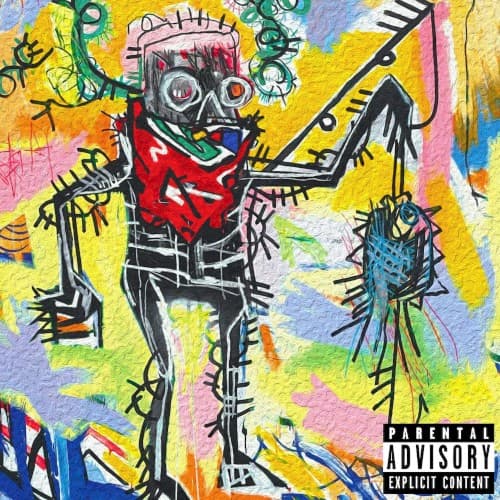
The Elusive Architect: Mach-Hommy's Mystique and Musical Vision
Mach-Hommy operates in hip-hop's liminal spaces, a figure who has turned opacity into artistic principle. The Haitian-American rapper and producer has built a career on strategic scarcity, limited releases, and a refusal to play by industry conventions. Where most artists chase visibility, Mach-Hommy cultivates absence, pricing albums at thousands of dollars, scrubbing streaming platforms, and treating exclusivity as both aesthetic choice and market strategy. His work rewards deep listening and patience, existing at the intersection of street cipher tradition and avant-garde experimentation.
Born to Haitian parents and steeped in Newark's multilingual communities, Mach-Hommy blends Creole phrases, jazz references, and dense wordplay into a singular voice. His breakthrough moment arrived quietly through underground cipher tapes and collaborations with Your Old Droog before the wider hip-hop community caught on. The 2021 album Pray for Haiti marked a creative peak, pairing his cryptic lyricism with Griselda affiliates and producers like Conductor Williams, showcasing how street rap could carry literary weight without sacrificing grit.
His influence extends beyond sales figures or chart positions. Mach-Hommy represents a philosophical stance: art as resistance to commodification, mystery as power, and craft over hype. For listeners willing to engage with his catalog on his terms, the rewards are substantial.
Sonic Alchemy: Mach-Hommy's Multilayered Production and Lyrical Density
Mach-Hommy's sound defies easy categorization, sitting somewhere between boom-bap minimalism and surrealist collage. His production choices favor dusty soul loops, chopped jazz samples, and sparse drum programming that leaves room for breath and silence. Tracks feel intentionally unfinished, as if capturing the raw energy of basement sessions rather than polished studio works. This lo-fi aesthetic connects him to the tradition of MF DOOM and Madlib while maintaining a distinct sonic signature shaped by his Haitian heritage and Newark upbringing.
Lyrically, Mach-Hommy operates at the intersection of street reporting and conceptual poetry. His bars move fluidly between English, Haitian Creole, and French, creating layered meanings accessible only to those willing to decode them. He references obscure films, Haitian history, and jazz musicians alongside corner economics and survival narratives. The effect is disorienting and compelling, demanding multiple listens to unpack references that range from Toussaint Louverture to Thelonious Monk. His flow shifts from conversational ease to intricate internal rhyme schemes, prioritizing texture and rhythm over clarity.
Collaborators shape his sound significantly. Working with producers like Conductor Williams, Camoflauge Monk, and Denny Laflare, Mach-Hommy gravitates toward artists who understand negative space and restraint. His chemistry with the Griselda camp, particularly Westside Gunn and Conway the Machine, emerged naturally from shared aesthetic values around gritty lyricism and boutique presentation. Yet Mach-Hommy remains stylistically distinct, less interested in horror-core imagery than philosophical introspection and cultural memory.
From Underground Ciphers to Pray for Haiti: Charting Mach-Hommy's Creative Arc
Mach-Hommy's early career unfolded largely invisible to mainstream radar, a deliberate choice that separated him from peers chasing blog buzz and label deals. His initial releases circulated through underground channels, cassette tapes, and limited Bandcamp drops priced to exclude casual listeners. Projects like HBO (Haitian Body Odor) and Dollar Menu series established his approach: high-concept packaging, esoteric references, and music treated as rare commodity rather than disposable content. This strategy alienated some while building fanatical devotion among those who gained access.
The relationship with Griselda Records brought wider attention without compromising his vision. While never officially signed to the Buffalo collective, Mach-Hommy appeared on Westside Gunn's projects and collaborated frequently with the extended family. These connections provided credibility within underground circles while maintaining his outsider status. Albums like Bulletproof Luh and The G.A.T. Files showcased his ability to navigate street rap conventions while smuggling in experimental elements, blending hard-edged production with abstract lyricism that referenced everything from blaxploitation cinema to Port-au-Prince street markets.
Pray for Haiti represented a creative zenith, an album that balanced accessibility with artistic integrity. Released in 2021 with production from Griselda architects and featuring guest appearances from Westside Gunn and Keisha Plum, the project felt cohesive and purposeful, a departure from his typically fragmented releases. Critics praised its meditative quality, the way Mach-Hommy wove personal history and cultural commentary into street narratives without didacticism. Tracks like "Marie" and "Folie à Deux" demonstrated his growth as both writer and curator, selecting beats that complemented rather than overwhelmed his dense lyricism.
Following Pray for Haiti, Mach-Hommy continued releasing projects at his own pace, including collaborative efforts and solo works distributed through unconventional channels. Albums like Balens Cho appeared on streaming platforms before being pulled, reinforcing his commitment to scarcity economics. He maintained creative partnerships with producers like Conductor Williams while expanding his own production palette, experimenting with longer song structures and more spacious arrangements. His output remains unpredictable by design, with projects emerging without announcement and disappearing just as quickly.
The business model itself became part of the art. By pricing albums at $333 or $777, Mach-Hommy forced conversations about music's value in the streaming era. Some viewed this as pretentious gatekeeping, others as legitimate critique of platforms that devalue artistry. Regardless of perspective, the strategy worked: his scarcity created demand, and his refusal to chase trends solidified his reputation as an uncompromising artist. Projects sold out despite astronomical prices, proving a market existed for music positioned as luxury good rather than disposable entertainment.
Cultural Impact: How Mach-Hommy Redefined Underground Hip-Hop Economics and Aesthetics
Mach-Hommy's greatest contribution may be demonstrating that alternative models for hip-hop success exist outside traditional industry structures. His career proves artists can build sustainable practices through scarcity, quality over quantity, and direct fan relationships. Younger artists studying his approach see possibilities beyond streaming farms and playlist placements, understanding that mystique and intentional absence can generate cultural capital. He pioneered a DIY ethos that respects both art and commerce without compromising either.
His influence on contemporary underground hip-hop extends beyond business strategy. Artists like Armand Hammer, Billy Woods, and Earl Sweatshirt share his commitment to challenging listeners, favoring oblique lyricism and experimental production over commercial appeal. Mach-Hommy helped normalize Haitian cultural references in rap, bringing Creole language and Caribbean history into spaces traditionally dominated by African-American narratives. This expansion of hip-hop's linguistic and cultural palette matters, creating room for diaspora voices and multilingual expression.
The legacy remains unfinished, still being written with each strategic release and withdrawal. Mach-Hommy represents a philosophical position: that art gains power through withholding, that scarcity can be political act, and that refusal participates in creation. Whether this approach proves sustainable long-term or remains niche phenomenon, his impact on how artists think about distribution, pricing, and audience relationships already reshapes underground hip-hop's possibilities. For those who engage deeply with his work, Mach-Hommy offers proof that hip-hop can remain both culturally rooted and experimentally adventurous.