Lil Peep: The Bedroom Poet Who Gave Emo Rap Its Face
Before the tours, the label interest and the posthumous charts, Lil Peep was a teenager on Long Island with a laptop, a head full of pop-punk and a SoundCloud account. Gustav Elijah Åhr started uploading music in 2013 under the name Trap Goose, then changed it to Lil Peep because his mother had called him Peep since he was a baby. That is the starting point of any serious Lil Peep artist profile, and it explains a lot about the sound: homemade, confessional and unembarrassed about its influences.
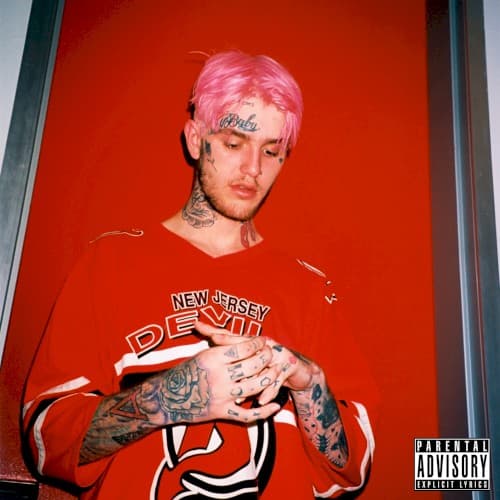
Born in Allentown, Pennsylvania, in 1996 and raised mostly in Long Beach, New York, Åhr became a leading figure in the emo rap movement and a member of the collective GothBoiClique. His 2015 single "Star Shopping" marked his emergence on the platform, and the Crybaby and Hellboy mixtapes in 2016 turned a cult following into something larger. Fans responded to the way he sang about loneliness, depression and heartbreak without any posing.
His career lasted only a few years. He died on November 15, 2017, before a scheduled show in Tucson on his American tour, with the medical examiner ruling it an accidental overdose. What he left behind was a tangle of mixtapes, EPs and two albums that continue to shape how young listeners think about rap, rock and vulnerability.
Emo-Trap, Lo-Fi Melodies and the Cobain Comparison
The easiest way to describe Lil Peep's sound is to start with what he borrowed. Trap hi-hats come from Southern rap, the angst from post-hardcore, and the melodies from third-wave emo, pop-punk and dream pop. AllMusic described the blend as hip-hop and rock along with trap, punk and dream pop, and that was also how his own catalog reads: a pop-punk sing-along on top of a lo-fi trap beat, delivered in a voice that sounds as though it was recorded alone at night.
Sampling was part of his identity from the beginning. He pulled from rock bands including Blink-182, Underoath, Brand New, Death Cab for Cutie and the Cure, among others, which helped build a bridge for listeners who grew up on guitars but now lived on streaming. The sampling also created problems. In 2017 the band Mineral accused him of using an unlicensed, uncredited sample of one of its songs, a dispute he answered by saying he only meant to show some love. Years later, his estate had to clear or replace samples when re-releasing Crybaby and Hellboy.
The comparison people kept making was to Kurt Cobain. Jon Caramanica of The New York Times called him the Kurt Cobain of lo-fi rap, and Peep himself encouraged the framing. He wrote about depression, past relationships and suicidal thoughts in a way that felt less like a pose and more like a diary left open. What separates him from many imitators is the melody: even at his rawest, he wrote hooks.
From Trap Goose to Come Over When You're Sober: The Short, Prolific Run
The early path was chaotic and prolific. After a stretch at several community colleges, Åhr dropped out and moved to Los Angeles in February 2016, living for a time in Skid Row and drifting in and out of homelessness. He joined the short-lived collective Schemaposse, then found a second home in GothBoiClique, whose members appear on the Crybaby mixtape. His 2015 releases, the Feelz EP and the Lil Peep; Part One mixtape, were followed by Live Forever, and by the end of that year he had completed a large body of work in his bedroom.
Crybaby came together in about a month and was released on SoundCloud in June 2016. He did most of the mixing and mastering himself. Alongside the solo tapes came collaborative projects such as California Girls and Vertigo, which kept the pipeline full. In August of that year, First Access Entertainment partnered with him to advise and invest in his career. Hellboy followed in September 2016. Songs such as "Girls" and "OMFG" collected millions of views on SoundCloud and YouTube, and the mixtape led to his first solo tour of the United States and Europe in spring 2017, with stops in Russia and the United Kingdom. Our review of Hellboy gave it a 6.8, a sprawling, rough-edged tape that shows the idea before the polish.
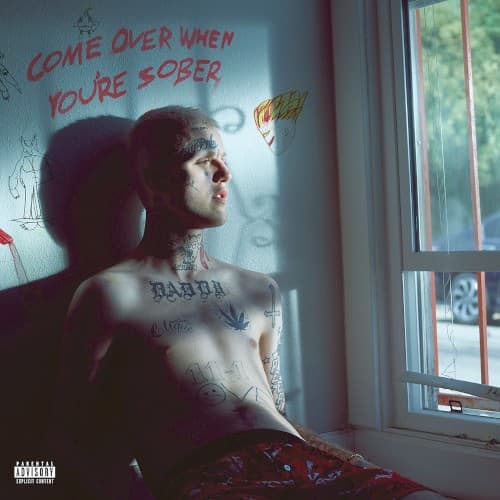
After that tour he moved to London, where he worked alongside iLoveMakonnen and longtime friend Bexey and recorded Come Over When You're Sober, Pt. 1, released in August 2017, a step toward pop-punk and rap rock that shifted his sound away from the mixtapes' lo-fi texture. It is also the high point of our scores for him, a 7.0, the most focused collection he put together. "Awful Things" from the album later became his first entry on the Billboard Hot 100, at number 79.
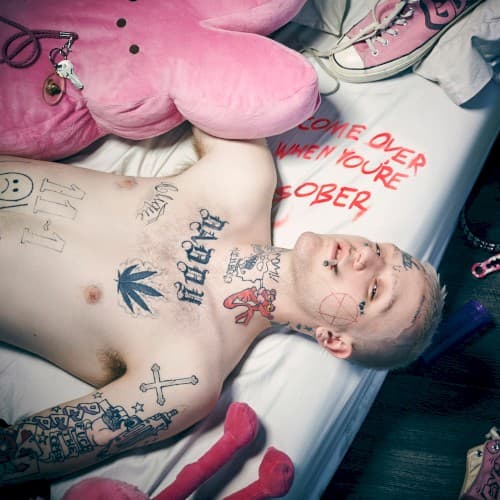
The posthumous era is its own chapter. His archive was acquired by Columbia Records in March 2018, and Come Over When You're Sober, Pt. 2 arrived on November 9, 2018, with Smokeasac as executive producer. It debuted at number four on the Billboard 200 with 81,000 album-equivalent units, his first US top 10 album, and it earned a 6.6 from us, a little uneven given that it was pieced together after his death. Earlier in 2018 came posthumous collaborations with Marshmello ("Spotlight") and Clams Casino ("4 Gold Chains"). "Falling Down," a reworking of an iLoveMakonnen collaboration featuring XXXTentacion, peaked at number 13 on the Hot 100, though its creation drew objections from some members of GothBoiClique.
Since then the estate has kept the catalog moving: the documentary Everybody's Everything premiered at SXSW in 2019, Crybaby and Hellboy were re-released on streaming with most samples cleared in 2020, and archival projects such as Diamonds with iLoveMakonnen, an original version of Pt. 2 and the EP Hate Me have appeared since.
Lil Peep's Legacy: Emo Rap's Defining Cautionary Voice
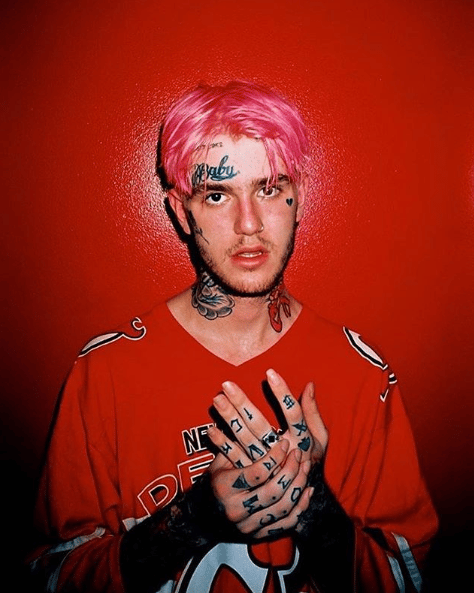
Lil Peep is credited as a leading figure of emo rap and an inspiration in alternative youth subcultures. Pitchfork's Steven J. Horowitz called him the future of emo, and plenty of younger artists have taken cues from the way he joined guitar-driven melody to trap rhythm. His fashion also mattered, with graffitied jackets, colored fur and pink clothing, and he modeled for Vlone and attended shows in Paris and Milan in his last months.
His openness is a big part of why people still connect with him. He spoke publicly about mental health and his sexuality, coming out as bisexual on Twitter in August 2017, and his executive producer on Pt. 1 has said that Peep wanted to give a voice to people who suffer from anxiety and depression and who felt misunderstood. That sincerity, more than any single song, is what listeners keep returning to.
The record is not spotless. Some of the mixtapes are loose and unfinished, and the posthumous releases blur the line between what he approved and what others assembled. Still, if you came to emo rap through Juice Wrld, XXXTentacion or the wave of SoundCloud melodic rap that followed, Peep is the missing link to the guitar bands that came first. The 2019 documentary Everybody's Everything, which premiered at SXSW, helped introduce him to people who missed his rise. Start with Come Over When You're Sober, Pt. 1, then go back to Hellboy and Crybaby to hear how the style took shape. Taken together, those records show an artist who was still finding his voice and already sounded like nobody else.