Nelly: St. Louis's Hook-First Rapper and the Sound of Early-2000s Radio
When Nelly signed to Universal in 1999, the label reportedly wasn't sure what to do with him. His A&R executive later said the internal feedback on the music was "extraordinarily negative." A rapper from St. Louis, with a Missouri twang and singsong hooks, did not fit neatly into the East Coast, West Coast or Southern boxes that hip-hop used at the time.
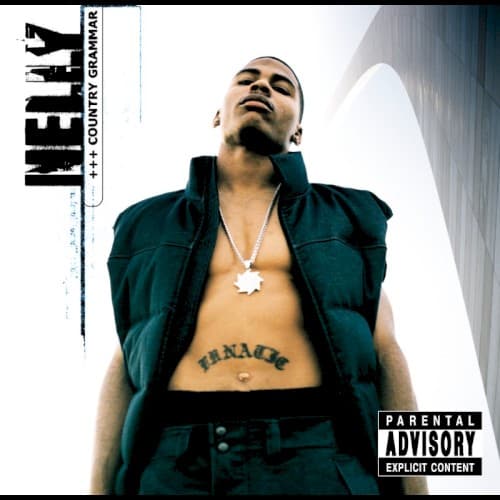
Then "Country Grammar" took off, reaching number seven on both the Billboard Hot 100 and the UK singles chart, and the debate ended. Born Cornell Haynes Jr. in Austin, Texas, and raised in the St. Louis area, Nelly turned the Midwest into a selling point. The label branded him as the region's star, and a generation of listeners agreed.
This Nelly artist profile traces how that happened and what came after. By 2014 the RIAA ranked him as the fourth-best-selling hip-hop artist in US music history, with 21 million albums sold, and Billboard placed him third on its Top Artists of the Decade list for the 2000s.
It is a career with two distinct halves: a run of enormous pop-rap hits in the early 2000s, followed by more than a decade of experiments that include R&B albums, collaborations with country stars and a full country-rap record.
Singsong Hooks, Missouri Twang and Crossover Instincts: The Nelly Sound
Peter Shapiro described Nelly's rapping as built on unforgettable hooks drawn from schoolyard songs, double-dutch chants and nonsense rhymes, delivered with a Missouri twang. AllMusic made a similar point, noting that his style is as much country as urban and that his dialect mixes Southern drawl and Midwestern twang. Those two descriptions explain why his songs stick: the hook is the first thing he builds, and the verse exists to carry you to it.
His own account of his process fits. Nelly has said he freestyles most lyrics first and then tightens them, writes in the studio rather than at home, usually comes up with the chorus before the verses, and likes to write directly to the beat he'll be rapping over. AllMusic also points to his tongue-twisting hooks, many of which are sung rather than rapped.
That hook-first approach made him a natural crossover artist. "Hot in Herre," "Dilemma" with Kelly Rowland, "Work It" with Justin Timberlake and "Over and Over" with country star Tim McGraw all show the same instinct, a rapper comfortable in R&B and pop settings without losing the bounce.
It also invited criticism. The video for the Tip Drill remix and the single "Pimp Juice" drew accusations of misogyny, and the controversy led him to cancel an appearance at a Spelman College bone marrow drive. Those episodes are part of the record, and they sit alongside the commercial success rather than cancelling it.
From Country Grammar to Heartland: Nelly's Chart Run and Reinventions
Nelly started in 1993 as a member of the St. Lunatics, a group he formed in high school with Ali, Murphy Lee, Kyjuan, Slo Down and his half-brother City Spud. They had a local hit with "Gimme What Ya Got" in 1996, but couldn't break out of St. Louis, and the rest of the group agreed to let Nelly go solo. After he signed to Universal in 1999, the label decided to start with a solo album and bring in the St. Lunatics the following year.
That album was Country Grammar in 2000. Its lead singles "Country Grammar" and "Ride wit Me," featuring City Spud, both reached the Hot 100 top ten, and the album topped the Billboard 200 and reached diamond status. "E.I." and "Batter Up" with the St. Lunatics followed. Our review of Country Grammar looks at the record that made him a star, and it is still the record to hear first. In January 2001 he was a special guest on the Super Bowl XXXV halftime show.
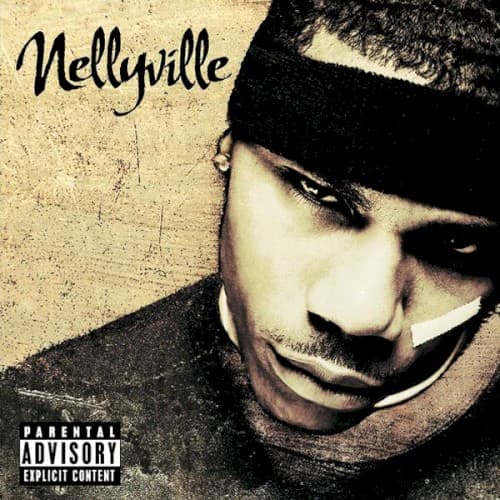
Nellyville in 2002 went further. It debuted at number one, and its lead single "Hot in Herre" hit number one on the Hot 100 and won the Grammy for Best Male Rap Solo Performance. "Dilemma" with Kelly Rowland also reached number one, and "Air Force Ones" with Murphy Lee and the St. Lunatics went top five. In 2003 he contributed "Shake Ya Tailfeather," with Diddy and Murphy Lee, to the Bad Boys II soundtrack; it hit number one and won the Grammy for Best Rap Performance by a Duo or Group. He performed at the Super Bowl XXXVIII halftime show in 2004.
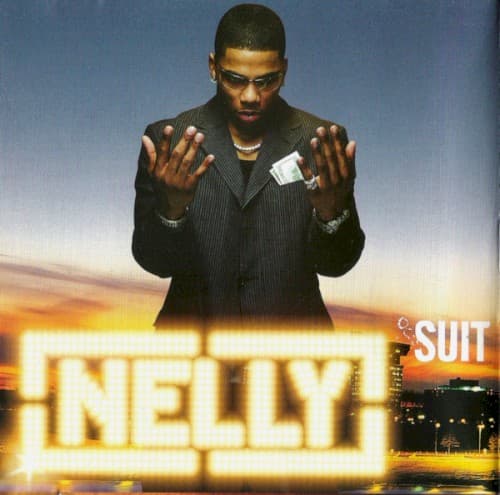
Later that year Nelly released two albums on the same day, September 14: the rap-oriented Sweat, which debuted at number two, and the R&B-leaning Suit, which debuted at number one and included "Over and Over" with Tim McGraw. The 2005 compilation Sweatsuit added "Grillz," produced by Jermaine Dupri, another chart-topper. Brass Knuckles arrived in 2008 after several delays, with singles including "Party People" featuring Fergie and "Stepped on My J'z" with Jermaine Dupri and Ciara. 5.0 in 2010 delved further into pop, and its lead single "Just a Dream" went triple platinum. He also guested on Rick Ross's "Here I Am" in this period.
M.O. came in 2013, with "Get Like Me" featuring Nicki Minaj and Pharrell Williams, and Heartland followed in 2020 as a full country-rap pivot; both met with lukewarm sales and mixed reviews. Between them, Nelly appeared on Florida Georgia Line's "Cruise" remix, starred in TV reality shows and finished third on Dancing with the Stars in 2020. His label imprint Derrty Entertainment, launched with Motown in 2003, has been largely inactive.
Nelly's Legacy: The Midwest's Biggest Rap Star and a Pop-Rap Template
Nelly's lasting contribution is regional as much as musical. Nelly was an unusual figure for a rapper from the Midwest at a time when hip-hop was dominated by the East Coast, West Coast and the South, and after Country Grammar St. Louis had a headline act. The label's decision to brand him as a Midwestern star turned a potential marketing problem into the thing that distinguished him, and the sales figures show how well it worked.
He also helped define what a rap crossover could look like in the 2000s. His melodic hooks, his readiness to duet with R&B singers, pop stars and a country artist, and his steady stream of hits fit the blurred genre lines that now define the charts. Billboard's decision to rank him third among the decade's top artists captures that influence as well as any single award.
Outside music, he built Vokal and the womenswear line Apple Bottoms and starred in The Longest Yard, a reminder that his name carried well beyond rap.
The critique is that the later decades were less focused. M.O. and Heartland didn't connect commercially, the albums often ran long, and some of the early controversy around videos and branding has aged poorly. Still, the best Nelly songs, "Hot in Herre," "Dilemma," "Country Grammar" and "Ride wit Me," remain staples. For listeners tracing the line from early-2000s radio rap to later melodic rappers, he is an essential stop, and fans of Ludacris or Nicki Minaj may recognize some of the same playful, hook-driven instincts.