From Radio Personality to Multi-Platinum Atlanta Icon
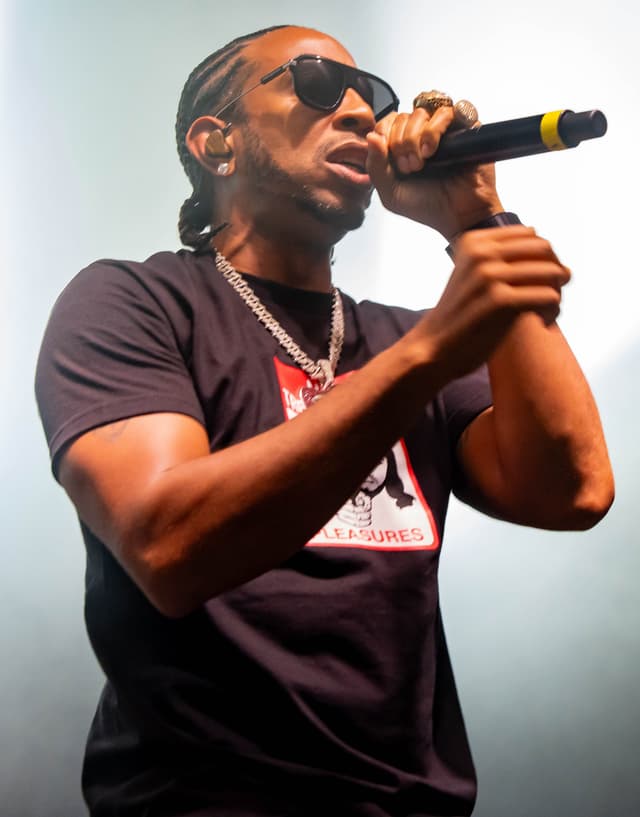
Christopher Brian Bridges built a career on exaggerated personality and technical precision. Born in Illinois but raised in Atlanta, Ludacris emerged from Hot 97.5 FM as an on-air personality who understood the mechanics of a hit before he ever recorded one. That insider knowledge shaped his approach — radio-ready hooks paired with rapid-fire delivery and a willingness to push comedic vulgarity further than most of his peers dared. By the time Back for the First Time arrived in 2000, Southern hip-hop had established commercial credibility through OutKast and Goodie Mob, but Ludacris brought something different: unfiltered id wrapped in expensive production.
His ascent coincided with a major shift in hip-hop's power center. While New York maintained cultural cachet and the West Coast rebuilt after the Death Row collapse, Atlanta was quietly becoming the industry's new capital. Ludacris embodied that transition — brash, unapologetic, and sonically indebted to the crunk movement without being imprisoned by it. He understood how to balance absurdist humor with street credibility, how to make party records that didn't feel disposable. That duality made him one of the defining voices of early 2000s mainstream rap.
Beyond music, he built an empire. Disturbing tha Peace became a legitimate label imprint. Film roles in the Fast and Furious franchise introduced him to audiences who never bought a rap album. Yet his core identity remained rooted in Atlanta's studio ecosystem, where he worked alongside Timbaland, Pharrell, and Kanye West during their most adventurous periods. Ludacris never claimed to be the most introspective rapper or the most innovative, but his consistency, technical ability, and understanding of commercial dynamics made him unavoidable.
Cadence, Comedy, and Crunk-Adjacent Maximalism
Ludacris built his sonic identity around velocity and exaggeration. His flow operates in multiple gears — from the deliberate, enunciated punchlines that land like scripted comedy to the breathless, syllable-stacking runs that test the limits of meter. He doesn't prioritize melody or sing-song cadences; instead, he treats beats as obstacle courses, navigating complex rhythmic patterns with the precision of someone who spent years timing songs to radio format. That technical foundation allowed him to adapt across production styles without losing his voice.
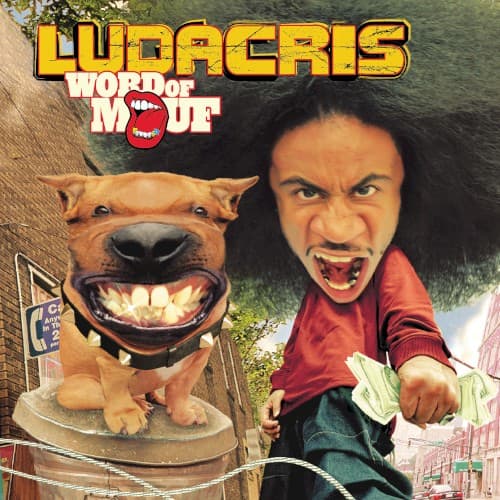
Production-wise, his catalog reflects Southern hip-hop's evolution from bass-heavy trunk rattle to glossier, synth-driven maximalism. Word of Mouf, reviewed here at 7.4, showcased Timbaland and Organized Noize crafting expensive backdrops for Ludacris's antics — futuristic percussion, layered vocal samples, and enough low-end to satisfy club DJs. He rarely worked with minimalist producers; his aesthetic demanded density, multiple sonic layers competing for attention. Crunk's influence appears in his energy and aggression, but he avoided the genre's raw simplicity, opting instead for polished chaos.
Lyrically, he embraced vulgarity as performance art. Tracks like "What's Your Fantasy" and "Move Bitch" weren't trying to be clever or introspective — they were engineered for maximum impact, designed to provoke reactions and dominate radio request lines despite their explicit content. Yet beneath the shock tactics, he displayed genuine wit and wordplay, stacking double entendres and cultural references with the speed of someone who understood language as rhythm. The humor could be juvenile, but the execution was often masterful. That combination made him accessible to pop audiences while maintaining enough technical credibility to collaborate with purists like Nas and Jay-Z.
Radio Roots, Mainstream Dominance, and Hollywood Diversification
Ludacris's path to stardom began behind the microphone at Atlanta's Hot 97.5, where he adopted the name "Chris Lova Lova" and studied what made records connect. That apprenticeship gave him access to industry infrastructure before most aspiring rappers even secured studio time. His independent debut, Incognegro, circulated regionally in 1999, catching the attention of Scarface, who helped broker a deal with Def Jam South. The re-released version became Back for the First Time in 2000, powered by "What's Your Fantasy" — a track so explicit that its success felt like a challenge to radio programmability.
Word of Mouf arrived in 2001 during hip-hop's commercial peak, moving over three million copies and establishing Ludacris as more than a one-hit novelty. The album balanced raunchy club records with expensive guest features — Nate Dogg, Shawnna, and Twista all contributed to its hit-making machinery. Timbaland's production on "Rollout (My Business)" gave Ludacris one of his signature songs, a bass-driven anthem that became synonymous with early 2000s car culture. The project proved he could sustain momentum, that his technical ability and personality could carry a full-length project beyond shock value.
Chicken-n-Beer (2003) and The Red Light District (2004) continued his commercial dominance, both debuting at number one and spawning radio staples like "Stand Up" and "Get Back." These albums refined his formula without reinventing it — high-profile producers (Kanye West, Pharrell, Lil Jon), radio-friendly hooks, and Ludacris's relentless energy holding everything together. He became a fixture on award shows, racked up Grammys, and positioned Disturbing tha Peace as a legitimate label operation, launching careers for artists like Chingy and Bobby Valentino.
As the 2000s progressed, his music became less central to his public profile. Acting roles expanded, particularly as Tej Parker in the Fast and Furious franchise, which introduced him to global audiences far beyond hip-hop. Release Today, Rap Tomorrow (2006) and Theater of the Mind (2008) sold respectably but lacked the cultural urgency of his earlier work. The industry had shifted — Southern rap's sound evolved toward trap's leaner aesthetics, and Ludacris's maximalist approach felt increasingly tied to a specific era. Battle of the Sexes (2010) and Ludaversal (2015) marked longer gaps between projects, signaling a career transitioning from frontline dominance to legacy maintenance.
Yet he never fully retreated. Guest verses on tracks by artists like Justin Bieber and Usher kept him visible to pop audiences, while his Verzuz appearance alongside Nelly reminded hip-hop purists of his deep catalog. He balanced nostalgia touring with selective new music, understanding that his brand extended beyond album cycles. The transition from rapper to entertainer was gradual but deliberate — fewer risks, more consolidation, a recognition that his peak commercial years were behind him but his influence remained embedded in Atlanta's ongoing cultural dominance.
Atlanta's Bridge Between Eras and Mainstream Maximalism
Ludacris occupies a specific position in hip-hop history: the commercially dominant artist who helped Southern rap fully colonize mainstream radio without compromising regional identity. Before him, Southern artists often had to code-switch or soften their sound for pop crossover. Ludacris proved that Atlanta's aesthetic — loud, unfiltered, sonically adventurous — could dominate charts without apology. His success made space for later waves of Georgia artists, from Young Jeezy's trap realism to Future's melodic experimentation, by establishing that the region could dictate commercial trends rather than follow them.
His technical influence is harder to trace than his commercial impact, largely because his style was so personality-driven. Few rappers successfully imitated his rapid-fire, punchline-heavy approach; it required a specific combination of breath control, timing, and comedic sensibility that didn't translate easily. Yet his willingness to experiment with flow patterns and pocket shifts can be heard in artists who treat rhythm as a primary compositional tool. His work with Timbaland and Pharrell during their most innovative periods also cemented his place in conversations about early 2000s production adventurism — he was the voice on some of that era's most forward-thinking beats.
Culturally, he represented a particular moment when hip-hop straddled vulgarity and corporate acceptance, when explicit content could coexist with Grammy wins and endorsement deals. That tension defined early 2000s rap — the music was more profane than ever, yet more commercially integrated into American culture. Ludacris navigated that space better than most, understanding when to push boundaries and when to deliver radio-safe hits. His transition to film further demonstrated hip-hop's expanding reach, proof that a rapper could build a second career outside music without abandoning the identity that made them famous. Three decades into his public life, Ludacris remains a reminder of when Southern hip-hop completed its takeover, when Atlanta became the center and everything else became periphery.