From Trinidad to Global Rap Phenomenon: Nicki Minaj's Rise
Nicki Minaj arrived at a moment when female rappers were nearly invisible in mainstream hip-hop, and she didn't just fill that void—she obliterated it with Day-Glo wigs, multiple personalities, and a flow that could flip from cartoon-voiced menace to technical assault mid-verse. Born Onika Tanya Maraj in Trinidad and raised in Queens, she brought Caribbean cadence into American rap syntax, creating something that sounded familiar yet completely alien. Her 2009 breakout on mixtapes like "Beam Me Up Scotty" showcased raw technical skill: rapid-fire delivery, punch-in flows, and a willingness to out-rap anyone sharing a track. By the time she signed to Young Money, she'd already developed the theatrical persona that would define her career—Roman Zolanski, her demonic alter ego, wasn't a gimmick but a vehicle for expressing aggression without apology.
What separated Minaj from predecessors like Lil' Kim and Missy Elliott wasn't just commercial success but the sheer versatility of her approach. She could body a trap beat with gutter bars, pivot to sing-rap on pop hooks, then deliver technical verses that invited comparison to her labelmate Lil Wayne. This wasn't genre tourism—it was genuine fluidity, backed by a work ethic that saw her appear on seemingly every major rap and pop single between 2010 and 2014. Her presence on tracks by Kanye West, Drake, and Ariana Grande wasn't tokenism; she was genuinely elevating songs, often stealing them outright. That refusal to stay in one lane made her both commercially dominant and critically polarizing.
Culturally, Minaj became shorthand for a new model of female rapper: hypersexual yet in control, commercially savvy yet technically credible, pop-friendly yet rooted in battle rap aesthetics. She didn't ask for space in hip-hop—she took it, defended it, and expanded it. Whether that meant sparring with male rappers on Twitter, dominating Billboard charts, or creating a fanbase (the Barbz) as fiercely loyal as any in music, she operated at a scale that fundamentally changed what was possible for women in rap.
Vocal Theatricality Meets Technical Precision: Minaj's Sonic Identity
Minaj's voice is her most recognizable instrument: a shape-shifting tool that moves from Valley Girl chirp to British aristocrat to demonic growl within a single verse. This isn't affectation for its own sake but a method of character creation, each vocal register representing a different aspect of personality. Roman Zolanski, her most infamous alter ego, speaks in a pitched-up snarl that recalls horror film possession more than traditional rap bravado. When she drops into her natural register—a Queens-inflected alto with Caribbean undertones—the contrast hits harder, grounding theatrical moments in lived experience. That vocal range became her signature, allowing her to inhabit pop songs without sacrificing her rap credibility.
Technically, Minaj operates in the Lil Wayne school of punch-in flows: fragmented phrases, unexpected pauses, and rhythmic pockets that sit slightly off the grid. She doesn't ride beats so much as attack them from odd angles, inserting syllables where none should fit and leaving space where you'd expect density. Her best verses feel like controlled chaos—"Monster" remains the gold standard, where she delivered three distinct flows across a single feature, systematically dismantling everyone else on the track. Producers like Boi-1da, Mike Will Made-It, and Bangladesh learned to leave room for her idiosyncrasies, building tracks with pockets where her vocal acrobatics could breathe.
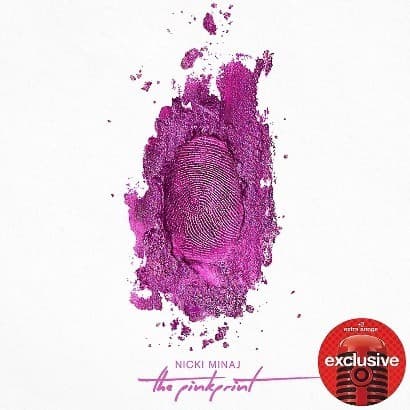
Production-wise, Minaj gravitates toward two extremes: minimalist trap with heavy 808s ("Chiraq," "Lookin Ass") and maximalist pop-rap with dense layers of synths and vocal processing. The Pinkprint marked a shift toward more introspective, melodic territory—songs like "The Crying Game" featured slower tempos and vulnerable vocal performances that revealed dimension beyond the bombast. She's at her most compelling when those modes collide: "Moment 4 Life" pairs triumphant synth-pop with raw Queens-corner storytelling, while "Right By My Side" uses Chris Brown's R&B hook as counterpoint to verses about relationship volatility. That tonal whiplash is the point—Minaj's aesthetic rejects consistency in favor of controlled instability.
Mixtape Queen to Pop-Rap Royalty: Charting Minaj's Commercial Dominance
Minaj's career began in Queens battle rap circles and underground mixtapes, where she sharpened technical skills under the name "Cookie." Her breakthrough came through the "Playtime Is Over" (2007), "Sucka Free" (2008), and "Beam Me Up Scotty" (2009) trilogy—street tapes that showcased aggressive bars over sample-heavy production. These weren't vanity projects but audition reels, displaying the versatility that would later define her. Lil Wayne recognized the potential, signing her to Young Money in 2009. By 2010, she'd become the first female artist featured on MTV's "My First Rap Song" and appeared on nearly every major rap release that year, from Jay-Z's "Blueprint 3" to Ludacris's "Battle of the Sexes."
"Pink Friday" (2010) established the template: rap verses for credibility, pop hooks for radio, and just enough theatricality to maintain mystique. "Super Bass" became a crossover phenomenon—a bubblegum earworm that somehow didn't alienate her hip-hop base. The album moved between trap bangers ("Did It On'em"), introspective moments ("Autobiography"), and full pop experiments ("Starships" on the deluxe edition). Critics were split—some praised the versatility, others accused her of selling out. The commercial verdict was clear: the album went triple platinum, and Minaj became the highest-charting female rapper since Lauryn Hill.
"Pink Friday: Roman Reloaded" (2012) doubled down on pop maximalism, yielding hits like "Starships" and "Pound the Alarm" that dominated summer playlists but frustrated purists. The album's dichotomy—aggressive rap on one half, EDM-tinged pop on the other—reflected Minaj's commercial position: too pop for traditionalists, too hip-hop for mainstream pop audiences. Yet she was moving units and headlining festivals, a feat no female rapper had accomplished in over a decade. Her appearance on Kanye West's "Monster" remained the gold standard for guest verses, proof that technical skill hadn't been sacrificed at the altar of commercialism.
The Pinkprint (2014) marked a creative reset. Working with producers like Boi-1da, Nineteen85, and Detail, Minaj delivered her most cohesive album: introspective without losing aggression, melodic without abandoning rap fundamentals. "Anaconda" repurposed Sir Mix-a-Lot's "Baby Got Back" into a bass-heavy anthem of sexual agency, while "Bed of Lies" featuring Skylar Grey explored romantic disappointment over sparse piano. The album felt like an artist reconciling personas—Roman Zolanski appeared sparingly, replaced by a more vulnerable voice discussing relationship failures and industry pressures. Critics responded with cautious praise; it earned a 7/10 rating and remains a touchstone for fans who prefer her rap-focused work.
Post-Pinkprint, Minaj's output became more sporadic. "Queen" (2018) returned to harder hip-hop production but struggled with cohesion, though singles like "Chun-Li" and "Barbie Tingz" reasserted her technical prowess. She continued dominating features—"MotorSport" with Migos and Cardi B, "Tusa" with Karol G—while feuding publicly with rival female rappers in a way that kept her name in headlines. By 2020, she'd announced semi-retirement to focus on family, though subsequent releases suggested "retirement" was more sabbatical than farewell. Throughout this period, she remained a kingmaker: any artist she collaborated with received instant credibility and chart momentum.
Redefining Female Rap's Commercial Ceiling and Cultural Impact
Minaj's most tangible legacy is the commercial infrastructure she built for female rappers. When she emerged, the industry operated on the assumption that only one woman could succeed at a time—a scarcity model that pitted artists against each other. Minaj shattered that ceiling through sheer volume of hits, proving sustained commercial success was possible. Artists like Cardi B, Megan Thee Stallion, and Doja Cat operate in a landscape Minaj reshaped, where female rappers can headline festivals, dominate streaming platforms, and demand equal billing. That doesn't mean she welcomed competition gracefully—her public feuds often revealed the psychic cost of fighting for space in a male-dominated genre—but the infrastructure now exists because she proved profitability.
Sonically, her influence is everywhere: the theatrical alter egos Drake occasionally employs, the rapid-fire flows female rappers deploy for battle rap credibility, the willingness to pivot between singing and rapping mid-verse without signaling genre shift. Cardi B's comedic timing and vocal character work, Doja Cat's genre fluidity, even Rico Nasty's rage-rap aesthetics trace lineage back to Minaj's refusal to be confined by expectations. Male rappers borrowed too—the emotional vulnerability of "The Pinkprint" predated the introspective turn in trap that artists like Future and Lil Wayne would explore more fully. Her guest verse on "Monster" remains a benchmark: the standard by which all features are judged, the proof that women could not just participate in hip-hop's premier moments but dominate them.
Culturally, Minaj represented something specific: hypersexuality as power rather than exploitation, femininity as armor rather than weakness, and commercial success as artistic validation rather than compromise. The Barbz—her intensely loyal fanbase—pioneered stan culture tactics that other fanbases would later adopt, turning social media into battlegrounds for their artist's honor. That intensity could curdle into toxicity, but it also demonstrated genuine connection between artist and audience. Minaj didn't just sell records; she created a community that saw her success as their own, her struggles as battles worth fighting. Two decades from now, hip-hop historians will mark her career as the inflection point where female rap stopped being a novelty category and became central to the genre's narrative.