The scorecard
7.2/10 · Good
- Writing25%
- 6.5
- Production25%
- 7.5
- Delivery15%
- 8.0
- Cohesion15%
- 6.5
- Originality10%
- 7.5
- Replay value10%
- 7.5
The verses borrow the cadence of a children's clapping game with playful phrasing, though the subject matter circles cars, jewelry and women with familiar detail.
Sparse, bass-forward beats leave room for the voice, and the flips of DeBarge and Primal Scream are chosen with the radio clearly in mind.
Nelly's slurred, singsong flow and on-pitch hooks carry the lead single and the DeBarge-based hit, while the crew verses around him sag.
The front half is a run of singles with smart radio sequencing, though the second half repeats the same mid-tempo template and the crew showcases stall the pace.
Few records of 2000 made a Missouri accent and playground chants sound like pop-rap, and the formula was copied for years afterward.
The singles hold up on every pass with fresh hooks and charm, while the filler between them sounds like a snapshot of 2000.
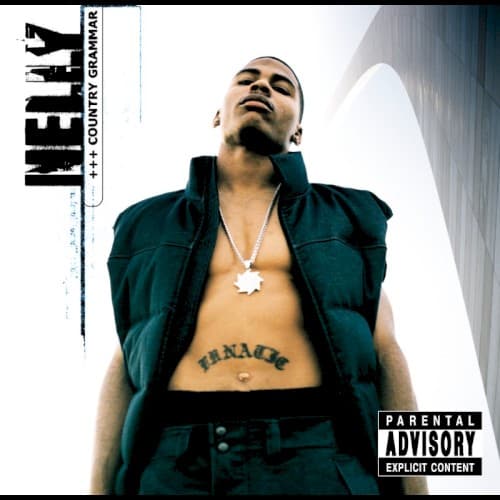
Nelly Country Grammar: A Jump-Rope Rhyme With a Bass Line
Country Grammar works because Nelly understood that a rap verse could be built like a jump-rope rhyme, and that nobody would punish him for keeping it that simple. The slurred, singsong delivery that some listeners filed under novelty is the engineering of the whole record: hooks you can chant before you understand them, bass lines that leave a gap for the voice, and a Missouri twang that sounds welcoming where most hard rap of the period sounded guarded. The case for this album is that it is a better pop record than it is a rap record, and that this is a compliment.
The case against it is just as concrete. Nelly's subject matter barely moves: cars, jewelry, women, the neighborhood, a little defensiveness. When the hooks are at full strength that limitation hardly matters, because the music is selling a feeling rather than an argument. When the hooks thin out, which happens in the back half, there is nothing underneath to hold your attention. People magazine called his thematic vocabulary limited at the time, and that is fair, but it misses how much the repetition is the point.
The stakes are larger than one debut. By 2000 the South was already producing hard, regional sounds in Houston, Memphis, New Orleans and Atlanta, and the fact sheet places Nelly's St. Louis alongside names like OutKast, UGK and Ludacris. What Nelly added was a route into the mainstream that did not require him to sand down his accent, and the sales, five weeks at the top of the Billboard 200 and eventually a Diamond certification, show how wide that route turned out to be. The real question for a critic is whether the songs deserve the numbers. About half of them do, and those songs are as sturdy as any pop-rap of the decade.
Space, Syllables and a Voice That Does Two Jobs
Nelly's writing is built from sound first and sense second. The rhyme schemes lean on repeated syllables, nursery-style call and response, and deliberately bent spellings, and the title song takes its shape from a children's clapping game. That is a smart borrowing: a game everyone already knows hands the verses a ready-made cadence, so the ear is trained before the first bar lands. The wordplay is playful rather than dense, closer to patter than to the layered internal rhymes of a lyric-driven record. When he reaches for seriousness, the sentiment is sincere but the detail is thin, and you notice the gap between a voice this distinctive and sentences this familiar.
The production comes mostly from Jason "Jay E" Epperson, with City Spud and Steve "Blast" Wills handling a few beats, and it is minimal and bass-forward. Drums are sparse, synth lines are simple, and when a melody is needed it is borrowed from soul and pop: "Ride Wit Me" is built on DeBarge and "Batter Up" on Primal Scream, which tells you the producers were thinking about the radio as much as the block. The empty space is the asset. Because there is so little clutter, Nelly's voice carries melody and percussion at once, and a verse can slide into a sung hook without a seam. One Rolling Stone writer described the low end as liquid, and that fits: the bass rolls under the vocal rather than punching through it.
Delivery is the strongest dimension. Nelly slurs words into one continuous line, bends syllables with a faint reggae inflection, and sings choruses in a lazy-sounding register that never leaves the pitch. It is a style that could have been a gimmick, but he controls it well enough to change the energy of a song just by tightening his phrasing. Compared with the more grizzled Southern voices of 2000, he sounds like someone who is enjoying himself, and that is a real selling point.
The weaknesses are structural. The supporting cast is mostly his own St. Lunatics crew, and their verses are competent but rarely memorable; they tend to deflate the momentum Nelly builds, as on the Lil' Wayne feature "For My", where the guest adds a name but not much heat. The album also leans on a single template, a mid-tempo bounce with a chanted hook, and by the second half the template has stopped surprising you. The three spoken skits feel like an obligation of the era rather than a design choice. None of this ruins the record, but it explains why the best songs sit so far above the average ones, and why the writing score lags behind the delivery score by a wide margin.
Front-Loaded Hits, a Back Half That Coasts
Country Grammar is sequenced like a radio rollout. It opens with a comic skit, moves quickly to a hometown anthem, and delivers its lead single in the fourth slot, early enough that the casual listener is already invested. A posse cut and a second skit follow, and then the album reaches its highest point with "Ride Wit Me", which turns the DeBarge sample into a warm, slightly wistful chorus and gives Nelly a rare chance to sound reflective. The next few songs keep the momentum alive, and the second single arrives right on cue. If you stopped listening around the halfway mark, you would think this was close to a perfect pop-rap debut.
The trouble starts after that. The middle stretch hands more room to the crew and to guests, and the songs begin to resemble each other: the same tempo, the same chanted structure, the same light menace. City Spud takes over several of the later beats, and while they are tidy, they do not have the hook density of the Epperson material. The fourth single and its Primal Scream flip lift the energy briefly, but the sequence then settles into a long coast toward the closing tribute, "Luven Me", a sincere song that borrows heavily from a famous mother-and-son rap ballad and from two R&B records. It lands softly rather than powerfully, and the album ends on a note that is pleasant but not decisive.
The length is not fully earned. At seventeen tracks, including three short spoken pieces, the album is longer than its ideas, and a tighter version of about twelve songs would be a stronger record. The sequencing is smart in one respect, though: it puts the sticky material where casual listeners will hear it first, which is exactly why the album sold the way it did. As a listening experience it is a strong first act and an acceptable second act, and the gap between them is the main reason this is a good album rather than a great one.
A Catalog Starter and a Genre Hinge
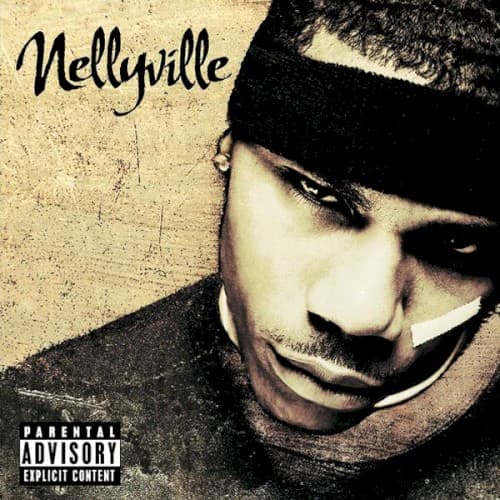
No other Nelly albums are rated on the site yet, so this verdict cannot set a deliberate order within his catalog. What can be said is that Country Grammar is his biggest record by sales and the clearest statement of what he does well: it is the one to start with if you want to know why a Missouri rapper became one of the most successful acts of the decade. Its follow-up, Nellyville, widened the palette, but the debut has the sharper focus, and the combination of hooks, bass and charm is hard to beat.
This album is for listeners who like pop-rap with a Southern accent, for anyone who wants to hear the bridge between regional rap and the radio at the turn of the century, and for people who enjoy a hook that sticks on first pass. It is less useful for listeners who judge rap mainly by lyric density, storytelling or dark atmosphere; for that, the grittier Houston record Ridin' Dirty is a better use of an evening. It has aged well in a specific way: the singles still sound fresh, while the filler sounds like a snapshot of 2000, and that split is what keeps the score in the upper-good range rather than the great one.
Start with "Ride Wit Me", then "Country Grammar (Hot …)", then "E.I.", and you will have heard everything that made the record a phenomenon. After that, "Batter Up" is worth a play for its swagger, and "Luven Me" is the one for listeners who want a softer side. Next, hear Nellyville to see how the formula held up with more money and a larger sound, and then Ludacris for a Southern star who pushed the same pop instincts in a louder, funnier direction. The best proof that the formula worked is that the three songs you start with still sound like a block party in progress.
Track by track
Track Listing
Intro
SolidA short comic skit with Cedric the Entertainer that sets a party mood. It is harmless scene-setting, not music.
St. Louie
StandoutA hometown anthem that tells you what the album is for: planting a flag for St. Louis. Epperson keeps the beat lean, and Nelly's voice slides over it with an easy, local pride. It is more atmosphere than argument, but it makes the city sound like a place with its own bounce rather than a stop on the way to somewhere else.
Greed, Hate, Envy
SolidCity Spud produces, and the title promises a heavier mood than the party songs around it. The idea is more ambitious than the execution: the writing stays on the surface and the hook is not strong enough to carry the weightier theme. A solid album track rather than a highlight.
Country Grammar (Hot …)
StandoutThe lead single and the clearest statement of the method. The verses are built from a children's clapping game, so the cadence feels familiar the moment it starts, and Nelly slurs the words into a slippery, almost reggae-tinged line that never loses its place in the beat. The bass is deep but the arrangement is bare, which leaves every syllable audible. The writing is more about rhythm than meaning, and the song is better for knowing that. It peaked at number 7 on the Hot 100, and it still works as a party starter because the hook can be chanted by people who have never heard the rest of the album.
Steal the Show
SolidA crew cut with the St. Lunatics, long at over five minutes. Epperson's beat is competent, but the supporting verses are interchangeable and the song never builds to a peak. It shows the group's chemistry and also why Nelly was the obvious solo act.
Interlude
SolidAnother brief spoken bit with Cedric the Entertainer. It serves as a breather and nothing more.
Ride Wit Me
StandoutThe best song here and the one that proves the formula can carry real feeling. The DeBarge flip supplies a soft, melodic bed, City Spud adds a verse that fits without taking over, and Nelly sounds both amused and a little thoughtful, a combination he rarely finds again. The chorus is a sung invitation, simple enough to repeat for hours, with enough warmth that it never turns into a slogan. As a rap and pop crossover it was the highest-charting single in the US, reaching number three, and it earns that position. If you only play one song from the record, this is it.
E.I.
StandoutA second hit built on a hook that reaches back to the vocal style of a famous 1990s New York star, but delivered with a Midwestern bounce. The beat is deliberately small, the flow is playful, and the song gets by on charm. It is not as sweet as the DeBarge single, but it is just as sticky, and it holds the center of the album's best stretch.
Thicky Thick Girl
SolidCity Spud produces a lighthearted ode with Murphy Lee and Ali on the guest verses. The beat is pleasant, but the subject is standard and the guests add little beyond variety. Filler with a smile.
For My
WeakLil' Wayne appears on a track that sounds like a template run once too many. The verse is short on surprises, and the song's mid-tempo pace blends into the material around it. One of the more forgettable stops on the record.
Utha Side
SolidEpperson supplies another smooth, mid-tempo bounce, and Nelly rides it with the same relaxed sing-song phrasing. The hook never finds a tune as memorable as the singles, so it sits in the album's middle without leaving a mark. Fine, not essential.
Tho Dem Wrappas
SolidA tougher-edged Epperson beat with Nelly sounding looser than the track seems to want. The writing leans on stock boasts and the hook is forgettable, so it is easy to lose once it ends.
Wrap Sumden
WeakA second St. Lunatics group song, and like the first it is functional rather than exciting. The chorus is serviceable, the verses trade off without a clear standout, and the song marks the point where the album begins to coast.
Batter Up
StandoutThe fourth single, produced by Steve Blast Wills with Murphy Lee and Ali on board, builds a chant around a Primal Scream sample. It is louder and more aggressive than anything around it, and the group vocals give it a stadium feel that lifts the second half. The humor in the delivery keeps it from sounding like a pose, though the verses fall back on the same shouting rhythm for too long. It works best as a jolt of energy rather than as a showcase for writing, and it is the last real burst of pace before the end.
Never Let ’Em C U Sweat
SolidCity Spud again, this time with The Teamsters. The beat is tidy, the theme is staying cool under pressure, and the hook is the type of line that suits a car stereo. It is decent, but the sound does not differ enough from earlier songs to leave a mark.
Luven Me
SolidA sincere closing tribute built on samples of One Way and Tony! Toni! Toné!, and the sort of song that NME heard as a rewrite of a famous mother-and-son rap ballad. The soul samples are warm and the sentiment is genuine, which gives the record a human close, but the writing is conventional and the comparison with the song it echoes is not kind. A pleasant, heartfelt end, not a standout.
Outro
SolidA short spoken sign-off with Cedric the Entertainer that rounds out the comedy frame. It is skippable.
Frequently Asked Questions
Is Nelly's Country Grammar a good album?
What are the best songs on Country Grammar?
How successful was Country Grammar?
Genres
Styles