Scorecard: 8.1/10 · Great
How we score- Writing(25%)
- 8.0
Vivid mafioso imagery built from precise detail—velour suits, foreign cars, women in furs—delivered in a conversational monotone that never shifts cadence or tone across fifty-nine minutes.
- Production(25%)
- 9.0
Skeletal soul loops with no drums on half the album, mixed so dry the samples sound like they are playing in the next room, a blueprint the underground has been tracing for fifteen years.
- Delivery(15%)
- 7.5
Conversational monotone that never strains for emphasis, perfectly suited to the dusty loops but offering little variety across fifty-nine minutes.
- Cohesion(15%)
- 7.0
The sound is unified but the sequencing sags in the middle stretch from Ridin Around to Don Shit, where the tempos blur together.
- Originality(10%)
- 9.0
In 2010 nothing sounded like this: no drums on half the tracks, no hooks, loops mixed like a demo, a blueprint that proved minimal could mean more than less and influenced half the underground for fifteen years.
- Replay value(10%)
- 8.0
The production holds up as a singular aesthetic choice and the writing rewards close listening, though the lack of dynamic range makes it easier to admire than to return to front-to-back.
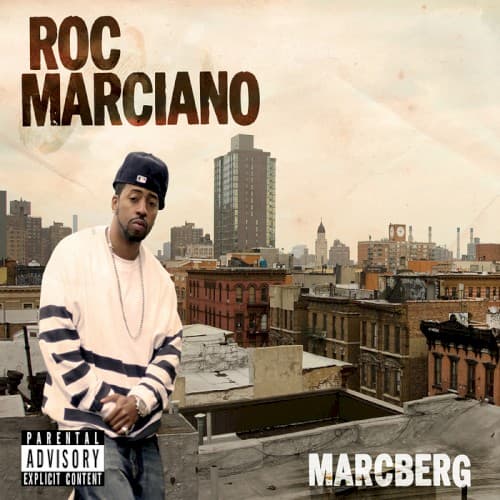
Roc Marciano Marcberg — The Album That Brought Back the Demo Aesthetic
Marcberg argues that less is more by stripping away everything the genre thought it needed in 2010: no hooks, no drums on half the tracks, no guest verses that matter, no mix engineer smoothing out the loops. What remains is Roc Marciano rapping over soul samples so dry they sound like they are playing on a turntable in the next room, mixed so low you lean in to hear him. The result is an album that redefined minimal not as sparse trap or lo-fi beats but as a deliberate refusal of polish, a mafioso rap record that sounds like it was recorded in a basement and left that way on purpose. It is the most influential underground rap album of the 2010s because it proved that going backward in fidelity could sound like going forward in craft.
The stakes in 2010 were clear: rap was dominated by Auto-Tune, club synths and maximalist production. Marciano, a former Flipmode Squad member with no real solo profile, released a self-produced debut on Fat Beats that ignored all of it. The thesis is audible in the first thirty seconds of It's a Crime, where a dusty loop cycles with no drums and Marciano's voice sits on top like another layer of dust. The choice to leave drums off Pop, Jungle Fever and the title track is not minimalism for its own sake but a specific argument about what a beat needs to be: a foundation for the raps, not a distraction from them. The album does not look back to the golden era so much as it builds a new thing from golden era parts, assembled without nostalgia or irony. Marcberg is a debut that arrived fully formed and changed what underground rap could sound like for the next fifteen years.
Soul Loops Mixed Like a Worn-Out Tape
Roc Marciano produced every track on Marcberg and the production is the thesis. The beats are built from soul and funk loops, usually two- or four-bar cycles, chopped just enough to remove the cleanest moments and leave the grain. On It's a Crime the loop is a muted horn riff that repeats without variation for four minutes; on Snow the sample is a keyboard line that sounds like it was recorded through a telephone. The mix is deliberately lo-fi: the samples sit low in the stereo field, the bass is thin, and the drums—when they appear—are programmed to sound like they were tapped on a desk rather than knocked out of a drum machine. On tracks like Pop and Jungle Fever there are no drums at all, just the loop and the voice, a choice that forces the rapping to carry the rhythm. The effect is claustrophobic in the way that early Mobb Deep records are claustrophobic, where the sound wraps around you rather than opening up.
The aesthetic is a demo that was never re-recorded, mixed as if the rough version was the final version. Nothing is polished and nothing is loud. The drums on Panic and Raw Deal hit with no punch, no sub-bass, no attempt to make them slap in a car. The loops on Ridin Around and We Do It never resolve, never build to a hook or a breakdown, just cycle until the track ends.
This is not boom bap revival; boom bap had punch and clarity. This is something drier and more austere, closer to the bedroom beats that would define Griselda and the Alchemist's 2010s work than to anything that was happening in New York rap when the album dropped. The sound is so unified that it becomes a problem by the middle of the album, where tracks like Thug's Prayer and Don Shit start to blur together because the tempo and texture never shift.
The writing is precise mafioso imagery: velour sweat suits, foreign cars, women in chinchilla, bricks and guns described with the specificity of someone cataloging inventory. Marciano's voice is a conversational monotone, no shouting, no emphatic syllables, every bar delivered like he is telling you a story across a table. The rhyme schemes are dense but never showy, internal rhymes tucked into the middle of bars without calling attention to themselves. On Whateva Whateva he strings together luxury signifiers—Porsches, marble floors, gold Rolexes—in a way that never feels like bragging, just reporting.
On the title track Marcberg he describes a shootout in two verses that move like a film sequence, no wasted words, no drama added for effect. The problem is that the delivery never changes: the same cadence, the same tone, the same mid-tempo pocket for fifty-nine minutes. It works for the aesthetic but it does not give the album any peaks. There are no hooks, no sung choruses, no moments where the energy shifts. By the time you reach Hide My Tears the sound is so unvarying that even a strong verse feels like more of the same.
An Album That Moves Like a Long Afternoon
Marcberg sequences like a mixtape: no narrative arc, no dynamic build, just a consistent sound for an hour. The opening stretch establishes the sonic palette and the writing approach. The first half holds attention because the strangeness of the production is still new. By the time you reach the middle stretch the lack of variation becomes a slog.
These are not bad tracks but they do not justify their place in the sequence; the tempos are the same, the loops are the same texture, and nothing happens to shift the momentum. The album picks up slightly in the final third. The title track Marcberg tightens the focus with a narrative that gives the writing something to do besides list luxury goods. The closing track ends the album on a reflective note that the rest of the record never attempts, a glimpse of what Marciano could do with a different emotional register.
The problem is that the album is too long for how little it varies. Fifteen tracks at fifty-nine minutes, most of them in the same tempo and texture, with no hooks or features to break up the sameness. The length is not earned because the sequencing does not build or release tension; it just accumulates. A ten-track version of this album would have been sharper.
The Blueprint Every Underground Rapper Has Been Tracing Since
Marcberg ranks as Roc Marciano's most important album because it invented a sound: minimal, drumless, lo-fi soul loops mixed like a demo, with writing so precise it does not need hooks or guests. In 2010 nothing else sounded like this and in 2025 half the underground is still trying to replicate it. The album's influence is clear—Griselda, Alchemist's 2010s output, the entire aesthetic of dusty New York street rap in the streaming era—but influence is not the same as completeness. The production is visionary but the lack of dynamic range makes it easier to admire than to revisit front-to-back. The writing is sharp but the delivery never shifts out of its conversational monotone, and by the middle of the album the tempos and textures blur together.
This is an album for listeners who want rap stripped to its studs: no polish, no hooks, no concessions to accessibility. If you need variety or momentum or energy shifts, skip it. If you are curious about where the underground sound of the 2010s came from, Marcberg is the origin point. Start with It's a Crime to hear the thesis, then Snow to hear how far he pushes the drumless approach, then the title track for the strongest writing. From here, listen to his 2012 follow-up Reloaded, which refines the sound into something more deliberate and less raw, or to early Griselda projects like Reject 2 to hear how the blueprint got built out. Marcberg is not a flawless album but it is a necessary one, the record that proved minimal could mean more than less and that a demo mix could be the final statement.
Track Listing
Pimptro
●A ninety-second scene-setter with no rapping, just a muted soul loop and some vocal ad-libs. It works as an intro because it establishes the dusty, lo-fi texture immediately, but it is not a track you return to on its own.
It's a Crime
▲The thesis statement: a drumless soul loop that cycles for four minutes with no variation, Marciano's voice sitting on top like another instrument in the mix. The writing is sharp mafioso imagery—foreign cars, designer clothes, women in furs—delivered in a conversational monotone that never strains for emphasis. The production choice to leave the drums off is audacious in 2010 and it works because the rapping carries the rhythm. The loop never builds or resolves; it just cycles, and the effect is hypnotic. This is the track that announced a new approach to minimal production in rap, and fifteen years later it still sounds like nothing that came before it.
Whateva Whateva
●The first track with drums, programmed so they tap rather than knock, mixed low enough that the soul loop still dominates. The writing continues the luxury catalog—Porsches, marble floors, gold Rolexes—without a wasted bar. The hook is just the title repeated twice, no melody, no variation. It works as a continuation of the opening argument but it does not add anything new.
Raw Deal
●A murkier loop with bass that sounds like it was recorded underwater, drums that shuffle rather than snap. The writing is tighter here: a verse about a shootout and a verse about moving weight, both delivered with the same deadpan tone. The production is more textured than the previous tracks but the tempo and mood are identical, so it starts to blend into the sequence rather than stand out.
We Do It
●The longest track in the first half at four and a half minutes, built on a loop that sounds like a warped vinyl sample with drums that barely register in the mix. The writing is solid but the length is not earned; the verse does not build or shift, and the loop does not develop. By the end of the track the sameness of the approach starts to feel like a limitation rather than a choice.
Snow
▲A drumless beat built on a keyboard line that sounds like it was recorded through a telephone, one of the album's strangest and most effective production choices. The writing is a catalog of criminal activity delivered with no drama, no emphasis, just facts. The lack of drums forces the rapping to carry the rhythm and Marciano's flow adjusts, locking into the loop's meter without ever rushing or dragging. The track is a proof of concept for the drumless approach and it works better than it should, though the texture is so dry it can feel airless.
Ridin Around
●A mid-tempo soul loop with drums that tap in the background, more of the same texture and tempo as the previous tracks. The writing is competent but not sharp enough to justify the four-and-a-half-minute runtime. This is where the album starts to sag: the production is unified but the lack of variation makes it hard to distinguish this track from the ones around it.
Panic
●Another drumless track, this one built on a loop that sounds like it is playing in the next room, mixed so low you have to lean in to hear the details. The writing describes a robbery in two verses with the same conversational tone, no shouting, no urgency in the delivery even as the content escalates. The production is bold but the sameness of the tempo and texture by this point in the album makes it feel like repetition rather than variation.
Thug's Prayer
▼The shortest full track at three minutes, a drumless loop with a muted vocal sample in the background. The writing is reflective but the delivery does not shift out of the monotone, so the emotional content does not land. The track feels like an interlude stretched to full length, and the sequencing would have been stronger if it had been cut or condensed.
Pop
●A drumless soul loop that cycles without variation for three and a half minutes, the rapping locked into the same pocket as the previous drumless tracks. The writing is technically strong but the track does not offer anything the album has not already done better on It's a Crime or Snow. By this point in the sequence the lack of dynamic range is a problem.
Jungle Fever
▲The longest track on the album at five minutes, built on a loop that has more movement than most of the previous beats, with a bassline that actually pushes the track forward. The writing is sharper here, two verses that move with more internal momentum, and the length feels earned because the loop develops slightly rather than just cycling. This is the first track since Snow that justifies its place in the sequence, a reminder of what the album sounds like when the production and writing are both firing.
Don Shit
●A soul loop with drums that shuffle in the same mid-tempo pocket as most of the album, solid writing but nothing that breaks new ground. The track is competent but forgettable, another entry in the middle stretch where the textures blur together.
Marcberg
▲The title track and one of the album's strongest moments, a narrative about a shootout told in two verses with no wasted words. The production is another drumless loop but the writing is focused enough that the track earns its four-and-a-half-minute runtime. Marciano describes the scene with the precision of someone cataloging details for a police report: the location, the setup, the escape, no drama added for effect. The delivery is still a monotone but the specificity of the imagery makes it work. This is the clearest example on the album of what the minimal approach can accomplish when the writing is tight.
Hide My Tears
▲The album closer, a reflective track that shifts the emotional register for the first time. The loop is softer than the rest of the album, almost melancholy, and the writing attempts vulnerability—regret, loss, the cost of the lifestyle—without breaking the conversational tone. The track works as a conclusion because it offers something the rest of the album does not attempt, a glimpse of interiority. It is not a dramatic ending but it is a deliberate one, and it suggests that Marciano could do more with different emotional material.
Shoutro
●A four-minute outro with shoutouts over a loop, no real content. It works as a closing bookend to Pimptro but it is not a track worth revisiting.