The Chef: Raekwon's Cinematic Approach to Street Narratives
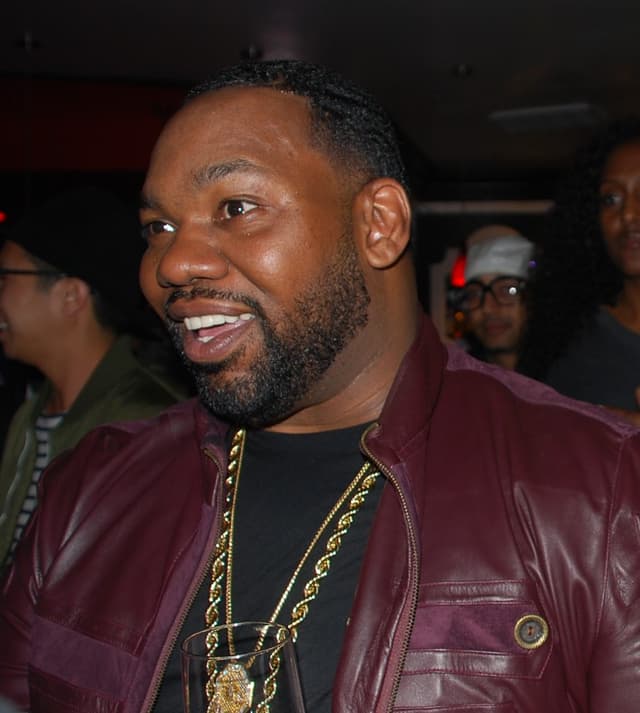
When Raekwon delivers the opening lines of "Knuckleheadz" — "Lay my head on the pillow, hand on the metal" — you're not just hearing a rapper, you're entering a fully realized world. Born Corey Woods in Brooklyn and raised in Staten Island's Park Hill projects, Raekwon emerged as one of Wu-Tang Clan's most distinctive voices, transforming street reportage into something closer to crime cinema. While his Wu-Tang brethren explored everything from comic book mythology to Five Percent philosophy, Raekwon carved out territory as hip-hop's most devoted chronicler of organized crime aesthetics, blending Scarface references with project realities until the line between autobiography and screenplay disappeared.
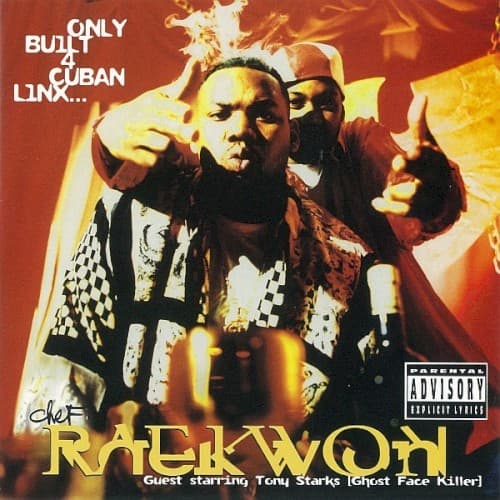
As a core member of Wu-Tang Clan since their 1993 debut, Raekwon established himself not through the most technically complex flows or the rawest delivery, but through sheer atmospheric command. His voice carries a measured confidence, each syllable dropped with the weight of someone who's seen too much to rush through the telling. Where other MCs might sprint through sixteen bars, Raekwon moves with deliberate pacing, letting imagery accumulate until entire scenes materialize. This approach reached its apex on his 1995 solo debut Only Built 4 Cuban Linx…, an album that didn't just document the drug trade but soundtracked it with such vivid detail that it became a genre blueprint.
Three decades into his career, Raekwon remains essential study for anyone exploring how hip-hop constructs narrative worlds. His influence extends beyond boom-bap traditionalists into the DNA of every rapper who's tried to make street tales feel cinematic, every producer who's layered soul samples until they sound like film scores, every MC who's understood that sometimes the most powerful flex is restraint.
Mafioso Aesthetics: Raekwon's Signature Sound and Lyrical Precision
Raekwon's sonic identity is inseparable from his partnership with RZA, whose dusty soul loops and minimal percussion became the perfect canvas for street vignettes. The sound is immediate: grimy piano stabs, Wu-Tang's signature hollow drums, and sample choices that feel lifted from forgotten 1970s crime soundtracks. RZA's production for Raekwon favors negative space, letting beats breathe so that every knife metaphor and designer fabric reference lands with maximum impact. This isn't the layered maximalism of Kanye West or the digital sheen of modern trap — it's raw, unpolished, deliberately murky, as if recorded in a basement while snow falls outside.
Vocally, Raekwon operates in a mid-range pocket that prioritizes clarity over flash. His flow doesn't contort into complex internal rhyme schemes or rapid-fire technical displays. Instead, he delivers with a conversational directness that masks considerable craft. Listen to how he navigates "Criminology" or "Ice Cream" — the rhythm shifts are subtle, the rhyme patterns sometimes months apart, but the momentum never breaks. He'll stretch a single image across four bars, then condense an entire transaction into two words. This economy of language became his signature, each line stripped to essential detail: the fabric weight of a jacket, the specific model of a car, the exact corner where something went down.
What distinguishes Raekwon from contemporaries is his commitment to the perspective. Where Nas might zoom out to philosophical reflection or Jay-Z might celebrate the fruits of hustling, Raekwon stays embedded in the moment — the kitchen scale, the stash house paranoia, the codes and hierarchies of street operations. His vocabulary draws heavily from mob films and luxury signifiers, creating a linguistic world where Clarks Wallabees matter as much as firearm calibers. This wasn't just rapper braggadocio; it was world-building through accumulated detail, teaching listeners to hear the difference between cashmere and regular wool, between retail work and weight moving.
From Enter the Wu-Tang to Solo Empire: Raekwon's Three-Decade Run
Raekwon's recorded history begins with Wu-Tang Clan's Enter the Wu-Tang (36 Chambers) in 1993, where he established himself immediately on "C.R.E.A.M." — not with the verse everyone quotes, but with measured appearances that suggested someone watching more than performing. While Method Man grabbed radio attention and Ol' Dirty Bastard provided chaotic energy, Raekwon represented the crew's strategic thinker, the member who understood narrative construction. His chemistry with Ghostface Killah was already apparent, their back-and-forth creating a dynamic that would define both their careers.
Only Built 4 Cuban Linx… arrived in August 1995 and immediately separated itself from standard hip-hop releases. Conceived as a mafia film in album form, with Ghostface cast as co-star and RZA providing the score, the project introduced the "Purple Tape" aesthetic — a continuous narrative flow where tracks bled into each other, skits felt organic rather than intrusive, and guest appearances (Nas on "Verbal Intercourse", Cappadonna throughout) integrated seamlessly into the world. The album pioneered what became known as mafioso rap, though Raekwon's version had little in common with the flashy, celebratory approach that followed. His mafia wasn't aspirational — it was atmospheric, tense, suffused with the understanding that power comes with paranoia.
The success of Cuban Linx created expectations that proved difficult to navigate. His 1999 follow-up Immobilarity arrived during Wu-Tang's commercial peak but felt tentative, caught between radio accessibility and street credibility. Only Built 4 Cuban Linx... Pt. II wouldn't appear until 2009 — fourteen years later — but the wait produced something rare: a sequel that honored the original without repeating it. Working with Dr. Dre, J. Dilla, Pete Rock, and RZA, Raekwon updated his sound while maintaining the narrative approach, proving the concept had legs beyond nostalgia.
The 2010s saw Raekwon embrace his elder statesman role without calcifying into pure revivalism. Albums like Shaolin vs. Wu-Tang (2011) and Fly International Luxurious Art (2015) brought in contemporary producers while maintaining his core aesthetic. Unlike some Wu-Tang members who chased trends or retreated into obscurity, Raekwon found a sustainable middle path — respecting his foundation while staying present. The Chef remained The Chef, whether working with The Alchemist on grimy loops or adapting to cleaner modern production, always finding ways to make his measured delivery cut through whatever beat he selected.
Throughout his solo career, Raekwon maintained Wu-Tang Clan commitments, appearing on group albums and countless member solo projects. This dual identity — individual artist and crew representative — gave him flexibility other solo acts lacked. When Wu-Tang nostalgia tours offered financial stability, he participated without abandoning new material. When younger artists from Action Bronson to Conway the Machine cited him as influence, he collaborated rather than dismissed them. The career longevity came not from reinvention but from understanding exactly what he did well and refusing to abandon it for temporary trends.
The Cuban Linx Blueprint: Raekwon's Lasting Impact on Hip-Hop Storytelling
Raekwon's primary contribution to hip-hop is structural: he proved that albums could function as sustained narratives rather than collections of singles. Only Built 4 Cuban Linx… established a template that dozens of subsequent artists borrowed — the cinematic scope, the guest-as-character approach, the willingness to let atmosphere matter as much as bars. You hear his influence directly in Pusha-T's coke rap precision, in Benny the Butcher's Griselda narratives, in any project that prioritizes world-building over individual track performance. The idea that a rapper could construct an entire sonic universe and invite listeners to inhabit it for an hour traces back to what Raekwon and RZA accomplished in 1995.
Beyond album structure, Raekwon codified a lyrical approach that balanced street documentation with aesthetic ambition. He demonstrated that you could report from the margins without sensationalism, that luxury references could serve narrative purpose beyond simple flexing, that restraint might communicate more than verbal gymnastics. This influenced not just East Coast traditionalists but anyone interested in how language creates space. When contemporary artists reference specific designer pieces or construct elaborate metaphors around illicit enterprise, they're working in territory Raekwon mapped.
The Chef's impact extends into production aesthetics as well. His albums with RZA established that raw, unpolished beats could support sophisticated narratives, that soul samples didn't need to be clean or obvious, that drums could hit hard while remaining minimal. This sonic philosophy became foundational for the underground boom-bap revival of the 2000s and the current Griselda movement. Producers still study how RZA's work on Cuban Linx creates tension through space and texture, how the mixing purposefully keeps elements murky and close, refusing studio polish in favor of basement griminess. That's Raekwon's legacy too — showing that high concept and raw execution aren't contradictory but complementary.