Style & Context
Influences
Francis Bacon portraiture, Robert Pruitt, street art figurative traditions
Location
Buffalo's East Side emerges through the cover's working-class intimacy and unvarnished documentary approach.
Visual Language
The expressionist brushwork creates psychological depth while maintaining the raw aesthetic Griselda Records champions.
Symbols
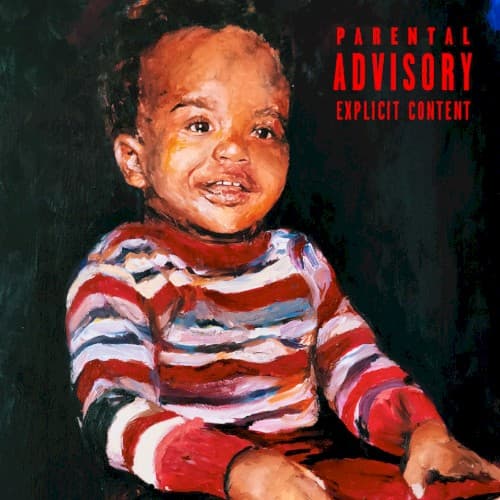
Child portrait
Represents Benny before Buffalo's streets hardened him into the dealer he became.
Striped shirt pattern
The prison-bar-like horizontal stripes foreshadow the incarceration themes woven throughout mafioso rap.
Painterly technique
The rough brushwork suggests memories aren't photographic but reconstructed, distorted by time and trauma.
Where Sound Meets Image
The cover perfectly frames Tana Talk 3's central tension: the distance between this innocent child and the drug dealer narrating the album. Benny's lyrics detail weight-moving, betrayal, and survival with surgical precision, always acknowledging the cost. The painted child represents who he was on 500 Breckenridge Street before the hustle. The Parental Advisory sticker isn't just a warning—it marks the exact border between childhood and the explicit street life documented across tracks about cooking crack and dodging federal charges.
This cover established Griselda's visual language: raw, personal, and anti-commercial. It influenced a wave of underground rap artwork that rejected airbrushed professionalism for intimate, hand-crafted aesthetics. The childhood photo approach—humanizing the street narrator—became a template for artists balancing vulnerability with hardness. Benny proved album art could be both personal family album and street manifesto.