Style & Context
Influences
Classic jazz album covers, Southern soul portraiture, 1970s Blaxploitation poster aesthetics
Location
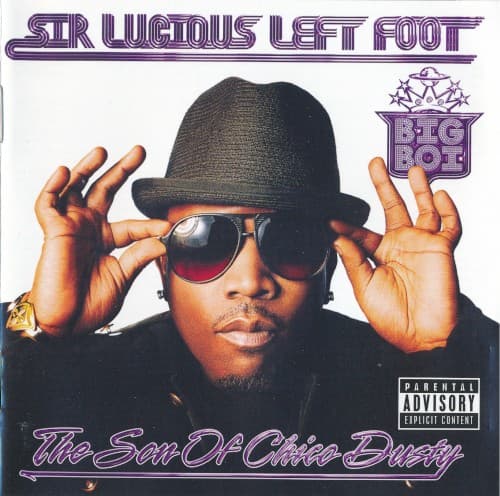
The purple Art Deco styling references Atlanta's historic Auburn Avenue jazz clubs and the city's Dungeon Family collective aesthetic.
Visual Language
The direct-to-camera composition channels the confidence of classic soul album covers while maintaining hip-hop's confrontational gaze.
Symbols
Aviator sunglasses
The reflective lenses create a barrier while revealing everything, mirroring Big Boi's introspective yet confident lyrical approach.
Fedora hat
The classic headwear connects Southern gentlemen traditions with hip-hop swagger, positioning Big Boi as inheritor of both legacies.
Hand framing gesture
The fingers form a director's frame around his face, asserting artistic control over his solo narrative after OutKast's hiatus.
Where Sound Meets Image
The purple typography visually echoes the album's deep funk grooves and psychedelic flourishes, particularly tracks like 'Shutterbug' and 'Fo Yo Sorrows.' The hand-framing gesture reflects the album's meticulous production craft—Big Boi as director of his sonic universe. The vintage-meets-modern aesthetic perfectly captures the album's fusion of Stax-era soul samples with cutting-edge electro-hop production, while the direct gaze mirrors his unfiltered, confident bars throughout.
This cover helped redefine solo identity for duo members, proving that stripped-down confidence could match OutKast's elaborate visual concepts. The fedora became a signature Big Boi accessory, cementing his visual brand separate from André 3000's flamboyance. The Art Deco purple typography influenced subsequent Southern rap covers seeking to balance regional pride with sophisticated design, moving past bling-era visual excess.