Style & Context
Influences
Gustave Doré biblical illustrations, stark minimalist design, underground rap aesthetics
Location
Brooklyn's Brownsville emerges through biblical metaphor—Ka reimagines his firefighting and street life through Genesis.
Visual Language
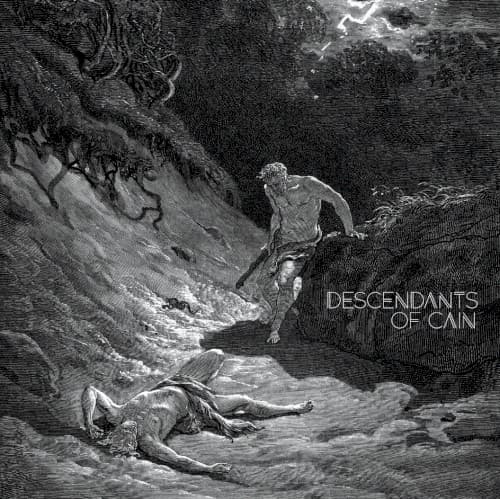
The juxtaposition of ornate Victorian engraving against clean sans-serif text creates temporal collision between ancient and modern.
Symbols
Cain fleeing Abel's body
The first murder becomes metaphor for cycles of violence plaguing urban communities and Ka's own narratives.
Doré's classical engraving style
Biblical art elevates street violence to mythological status, suggesting these struggles are timeless human conditions.
Lightning in upper right
Divine judgment flashes above the scene, marking this as spiritual warfare beyond mere mortal conflict.
Where Sound Meets Image
The cover's oppressive darkness and historical weight mirror Ka's whispered delivery over skeletal, often drum-less production. Just as Doré's engraving demands close examination to reveal intricate cross-hatching, Ka's lyrics require multiple listens to unpack their layered meanings. The biblical Cain narrative directly informs album tracks exploring brotherhood betrayed, marked men walking cursed earth, and violence as inherited condition. The absence of color parallels Ka's stripped-down sonic palette where silence and negative space become instruments.
This cover helped cement underground hip-hop's embrace of high art appropriation as cultural commentary rather than decoration. Ka's use of classical imagery influenced subsequent rap albums to treat cover art as thesis statement rather than promotional tool. The stark typography over historical artwork became a template for conscious rap releases prioritizing intellectual depth. It demonstrated how hip-hop could claim Western art canon's darkest images and recontextualize them as street narratives.