Style & Context
Influences
Sports photography, boxing promotional materials, Gordon Parks documentary style
Location
This Queens MC's response to West Coast gangsta rap's rise shows East Coast hip-hop reasserting its dominance through raw power.
Visual Language
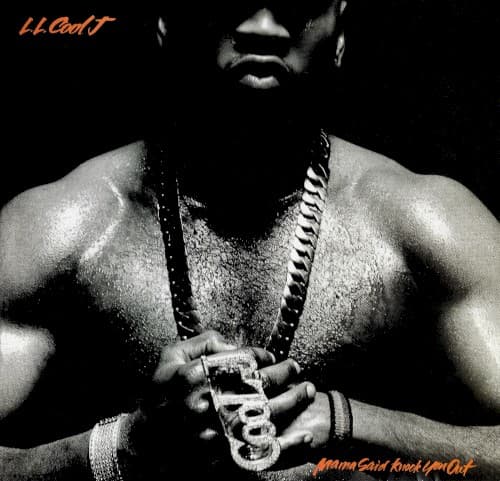
The lighting sculpts LL's physique like a classical statue while maintaining street-level grit through the rough grain and shadows.
Symbols
Heavy rope chain
The oversized jewelry represents hip-hop royalty reclaiming his throne after doubters questioned his relevance in the evolving scene.
Bare chest and shoulders
The exposed upper body communicates vulnerability transformed into strength, showing LL had nothing to hide from his critics.
Clenched fists
The fighter's stance directly references the album title and boxing imagery, positioning the music as combat against competition.
Where Sound Meets Image
The cover's fighting stance directly mirrors the album's combative energy, from the title track's boxing metaphors to the aggressive delivery throughout. The monochrome severity matches Marley Marl's stripped-down, sample-heavy production that dominated tracks like 'The Boomin' System' and 'Cheesy Rat Blues.' The bare-chested vulnerability yet confident posture reflects LL's lyrical strategy—acknowledging critics while demolishing them with technical superiority and renewed hunger.
This cover established a template for comeback albums in hip-hop, proving that stripping away commercial gloss could restore credibility. The confrontational, athletic presentation influenced countless rappers photographing themselves as fighters or warriors rather than entertainers. The minimalist power of this image showed that hip-hop album art could communicate through absence and restraint rather than maximalist excess.