The First Def Jam Star Who Defined Crossover Rap
When a 16-year-old James Todd Smith sent a demo tape to Russell Simmons in 1984, he didn't just launch his own career — he became the foundation artist for Def Jam Recordings, hip-hop's most influential label. As LL Cool J (Ladies Love Cool James), he represented something unprecedented: a commercially viable solo rapper who could balance street credibility with mainstream appeal, aggression with romance, and raw energy with technical precision. His debut Radio arrived in 1985, establishing the template for rap albums as cohesive artistic statements rather than singles collections. Where earlier rap acts like Run-DMC broke through as groups, LL proved a solo MC could command full albums and arena stages.
Across four decades, LL Cool J has navigated every shift in hip-hop's landscape while maintaining relevance without capitulation. From the boom-bap dominance of his classic period through the glossier production of the late 90s into the 2000s, he adapted without abandoning the core elements that made him distinctive. His influence extends beyond music into acting, television hosting, and business, making him one of rap's first true multimedia moguls. Yet the music remains his foundation — fourteen studio albums spanning 1985 to 2013, each reflecting its era while bearing his unmistakable stamp.
Vocal Power and the Evolution of Rap Romance
LL Cool J's sonic signature centers on his voice: a powerful, resonant instrument capable of effortless projection and precise control. Unlike the nasal delivery of many early rap pioneers or the gravelly tones of street-focused MCs, LL possessed a clarity and depth that translated seamlessly across production styles. His flow in the mid-80s favored aggressive, punchy delivery with minimal embellishment — bars hit hard and direct, riding Rick Rubin's stripped-down production with commanding presence. Listen to "Rock the Bells" or "I Can't Live Without My Radio" and you hear an MC who understood that sometimes the most effective technique is unadorned power.
What distinguished LL from his peers was his willingness to explore romantic and sexual themes with the same intensity he brought to battle raps. "I Need Love" from Bigger and Deffer shocked purists in 1987 — a slow jam where a tough MC revealed vulnerability. This wasn't weakness; it was expansion of hip-hop's emotional range. He created a lane for romantic rap that influenced everyone from Heavy D to Drake, proving MCs could address women directly without sacrificing credibility. Tracks like "Around the Way Girl" and "Hey Lover" refined this approach, balancing smooth delivery with just enough edge to maintain his street foundation.
Production relationships shaped his sound across eras. Rick Rubin's minimalist approach on Radio and Bigger and Deffer gave LL raw, uncluttered backdrops that let his voice dominate. The shift to Marley Marl for Mama Said Knock You Out marked a crucial evolution — denser, more layered production that demanded technical adaptation. LL rose to the challenge, his flow becoming more intricate, his delivery more varied. Later collaborations with Trackmasters, Erick Sermon, and Timbaland saw him adjust to each producer's signature while maintaining his core identity. This chameleon quality — adapting to contemporary sounds without losing himself — explains his longevity.
From Radio Breakthrough to Mama Said Knock You Out Revival
LL Cool J arrived fully formed. Radio, released when he was seventeen, established him as hip-hop's first teen idol and first solo superstar. Rubin's production stripped rap down to essentials — drum machines, scratches, and LL's voice filling the sonic space. "I Can't Live Without My Radio" and "Rock the Bells" became anthems, the latter showcasing technical ability that transcended novelty. The album went platinum, proving rap albums could sell without crossover compromise. His sophomore effort Bigger and Deffer doubled down on this success while introducing the vulnerability of "I Need Love," his first Top 20 pop hit. Suddenly LL was everywhere — MTV, pop radio, movie screens — and some in hip-hop questioned whether he'd gone too soft.
The perception crystallized with Walking with a Panther in 1989. Commercially successful but critically divisive, the album leaned heavily into his smooth, radio-friendly side. Tracks like "I'm That Type of Guy" felt calculated for crossover appeal. Hip-hop purists sensed an artist losing his edge, and newer, harder voices like N.W.A and Public Enemy were dominating the cultural conversation. Kool Moe Dee attacked him on wax. Ice-T questioned his legitimacy. LL faced a crucial crossroads: evolve or become irrelevant.
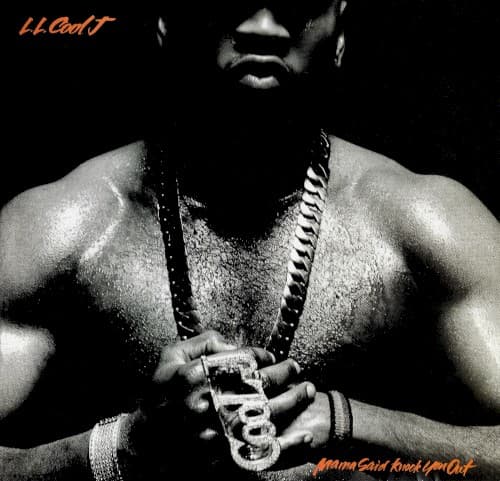
Mama Said Knock You Out answered every question. Released in 1990, the album reasserted LL's dominance through pure aggression married to undeniable skill. The title track, produced by Marley Marl, exploded with raw power — that opening "Don't call it a comeback" became one of rap's most iconic declarations. Marl's production gave LL his hardest sonic backdrop yet, and he attacked every beat with renewed hunger. "The Boomin' System" and "Farmers Boulevard" reminded listeners of his technical prowess, while "Around the Way Girl" proved he could still craft hits without compromising. The album revitalized his career and demonstrated that mainstream appeal and street credibility weren't mutually exclusive. Critics who dismissed him were forced to reassess.
The 90s saw LL navigate hip-hop's golden age as an established veteran adapting to new landscapes. Mr. Smith (1995) and Phenomenon (1997) maintained commercial viability without matching Mama Said's critical impact. "Doin It" and "Phenomenon" kept him on radio, but the emergence of Bad Boy's glossy sound and Death Row's gangsta dominance shifted hip-hop's center. LL remained a presence rather than a trendsetter. G.O.A.T. (2000) signaled awareness of his legacy status — the title itself (Greatest of All Time) invited both celebration and debate. The album succeeded commercially, proving he could still move units a decade and a half into his career.
His later work from 10 (2002) through Authentic (2013) found LL in elder statesman mode, still technically proficient but no longer shaping rap's direction. These albums featured contemporary production and guest appearances aimed at maintaining relevance, with mixed results. Yet even as his recording output slowed, his cultural presence expanded. Acting roles multiplied, from Any Given Sunday to NCIS: Los Angeles. He hosted the Grammys multiple times, becoming one of hip-hop's most visible mainstream ambassadors. This transition from active MC to multimedia personality mirrored hip-hop's own journey from subculture to dominant force in American entertainment.
Pioneering the Blueprint for Rap Longevity and Crossover Appeal
LL Cool J's influence operates on multiple levels. Musically, he pioneered the solo rap album as cohesive artistic statement and proved an MC could sustain a career across decades and style shifts. His willingness to explore romantic themes expanded hip-hop's emotional vocabulary, creating space for sensitivity within a genre often defined by hardness. Every rapper who's balanced tough persona with vulnerability — from Ja Rule to Drake — walks a path LL helped clear. His vocal approach, emphasizing clarity and power over stylistic gimmicks, influenced a generation of MCs who prioritized presence and technical control.
Culturally, LL demonstrated that hip-hop artists could achieve mainstream success without abandoning their craft or compromising their roots. He appeared in movies, launched clothing lines, and became a television fixture while maintaining respect in hip-hop circles — a balance few have managed as successfully. His Mama Said Knock You Out comeback became a template for veteran artists revitalizing their careers through renewed focus and aggression. When established rappers face questions about relevance, they're essentially facing the same challenge LL conquered in 1990.
His position in hip-hop's pantheon is complicated by longevity itself. Newer generations may know him more as a TV personality than as the hungry teenager who helped build Def Jam. Yet his peak period output — Radio through Mama Said Knock You Out — remains essential listening for understanding rap's evolution from party music to art form. He bridged eras, influenced countless artists, and proved that hip-hop careers could extend beyond a few albums or a single style. In a genre that often celebrates youth over experience, LL Cool J stands as evidence that adaptability, skill, and strategic reinvention can sustain relevance across generations.