Scorecard: 7.7/10 · Great
How we score- Writing(25%)
- 7.5
Farmers Blvd. and To da Break of Dawn show cutting battle craft and self-aware humor; the love songs lack the same detail.
- Production(25%)
- 8.5
The title track and Murdergram deliver raw drum breaks and layered scratches that still hit; filler like Milky Cereal shows where the formula wore thin.
- Delivery(15%)
- 8.0
The controlled fury on Mama Said Knock You Out and the relaxed pocket on Around the Way Girl prove range; the slower cuts expose limits in cadence variation.
- Cohesion(15%)
- 6.5
The first seven tracks build momentum and the title track lands perfectly; the back half sags with material that could have been cut.
- Originality(10%)
- 7.0
The stripped-back production and defiant tone answered the sample-heavy pop-rap moment of 1990, but the approach was refinement rather than invention.
- Replay value(10%)
- 8.0
The singles and the diss track hold up as East Coast standards; the deep cuts reward fans but do not demand return visits.
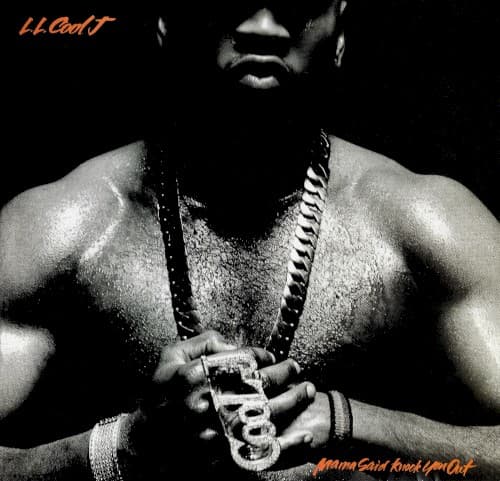
LL Cool J Mama Said Knock You Out — The Punch That Answered the Doubt
By 1990, the narrative had already turned. The ballad-heavy pivot that made LL Cool J a crossover star had also made him a target, and the whispers that he had gone soft were loud enough that this album opens by addressing them. Mama Said Knock You Out is a response record, built to prove that the rapper who held the crown in the mid-eighties could still fight for it when the sound had moved toward sample collages and the competition had multiplied. The thesis is audible in the first five songs: stripped drum breaks, sparse loops, and verses that push back against anyone who counted him out. The album works because it commits to the argument instead of hedging, and because the best tracks here deliver both the aggression and the technique to make the claim credible.
The stakes were real. The pop turn had worked commercially but cost credibility, and this album had to re-establish LL as a technician and a battler without abandoning the crossover audience he had built. The solution was to split the difference: raw production and combative writing on the majority of the runtime, with just enough melody and accessibility in the singles to keep radio interested. The balance is uneven and the back half of the tracklist shows where the ideas ran out, but the peaks are high enough that the album succeeded as both a commercial return and a statement of technical intent. What it proved was that a rapper could reclaim legitimacy without pretending the pop moment had not happened, and that reinvention could look like a deliberate step backward into the sound that had been abandoned.
Boom Bap as Argument
The production here is a reaction against the clutter of late-eighties rap-pop and the dense sample layering that acts like Eric B. and Rakim and Public Enemy were already building. Where those records stacked sound, Mama Said Knock You Out strips it back: hard drums, minimal loops, prominent scratching, and space around the vocals. The title track is the template, with a two-bar loop and a breakbeat that leaves room for the rapping to dominate. Murdergram and To da Break of Dawn follow the same blueprint, and the approach works because the simplicity foregrounds the flow rather than hiding it. The production is not innovative in 1990 terms, but it is a pointed choice, and the commitment to the stripped sound gives the album a consistent punch that the previous records lacked.
The weakness is in the beats that do not land. The Boomin' System is a car-stereo flex with more concept than groove, and Milky Cereal and Cheesy Rat Blues feel like filler even by early-nineties standards, where the loops are thin and the energy does not match the vocals. The album runs fourteen tracks and could have been twelve without losing anything essential. When the production works, it is because the drums are hard enough and the loops are repetitive enough to lock in, but the sound is not varied enough to sustain the full runtime without stronger writing across the board.
The writing is strongest when it is combative. The self-awareness on Farmers Blvd. is sharper than the bragging, and the humor in the punchlines keeps the aggression from sounding one-note. The love songs are competent but generic, with the hooks well-chosen and the premises relatable but not much detail in the verses. The writing on the weaker tracks defaults to battle clichés and sexual content without enough craft to make the repetition interesting. The album succeeds when LL sounds like he has something to prove and stumbles when he is running out the clock.
Front-Loaded Momentum
The sequencing is front-loaded by design. The second track establishes crossover appeal immediately, and the next four build toward the title cut, which lands at track eight as the album's thesis statement. That first stretch is the album's core, sequenced to feel like an argument that escalates with each entry. The decision to put the hardest material early and the title track in the middle works because it lets the album peak when the claim is made, but it also means the back half has to coast on weaker songs.
After the centerpiece, the pacing sags. The middle section holds competent but slight material, and the closing run feels like contractual obligations rather than creative choices. The album is fifty-five minutes and fourteen tracks, and the length works against it. The first half earns the runtime, but the back half exposes that the ideas and the beats were not deep enough to sustain a full LP. A tighter tracklist would have kept the momentum that the sequencing establishes in the opening stretch, but as it stands, the album proves its point early and then dilutes it.
The Comeback That Worked Halfway
Mama Said Knock You Out succeeded at what it set out to do: re-establish LL Cool J as a technically credible rapper at a moment when his relevance was being questioned. The title track, To da Break of Dawn, and Farmers Blvd. are among the best East Coast rap songs of 1990, and they hold up because the writing is sharp and the production is forceful without being dated. Around the Way Girl remains a crossover standard, and the album as a whole is proof that a rapper could reclaim legitimacy without fully abandoning the pop audience. The problem is that the material is not consistent enough to make the full runtime essential, and the weaker tracks expose the limits of the sound and the writing. It ranks as a successful reinvention and a necessary statement in the catalog, but not as a front-to-back classic.
This is for fans who want to hear the moment when LL reasserted himself as a battler and for listeners interested in how East Coast rap sounded at the turn of the nineties, before G-funk and sample-heavy production became dominant. Skip it if you expect every track to justify its inclusion or if stripped boom-bap without much variation in texture puts you to sleep. Start with the title track, To da Break of Dawn, and Farmers Blvd., which are the three tracks that make the case without filler. If those work, try Murdergram and Around the Way Girl for the range. Hear Radio and Walking with a Panther first if you want the full arc of the catalog, and hear The Great Adventures of Slick Rick or Fear of a Black Planet for 1990 East Coast rap with more ideas per track.
Track Listing
The Boomin’ System
●An intro that is more concept than song, built around car-stereo bass and a premise about sound quality. The beat is thin and the rapping is functional rather than urgent, which makes this feel like an obligation to open with energy rather than a track that earns its place. It sets the tone for the stripped production that follows, but it does not make a case for itself beyond that.
Around the Way Girl
▲The crossover single that proved LL could still chart without compromising the album's harder material. The hook is built on a sample that everyone recognizes, and the premise is relatable enough to work on radio. The writing is competent but not detailed, with verses that describe an archetype rather than a specific person. The track succeeds because of the groove and the accessibility, not because of the craft in the verses, but it remains the most enduring song from the album for casual listeners.
Eat Em Up L Chill
▲A solid battle track with a hard drum break and a flow that locks into the pocket without much variation. The writing is combative and direct, with punchlines that land more often than they miss. The energy is higher than the opener, and the production is stripped enough to let the rapping dominate. It is not a standout, but it is the first track that delivers on the album's thesis without hedging.
Mr. Good Bar
▼A sex track that feels like a relic even by 1990 standards, with innuendo that is neither clever enough to be funny nor explicit enough to be provocative. The beat is minimal and the hook is repetitive, and the writing does not have enough detail or wordplay to make the subject matter interesting. It is the first real misstep on the tracklist, and it breaks the momentum that the previous two tracks had built.
Murdergram
▲The hardest track on the album, with a menacing loop and a flow that sounds controlled and deliberate. The writing is darker and more specific than the standard battle material, and the production gives the verses room to breathe. This is the sound the album should have committed to more fully, and it holds up as one of the most convincing pieces of evidence that LL could still compete with the younger acts who were moving the sound forward.
Cheesy Rat Blues
▼Filler. A diss track aimed at unnamed targets, with a lazy groove and writing that defaults to generic insults. The production is thin and the verses do not have the specificity or the energy to make the track memorable.
Farmers Blvd. (Our Anthem)
▲A Queens anthem with self-aware humor and sharper writing than most of the battle tracks. The production is minimal but effective, and the flow has more variation than the previous cuts. The track works because LL sounds relaxed and confident rather than defensive, and the wordplay is specific enough to reward attention. It is one of the three or four tracks on the album that would make a strong case for LL as a technician to anyone who had written him off, and it holds up better than most regional anthems from the same period.
Mama Said Knock You Out
▲The thesis statement and the peak of the album. The production is a perfect example of boom-bap stripped to its essentials: a two-bar loop, a hard breakbeat, and scratches that punctuate the verses. The writing is combative and motivational in equal measure, and the delivery is controlled fury without sounding forced. The hook is simple and effective, and the verses have enough quotable lines to make the track work as both a single and a statement. This is the track that re-established LL as a credible battler, and it remains the most important song on the album and one of the best East Coast rap tracks of 1990.
Milky Cereal
▼A weak interlude with a thin beat and a half-formed concept about breakfast cereal. The track feels like a joke that was not developed enough to be funny, and it does nothing for the album except pad the runtime.
Jingling Baby (Remixed but Still Jingling)
●A remix of an earlier track, with a groove that is smoother than most of the album and a hook that is catchy without being substantial. The writing is light and the subject matter is forgettable, but the production is solid enough to keep the track from dragging. It is competent filler that does not add much to the album's argument.
To da Break of Dawn
▲A direct diss track aimed at specific targets, with writing that is detailed and cutting. The verses name names and cite specific grievances, and the delivery is sharp enough to make the insults land. The production is sparse and aggressive, with a loop that stays out of the way and drums that drive the flow. This is the best example of battle rapping on the album, and it works because the writing is specific and the performance sounds personal rather than formulaic. It holds up as one of the defining diss tracks of the early nineties, and it is essential listening for anyone interested in how East Coast battling sounded before the mafioso era.
6 Minutes of Pleasure
●A sex track with a smooth groove and writing that is more explicit than Mr. Good Bar but not much more interesting. The beat is solid and the flow is relaxed, but the verses do not have enough craft or humor to make the subject matter engaging. It is competent but forgettable.
Illegal Search
●A concept track about police harassment, with a narrative structure that is more developed than most of the album but writing that is heavy-handed. The production is minimal and the verses are straightforward, and the track feels like an attempt at conscious rap that does not have the nuance to succeed. It is one of the weaker attempts at depth on the tracklist.
The Power of God
▼A closing track that aims for uplift and lands on preaching. The production is thin and the writing is more slogan than argument, and the track feels like an obligation to end on a positive note rather than a natural conclusion to the album. It does not add anything that the previous thirteen tracks have not already said, and it is the weakest closer LL could have chosen.