Style & Context
Influences
Documentary photography, b-boy street culture, punk rock album aesthetics
Location
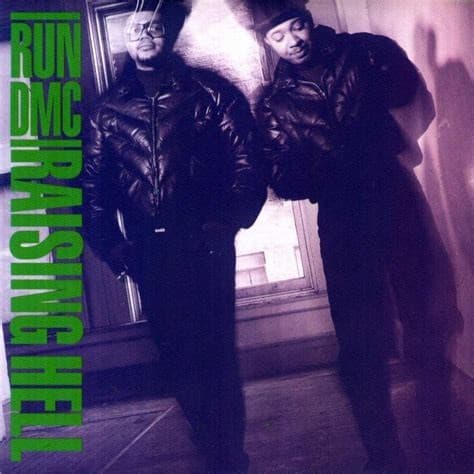
The interior setting evokes the working-class apartments of Hollis, Queens where the group honed their sound.
Visual Language
The composition uses environmental portraiture to place the artists in their natural habitat rather than on a stage.
Symbols
Black leather jackets
These jackets symbolize the fusion of rock rebellion with hip-hop culture that defined the album's sound.
Fedora hats
The black fedoras became Run-D.M.C.'s trademark, elevating streetwear into a recognizable uniform of Queens authenticity.
Empty apartment interior
The sparse room represents hip-hop's humble origins before corporate sponsorships and stadium tours changed everything.
Where Sound Meets Image
The stark visual mirrors the album's stripped-down production style where drum machines and hard rock guitars replaced disco-era excess. The purple tint reflects the album's darker, more aggressive tone compared to their earlier work. The group's confident posture in an everyday space captures the same attitude heard on tracks that boldly declared hip-hop's legitimacy as an art form, not a passing fad.
This cover cemented the uniform aesthetic that defined Run-D.M.C.'s brand for their entire career and influenced countless rap groups to develop signature looks. The anti-glamour approach paved the way for hip-hop album covers to embrace raw street imagery rather than imitate R&B's polished studio shots, establishing a visual vocabulary that hardcore rap would build on for decades.