Scorecard: 8.3/10 · Great
How we score- Writing(25%)
- 7.5
The boasts and crew declarations are direct and economical, backed by real wit on tracks like the storytelling across the title cut and the specificity of the Adidas ode, though the formula grows thin by the back half.
- Production(25%)
- 9.0
Rick Rubin stripped the sound down to drum machines and hard rock guitars with nothing wasted, making beats that hit harder than anything in rap or rock that year and still sound massive.
- Delivery(15%)
- 8.5
Run and DMC trade lines with precision and force, the call-and-response locked tight, each voice distinct, the timing impeccable even when the material is just showing off.
- Cohesion(15%)
- 7.0
The first six tracks are a sustained attack with no weak moments, but the second side scatters into comedy sketches and an a cappella interlude that break the momentum before the closer lands.
- Originality(10%)
- 9.5
The rock-rap fusion had been attempted before by this same group, but Raising Hell made it sound inevitable and showed the rest of the genre how to build albums that could command mainstream attention without softening the sound.
- Replay value(10%)
- 8.5
The singles remain essential and the deep cuts like the title track hold up, though the novelty tracks date the album and a few moments feel like time-stamped experiments rather than permanent additions to the catalog.
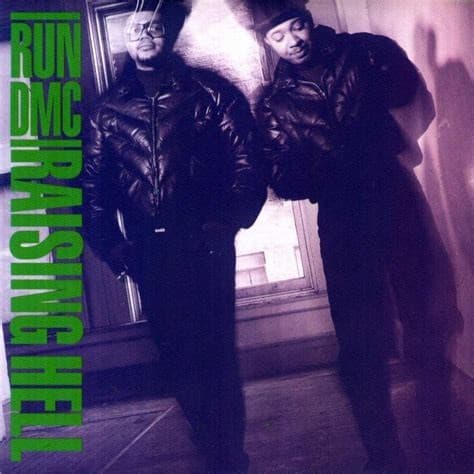
Run-D.M.C. Raising Hell — The Album That Made Rap a Format
Raising Hell is the album that proved rap could sell like rock and sound harder than both. Released in 1986, it was the first rap record to go platinum and the first to crack the top five of the pop chart, doing so with a sound that stripped away the funk loops and studio sheen that defined the genre's first wave. Rick Rubin and Russell Simmons are credited as producers, but the group built the music: drum machines programmed to thud like arena rock, guitars sampled and played live with no attempt at smoothness, and two voices trading lines with the discipline of a drill sequence. The thesis here is that Raising Hell earned its commercial breakthrough not by softening rap for a crossover audience but by making the sound so direct and forceful that the audience had to meet it where it stood.
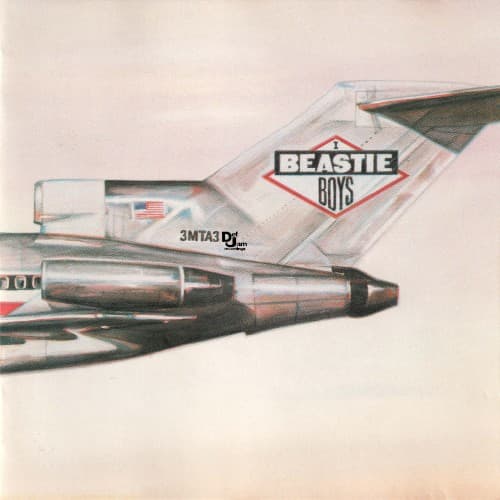
The album's first half is nearly flawless, six tracks in a row that define what the group was for: precision, force, and the confidence that comes from knowing exactly what works. The back half stumbles with comedy tracks and filler that show the group filling space rather than driving an argument. But the peaks are high enough to justify the reputation. The rock fusion on Walk This Way was not the group's invention—they had already done it on Rock Box and King of Rock—but here it was executed with enough clarity and volume to become the template every rap-rock crossover would chase for the next decade, paving the way for records like Beastie Boys' Licensed to Ill. The album sits at the front of the golden age not because it invented the techniques but because it showed rap how to build albums that could command album-level attention and sales. The influence is in the structure as much as the sound.
Drum Machines, Guitar Riffs, and No Apologies
The production on Raising Hell is a study in reduction. Rubin's hand is all over the sound: hard drums with no swing, guitar riffs sampled and looped with the bluntness of a power chord, and no basslines to smooth the edges. The beats on Peter Piper and It's Tricky are built from drum machines programmed to hit like snares in a gym, and the vocals sit on top with no reverb or studio warmth. The result is a sound that worked in cars, on boomboxes, and in arenas without needing different mixes for each, a stark contrast to the layered complexity of Public Enemy's dense production or the sample-heavy approach of Paul's Boutique. The guitar on the title track Raising Hell comes in heavy and distorted, closer to metal than funk, and the group lets it dominate the track without trying to rap over it—they wait for the breaks and then come in sharp.
The writing is direct and focused, though it covers limited ground. Run and DMC trade boasts and crew declarations with economy, each line hitting its point and moving on. My Adidas is the standout for specificity: the song is exactly what the title says, a detailed ode to a sneaker with no metaphor or filler, and it works because the conviction is absolute. The title track tells a story about the group's rise and the chaos of success, structured as a narrative rather than a list of claims, and it shows what the group could do when the writing had somewhere to go. Proud to Be Black closes the album with a history lesson and a statement of purpose, direct and unapologetic, and it lands because the tone never shifts into preaching—it is delivered with the same force as the boasts.
The weaknesses are in repetition and reach. By the time the album hits You Be Illin' and Dumb Girl, the writing is coasting on formula: clever enough to work as singles but thin when placed next to the sharper material. The comedy on You Be Illin' is mild, the kind of observational humor that plays once and wears out, and Dumb Girl is a dismissive sketch that has not aged well and was not deep enough to justify revisiting. The group's delivery never flags—Run and DMC sound locked in from the first track to the last, the timing precise and the call-and-response rhythm never losing its snap—but the material does not always match the performance. The album would be stronger at ten tracks, cutting the filler and ending on Proud to Be Black without the detours.
A Record Built for the First Six Songs
The sequencing on Raising Hell is frontloaded by design. The first stretch opens sharp and economical, establishing the group's cadence and Jam Master Jay's turntable work, and does not let up through the initial run. The opening tracks follow in quick succession, each one built on a different sonic foundation—new wave guitar on one, sparse drums on another—and the variety keeps the momentum from turning into monotony. The centerpiece arrives as five minutes of rock fusion that still sounds like a risk even after decades of imitation, and then the first half closes with two tracks that keep the intensity high without trying to top the single.
The back half is where the album sags. The middle section is solid but unremarkable, one strong moment isolated by weaker material on both sides, and a novelty track does not carry enough weight to justify its placement. A twenty-seven-second a cappella interlude breaks the flow rather than building it, and the album does not recover its pace until the closing run. The length is not the problem—forty minutes is reasonable—but the distribution is uneven. The album feels like two different projects: a sharp, focused statement on the first half and a looser collection of experiments and filler on the second. The peaks justify the runtime, but the sequencing does not make a case for experiencing the album as a whole.
The Blueprint That Opened the Door
Raising Hell ranks as the most important Run-D.M.C. album because it was the one that proved rap could sell millions and dominate the charts without compromising the sound. It is not the group's most consistent work—the back half is uneven and some of the comedy has not traveled well—but the highs are high enough to define an era. The album sits between the raw early singles and the more polished later records, and it captures the group at the moment when they had perfected the attack but had not yet started second-guessing it. For listeners who want to understand why rap became an album format and not just a singles genre, this is the record that made the case.
The album is essential for anyone studying the history of rap-rock fusion or the mechanics of crossover success, and it remains a strong listen for fans of hard, direct hip-hop with no interest in melody or atmosphere. Casual listeners should start with Peter Piper, It's Tricky, and Walk This Way to hear the sound that defined the mid-eighties, then move to the title track and Proud to Be Black for the deeper writing. Skip You Be Illin' and Dumb Girl unless you are documenting the full picture. For next steps, hear King of Rock to understand where the group was before Rubin tightened the sound, and then move forward to Tougher Than Leather to hear what happened when they tried to build on this success. Raising Hell does not represent the peak of rap writing or the deepest album in the genre, but it is the record that showed the industry rap could be a commercial force and still sound like itself.
Track Listing
Peter Piper
▲The album opens with a showcase for Jam Master Jay's turntable work and the group's call-and-response precision. The beat is built on a flute loop and hard drums, no bassline, and the rapping is sharp and economical. Run and DMC trade lines about their skills and their crew, each verse structured as a series of quick jabs rather than a sustained argument. The track sets the tone for the album: direct, confident, and stripped of anything that does not serve the rhythm. The writing is clever without overreaching, and the delivery is locked tight. It remains one of the group's best album openers because it wastes no time and establishes the standard for everything that follows.
It’s Tricky
▲Built on a new wave guitar riff and a drum machine pattern that hits like a metronome, this track is pure momentum. The verses are about the challenges of fame and the complications of the lifestyle, delivered with the same force as the boasts. The hook is immediate and the structure is simple, but the energy never drops. The production is sparse, just drums and guitar with no filler, and the group's voices cut through without needing reverb or layering. It is one of the album's strongest singles because the writing is specific enough to avoid formula and the beat is built to play loud. The track has aged well because it never relied on novelty.
My Adidas
▲A two-minute and forty-seven-second ode to a sneaker, and it works because the group commits fully to the premise. The verses catalog the ways the group wears the shoes, the places they have been, and the statement they make, all delivered with complete seriousness. The beat is minimal, just drums and a bassline, and the vocals are pushed forward in the mix. The writing is specific and direct, and the track avoids irony or winking—it is exactly what it says it is. The cultural impact was immediate, leading to an endorsement deal, and the track remains a perfect example of how rap can turn a mundane subject into a statement of identity through sheer conviction and precise writing.
Walk This Way
▲The rap-rock fusion that brought Aerosmith back to the charts and pushed Run-D.M.C. into the top five. The track is built on the original guitar riff, played by Joe Perry, with the drums programmed harder and the vocals rapped rather than sung until Steven Tyler comes in for the final verse and chorus. The production is sharp and the arrangement is simple: the beat never softens, and the rock elements are integrated rather than layered on top. The group's verses are economical, letting the riff do the work, and the collaboration feels like two acts meeting in the middle rather than one compromising for the other. The track has been overplayed and overanalyzed, but it still sounds forceful because the execution is clean and the sound is direct. It is the blueprint every rap-rock crossover has chased since.
Is It Live
●A declaration of the group's live performance power and their ability to command a crowd. The beat is spare, built on drums and a looped guitar, and the vocals trade off rapidly. The writing is solid but not as sharp as the tracks that precede it, and the energy holds but does not build. It works as a transition between the singles and the deeper album cuts, maintaining the intensity without trying to top what came before. The track has not become a standout in retrospect, but it serves its purpose in the sequencing and does not waste time.
Perfection
●The final track of the first side, closing out the strongest run on the album. The verses are about skill and superiority, delivered with the usual precision, and the beat is hard and simple. The writing does not reach for new ground, but the execution is sharp and the track works as a capstone to the side. It is not one of the album's peaks, but it holds the standard and does not let the momentum drop before the record flips. Solid and functional, it does what it needs to do.
Hit It Run
●The opening track of the second side, and the moment when the album starts to feel less focused. The beat is adequate and the verses are competent, but the writing is thinner and the energy feels lower. The track is not weak, but it is unremarkable, and it signals that the back half of the album will not match the front. It works as an album cut but not as a standout, and it could have been cut without loss.
Raising Hell
▲The title track is one of the album's strongest deep cuts, built on a heavy guitar riff and a narrative structure that separates it from the boasts and declarations elsewhere. The verses tell the story of the group's rise, the chaos that followed, and the pressure of success, with concrete details and a clear arc. The beat is massive, the guitars distorted and loud, and the group lets the music breathe rather than filling every bar. The track shows what the group could do when the writing had a larger ambition, and it stands as one of the album's peaks. The placement on the second side, surrounded by weaker material, diminishes its impact, but the track itself is among the best the group recorded.
You Be Illin’
▼A comedy track built on observational humor about people acting foolish in everyday situations. The beat is minimal, the delivery is lighter, and the writing is mild. The track was a single and it worked as a novelty, but it has not aged well and it breaks the album's momentum. The humor is safe and the examples are generic, and the track feels like filler when placed next to the sharper material. It is not offensive, but it is skippable.
Dumb Girl
▼A dismissive sketch about a woman who does not meet the group's standards. The writing is thin and the tone is condescending, and the track has not aged gracefully. The beat is adequate but the material does not justify the runtime, and the track feels like a misstep even by the standards of mid-eighties rap. It is one of the album's weakest moments and it could have been left off entirely.
Son of Byford
●A twenty-seven-second a cappella interlude where the group introduces Jam Master Jay's father. It serves no musical purpose and breaks the flow rather than building it. The track is a curiosity but not a meaningful addition, and it makes the sequencing of the second side feel even more scattered.
Proud to Be Black
▲The album closes with a history lesson and a statement of pride, delivered with the same force as the boasts. The verses recount African and African-American history, name specific figures, and make the argument clearly and directly. The beat is spare, built on drums and a simple bassline, and the vocals are pushed forward. The track does not preach or soften, and it works because the tone is consistent with the rest of the album—it is a declaration, not a lecture. The placement as the closer is deliberate, ending the album on substance rather than spectacle. It is one of the stronger deep cuts and it has aged better than most of the second side.