How Three Kids from Hollis Changed Hip-Hop Forever
Run-D.M.C. didn't just make hip-hop records — they made hip-hop unavoidable. Joseph Simmons (Run), Darryl McDaniels (D.M.C.), and Jason Mizell (Jam Master Jay) emerged from Hollis, Queens in 1982 with a sonic blueprint that stripped rap down to its most potent elements: booming 808s, aggressive vocal exchanges, and no live band to soften the blow. Where disco-era rap had relied on funk samples and party atmospheres, Run-D.M.C. delivered confrontational minimalism that sounded like nothing else on radio.
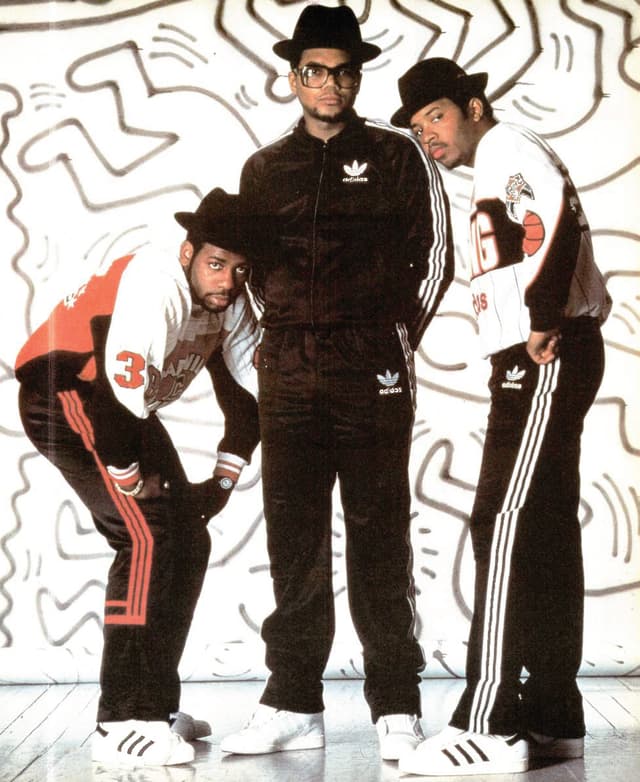
Their cultural impact extended far beyond music. The group's uniform — black leather, Kangol hats, unlaced Adidas sneakers, thick gold chains — became hip-hop's first globally recognized aesthetic. They proved rap could sell millions without compromising its street authenticity, crossing over to rock audiences while maintaining credibility in the boroughs. By the time they disbanded following Jam Master Jay's murder in 2002, they had fundamentally reshaped what hip-hop could be and where it could go.
Run-D.M.C. operated at the intersection of art and commerce with unmatched effectiveness. They were the first rap act on MTV in heavy rotation, the first to grace the cover of Rolling Stone, the first to secure a major endorsement deal with a non-music corporation. These weren't just milestones — they were systematic demolitions of the barriers keeping hip-hop marginalized. Every door they kicked open stayed open for those who followed.
The Sonic Revolution: Minimalist Beats and Maximum Impact
Jam Master Jay's production philosophy defined an era: less is more, and drums are everything. His approach to beat construction emphasized the Roland TR-808 drum machine's synthetic thud, creating stark soundscapes where every kick drum felt like a physical blow. There were no elaborate arrangements, no session musicians smoothing out the edges. Scratching wasn't decorative — it functioned as an instrument, punctuating verses and building tension between bars. This aesthetic represented a deliberate rejection of rap's disco roots in favor of something harder and more distinctly hip-hop.
Run and D.M.C.'s vocal interplay established the template for tag-team delivery. They traded bars with military precision, finishing each other's lines and doubling up on key phrases for emphasis. Their voices — Run's higher-pitched urgency against D.M.C.'s gravel-toned authority — created natural contrast without needing complex production tricks. The aggression was palpable but controlled, closer to a street corner argument than a shouting match. Lyrics prioritized clarity and punch over wordplay acrobatics, delivering their messages with maximum efficiency.
Their willingness to incorporate rock elements separated them from contemporaries who viewed guitar-based music as fundamentally opposed to hip-hop culture. The collaboration with Aerosmith on "Walk This Way" wasn't pandering — it was strategic expansion, proving rap and rock shared the same rebellious DNA. That track's success didn't just cross genres; it obliterated the artificial divide between them, creating space for future rap-rock hybrids while demonstrating hip-hop's capacity to absorb and transform any musical influence.
From Hollis Basement to Global Dominance: The Run-D.M.C. Trajectory
The group's formation grew directly from the Hollis hip-hop scene, where Joseph Simmons had already established himself as DJ Run, spinning at local parties organized by his brother Russell Simmons. Russell, recognizing his brother's potential, pushed him to transition from DJ to MC, pairing him with childhood friend Darryl McDaniels. When they added Jason Mizell as their dedicated DJ in 1982, the trio had the chemistry and vision to pursue something bigger than park jams and community center shows.
Their self-titled 1984 debut announced a new era with bracing clarity. "It's Like That" and "Sucker M.C.'s" rejected everything that had come before — no disco strings, no Chic bass lines, no feel-good party vibes. Just drum machines, aggressive vocals, and an attitude that dared radio to ignore them. The album went gold, an unprecedented achievement for a rap release, proving there was a massive audience hungry for hip-hop's uncut essence. Critics didn't know what to make of it, but young listeners recognized something authentic and powerful.
"King of Rock" in 1985 pushed further into rock territory, literally and figuratively. The title track's guitar riff announced their intentions to dominate beyond hip-hop's existing boundaries. They appeared on MTV, performed on "Saturday Night Live," and systematically dismantled every argument that rap was a novelty genre destined to fade. The album's commercial success — certified platinum — forced the industry to acknowledge hip-hop as a permanent fixture rather than a passing trend.
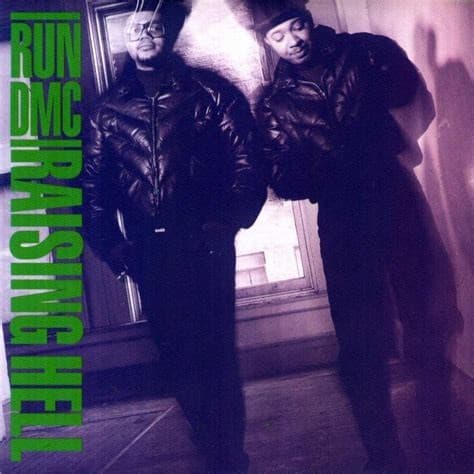
Then came "Raising Hell" in 1986, the album that detonated hip-hop into the mainstream stratosphere. "Walk This Way" featuring Aerosmith became an inescapable cultural phenomenon, bridging the gap between suburban rock fans and urban hip-hop heads. "My Adidas" sparked the first major sneaker endorsement in rap history, resulting in a million-dollar deal that legitimized hip-hop artists as marketable brands. "It's Tricky" and "You Be Illin'" kept the group omnipresent on radio and MTV. The album moved three million copies, setting a commercial benchmark that seemed impossible just two years earlier. Run-D.M.C. weren't just successful — they had fundamentally altered hip-hop's relationship with mainstream American culture.
The late 80s and early 90s proved more challenging. "Tougher Than Leather" in 1988 and "Back from Hell" in 1990 sold respectably but couldn't match "Raising Hell"'s cultural impact. Hip-hop had evolved rapidly; the abrasive minimalism that once sounded revolutionary now competed with Public Enemy's dense political commentary, N.W.A's gangsta narratives, and the Native Tongues' Afrocentric creativity. Run-D.M.C.'s formula hadn't changed, but the context around it had shifted dramatically.
They adapted with "Down with the King" in 1993, collaborating with Pete Rock and incorporating more contemporary production techniques while maintaining their core identity. The title track, produced by Pete Rock, gave them their biggest hit in years and proved they could still compete when working with the right partners. It felt like a renaissance, a veteran group finding renewed purpose.
But the momentum didn't sustain. "Crown Royal," released in 2001 after several years of silence, featured collaborations with artists like Nas and Fat Joe but felt more like a nostalgia project than a genuine comeback. By then, hip-hop had moved through several generational shifts. The stripped-down minimalism Run-D.M.C. pioneered had given way to maximalist productions, Southern bounce, and digital experimentation. They remained respected elders, but the culture had moved on.
Jam Master Jay's murder in his Queens recording studio on October 30, 2002, ended the group permanently. The tragedy robbed hip-hop of one of its foundational architects and closed the chapter on a group that had given the culture its first taste of mainstream dominance. Run and D.M.C. would reunite occasionally for memorial performances, but Run-D.M.C. as a creative force died with Jay.
The Foundation Everything Else Was Built On
Run-D.M.C.'s influence operates on multiple levels simultaneously. Musically, they established the sonic template that East Coast hip-hop would build on throughout the 80s and 90s — drum machine-driven minimalism, aggressive vocal delivery, and strategic use of rock elements. Groups like the Beastie Boys and Public Enemy took direct inspiration from their approach, while later acts from Onyx to M.O.P. channeled their confrontational energy. The tag-team vocal format they perfected became standard practice, influencing everyone from EPMD to Outkast to Mobb Deep.
Culturally, they were the bridge. Before Run-D.M.C., hip-hop existed primarily within Black and Latino urban communities, struggling for recognition beyond local radio and independent labels. After "Raising Hell," rap was a global phenomenon with legitimate commercial power and cultural authority. They didn't water down hip-hop to achieve crossover success — they forced mainstream culture to meet them where they stood. That precedent changed everything, establishing that hip-hop could dominate on its own terms rather than conforming to industry expectations shaped by rock and pop conventions.
Their business innovations proved equally transformative. The Adidas endorsement demonstrated that rappers could secure corporate partnerships based on cultural influence rather than traditional celebrity metrics. Hip-hop fashion became a marketable commodity because Run-D.M.C. showed that streetwear had commercial value and aspirational appeal. Every sneaker deal, every clothing line, every brand partnership in hip-hop traces back to what they established. Jay-Z building Rocawear, Kanye West partnering with Nike and Adidas, Travis Scott's McDonald's collaboration — all of it stands on the foundation Run-D.M.C. built when they turned unlaced Adidas into cultural currency.