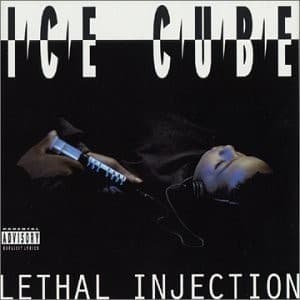
The scorecard
6.4/10 · Mixed
- Writing25%
- 6.0
- Production25%
- 7.5
- Delivery15%
- 7.0
- Cohesion15%
- 5.5
- Originality10%
- 5.0
- Replay value10%
- 6.5
The album drops the sharp political writing of Death Certificate for simpler gangsta posturing, with generic threats and misogyny dominating most tracks.
QDIII and the team deliver clean G-funk grooves that work individually, though the eleven-minute Bop Gun sprawl and uneven sequencing hurt the whole.
Cube's bark still has authority and his flow adapts well to the funkier production, but the material rarely pushes him beyond comfort.
The album lurches between party funk, violent threats and the bloated Bop Gun experiment with no binding idea, padding the runtime past what the songs earn.
Lethal Injection follows the G-funk trend rather than leads it, trading Cube's confrontational originality for formula that Death Row had already perfected.
You Know How We Do It and Ghetto Bird hold up as West Coast staples, but most of the album wears thin once the funk novelty fades.
Ice Cube Lethal Injection — The Pivot That Cost Him the Edge
Lethal Injection is the sound of Ice Cube chasing the market instead of leading it. Two years after Death Certificate made him rap's most dangerous voice, Cube handed the boards to QDIII and a crew of journeymen and delivered an album that smooths out his rage into G-funk product. The thesis arrives early: threats so generic they could have been written by algorithm, and coasting on a lazy Zapp interpolation that asks nothing of the listener except nodding recognition. The album sold platinum and spawned MTV rotation, but it marked the end of Cube as a singular force.
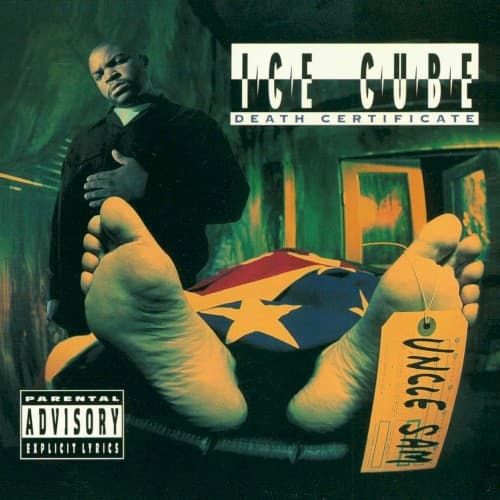
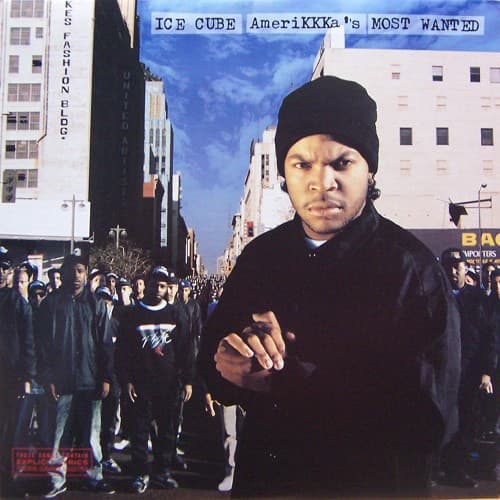
The context matters because Cube had already proven he could do confrontational and commercial at once. AmeriKKKa's Most Wanted turned Public Enemy's wall of noise into West Coast gold, and Death Certificate moved units while making white America nervous. Lethal Injection attempts neither. It arrives a year after The Chronic reordered West Coast rap around funk samples and lowrider bass, and Cube's response is to hire Quincy Jones III and replicate the formula without the focus.
What made Dre's debut work was sequencing discipline and a unifying sound; Lethal Injection has neither. The eleven-minute George Clinton experiment feels like Cube demanding his own Nuthin' but a 'G' Thang without understanding why that song was three minutes. The album moves platinum numbers but it trades the confrontation that made Ice Cube matter for grooves that sound like everyone else.
Funk Without the Bite
The production on Lethal Injection is competent G-funk that rarely rises above competence. QDIII, handling four tracks including the singles, delivers clean work: helicopter sound effects that actually serve the lyric, and Zapp's Computer Love flipped into an effortless cruise that became a format staple. The issue is not craft but imagination. Where The Chronic used funk samples to build a humid, paranoid Los Angeles, Lethal Injection uses them as decoration.
Sir Jinx, who co-produced some of Cube's sharpest early work, contributes only the intro and one dull cautionary tale that wastes his talent. The rest of the board—Madness 4 Real, Laylaw, Brian G, 88 X Unit—are capable but invisible, filling space rather than shaping it.
The writing is where Cube loses the plot entirely. AmeriKKKa's Most Wanted and Death Certificate had a point of view: righteous anger, Black nationalism, media criticism, misogyny and homophobia delivered with enough wit and venom that you had to reckon with them. Lethal Injection ditches the ideology for rote gangsta posturing. Threats without targets, misogyny without the provocative framing Cube used to justify it as social commentary, and an afterlife imagined as a place to keep thugging that might have been subversive in sharper hands but here just sounds lazy.
The album's best writing appears on the police helicopter chase narrated with enough detail to make the paranoia tangible, and the track that at least attempts a question even if the answer is a shrug. The rest is filling bars.
Cube's delivery holds steady. His bark still commands attention and he navigates the funkier production without sounding awkward, but the material does not push him. On Death Certificate he sounded like he had something to prove on every track; here he sounds like he is clocking in. The guest appearances do nothing: George Clinton's presence is wasted on a bloated jam that never justifies its length, and K-Dee is anonymous. The album needed either Cube's older ferocity or a new idea; it offers neither.
A Sequence That Never Finds Its Stride
Lethal Injection opens with two strong moves and then wanders for the next hour without a plan. The first half tries to alternate between funk grooves and harder threats, but the transitions are abrupt and the tonal shifts feel arbitrary. The album's smoothest moment sits next to one of its ugliest, with no bridge between them. The pacing peaks early and coasts until an eleven-minute derailment.
That Funkadelic interpolation would be a bold closer; instead it lands at track six and kills the album's momentum. The song has moments—Clinton's voice adds texture, the groove has a loose, live feel—but it overstays by seven minutes and makes everything after it feel like an afterthought. The mid-tempo track that found a second life in Office Space six years later might have been a highlight if it were not buried in the back half. The closing stretch feels like contractual obligation, competent but inessential.
The album needed to be nine songs, not twelve, and it needed the Funkadelic jam cut to four minutes or moved to the end. At fifty-six minutes it sags under its own weight, and the sequencing suggests no one was willing to make hard cuts.
The Album Where Cube Became Just Another West Coast Rapper
Lethal Injection ranks third in Cube's early run, behind both AmeriKKKa's Most Wanted and Death Certificate by a wide margin. Those albums had a reason to exist beyond moving units; Lethal Injection sounds like Cube following a trend he used to set. The album went platinum because Cube's name still carried weight in 1993 and because You Know How We Do It and Bop Gun got the radio and MTV push, but it marked the beginning of his creative decline. The sociopolitical edge that made him essential is gone, replaced by formulaic gangsta content that dozens of West Coast rappers were doing as well or better. It has not aged poorly because it was never ahead of its time—it was behind the moment it dropped, chasing The Chronic's blueprint a year too late.
The album is for Cube completists and for anyone who wants to hear how even the best West Coast rappers got smoothed out by the G-funk wave. Skip it if you want Cube at his most confrontational or if you have limited time for his catalog; AmeriKKKa's Most Wanted and Death Certificate are essential and this is not. Start with You Know How We Do It for the slick single work, Ghetto Bird for the best writing, and Down for Whatever for the groove that actually aged well. If you enjoy the sound, try DJ Quik's Safe + Sound from the same year, which does the G-funk pivot with more personality, or Spice 1's AmeriKKKa's Nightmare, which kept the aggression Cube abandoned. Lethal Injection is not a bad album, but it is the first Ice Cube album that feels replaceable, and that matters when you are judging an artist who built his name on being irreplaceable.
Track by track
Track Listing
The Shot (intro)
SolidA short, ominous intro with sirens and tension-building that sets a grimly cinematic mood. It does its job in under a minute and gets out, which is more than can be said for some of the full songs that follow.
Really Doe
SolidThe album's first full track opens with hard drums and Cube delivering threats that sound tough but mean nothing specific. The production from Derrick McDowell and Laylaw has punch, and Cube's flow is authoritative, but the writing is pure formula: enemies unnamed, violence without context, the kind of content that filled a hundred West Coast albums in 1993. It works as an energetic opener but it is instantly forgettable once the beat stops.
Ghetto Bird
StandoutThe album's sharpest moment, built on QDIII's minimal, menacing production and Cube's most focused writing. The helicopter sound effects are obvious but effective, and Cube narrates a police chase with enough specificity—ducking through alleys, the chopper's searchlight cutting through the dark—to make the paranoia real. The hook is blunt and the perspective is consistent: this is what it feels like to be hunted in South Central. The best writing on the album, hands down.
You Know How We Do It
SolidThe smoothest track on the album and the one that got the most play, built on a blatant Zapp interpolation that QDIII wisely does not mess with. Cube sounds relaxed, the groove is effortless, and the whole thing coasts on pure California vibe. It is also completely empty: a party track with no stakes, no edge, no reason to exist beyond radio rotation. It works as background music for a cookout, which is both its strength and its problem. Cube used to have more to say.
Cave Bitch
WeakCrude, ugly misogyny with no wit and no framing to justify it. Cube calls a white woman slurs for four minutes over a plodding Brian G beat that does nothing to elevate the content. Where Death Certificate's controversial tracks at least had a confrontational political edge, this is just lazy hatred. Skip it.
Bop Gun (One Nation)
WeakAn eleven-minute Funkadelic interpolation that overstays its welcome by at least seven minutes. George Clinton shows up to add his voice and the groove has a loose, live-band feel that distinguishes it from the sample-heavy tracks around it, but the song has no structure and no discipline. It meanders through verses and instrumental breaks without building to anything, and by minute six you are waiting for it to end. The idea of Cube and P-Funk collaborating could have worked as a tight four-minute single; instead it is a bloated experiment that kills the album's pacing. The fact that it became an MTV staple says more about the novelty of the sample and the guest than the quality of the song.
What Can I Do?
SolidA halfhearted introspection track where Cube asks the title question and offers no compelling answer. The 88 X Unit production is anonymous mid-tempo funk, and Cube's writing gestures at systemic problems without committing to any real analysis. It is not bad, but it is not necessary either—just another album track filling space between the singles.
Lil Ass Gee
SolidA cautionary tale about a young gang member that hits every predictable beat: kid gets jumped in, kid catches a case, kid ends up dead or locked up. Sir Jinx's production is solid but unremarkable, and Cube's storytelling is competent without being vivid. The song feels like Cube going through the motions on a topic he already covered better on earlier albums.
Make It Ruff, Make It Smooth
SolidA duet with K-Dee that attempts to contrast hard and smooth styles but lands somewhere in the middle of both. QDIII's production has a jazzy undertone that distinguishes it slightly from the rest of the album, but neither Cube nor K-Dee brings much energy. It is fine as deep-cut filler, nothing more.
Down for Whatever
StandoutThe album's unexpected legacy track, thanks to its inclusion in Office Space six years later. Madness 4 Real's production has a hypnotic, mid-tempo groove that sounds better now than it did in 1993, and Cube's delivery is relaxed but still commanding. The writing is standard gangsta content—loyalty, violence, the usual—but the beat carries it. One of the album's better moments, though it took a cult comedy to give it a second life.
Enemy
SolidA paranoid, mid-tempo track about betrayal and distrust that never rises above generic. Madness 4 Real delivers a moody beat, but Cube's writing is vague threats and familiar complaints without the sharp detail that made his earlier work cut. It sounds like an album track because it is an album track: competent, forgettable, unnecessary.
When I Get to Heaven
WeakThe closer imagines the afterlife as a place to keep thugging, which could have been darkly funny or genuinely subversive in sharper hands. Instead it is lazy concept work over a sleepy Brian G beat that drifts without momentum. Cube sounds checked out, and the song ends the album on a shrug rather than a statement. A weak finish to an album that needed a stronger ending.
Frequently Asked Questions
Is Ice Cube Lethal Injection worth listening to?
What is the best song on Lethal Injection?
Why is Lethal Injection considered a weak Ice Cube album?
Styles