The scorecard
6.0/10 · Mixed
- Writing25%
- 6.0
- Production25%
- 6.5
- Delivery15%
- 6.5
- Cohesion15%
- 5.5
- Originality10%
- 5.5
- Replay value10%
- 5.5
Stacked metaphors and punchlines still land on "6 Foot 7 Foot", but verses recycle the same drug and bravado imagery and rarely surprise.
The dark, sparse beats of "Nightmares of the Bottom" and "President Carter" work, while the ballads and "How to Hate" chase radio.
Wayne's croak and flexible timing carry the record, though the Jadakiss, Tech N9ne and Cory Gunz appearances often sharpen him.
Grim mood pieces sit beside soft pop moves with no sequencing logic, and the second half loses momentum.
It repeats what Wayne had already mapped on Tha Carter II and III and follows radio trends more than it sets them.
The ballads and mid-album filler make a full playthrough unrewarding even though the best rap cuts hold up better than the earlier Carters suggested.
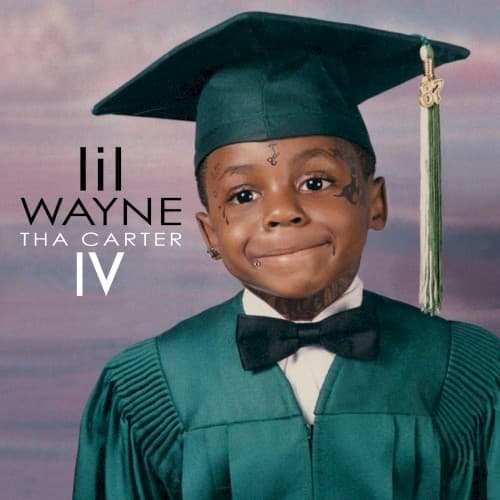
Lil Wayne Tha Carter IV: A Great Rapper at Ninety Percent
Tha Carter IV is the sound of a great rapper working at ninety percent and a very expensive record built to hide the missing ten. Lil Wayne is still the most agile voice on the album by a wide margin, but the agility no longer produces surprises. Where Tha Carter III kept finding new places to put a punchline, this one mostly repeats the places he already mapped, with better lighting. That is the thesis: a professional, polished, frequently entertaining record from a man whose best work was never professional.
The context explains the temperature. The sessions began in 2008 and then stopped, a prison sentence interrupted the plan, and the album was re-recorded from scratch afterward. A project with that history arrives either as a statement or as a compromise, and this is a compromise. The Wikipedia summary of the writing calls it more introspective and downtempo, and that is accurate as far as it goes. What it leaves out is how often the introspection stays on the surface. Wayne sounds like someone who has learned to ration his strangeness.
Heard as Southern rap, the problem is sharper. Wayne came out of New Orleans with a bounce and a menace that made Houston, Atlanta and Memphis producers want to ride alongside him. Here the beats lean toward whatever a radio program director might want in 2011: piano ballads, a John Legend hook, a Drake verse stacked beside a Jadakiss verse. The Southern gloom survives in pockets, mainly on the cuts where the drums sit low and he lets a syllable drag across a bar line, but those pockets are small and they are not where the singles live.
None of this makes it a bad record. It sold 964,000 copies in its first week and earned a Grammy nomination for Best Rap Album, and the commercial case was never in doubt. The artistic case is more modest: a strong second-tier Wayne album, better than the disastrous Rebirth, clearly below Tha Carter II and Tha Carter III. The rest of this review is about where it earns that middle position and where it quietly wastes it.
Polished Beats, Familiar Punchlines, Borrowed Gloom
The writing is where the album loses the most ground. Wayne's gift has always been the stacked metaphor, the pun that lands a half-beat after you expected it to, and on Tha Carter IV those moves are present but familiar. A verse will open on a hard image, spin three variations of it, and close on a punchline that feels pre-assembled. The craft is real. The surprise is gone. Critics at the time complained that he rarely gives specific detail and that the subject matter loops back on itself, and the second half of that complaint is hard to argue with: drugs, danger, women and his own greatness take up most of the room, treated at a distance.
Production is the other half of the argument, and it is a split decision. The credit list is huge, with Bangladesh, T-Minus, 40, Polow da Don, Cool & Dre, Streetrunner, Detail and others all taking turns, and the sound is predictably uneven. The best beats hold a low, ominous pocket that suits Wayne's rasp: long synth tones, a bass pulse that moves the way New Orleans bounce moves even when the tempo is slow. The weakest sound like the label asked for a hit and then asked again. A lot of the record sits at a mid tempo that forces Wayne to rap inside the beat when his best verses ride across it.
His delivery is the album's most dependable asset. The croak is intact, the timing is flexible, and he still knows how to let a rhyme fall apart and snap back together on the next bar. Where earlier records sounded like a man who could not stop, this one sounds like a man choosing where to stop, and the choosing shows. There is nothing wrong with control, but Wayne at his most thrilling was never controlled. The guests help in uneven ways. Drake is useful as a pop foil, Tech N9ne brings a pace that makes Wayne's sound relaxed, and a late posse cut hands the mic to veterans from Houston and New York who sound more hungry than the headliner.
The structural weakness is mood. Because the album leans on a dark, morbid register, the pop moves hit harder in the wrong way. A song built for a wedding playlist next to a song that fixates on death does not read as range; it reads as a record trying to be two projects at once. The failure is not that either mood is bad. It is that no sequencing logic joins them, so the album feels assembled by committee from the best of several sessions instead of grown out of one idea.
A Strong Opening Act and a Meeting in the Middle
As a sequence, Tha Carter IV has the shape of a good first act and a baggy middle. The opening stretch is the strongest: it sets the tone with a slow, grave introduction, then pushes through a few songs that give Wayne room to talk and the drums room to hit. By the time the lead single arrives around the fourth slot, the album is moving with real momentum, and the pairing of a booming, fast verse from a guest with Wayne's own sideways flow is the sharpest bit of casting on the record.
Then the pacing stalls. From the midpoint onward, the album alternates between mid-tempo mood pieces and radio-bait ballads, and the transitions are rough. The skit-length interlude reads as a hinge more than a destination, and after it the record keeps changing gears without ever fully committing to one. At fifteen tracks it is not excessive by the standards of the era, but the length is not earned either. A tighter version at twelve songs would have kept the best material and removed the sense of a man waiting for the hit to arrive.
The closing run is the second half's saving grace. The back end brings in a stretch of guests and a posse closer that give the album a proper finish, and the final song hands the floor to a group of veterans while Wayne steps back. That choice is generous and interesting, though it also makes the record end with someone else's voice. After a long album about Wayne's own greatness, the best bars of the closing stretch belong to other rappers, which says something about where the energy actually was.
The sequencing problem is also a Southern problem. Southern rap albums at their best, from UGK to Outkast to Wayne's own earlier work, sound like a place. Tha Carter IV sounds like a meeting. The pieces are good, but the geography is missing, and the album never builds the kind of regional continuity that makes a long record feel inevitable.
Third in the Carter Series, Still Worth Hearing
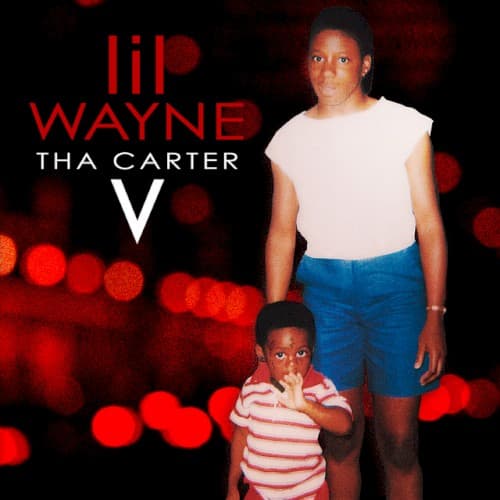
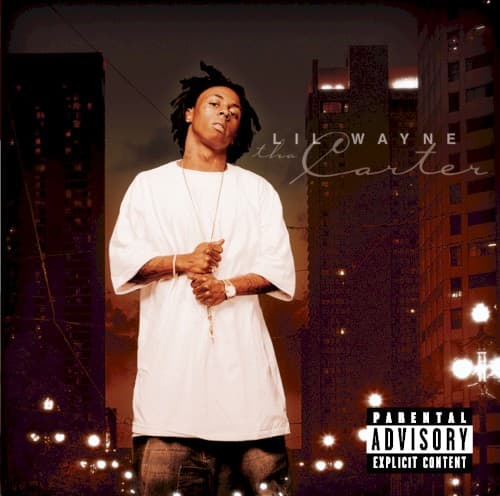
Tha Carter IV ranks third among the four Wayne records on this site, behind Tha Carter III at 7.9 and Tha Carter II at 7.6, and far ahead of Rebirth at 3.8. The order is deliberate. Tha Carter II and Tha Carter III both knew what they were, and both took risks that sometimes failed. Tha Carter IV takes almost none, and the safety shows in the lower writing and originality scores even as the delivery stays strong.
It is for listeners who want to hear Wayne in his peak commercial period, when the tricks still worked but the runway was shortening. If you grew up with the mixtapes and want the full-strength version, this is not the place to start. If you want a rapper who sounds expensive and comfortable, with a few exceptional songs surrounded by competent ones, it will do the job. Skip it if you are looking for the weirder, funnier, more reckless Wayne; that version lives on the earlier records.
It has aged better than its first reviews suggested, mostly because the songs that matter have outlasted the album that contained them. The Metacritic average of 60 reflects a real disappointment at the time, but a decade on, the ballads sound like period pieces and the better rap cuts hold up as examples of what a veteran sounds like when the machine is fully tuned.
Start with "6 Foot 7 Foot" for the lead single and Cory Gunz's sprint, "John" for the Rick Ross collaboration, and "How to Love" if you want the hit that defined the record's commercial peak. Then go back to Tha Carter III, where the same voice sounds reckless instead of rehearsed. If you want to hear what Wayne sounded like when the experiments still came without a safety net, Tha Carter II is the next step. Tha Carter IV is a good record by a great rapper who had temporarily stopped trying to be better than good.
Track by track
Track Listing
Intro
SolidA slow, grave opening that sets a darker tone than the singles suggest. Wayne keeps the mood contained instead of pushing for a statement, which makes it a decent doorway but not a memorable one.
Blunt Blowin
StandoutStoned and unhurried, with a beat that leaves a lot of air around the voice. Wayne's lazy drawl suits it, and the song is one of the places where the Southern pace actually shows up. The writing leans on familiar imagery, so it works as a vibe more than a verse.
MegaMan
StandoutA short, frantic alter-ego cut with a ragged, abrasive energy that is closer to the old mixtape Wayne than anything else on the front half. It is a brief burst, not a destination, but it injects some mischief the album needs.
6 Foot 7 Foot
StandoutThe best single on the record and the one place where the metaphor machine still feels dangerous. Bangladesh builds the beat on a Harry Belafonte sample, a bright calypso loop that sounds off-kilter against Wayne's menace, and the rapper reacts by stacking images that keep landing a beat later than expected. Cory Gunz arrives with a breathless verse that forces Wayne to answer, and the contrast is the point. This is what Tha Carter IV could have been all the way through.
Nightmares of the Bottom
StandoutThe grimmest song on the album and one of its better attempts at weight. The beat is dark and sparse, and Wayne leans into the morbid register with a verse that sounds committed rather than performed. It is a little long for what it says, but the atmosphere is believable.
She Will
SolidA Drake feature built on T-Minus and 40, with a hazy, sinking beat that makes the song sound more like Toronto than New Orleans. Wayne is efficient, and the hook does the selling. It is smooth enough to be a hit and anonymous enough to be forgettable.
How to Hate
WeakA T-Pain duet that is the album's most obvious weak point. The vocal effects and melodic hook are meant to be a bridge to radio, but the writing is thin and the tone is sour, and the song sounds stuck between a rap track and a pop one. Critics singled it out for a reason.
Interlude
SolidA short transition with Tech N9ne and additional vocals from André 3000. It is quick and busy, and the fast rhythm gives the record a brief jolt, but at two minutes it plays more like a pause than a song.
John
StandoutRick Ross rides a thick, ominous beat from Polow da Don, and the song is a heavy-footed street cut with a proper hook. Wayne is looser than on the surrounding songs and the two voices complement each other, one gravelly and one slippery. A solid second single that sounds bigger than it is.
Abortion
StandoutA short, hard-edged cut from The Commission and Streetrunner that gives Wayne room to unload a fast, dense verse. It is one of the more direct rap performances here, with less hook and less polish than its neighbors. The title is blunt, but the song itself is just a crisp verse over a tough beat.
So Special
SolidA John Legend collaboration produced by Cool & Dre that goes straight for the soft-focus ballad. It is pleasant and wildly out of step with the rest of the record. Wayne is a guest in his own song, and the hook does all the emotional work.
How to Love
SolidThe biggest hit and the album's most divisive choice. Detail's production is a clean, melodic ballad, and Wayne sings rather than raps. It worked as a single and it is catchy, but it asks the listener to accept a different kind of artist than the one who made the rest of the record. A fine pop moment and a weak rap one.
President Carter
StandoutA Jimmy Carter speech sample over an eerie horror-film loop gives the song a stately, slightly ghostly feel. It is one of the stronger production concepts on the record, and Wayne handles it with a measured verse. The wordplay on the surname is clever without being showy.
It’s Good
SolidCool & Dre turn The Alan Parsons Project's 'The Cask of Amontillado' into a gloomy, mid-tempo backdrop, and Jadakiss and Drake add two guest verses. It is a competent, polished closer to the main run, though the guests land harder than the host.
Outro
StandoutA posse cut that hands the microphone to Bun B, Nas, Shyne and Busta Rhymes while Wayne steps aside. The veterans sound motivated and the writing is sharper than most of what came before. It is a generous way to end the album and also an admission that the energy had moved.
Frequently Asked Questions
Is Tha Carter IV a good album?
How does Tha Carter IV rank among the Carter albums?
What are the best songs on Tha Carter IV?
How well did Tha Carter IV sell?
Genres
Styles