The scorecard
5.6/10 · Mixed
- Writing25%
- 5.5
- Production25%
- 6.0
- Delivery15%
- 6.5
- Cohesion15%
- 4.5
- Originality10%
- 5.0
- Replay value10%
- 5.5
Cam'ron's deadpan humor lands on 357 and Death, but too many verses on the guest-heavy cuts stay at generalized toughness with few lasting images.
Digga and Un Rivera's soul-sample loops suit his relaxed cadence and the Death sample choice is bold, though Dupri-style radio beats lower the temperature.
The unbothered, conversational voice is already distinctive and carries weaker material further, even as the pop hooks undercut it.
Nineteen tracks with two interludes and a saggy mid-album run of similar duets make this feel like a label compromise stretched too long.
The voice is individual but the format follows the Bad Boy-era pop-rap template closely, with only hints of the style he would develop.
A handful of tracks like 357, Death and Confessions hold up, while the guest-driven filler and skits are easy to skip.
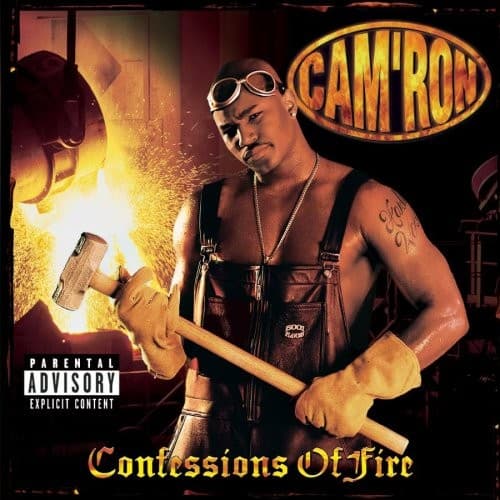
Cam'ron Confessions of Fire: A Harlem Voice Stuck in a Pop-Rap Template
Confessions of Fire is a debut by a rapper who already sounds like himself and an album that has not decided what to do about it. Cam'ron arrives in 1998 with a deadpan, conversational voice, a gift for the offhand punchline, and a Harlem swagger that owes more to street talk than to any rhyme-school discipline. The beats around him, however, are tuned for the sound that dominated the era's charts: glossy, sample-heavy, built for hooks and guests. The tension between the two is the whole record, and my argument is that the album's reputation for being merely mixed undersells how clearly it maps what Harlem rap was about to become.
The lineage is easy to hear. The shiny, soul-sampling pop-rap template pioneered by Puffy and Bad Boy hangs over most of the album, and the presence of Mase on three tracks makes the link literal. A critic at AllMusic framed it exactly that way, hearing a rapper following the Puffy path while keeping a street edge and a stronger technical hand, but short on the pop instinct that makes big hits. That reading is fair as far as it goes, and I would add that the album works best precisely when it stops auditioning for that crown.
Where the record argues with its own formula is the harder material. The cuts built on darker loops, plainspoken stories and a flat, unbothered delivery point forward to the style Cam'ron would later take into the Diplomats era, where his indifferent voice became a weapon rather than a limitation. Here the voice is still being fitted to a template, and the writing carries the usual debut baggage: lines that gesture at toughness without the details that sell it, and hooks that exist because the label needed them.
The stakes were commercial as much as artistic. The album debuted at number six on the Billboard 200 and went gold, so the strategy worked, and it also set a pattern of compromise he spent several years unlearning. The record deserves to be heard as a document of that negotiation, uneven by design and revealing because of it.
Soul Loops, Deadpan Wit and a Bloated Tracklist
The production is the album's biggest variable. Darrell "Digga" Branch handles most of it, usually alongside Lance "Un" Rivera, and the pair favor soul and R&B samples that give the tracks a warm, lived-in bounce. That choice suits Cam'ron's relaxed cadence better than a harder, drum-heavy approach would have, because his delivery never strains and the beats do not ask it to. Swizz Beatz, Jermaine Dupri and the Trackmasters-adjacent names on the credits supply the shinier end of the palette, and the difference in texture is audible: when the album shifts from Branch's soulful loops to a pop-rap beat built for a guest, the temperature drops.
His writing is the second variable. At his best Cam'ron is funny without announcing it, delivering a boast in the same bored tone as a throwaway remark. That dry approach produces some of the record's sharpest moments, and it is the thing that separates him from the louder rappers of the period. The weakness is breadth. Too many verses stay at the level of generalized toughness and luxury, and the album gives the listener few images that stick after the song ends. The family songs and the darker narratives hit harder because they have a subject, while the party tracks run on attitude alone.
Guests are a mixed bag. The pop-leaning collaborations were commercial decisions, and they are the weakest links, with hooks that sound like they were written for another artist's album. The more natural pairings, where a rhymer trades verses with him over a loop, keep the album grounded. The sampling is the most distinctive thing about the record: choices like a famous detective-show theme and a notorious posthumous vocal show a taste for audacity that the rest of the album does not always match.
The most consistent problem is length. Nineteen tracks, including two interludes, is too many for a first album from an artist whose strengths repeat. The mid-section drifts into a run of mid-tempo songs with similar structures, and the verses lose the personality that makes the early tracks distinctive. A tighter version at fourteen or fifteen tracks would be an easier album to defend.
Delivery is the one area where he is already finished. The voice has the lazy confidence that later albums would sharpen, and it carries the weaker writing further than it deserves to go. That is both a strength and a trap: it makes every song listenable and makes it hard to tell which songs are good.
A Strong Start, a Saggy Middle and a Late Recovery
The sequencing follows a standard late-1990s major-label pattern: a statement-of-intent opening, early singles placed where radio listeners will find them, a mid-album run of guests, and a long confessional closing stretch. It is a familiar structure and the album follows it without much imagination, which is part of why the first third feels more convincing than what follows. The opening run lays out the mission clearly, and the pacing there is brisk, with a good balance between street cuts and the pop concessions the label required.
The peak arrives early and the middle sags. After the first set of singles and the darker centerpiece, the album settles into a stretch where mood, tempo and subject matter blur together. The R&B-flavored duets and party-minded tracks are individually pleasant and collectively samey, and the record loses the sense of forward motion it had established. Interludes and skits do not help; they break momentum rather than build a world, and they are the kind of filler that dated quickly.
The late-album recovery is real. The closing stretch returns to the harder, more personal material, and the long title track near the end is the one moment where the album's ambition outruns its template. That positioning is smart: finishing on the heavier, more reflective songs leaves a stronger impression than the pop-leaning middle would suggest. The record ends better than it plays through its center.
Whether the length is earned depends on the listener. For someone interested in the lineage from Bad Boy-era gloss to the harder New York sound that followed, the full run is useful because it shows both impulses side by side. For someone who wants the best of Cam'ron, a playlist of seven or eight tracks does the job better. The album rewards selective listening more than a straight-through play, and that is the clearest sign of a debut still searching for its shape.
The Rough Draft Behind the Diplomats Era
No other Cam'ron albums are rated on the site yet, so the ranking rests on what this record shows against what the artist became. Confessions of Fire is a promising and uneven debut: valuable for the voice, limited by the formula. It is not where his best work lives, and it is not essential for a listener who wants the peak of New York street rap from the early 2000s. It is important for someone who wants to understand how that peak was reached, and for that purpose it earns a place on the shelf.
The mixed reception is justified in outline and wrong in emphasis. Critics were right that the pop concessions drag the album down, and right that he had not yet found a persona that matched his voice. What gets missed is how much of the later Cam'ron is already present: the deadpan humor, the preference for soul loops, the lack of interest in sounding eager. The record is also a useful measure of a particular moment, when a Harlem rapper could be pushed toward the Bad Boy blueprint by a major label and still leave fingerprints on the result.
Who should start here? Listeners curious about the Harlem lineage, the soul-sample era of East Coast rap, and anyone building a chronology of the artist. Who should skip it? People who want tight, consistently sharp albums and have little patience for 1990s pop-rap guest features. The album has aged unevenly: the gloss dates, the hard tracks hold, and the humor is timeless.
Three tracks make the best case. Start with 357 for the street-leaning single, move to Death for the darkest and most ambitious beat choice, then Horse & Carriage for the crossover hit that paid for everything. For what to hear next, the later Diplomats-era albums show the voice working without a template, and an early Mase album gives useful context for the Bad Boy gloss that this record is working with and against.
Confessions of Fire is best understood as a rough draft by a rapper who would eventually write much better versions of the same ideas, and the draft is still worth reading because the handwriting is already his.
Track by track
Track Listing
Intro
SolidA skit-length opener that sets the tone and runs longer than it needs to. It establishes the album's persona without saying much, and it is mostly scene-setting.
Glory
StandoutA Swizz Beatz production with Noreaga that favors big, bouncy drums and a hype-man energy. The pairing works on attitude: both rappers sound relaxed over a loud beat. It is a strong early shot that proves he can hold up next to a bigger-name peer.
357
StandoutThe street single and the album's most direct statement of intent. The beat borrows a famous television theme, adding a swaggering edge without softening the rhymes. Cam'ron is blunt and deadpan, and the track shows his core appeal: no strain, no shouting, just an unbothered voice over something hard. Its chart showing was modest, but it is the clearest preview of the harder style he would develop. The sample choice also shows a willingness to be playful, and the hook is short enough not to wear out. It is among the best things on the record and a better single than the album's pop moves, though the verses stay at the level of generalized menace instead of detail.
Rockin' and Rollin'
WeakA Jermaine Dupri production that aims squarely for radio. It is bright and bouncy but undistinguished, and the writing is generic enough to fit any rapper's album.
Wrong Ones
SolidA soulful, sample-driven cut with a female vocal that leans into R&B territory. The mood is smooth and the beat is pleasant, but the song stays on the surface and does not build.
Death
StandoutThe album's darkest moment and its most interesting production decision, built on a sample of a Notorious B.I.G. vocal. The beat is heavy and slow, and Cam'ron treats the subject with an unusually serious voice, which gives the lyrics real weight. It points toward the grimmer material he would write later and shows that his deadpan delivery can carry genuine menace as well as jokes. The song's tension comes from restraint: he never raises the energy, and the loop does the emotional work. Sampling a famous late rapper is a risky choice that could read as exploitation, but the track treats it as homage and earns the move. This is the best argument that the debut has substance underneath the gloss, and the track most worth returning to.
Horse & Carriage
StandoutThe crossover single with Mase, built on a playful sample pairing and a smooth, laid-back groove. It reached the top ten of the R&B/hip-hop chart, which tells you how well it fit the era. The two rappers trade easy lines over a beat that is friendly rather than hard, and the chemistry is genuine even when the writing is light. Cam'ron's sleepy voice and Mase's relaxed style complement each other, and the song's charm is its lack of effort. It is also the clearest example of the album's commercial bargain: it works as a hit, it dates quickly, and it is the sound that the rest of his career would move away from. Fun, durable and slight.
Me, My Moms & Jimmy
StandoutA family-themed song with soulful vocal guests, built on an upbeat sample and a nostalgic tone. It is one of the more personal moments on the record and gives him a subject beyond bravado. The warmth is genuine and the hook is easy, and the song is more memorable than most of the mid-album material because it has something to be about.
Prophecy
SolidA Kelly Price collaboration that borrows a familiar pop melody and sets it to a slow, reflective beat. The vocal gives the song an emotional ceiling the verses do not reach. It is pleasant and well made, but it plays like an R&B song with a rap verse attached.
We Got It
SolidA Mase-featuring cut that reunites the pair on a funkier, looser beat. It is energetic and breezy, with no real stakes. The chemistry remains, and the song is a decent mid-album lift that does not add much to the story.
D Rugs
StandoutA drug-themed street song built on soul samples, with a smoky, languid beat and a guest voice. The writing here has more texture than on the pop cuts, and the loop gives the track an appealingly grimy feel. It is a solid, atmospheric deep cut.
Feels Good
SolidThe Usher-assisted single, a smooth R&B record with a rapped verse. It is designed for radio and does exactly that, though it missed the pop chart. The hook is polished and the rapping is minimal. A slick but disposable detour.
Phone Interlude
WeakA short conversational skit that breaks the momentum. It is filler and does not earn its place.
A Pimp's a Pimp
SolidA Jermaine Dupri collaboration on a soul sample, with a swaggering mood and a bouncy groove. Cam'ron is in comfortable territory, and the song is a decent showcase for his casual humor, though the subject matter is a familiar rap trope. Fine, not memorable.
Confessions
StandoutThe long, reflective title track near the end, running nearly six minutes. It is where the album drops the party mood and tries to say something personal, with a sung hook that gives it a somber frame. The pacing is deliberate, and his deadpan voice suits a story about regret and consequence better than it suits the club songs. The track is overlong for what it says, and the hook leans a little too hard on melodrama, but the ambition is evident and the album needs that kind of stretch. It is the clearest sign that the artist had more to offer than the pop-rap template allowed, and it makes a strong case for the record as a whole.
Fuck You
SolidA short, snarling track with Mase and a soulful sample, running under three minutes. It is blunt, brisk and a welcome change of pace, though it does not leave a deep impression.
Me & My Boo
SolidA romantic duet with Charli Baltimore built on a classic soul sample. It is smooth, slightly sentimental and aimed at the female audience the label wanted. It is competent and forgettable.
Shanghai
StandoutA Swizz Beatz production with a stark, percussive feel and a harder edge. Cam'ron sounds energized and the beat gives him room to be sharp. It is one of the more underrated cuts on the second half.
Who's Nice
StandoutA closing posse-free showcase where he simply raps over a Branch and Rivera beat. It ends the album on a boastful note with little baggage, and the delivery is relaxed and confident. A solid sign-off that feels like the album he could have made.
Frequently Asked Questions
Is Cam'ron's Confessions of Fire a good album?
What are the best songs on Confessions of Fire?
How did Confessions of Fire perform commercially?
Styles